
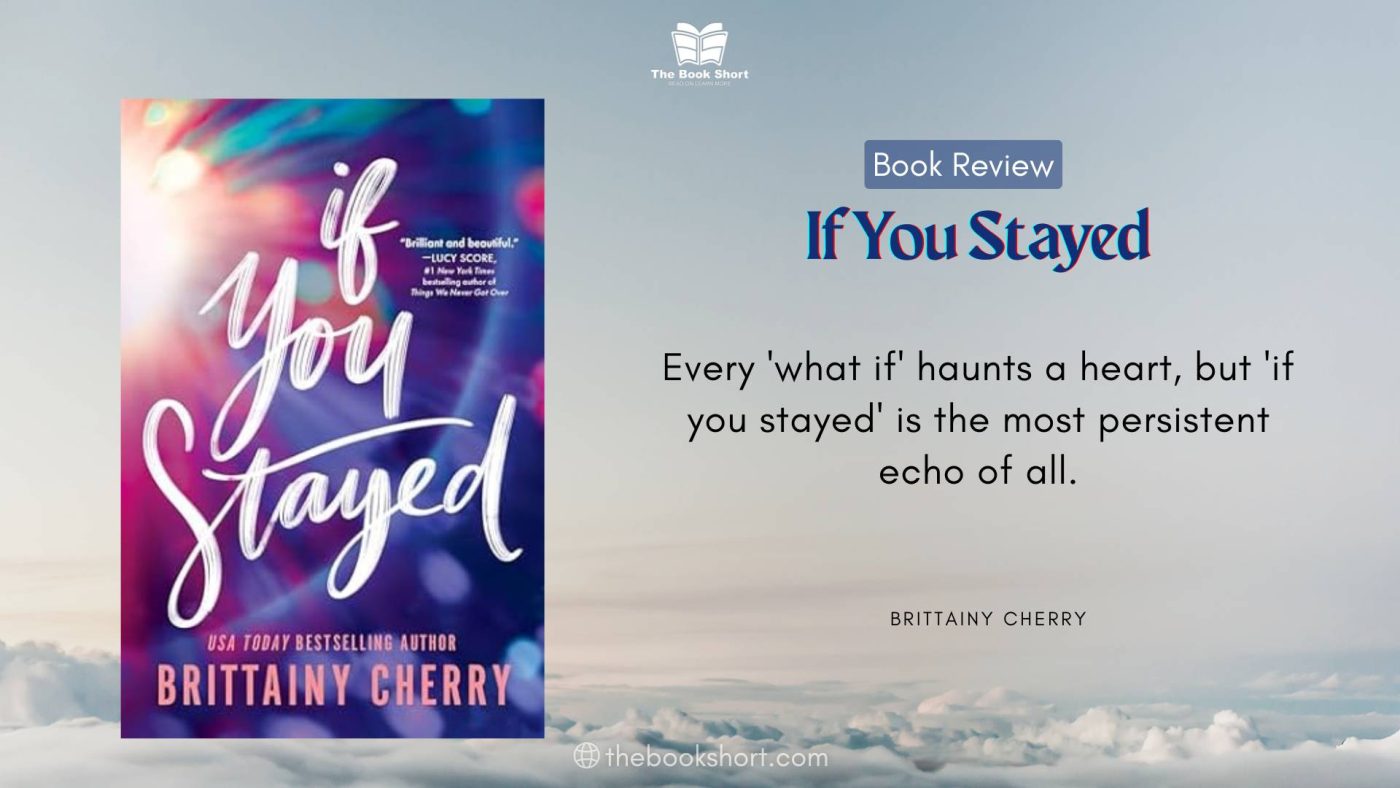
A heartbreaking journey through the desolate landscape of loss and the fragile path towards rediscovery. Brittainy Cherry’s If You Stayed isn’t just a romance; it’s a profound exploration of healing, the messy reality of grief, and the courageous act of finding love again after devastation.
How do you begin to piece yourself back together when your world shatters? Brittainy Cherry’s novel, If You Stayed, bravely plunges into the suffocating depths of grief, tracing the excruciatingly slow process of healing, and revealing the unexpected resilience of the human spirit in the face of unbearable loss. As a reviewer, I was drawn to this book precisely because of its reputation for tackling profoundly difficult emotional themes with raw honesty and a powerful, unflinching exploration of second chances – not just in love, but in life itself. Its significant value lies in its refusal to look away from immense pain, instead illuminating the painstaking search for hope in the deepest darkness, making it a truly compelling read for anyone seeking stories of emotional recovery and the enduring power of human connection.
Essential Information: If You Stayed by Brittainy Cherry
Here are the key details about this poignant novel:
- Title: If You Stayed
- Author: Brittainy Cherry
- Year of publication: 2017
- Genre: Contemporary Romance, New Adult, Emotional Fiction, Grief & Loss
- Number of pages: 397 pages (note: pagination can vary slightly across editions)
- Target audience: Adult readers, particularly those who appreciate deeply emotional contemporary romance and character-driven stories centering on themes of grief, healing after loss, and second chances in love.
If You Stayed Summary: Diving into Brittainy Cherry’s Emotional Novel
If You Stayed tells the story of Willow Turner, a young woman whose life is irrevocably cleaved in two by the sudden, tragic death of her high school sweetheart and the undisputed love of her life, Landon. The narrative opens with Willow adrift, reeling from this unimaginable loss, consumed by the vast, aching void left behind. The initial portion of the book focuses acutely on her immediate, visceral grief and the devastating impact it has on every facet of her existence.
Part 1: The Crushing Aftermath of Loss
The story immerses the reader in the world shortly after Landon’s death. Willow is utterly broken, a shell consumed by a sadness so profound it feels physical. She is convinced there is no future without the person she believed was her future. Her world contracts violently, and she instinctively pushes away the very people trying to anchor her – her worried family and her devoted best friend, Georgia.
- Initial Grief: Cherry portrays Willow’s pain with stark realism. This isn’t a tidy sorrow; it’s the raw, messy, often ugly reality of mourning – the paralyzing numbness, the lashing anger, the futile denial, and the overwhelming sadness that makes the simple act of getting out of bed a monumental, impossible task.
- Isolation: In the suffocating grip of grief, Willow retreats entirely. She severs ties with her former life, recognizing that every memory, every place, every person is inextricably intertwined with Landon. This self-imposed isolation becomes a painful manifestation of her struggle to process and cope.
- Family and Friendship Dynamics: The narrative keenly observes the ripple effect of Willow’s grief on her closest relationships. We see the strain on her supportive yet sometimes helpless family, and the unwavering loyalty of Georgia, whose persistent attempts to reach the unreachable Willow highlight the profound difficulty of helping someone lost in the labyrinth of their own sorrow.
Part 2: A Faint Glimmer of Hope
As time inches forward, slowly and agonizingly, Willow begins the arduous, hesitant journey towards healing – often against her own will. The catalyst for change, as is often true in life, arrives in an unexpected form. This is where the second main character, Damian Vance, enters the picture. Damian is the new neighbor, a brooding, reclusive musician who seems to carry burdens as heavy as Willow’s, though hidden beneath a prickly exterior.
- Meeting Damian: Damian arrives in Willow’s life not immediately as a romantic prospect, but as a challenging, intriguing presence next door. Their initial interactions are marked by friction, born from Willow’s fortified emotional walls and Damian’s own complex, guarded nature.
- Shared Pain: As they are reluctantly drawn together, Willow and Damian discover a shared language of pain and understanding, even though their specific experiences of loss differ. This unspoken empathy, this recognition of a fellow wounded soul, becomes an unexpected, fragile bridge between them.
- The Slow Thaw: Their relationship develops not in a sudden rush, but through a careful, hesitant, slow-burn process. They are two fractured individuals finding tentative solace and understanding in each other’s quiet presence. Damian doesn’t seek to replace Landon; instead, he offers a different kind of connection – one built on quiet companionship, shared vulnerability, and profound empathy.
Part 3: Weaving the Present with the Past
The latter half of the book delves into the intricate complexities of moving forward while still profoundly tethered to the past. Willow grapples with consuming guilt over the mere possibility of finding happiness again, the paralyzing fear of somehow forgetting Landon, and the significant challenges of building a new, fragile relationship while still shouldering the immense weight of her grief.
- Developing Connection: The bond between Willow and Damian deepens gradually into something more profound than just shared pain. They begin to share vulnerabilities, support each other through difficult emotional moments, and find fleeting moments of lightness and joy amidst the heavy shadows of their pasts.
- Internal Conflict: Willow’s internal landscape is a battlefield. Is it acceptable to love again? Does moving on somehow betray the love she had for Landon? Does healing mean letting go of his memory? These agonizing questions lie at the very heart of her journey and drive much of the narrative’s tension.
- External Challenges: Their budding relationship isn’t without its external pressures. They face potential judgment or misunderstanding from those who knew Willow and Landon as a couple, adding another layer of complexity. Damian also carries the weight of his own past and present struggles.
- Finding Peace: The novel moves towards a powerful culmination: Willow finding a way to integrate the enduring love and memory of her past with the possibility of happiness in her present. The resolution isn’t about forgetting Landon, but about making space within her heart for new love, recognizing that honoring memory and continuing to live and find joy are not mutually exclusive. Her journey is one of tentative acceptance, hard-won self-forgiveness, and ultimately, finding a fragile but real sense of peace.
This summary effectively maps the emotional arc from shattering loss and profound isolation to hesitant connection and eventual, hard-won healing, highlighting Damian’s crucial role in Willow’s path forward and the complex internal and external conflicts she navigates.
Analyzing If You Stayed: Deeper Look at Themes, Style, and Characters
If You Stayed fearlessly delves into the profound, often turbulent, emotional landscape of grief, enduring love, and the challenging path towards recovery. Brittainy Cherry navigates these complex themes with a master’s touch, offering a raw, introspective, and deeply empathetic portrayal of human resilience.
Characters, Structure, and Key Themes
Let’s break down the core components that make this novel resonate:
- Characters:
- Willow: As the protagonist, Willow is the raw, exposed nerve of the story. Cherry renders her grief with an authenticity that is almost painful to witness, making her initial desolation and her subsequent hesitant, fragile steps towards healing incredibly believable and affecting. Her internal voice, delivered through the first-person perspective, is absolutely central to grasping the depth of her struggle and the magnitude of her eventual growth.
- Damian: Damian embodies the archetypal ‘wounded hero,’ but with a realistic complexity. His mysterious past and quiet, often brooding intensity make him a compelling, intriguing counterpoint to Willow’s more overt pain. His remarkable patience, empathy, and understanding are crucial catalysts for Willow’s ability to slowly lower her defenses and trust again. His own struggles, revealed gradually, add significant depth to his character and subtly parallel Willow’s journey in resonant ways.
- Supporting Characters: Characters like Willow’s unwavering best friend Georgia and her family provide essential emotional scaffolding and occasional conflict. Their presence highlights the crucial community aspect of navigating grief and the ripple effects of loss on those around the bereaved.
- Structure: The novel follows a largely linear chronological structure, meticulously tracking Willow’s painful journey through time. It moves seamlessly (though emotionally jarringly) from the immediate, suffocating period defined solely by grief to the slower, more complex, and often frustrating process of healing and attempting to rebuild a life. Damian’s introduction serves as a clear structural shift, marking the narrative’s pivot from Willow’s internal isolation towards the possibility of external connection. Flashbacks and poignant memories of Landon are woven throughout, ensuring that Willow’s present pain is always contextualized by the vibrant happiness of her past.
- Key Themes:
- Grief and Loss: This is the novel’s beating heart, explored in its most raw, untamed form. The book refuses to romanticize or simplify mourning, delving into its messy, consuming, and often unattractive realities.
- Healing and Recovery: A central message is that healing is neither linear nor swift. It is depicted as a painstaking process of tiny steps forward, inevitable setbacks, and finding fragile solace in unexpected people and places.
- Second Chances and Finding Love After Loss: A crucial, hopeful theme explores the profound complexity and inherent guilt associated with finding love and happiness again after a devastating loss.
- Communication, Vulnerability, and Connection: The characters’ capacity (or initial inability) to articulate their pain, fears, and tentative hopes is a significant driver of both the plot and their emotional development. The deep, empathetic bond forged between Willow and Damian underscores the vital importance of human connection in breaking the chains of isolation.
- Integrating Past and Present: The book powerfully argues that moving forward doesn’t necessitate forgetting the past. It’s about learning to carry the memory of those lost not as a burden preventing future happiness, but as a cherished part of the life that continues.
Writing Style & Content Quality
Brittainy Cherry’s writing style is undeniably and intensely emotional, often bordering on the poetic in its descriptions of internal states. She possesses a remarkable talent for conveying the raw, interior landscape of her characters, particularly Willow’s grief, employing vivid metaphors and deeply introspective prose. The first-person perspective is key, allowing readers to become utterly immersed in Willow’s pain and her subsequent tentative, fragile hope.
The content quality is exceptionally high in terms of emotional depth and character development. Cherry is fearless in exploring dark, painful emotions, which lends the story its potent, raw power. Some readers, however, might find the sheer intensity of the initial grief portrayal overwhelming or emotionally draining. While the romantic elements are crucial to the healing arc, they occasionally lean into familiar contemporary romance tropes. What truly distinguishes If You Stayed within its genre is Cherry’s unwavering dedication to depicting the process of grief and healing with unflinching realism. It avoids quick fixes; the past isn’t easily left behind, which makes the emotional journey feel incredibly authentic, earned, and deeply impactful.
Notable Passages Reflecting the Book’s Essence
While specific quotes can vary slightly between editions, the core emotional resonance of Cherry’s writing is powerfully captured in lines that speak directly to pain, memory, and the tentative search for light. Passages often mirror Willow’s internal state and evolving understanding:
- “Grief is not a passive entity; it is an active assault.” (This quote powerfully captures the consuming, aggressive nature of her initial pain).
- “He wasn’t a replacement… he was a hand reaching for mine in the middle of the dark.” (This speaks to the nature of her connection with Damian – supportive and necessary, not substitutive).
- “Maybe healing wasn’t about forgetting, but about making space.” (This encapsulates the book’s central message about integrating loss into a life that continues).
These evocative lines highlight the novel’s intense focus on the subjective experience of grief and the hesitant, complex acceptance of new beginnings.
If You Stayed Book Review: Personal Impressions and Core Value
If You Stayed is an emotionally demanding yet ultimately profoundly rewarding read that successfully navigates the difficult, often painful, subject of grief and the arduous path towards recovery. My personal impression is that the novel’s greatest strength lies precisely in its raw, unflinching, and deeply authentic portrayal of Willow’s pain. Cherry refuses to sugarcoat the devastation of loss, which makes Willow’s eventual, hard-won steps toward healing feel incredibly impactful, earned, and believable. The connection forged between Willow and Damian feels refreshingly slow and realistic, rooted in shared understanding and empathy rather than instant romantic fireworks, significantly enhancing the story’s authenticity.
A potential challenge or ‘disadvantage’ for some readers lies in the sheer, relentless intensity of the initial grief depicted. It is heavy, emotionally draining, and can be difficult to read at times. While this depth is absolutely necessary for the story’s powerful arc, readers should be prepared for a deep, often uncomfortable, dive into sorrow. Additionally, while the romantic plotline is sweet and supportive, some aspects might feel familiar within the broader landscape of the contemporary romance genre.
The readability level is generally accessible, written in a contemporary, first-person voice that fosters deep immersion. However, the significant emotional weight means this is a book that demands attention and emotional investment; it is decidedly not a light, breezy escape read. It is most suitable for adult readers who deeply appreciate character-driven stories and are willing to engage with difficult, complex emotional themes. Fans of authors renowned for tackling intense emotions within romance, such as Colleen Hoover, Mia Sheridan, or Amy Harmon, would likely find If You Stayed a compelling and worthwhile read.
The enduring value of If You Stayed extends beyond its genre. It offers a fictional yet profoundly realistic depiction of how grief can consume a person entirely and the arduous, often messy, non-linear path required to find fragile hope and purpose again. The narrative provides valuable insights into the importance of patience (both with oneself and with others navigating mourning), the indispensable value of authentic human connection in mitigating isolation, and the vital idea that moving forward in life doesn’t diminish or disrespect the love for those lost. It gently encourages a mindset shift towards accepting that a life, and love, that honors memory can indeed exist alongside finding future happiness. For anyone who has experienced profound loss or is supporting someone through it, the book can offer a sense of validation for the difficulty of the journey and a ultimately hopeful perspective on the possibility of recovery and finding joy again.
Comparing If You Stayed with Similar Romance Books About Grief
If You Stayed sits comfortably within the subgenre of deeply emotional contemporary romance, which frequently features protagonists navigating significant adversity, past trauma, or profound loss. It shares structural and thematic similarities with other novels that pair a grieving or wounded protagonist with a supportive partner who often carries their own hidden burdens.
Compared to books like Colleen Hoover’s It Ends With Us (which addresses abuse and recovery) or Mia Sheridan’s Archer’s Voice (featuring a protagonist overcoming past trauma and finding healing through connection), If You Stayed places an almost singular, intense focus on the process of mourning the specific loss of a life partner. While other novels might use trauma or loss as a backdrop that the characters must overcome together once the romance is established, Cherry foregrounds the all-consuming grief itself, making it the primary internal journey Willow must navigate alongside the hesitant development of a new relationship. The grief isn’t just context; it is the crucible through which the new love is forged.
Readers who have been moved by deep emotional journeys and the slow, tender burn of finding love and healing after hardship in similar books might find If You Stayed particularly resonant. Consider it if you enjoyed:
- Archer’s Voice by Mia Sheridan: Shares the trope of a deeply wounded protagonist finding healing and voice through a supportive connection.
- The Weight of the Stars by K. Ancrum: Explores themes of grief, isolation, and finding connection amidst darkness, though with a slightly more New Adult/Young Adult crossover feel.
- Me Before You by Jojo Moyes: While different in its specific plot trajectory, this book similarly deals with navigating life-altering loss and finding unexpected love and purpose in circumstances defined by endings.
If You Stayed shares with these novels a commitment to portraying deeply flawed, relatable characters and a focus on significant emotional development occurring parallel to or driving the romantic plot.
Is If You Stayed Worth Reading? Conclusion and Recommendations
If You Stayed by Brittainy Cherry is a poignant, raw, and ultimately powerful novel that bravely confronts the devastating impact of loss while tenderly weaving a message of fragile hope and enduring resilience. Its outstanding value lies in its unflinchingly honest and remarkably detailed portrayal of the grief process, making the protagonist’s challenging journey towards healing and finding new love feel incredibly moving, authentic, and hard-won.
Yes, If You Stayed is absolutely worth reading, especially for those who seek out emotionally rich, character-driven stories that don’t shy away from life’s difficult realities. It should be read by anyone looking for a romance novel with significant emotional depth that explores themes far beyond simply finding love. It comes highly recommended for devoted fans of Brittainy Cherry’s other works and readers who appreciate authors like Colleen Hoover, Mia Sheridan, or others known for tackling heavy, difficult subjects within the framework of the contemporary romance genre. Be prepared for an intense emotional experience, but one that ultimately feels profoundly rewarding and speaks to the enduring capacity of the human heart to heal and love again.
Have you read If You Stayed? Share your thoughts and feelings about this emotional journey in the comments below!