
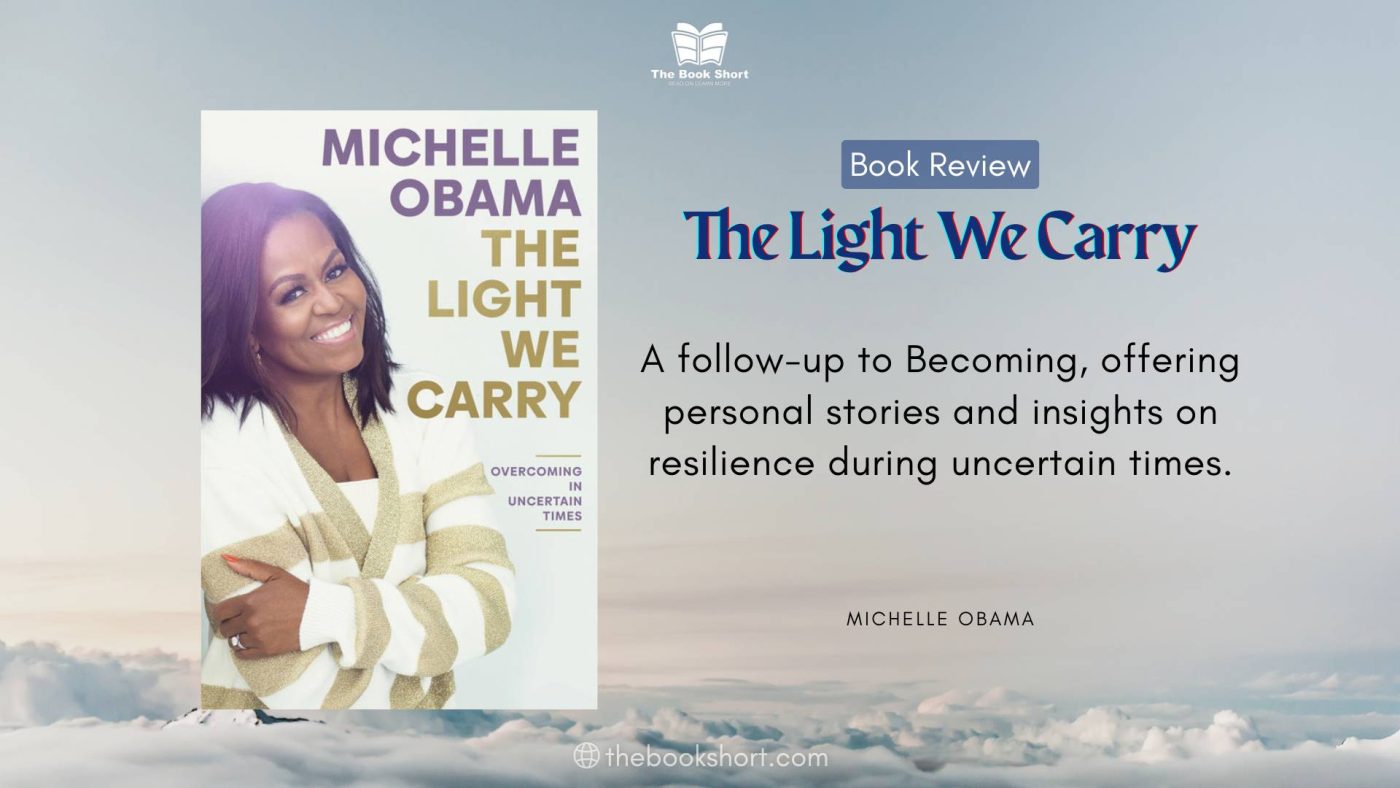
Navigate uncertainty & build resilience with Michelle Obama’s The Light We Carry. Discover practical wisdom for challenging times.
Introduction
In a world frequently buffeted by uncertainty and change, finding solid ground and sustaining hope feels more essential than ever. Michelle Obama’s The Light We Carry: Overcoming in Uncertain Times emerges as a timely and deeply personal guide, rooted in her own lived experiences. I was drawn to explore this book not only for its relevant message in our complex era but also for the author’s unique voice and perspective. More than just offering advice, Obama shares relatable stories that illuminate practical, accessible “tools” for navigating life’s inevitable challenges. Its profound value lies in its ability to connect with readers on a deeply human level, fostering introspection and empowering a sense of resilience.
Basic Information About The Light We Carry by Michelle Obama
- Title: The Light We Carry: Overcoming in Uncertain Times
- Author: Michelle Obama
- Year of publication: 2022
- Genre: Memoir, Self-Help, Personal Development, Inspirational
- Number of pages: Approximately 336 pages (may vary slightly by edition)
- Target audience: Adults interested in personal growth, building resilience, navigating fear and uncertainty, memoir readers, and those seeking inspirational guidance from a trusted voice like Michelle Obama’s.
Summary of The Light We Carry Book by Michelle Obama
Rather than serving as a direct sequel to her bestselling memoir Becoming, The Light We Carry: Overcoming in Uncertain Times pivots to focus intently on the strategies and inner resources, or “tools,” Michelle Obama has cultivated throughout her life to confront fear, anxiety, self-doubt, and the unpredictable nature of the world. The book unfolds as a series of intimate reflections, drawing heavily on personal anecdotes spanning from her childhood and young adulthood to her impactful years as First Lady and her life in the public eye since leaving the White House. She presents these deeply personal reflections not as dictates, but as potential pathways and practical approaches readers can consider and adapt for their own journeys.
At the heart of the book is the powerful metaphor of an inner “light”—a core of strength, deeply held values, and authentic connection that can be nurtured and relied upon, especially when external circumstances feel overwhelmingly dark or confusing. Obama compellingly argues that this light isn’t an exclusive gift bestowed upon a select few; it is something everyone possesses the capacity to cultivate through self-awareness, community building, and the intentional practice of specific habits and mindsets.
The book is thoughtfully structured around several key “tools” or concepts that Obama shares, weaving them seamlessly throughout the narrative rather than presenting them as rigidly defined chapters.
Building Your “Toolbox”
Obama introduces the foundational concept of building a personal “toolbox”—a collection of strategies, both big and small, designed to help navigate difficult times. This idea emphasizes practicality over grand gestures, encouraging readers to identify and utilize the specific, often small, approaches that provide stability, clarity, and comfort in moments of stress or confusion. She invites readers to reflect on what has served them well in the past and to consciously seek out and add new tools to their repertoire.
Going High (When They Go Low)
Drawing directly from the iconic phrase she popularized during the 2016 presidential campaign, Obama delves into the profound, often challenging, meaning of “Going High.” She clarifies that this isn’t about passive acceptance or ignoring injustice. Instead, it’s a deliberate, strategic choice to maintain one’s integrity, values, and focus on positive action and purpose, even—especially—in the face of negativity, criticism, or opposition. It demands significant discipline, self-control, and an unwavering commitment to civility, even when provoked. Her reflections are candid about the personal cost and the sheer strength required to make this difficult choice repeatedly under immense pressure.
The Power of Small
This concept highlights the quiet but profound importance of small, consistent actions, connections, and moments. In overwhelming times, fixating on large, seemingly insurmountable problems can be paralyzing. Obama suggests finding powerful agency and grounding in the small things: small acts of kindness extended or received, small daily routines that provide structure, small, meaningful connections with friends, family, or even strangers. These seemingly minor elements, she argues, accumulate to create a vital sense of purpose, stability, and manageable progress. She recounts moments from her own life where focusing on the immediate, tangible, and small tasks helped her remain centered amidst the staggering demands and anxieties of public life.
When They Go Low, Go Flourish
Expanding on the principle of “Going High,” Obama introduces “flourishing” as an active, vibrant response to attempts to diminish or defeat you. It’s a powerful step beyond merely maintaining composure; it’s about actively thriving, growing, pursuing joy, and investing in purpose despite adversity. This is presented as a form of dynamic, resilient resistance—a refusal to let external negativity dictate your internal state or halt your growth. It necessitates a commitment to self-care, creative expression, and consciously investing energy into what truly nourishes your spirit, rather than getting consumed by reactive engagement with negativity.
The Kitchen Table
This potent symbol represents the irreplaceable importance of community, connection, and shared humanity. Obama movingly discusses how gathering with loved ones—sharing stories, vulnerabilities, laughter, and support—is absolutely fundamental to building and sustaining resilience. The “kitchen table” serves as a powerful metaphor for the safe, nurturing spaces we create, whether physical or emotional, where we can shed our defenses, find deep understanding, and draw immense strength from the presence and perspective of others. She shares touching anecdotes about the grounding influence of her own close-knit family and enduring friendships.
The Gift of a Name
Obama reflects thoughtfully on the intricate layers of identity, particularly the significance of names and how they connect us to our heritage, our families, and our evolving sense of self. This theme touches upon feelings of belonging, history, and the crucial importance of understanding and honoring where we come from. She discusses navigating various spaces and roles where her identity was perceived, sometimes misjudged, or challenged, and the quiet strength she found in holding onto her own truth and understanding her roots.
The Reading Life
Books and the act of reading are presented not just as a pastime but as essential tools for expanding perspective, cultivating empathy, and finding both solace and profound inspiration. Obama shares her personal, lifelong relationship with reading and how it has profoundly shaped her understanding of the world, its complexities, and herself. Reading offers a necessary escape, certainly, but also a vital way to engage with diverse ideas, experiences, and histories, contributing significantly to building both intellectual and emotional resilience.
Regarding Others
This crucial theme explores the indispensable importance of empathy, seeking understanding, and finding common ground with people who hold different perspectives or come from different backgrounds. In a world often polarized by disagreement and division, Obama stresses the urgent need to recognize and affirm the shared humanity in others, even—especially—those with whom we fundamentally disagree. This requires active, humble listening, genuine curiosity, and a willingness to step beyond our own biases and assumptions. It is presented as a fundamental tool for bridging divides, fostering compassion, and nurturing a more connected, understanding society.
The Light We Carry
Bringing these interwoven themes together, Obama reiterates that the inner light we cultivate isn’t merely for our own benefit; it is meant to be shared, used to illuminate pathways for others, and to bring warmth and connection to the world around us. This light is found in our core values, our authentic connections, our purposeful actions, and our willingness to be vulnerable and true to ourselves. It is the enduring strength derived from knowing ourselves deeply and connecting meaningfully with others, enabling us to face uncertainty not with paralyzing fear, but with a clear sense of purpose, agency, and hope.
Throughout the book, Obama masterfully weaves together these powerful concepts with resonant personal stories—from discovering the calming practice of knitting to manage anxiety during the pressures of public life, to navigating the complex social dynamics of the White House, to reflecting on the enduring lessons taught by her father. She is remarkably candid about her own struggles with imposter syndrome, moments of crippling fear, and the perpetual challenge of balancing demanding public roles with essential private life. The Light We Carry is less a book of prescriptive advice and more an invitation to embark on one’s own journey of building resilience, offering Obama’s path as an example. It’s an intimate, heartfelt conversation, grounded in the unwavering belief that everyone possesses the capacity to find, cultivate, and proudly carry their own light, offering both personal strength and a beacon for others, even in the most challenging and uncertain times.
Analyzing Themes and Style in The Light We Carry Book
The Light We Carry distinguishes itself within the landscape of personal development and inspirational literature by rooting its wisdom firmly in authentic, lived experience rather than presenting purely theoretical principles. Michelle Obama positions herself not as a distant expert dispensing abstract advice, but as a fellow traveler, generously sharing the specific, hard-won tools that have proven invaluable on her own path through life’s complexities.
Structure, Key Arguments, and Themes
The book’s structure is thematic, organized around the core “tools” Obama explores (like “Going High,” “The Power of Small,” “The Kitchen Table,” etc.). These aren’t presented as a rigid, linear progression but rather as interconnected facets of resilience, self-awareness, and community building. This structure feels fluid and organic, much like an extended, insightful conversation where she moves naturally between different aspects of coping, connecting, and thriving.
Key arguments woven throughout the narrative center on several powerful ideas:
- Resilience is an Active Practice: Obama consistently emphasizes that the ability to navigate and withstand challenges is not a fixed innate trait but a skill that must be actively developed and practiced through conscious effort and intention.
- Strength Comes from Within: While external circumstances are undeniable realities, true, sustainable strength and stability are cultivated by nurturing internal resources—deep self-knowledge, clarity of values, and perspective.
- Community is Indispensable: Meaningful connection with others, whether family, friends, or broader communities, is portrayed not just as helpful but as a vital, fundamental source of support, understanding, and shared strength essential for enduring tough times.
- Small Actions Hold Great Power: Facing overwhelming challenges becomes possible, Obama shows, by focusing on manageable steps, finding moments of grace in the everyday, and recognizing the cumulative impact of small, consistent efforts.
- Authenticity as a Source of Strength: Sharing vulnerability and courageously being true to oneself, even when it feels difficult or risky, is presented as a powerful tool for deeper connection with others and essential self-acceptance.
The dominant themes resonate universally: resilience in the face of adversity, the complexity and power of identity, the vital role of community, finding pockets of joy and meaning amidst difficulty, confronting fear and self-doubt head-on, and the critical importance of empathy and mutual understanding in an increasingly divided world. These themes are timeless, yet Obama gives them fresh weight and immediate relevance by anchoring them firmly in her own unique and compelling experiences.
Writing Style & Content Quality
Obama’s writing style is notably accessible, warm, and feels remarkably conversational. Reading it is akin to sitting down with a wise, empathetic friend who is willing to share their deepest insights and struggles over a cup of tea. The language is refreshingly straightforward and blessedly free of jargon, making complex emotional and psychological concepts feel immediately understandable and relatable. Her prose is clear, concise, and flows with an effortless grace.
The content quality is exceptionally high, distinguished by its profound sincerity, unflinching honesty, and immediate relatability. Obama is wonderfully candid and vulnerable, sharing personal stories that range from quietly humorous to profoundly poignant, but are always disarmingly honest. She does not shy away from discussing her anxieties, moments of profound doubt, or the immense, often unseen, challenges she faced in her extraordinary life journey. This willingness to be vulnerable is perhaps the book’s greatest strength, forging a powerful bond of trust with the reader and making her shared wisdom feel earned, authentic, and deeply trustworthy. The book successfully avoids empty platitudes, instead offering rich reflections directly rooted in concrete, lived experiences.
Notable Quotes from The Light We Carry
Obama’s narrative is sprinkled with memorable, resonant lines that effectively encapsulate her core messages and the spirit of the book:
- “When we are able to make a little room for uncertainty, when we can make space for doubt, when we can allow for both vulnerability and truth, we stand a better chance of finding and nurturing that inner light.” – This quote captures the acceptance of discomfort as a path to strength.
- “For me, ‘going high’ has always been a strategic decision. It was about breathing my way through the stress and frustration, giving myself a beat to choose my response, and then making sure that my response was laser-focused on the outcomes I wanted.” – This demystifies a famous phrase, highlighting the intentional effort behind it.
- “The world can be a confusing, challenging place. And it’s tempting, in such moments, to turn inward, to let fear or frustration or a sense of powerlessness overwhelm us. But that’s when we need to turn outward. That’s when we need to find our people.” – This powerfully emphasizes the vital role of community in overcoming isolation.
- “The power of small. It has saved me again and again. Not only in moments when things felt particularly dark or impossible, but in the duller stretches too, those times when you’re just moving through the days and you wonder what you’re even doing with yourself.” – This highlights the understated but profound impact of focusing on manageable, everyday elements.
- “Our command is to be curious, to be open, to understand that differences between people are not reasons for division but for discovery.” – This speaks directly to the importance of empathy and bridging divides in a polarized world.
These quotes effectively illustrate her direct, encouraging tone and the compelling blend of personal reflection and universal wisdom that defines the book. They serve as potent miniature encapsulations of her core strategies for facing uncertainty and nurturing one’s inner strength.
Evaluation & Personal Review of The Light We Carry
Reading The Light We Carry felt less like engaging with a formal self-help manual and much more like settling into a deeply personal, intimate conversation with someone I hold in high regard. My overall impression upon finishing the book was overwhelmingly positive and genuinely uplifted.
Personal Impressions (Advantages, Disadvantages if any)
Advantages:
- Profound Authenticity and Relatability: Obama’s courageous willingness to share her own internal struggles – navigating imposter syndrome, dealing with relentless public criticism, the constant battle of balancing demanding roles – makes the book incredibly relatable. It effectively strips away any distant, idealized image, revealing that even individuals who have reached extraordinary heights face similar, fundamental internal battles.
- Warm, Accessible, and Engaging Tone: The conversational, unpretentious writing style makes the book an absolute pleasure to read. It feels entirely genuine, never academic, clinical, or preachy. You genuinely feel welcomed into her reflections.
- Grounded, Practical Wisdom: The “tools” she describes are not abstract theoretical concepts but tangible, actionable approaches drawn directly from real-life situations she has navigated. They are presented with a deceptive simplicity that belies their potential for profound impact.
- Inspiring Message of Agency and Resilience: The central metaphor of finding and nurturing one’s inner light provides a powerful, empowering sense of agency and instills genuine hope, particularly resonant in uncertain times.
- Timely Emphasis on Community: Her consistent focus on the critical importance of connection and shared experience serves as a vital, timely reminder of the indispensable role relationships play in building and sustaining our well-being and resilience.
Disadvantages:
- Less of a Step-by-Step Manual: While she presents clear “tools,” the book is fundamentally reflective and anecdotal, not a rigid, step-by-step guide to self-improvement. Readers seeking a highly structured, formulaic approach to self-help might find it less explicitly directive than some other books in the genre.
- Rooted in a Unique Life: While the personal stories are a core strength, some readers might occasionally find themselves wishing for slightly broader applications of the lessons beyond her very specific, high-profile experiences, although she makes conscious efforts to frame the lessons universally.
Readability Level and Suitability
The Light We Carry possesses a notably high readability level. Obama’s language is clear, her sentences are generally accessible, and the narrative flows smoothly, making it easy and engaging for a wide range of readers.
It is particularly well-suited for:
- Anyone grappling with feelings of being overwhelmed, anxious, or uncertain, whether due to current global events or personal challenges.
- Readers specifically interested in gaining deeper insight into Michelle Obama’s personal journey, her mindset, and her reflections on life lessons.
- Those actively seeking inspiration and practical, relatable ways to cultivate personal resilience and navigate difficult periods.
- Individuals who prefer a more personal, anecdotal, and less clinical approach to personal development literature.
- Book clubs looking for a thought-provoking, accessible title centered on themes of personal growth, overcoming adversity, and the power of community.
Practical Value (Lessons, Application, Change in Mindset…)
The significant practical value of The Light We Carry lies less in providing explicit instructions and more in its power to inspire a tangible shift in mindset and offer actionable insights derived from Obama’s own experience.
- Key Lessons Learned: The book teaches that vulnerability can be a profound source of strength, that finding and cherishing moments of joy and connection in the small, everyday things is essential for well-being, that resilience is not a passive state but an active, intentional practice, and that maintaining your integrity (“Going High”) is a powerful, deliberate choice with significant impact.
- Encouraged Application: Readers are subtly encouraged to identify and nurture their own personal “tools” or coping mechanisms that serve them well. They are gently prompted to cultivate and lean into their supportive communities—their own version of the “Kitchen Table”—and to actively seek out expanded learning and perspective through reading or other forms of engagement (“The Reading Life”). The rich examples Obama provides make it easier for readers to envision how these abstract tools might be applied to the specific contours of their own lives.
- Fostering a Change in Mindset: Ultimately, the book encourages a powerful shift in focus from being consumed by external chaos to recognizing and cultivating internal strength and community connection. It promotes a mindset of active navigation and purposeful engagement with challenges, rather than passive endurance. It powerfully validates feelings of fear, doubt, and uncertainty while simultaneously offering compassionate, practical pathways through them. Crucially, it reinforces the fundamental idea that everyone possesses intrinsic value and an inner light waiting to be recognized, nurtured, and shared with the world.
Overall, The Light We Carry stands as a deeply comforting, genuinely empowering, and profoundly humanizing read that gently but firmly encourages readers to look both inward and outward for the immense strength needed to face life’s inevitable challenges with courage, grace, and a sense of connected purpose.
Comparison with Similar Books
The Light We Carry resides comfortably at the intersection of memoir, personal development, and inspirational literature. While it shares common ground with other books in these genres that offer guidance on navigating life’s complexities, its unique resonance stems from Michelle Obama’s specific, globally recognized platform and experiences, combined with her distinctively personal, candid, and non-expert tone.
Compared to more traditional self-help books (such as those authored by researchers like Brené Brown or pragmatic writers like Mark Manson), Obama’s book is less structured around explicit psychological frameworks, scientific research, or step-by-step prescriptive programs. It is far more anecdotal, reflective, and narrative-driven. The profound lessons are intimately embedded within the fabric of her life story rather than presented as universal, decontextualized laws.
It shares thematic similarities with memoirs by other prominent figures who reflect deeply on life lessons learned (for example, Oprah Winfrey’s What I Know For Sure). Like Winfrey, Obama distills wisdom gleaned from a life lived in the public eye, but The Light We Carry maintains a sharper, more specific focus on the how of enduring uncertainty and building resilience, positioning it more firmly within the personal development sphere than a pure chronological life narrative.
For readers who connected with The Light We Carry for its compelling blend of personal storytelling, accessible wisdom, and emphasis on authenticity and connection, here are a few potentially resonant titles:
- Becoming by Michelle Obama: Her preceding memoir offers essential background and broader context for her life journey, which deeply informs the reflections and tools presented in The Light We Carry. Reading Becoming can enrich the experience of this book.
- Untamed by Glennon Doyle: This book explores powerful themes of authenticity, self-discovery, and the courage required to build a life aligned with one’s inner truth, often conveyed through deeply personal anecdotes and reflections in a similarly candid and urgent style.
- Atlas of the Heart by Brené Brown: While more rooted in research and language mapping, Brown’s work extensively explores the universal emotions and experiences that define what it means to be human, offering language and frameworks for understanding the very feelings (like fear, anxiety, shame) that Obama discusses navigating. It complements Obama’s more narrative approach with psychological depth.
- The Book of Joy by Desmond Tutu and The Dalai Lama: A transcribed conversation between two global spiritual icons discussing how to find joy even in the face of immense suffering and adversity. It offers profound wisdom on similar themes of resilience, perspective, compassion, and shared humanity, although from vastly different cultural and philosophical traditions.
The Light We Carry carves out its own distinct space through its specific, timely focus on cultivating inner strength and resilience in the unique context of modern uncertainty and division, all filtered through the uniquely compelling and profoundly human lens of Michelle Obama’s experience.
Conclusion & Recommendations for The Light We Carry Book
The Light We Carry: Overcoming in Uncertain Times by Michelle Obama is a book that offers truly outstanding value as a source of comfort, profound inspiration, and practical, accessible wisdom. Its most significant strength lies in its deeply authentic, warm, and conversational tone, paired with the relatable, immediately understandable nature of the “tools” Obama shares—strategies like choosing to “Go High,” recognizing “The Power of Small,” and intentionally building your supportive “Kitchen Table” community. These are not abstract concepts, but rather deeply personal practices and mindsets that she has genuinely utilized to navigate her own fears, moments of crippling doubt, and the very public, often immense, challenges of her life.
Is The Light We Carry worth reading? Resoundingly, yes. It is a book that speaks directly and compassionately to the pervasive anxieties and uncertainties many people grapple with today, offering not simplistic answers but empowering perspectives and genuinely actionable ideas for cultivating personal resilience from the inside out. It serves as a powerful, gentle reminder that each of us possesses an inner reservoir of strength—our own unique “light”—that can be nurtured, relied upon, and shared, providing essential stability even when the external world feels most chaotic and unpredictable.
This book comes highly recommended for anyone seeking:
- To feel understood and less alone in facing the uncertainties of life.
- Genuine inspiration and practical encouragement to cultivate their own inner strength and coping mechanisms.
- Accessible, relatable strategies for managing stress, anxiety, and self-doubt derived from lived experience.
- A powerful, heartfelt reminder of the indispensable importance of community, human connection, and shared vulnerability.
- An intimate, insightful look into the mindset and personal practices of a prominent figure who has navigated significant challenges with remarkable grace, integrity, and enduring purpose.
It is particularly suitable for adults navigating personal or professional transitions, dealing with increased pressures, or simply feeling overwhelmed by the state of the world and searching for ways to stay grounded and hopeful. The Light We Carry is a book that encourages vital introspection and offers a warm, inviting nudge towards finding moments of joy, purpose, and connection in the quiet, everyday acts of living.
Have you read Michelle Obama’s The Light We Carry? Share your thoughts, favorite “tools,” or personal takeaways in the comments below!