

Feeling lost in the digital marketing maze? “Digital Marketing for Dummies” is more than a manual; it’s a compass, offering a clear, actionable roadmap to genuine online growth.
Digital Marketing for Dummies: Key Book Facts
- Title: Digital Marketing for Dummies
- Author: Ryan Deiss & Russ Henneberry
- Year of publication: First edition 2016, updated periodically (e.g., 2020)
- Genre: Business, Marketing, Non-fiction
- Number of pages: Approximately 432 pages
- Target audience: Small business owners, marketing students, entrepreneurs, traditional marketers transitioning to digital, and anyone new to online marketing.

Digital Marketing For Dummies (For Dummies (Business & Personal Finance))
Digital Marketing for Dummies Book Summary: A Deep Dive
“Digital Marketing for Dummies” by Ryan Deiss and Russ Henneberry isn’t just a grab-bag of marketing tactics; it’s a comprehensive blueprint for building a predictable, scalable marketing engine. The authors, both luminaries at DigitalMarketer, anchor the entire book to their signature strategic framework: the “Customer Value Journey” (CVJ). This summary unpacks the book’s core ideas, following its logical path from high-level strategy to on-the-ground execution.
Part 1: Getting Started with Digital Marketing
This opening section immediately sets the book apart. Before a single tactic is mentioned, the authors challenge you to define your goals and, more importantly, to deeply understand your customer. They reframe digital marketing not as a method for shouting at prospects, but as a discipline for starting meaningful conversations and nurturing relationships.
The centerpiece of the entire book is unveiled here: The Customer Value Journey (CVJ). This 8-stage framework maps the entire evolution of a customer, from a complete stranger to a brand’s most passionate advocate. The stages are:
- Awareness: A prospect discovers your brand for the first time.
- Engagement: They interact with your content, signaling interest.
- Subscribe: You earn their trust and they grant you permission to market to them directly (e.g., by providing an email address).
- Convert: They make a small, low-risk purchase (a “tripwire”) to experience the value you offer.
- Excite: You deliver a fantastic experience with that first transaction, building momentum.
- Ascend: They are now ready to buy your core, higher-value products or services.
- Advocate: Delighted customers are encouraged to leave positive reviews and testimonials.
- Promote: Your happiest customers become active promoters, organically sharing your brand with others.
This journey becomes the book’s North Star, ensuring every subsequent chapter and tactic serves the ultimate goal of moving customers gracefully through these stages.
Part 2: Planning Your Digital Marketing Campaigns
With the CVJ framework in place, this part gets down to the business of planning. It’s about creating the map before you start driving.
- Defining Your Ideal Customer: The book champions the creation of a detailed customer avatar. This isn’t just about demographics; it’s about diving into their goals, values, challenges, and pain points. Without this clarity, the authors argue, any marketing spend is pure guesswork.
- Crafting Irresistible Offers: Deiss and Henneberry brilliantly illustrate how to design offers tailored to each stage of the journey. You’ll learn to build effective lead magnets (for the Subscribe stage), compelling tripwires (for the Convert stage), and a profitable core offer (for the Ascend stage). They provide a clear formula for making each offer feel valuable and perfectly timed.
- Building a Content Strategy: Content is presented as the fuel for the entire CVJ engine. The authors provide a model for creating a content plan that preemptively answers customer questions and overcomes objections at every stage. The aim is to use content to build unshakable authority and trust, pulling prospects forward rather than pushing them.
Part 3: The Driving Forces of Digital Marketing: Traffic, Conversion, and Follow-Up
This is the book’s tactical heart, detailing the specific channels and methods for bringing the Customer Value Journey to life.
- Generating Traffic: The authors simplify the complex world of traffic by splitting it into three types: traffic you control (paid ads), traffic you don’t control (organic search and social), and traffic you own (your email list). They provide clear, beginner-friendly introductions to the essential channels:
- Search Engine Optimization (SEO): The fundamentals of on-page and off-page SEO needed to earn valuable organic traffic from search engines.
- Search Engine Marketing (SEM): A primer on running paid search campaigns on platforms like Google Ads to capture active buyer intent.
- Social Media Marketing: A guide to using platforms like Facebook, Instagram, and LinkedIn for both organic community building and hyper-targeted paid ads. The focus is on being present where your customers are.
- Email Marketing: Elevated as the single most crucial channel because it’s the only traffic you truly own. The book covers list-building essentials, writing emails that get opened, and setting up automated campaigns.
- Conversion Architecture: Attracting visitors is pointless if they don’t take action. This section dissects the art and science of conversion, covering the anatomy of high-performing landing pages. You’ll learn about crafting magnetic headlines, clear calls-to-action (CTAs), leveraging social proof, and designing a frictionless user experience.
- Retargeting and Follow-Up: Acknowledging that most prospects won’t convert on a first visit, the book explains the magic of follow-up. It details how to use retargeting (showing ads to past website visitors) and automated email sequences to nurture leads and gently guide them back to your offers.
Part 4: Measuring, Analyzing, and Optimizing Campaigns
This section drives home the mantra: “What gets measured, gets managed.” The authors demystify marketing analytics, making data accessible and actionable for everyone. They teach you how to focus on metrics that truly impact the bottom line, steering you away from vanity metrics like “likes” and “followers.” Key topics include:
- Identifying Key Performance Indicators (KPIs): Pinpointing the numbers that signal business health, such as Cost Per Acquisition (CPA), Customer Lifetime Value (CLV), and conversion rates at each stage of the funnel.
- Leveraging Analytics Tools: An introduction to essential tools like Google Analytics, showing you how to track user behavior, diagnose leaks in your marketing funnel, and prove the ROI of your campaigns.
- The Power of Split Testing: The concept of A/B testing is presented as the marketer’s scientific method. By systematically testing variations of headlines, offers, and calls-to-action, you can make data-driven decisions that compound into massive performance gains over time.
Part 5: The Part of Tens
Staying true to the classic “For Dummies” format, the book wraps up with several chapters of concise, list-based advice. These serve as excellent quick-reference guides, covering topics such as:
- Ten Critical Digital Marketing Mistakes to Avoid.
- Ten Indispensable Tools for Digital Marketers.
- Ten Core Metrics You Should Always Monitor.
These final chapters crystallize the book’s key lessons, providing a handy checklist as you begin to execute your new marketing plan.
In-depth Analysis: A Book Review of Digital Marketing for Dummies
“Digital Marketing for Dummies” achieves a rare feat: it provides a powerful, unifying strategy before it ever gets bogged down in tactics. While the title suggests a surface-level overview, the book’s core framework delivers a sophisticated and holistic system for sustainable business growth.
Structure & Key Arguments
The book’s most profound contribution is the Customer Value Journey (CVJ). This 8-stage model is the philosophical and structural spine of the entire text. Most marketing books offer a disjointed checklist of channels (Do SEO! Do social media!). Deiss and Henneberry argue that tactics without a customer-centric strategy are not just ineffective; they’re a waste of resources.
The CVJ framework is brilliant for three key reasons:
- It Creates Context: Every tactic, from running a Facebook ad to writing a blog post, is given a specific job: move a customer to the next stage of the journey. This eliminates confusion and helps marketers prioritize what to do next.
- It’s Inherently Customer-Centric: The model forces you to see your marketing through your customer’s eyes. What information, value, or experience does a person need to willingly move from stranger to fan? This fundamentally shifts the focus from “pushing product” to “pulling people in with value.”
- It’s Universally Scalable: The CVJ is just as relevant for a solo entrepreneur as it is for a Fortune 500 company. It’s a universal blueprint for building relationships, making the book’s wisdom incredibly versatile.
The central argument is that world-class marketing isn’t about mastering one channel; it’s about orchestrating all channels to guide customers through a seamless and valuable experience.
Writing Style & Content Quality
True to its brand, the writing is exceptionally clear and encouraging. The authors skillfully avoid intimidating jargon, and when they introduce essential terms like “lead magnet” or “tripwire,” they define them with simple analogies and real-world examples. The tone is empowering, designed to build confidence in the reader.
For its intended audience, the content quality is superb. A veteran marketer won’t find revolutionary new tactics, but they will find a robust and perfectly organized system for applying what they know. The book’s genius lies not in revealing secrets but in codifying proven principles into an actionable framework. The generous inclusion of checklists, templates, and “Pro Tips” adds tremendous hands-on value.
Crucially, this book is born from the trenches. The content is derived from the real-world experience of DigitalMarketer, one of the world’s leading marketing training companies. The advice isn’t academic; it’s battle-tested across thousands of businesses.
Notable Quotes from the Book
- On the goal of marketing: “The goal is to move prospects and customers seamlessly and subtly through each phase of the Customer Value Journey.” This quote perfectly captures the book’s central thesis—that marketing is a process of elegant guidance, not a series of jarring interruptions.
- On the role of content: “Your content marketing is the voice of your company. It’s what you say and how you say it, and it’s your primary method of building a relationship with your prospects and customers.” This elevates content from a simple SEO tool to the very heart of brand communication and trust-building.
- On the importance of owned media: “The job of all other traffic-generating media (social, search, etc.) is to drive prospects to an asset that converts them into email subscribers.” This is a powerful declaration of the supreme value of an email list—the only audience a business can truly own and control.
Evaluation & Expert Personal Review
“Digital marketing for Dummies” is a stellar resource that punches far above its weight class. It serves as both a comprehensive education for the novice and a strategic field guide for the practicing marketer.
Advantages:
- The Game-Changing CVJ Framework: This is the book’s crown jewel. It provides a strategic lens that transforms the chaos of marketing into a logical, step-by-step process. This framework alone justifies the purchase.
- Comprehensive and Actionable: The book masterfully covers the full digital marketing spectrum, from high-level strategy to the nuts and bolts of SEO, paid media, and email. More importantly, it’s packed with actionable steps, checklists, and templates that empower readers to get started immediately.
- Exceptionally Clear and Accessible: The “For Dummies” format shines. The language is refreshingly simple, complex concepts are broken down with brilliant analogies, and the structure is a breeze to follow. It successfully demystifies a subject that often feels overwhelming.
Disadvantages:
- The Inevitable Pace of Change: Digital marketing evolves at lightning speed. While the core CVJ strategy is timeless, specific details about platform interfaces (like the Facebook Ads manager) will naturally become dated. Readers should view this book as their strategic foundation and supplement it with current online resources for tactical execution.
- Potential for Overwhelm: For an absolute beginner, the sheer volume of information could feel daunting. The best way to approach the book is as a reference manual. Master one stage of the CVJ at a time, rather than trying to do everything at once.
Readability and Target Audience:
The readability is outstanding, requiring zero prior marketing knowledge. This book is perfectly tailored for:
- Small Business Owners needing a complete, do-it-yourself system for online growth.
- Marketing Students & Aspiring Professionals who want a practical framework that connects classroom theory to real-world application.
- Traditional Marketers looking to pivot their skills and understand how timeless marketing principles translate to the digital landscape.
- Entrepreneurs and Solopreneurs who wear all the hats and need a reliable marketing blueprint to follow for predictable results.
Practical Value:
The practical value of this book is immense. The most profound takeaway is the mindset shift it creates: stop chasing tactics and start building a system. Instead of asking “Should I be on TikTok?”, the reader learns to ask “How could TikTok help me move my ideal customer from the Awareness to the Engagement stage of my CVJ?”.
You will walk away with a clear map for your marketing, a deep understanding of how all the pieces fit together, and the confidence to execute campaigns that drive real business results. It provides the tools to not only do digital marketing but to think like a strategic digital marketer.
Comparison with Similar Digital Marketing Books
“Digital Marketing for Dummies” carves out a unique and essential space on the marketing bookshelf.
It is far more practical and systematic than high-level philosophy books like Seth Godin’s “This Is Marketing.” Godin inspires you to adopt the right mindset; Deiss and Henneberry give you the step-by-step instruction manual to bring that mindset to life.
Compared to hyper-focused tactical books like Russell Brunson’s “Dotcom Secrets” or “Traffic Secrets,” this book offers a broader, more foundational perspective. Brunson delivers a masterclass on sales funnels, which aligns perfectly with the “Convert” and “Ascend” stages of the CVJ. “Digital Marketing for Dummies” provides the complete, end-to-end journey into which Brunson’s powerful funnel-building strategies can be plugged.


If you liked this book, you might also enjoy:
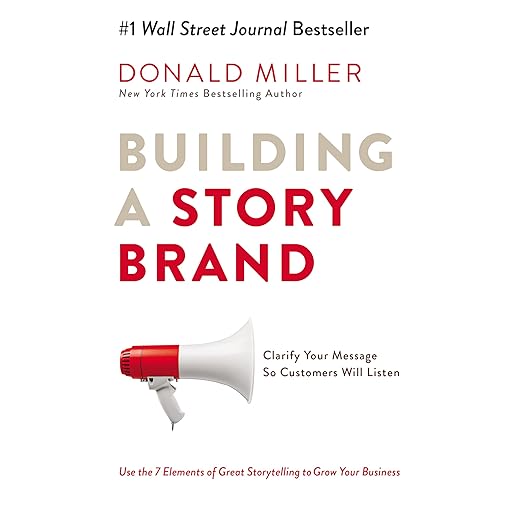
- “Building a StoryBrand” by Donald Miller: The perfect follow-up for clarifying your message. Miller’s framework will teach you how to craft the compelling words needed to fuel every stage of the Customer Value Journey you just learned.
- “They Ask, You Answer” by Marcus Sheridan: A deep dive into the content marketing philosophy this book introduces. It shows you exactly how to build immense trust and drive sales simply by obsessively answering your customers’ questions.
- “Dotcom Secrets” by Russell Brunson: For readers ready to master the art of the sale. This book is the ideal next step for optimizing the middle of the CVJ and building high-converting sales funnels.
Conclusion: A Highly Recommended Digital Marketing Guide
“Digital Marketing for Dummies” is a Trojan horse—a simple title that conceals a powerhouse of strategic marketing wisdom. Its true genius lies in the Customer Value Journey framework, which transforms a confusing mess of tactics into a single, elegant, and cohesive strategy. It provides a clear, logical, and actionable roadmap for attracting strangers and systematically turning them into a business’s most passionate fans.
Is it worth reading? Absolutely. For any business owner struggling to get results from their marketing or any newcomer to the field, this book is an indispensable guide. It provides the strategic foundation that is so tragically missing from most marketing conversations.
This book should be required reading for every small business owner, entrepreneur, and junior marketer. It will save you years of wasted effort and thousands of wasted dollars by teaching you how to build a marketing engine, not just a collection of random parts.
Have you read this book? Share your thoughts in the comments below