
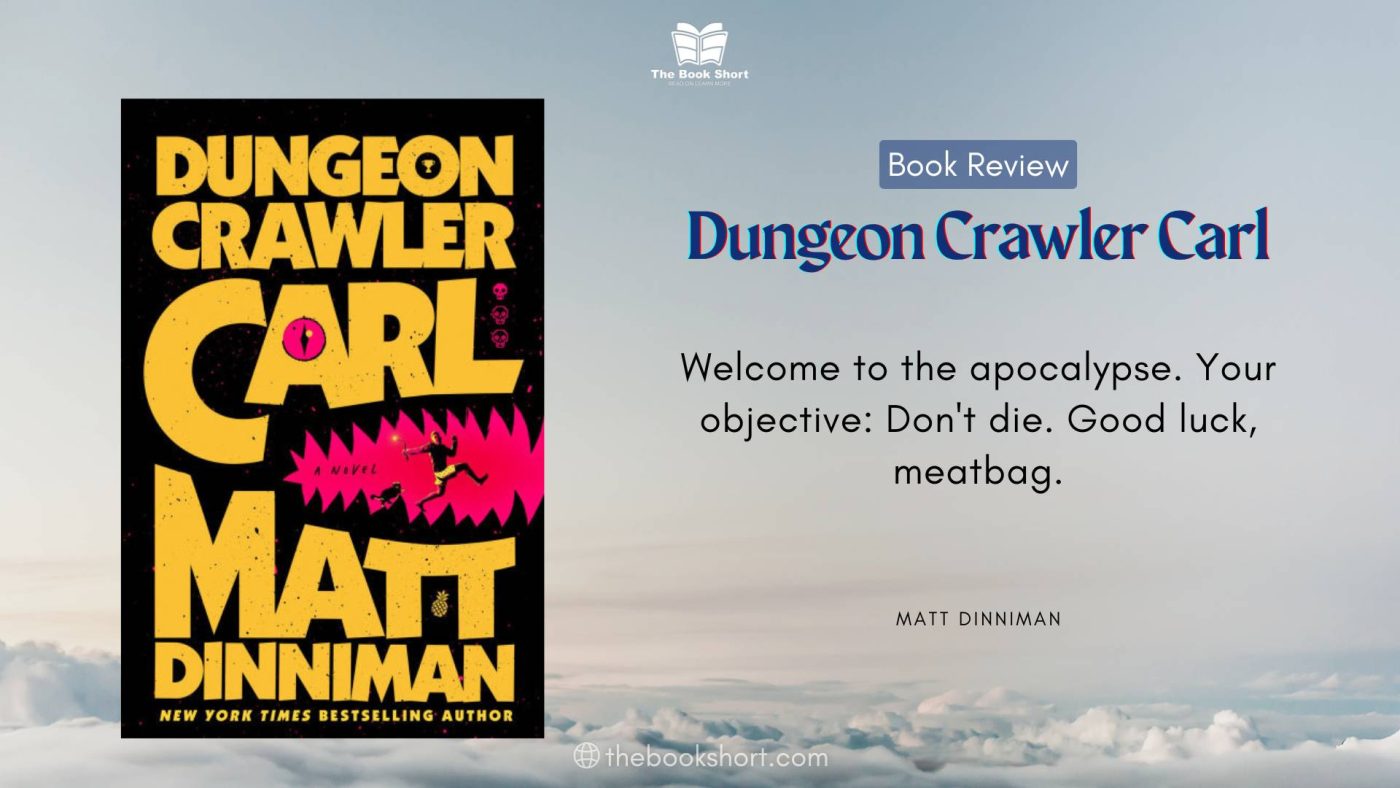
Earth’s gone! Forced into a deadly dungeon crawl, Carl and his cat Princess Donut must survive floor after floor in a brutal, hilarious galactic reality show. Get the book breakdown!
Earth is destroyed, and humanity is forced into a universe-spanning Dungeon sanctioned by an unknown intergalactic Syndicate. Dungeon Crawler Carl by Matt Dinniman plunges players into this brutal, televised game for survival and entertainment. I chose this series for its unique blend of grim dark humor, relentless action, and surprisingly deep exploration of morality within an absurd, high-stakes system. Its innovative take on the LitRPG genre makes it a compelling read.
Dungeon Crawler Carl Book: Essential Details
Here is some basic information about the first book in the Dungeon Crawler Carl series:
- Title: Dungeon Crawler Carl
- Author: Matt Dinniman
- Year of publication: 2020
- Genre: LitRPG, Science Fiction, Dark Comedy, Fantasy
- Number of pages: Varies by edition (approx. 400-500 pages for Book 1)
- Target audience: Readers who enjoy LitRPG, survival stories, dark humor, and unique system-based fantasy/sci-fi.
Dungeon Crawler Carl Book Summary: A Brutal Galactic Game
Dungeon Crawler Carl begins with an unthinkable catastrophe: the sudden destruction of Earth by seemingly artificial means. Simultaneously, a massive, multi-level structure erupts from the planet, which the survivors quickly learn is an intergalactic “Dungeon.” This Dungeon is part of a universe-wide, televised reality show run by mysterious entities called the Syndicate. Billions from countless species across the galaxy tune in to watch participants (Dungeon Crawlers) fight for survival, gain levels, acquire skills, find loot, and face increasingly deadly challenges floor by floor.
Our protagonist, Carl, is a normal guy who happens to be visiting his ex-girlfriend, Donut, on the fateful day. Donut isn’t just his ex; she’s also his ex’s pampered, spoiled cat. In the chaos, Carl and Donut are thrust into the Dungeon together, becoming reluctant partners and forced participants. The rules of the Dungeon are complex and constantly evolving, dictated by an omnipresent AI voiced by the charismatic, yet often cruel, Narrator. Every action, every kill, every discovery is broadcast and commented upon for the entertainment of the galactic audience.
The first few floors of the Dungeon are a baptism by fire. Carl and Donut (who surprisingly gains sapience and unique skills as a “Bonded Pet”) must quickly adapt to the Lithoverse system. This system governs everything: gaining experience points (XP) from kills, leveling up to increase stats and unlock new abilities, acquiring unique “Delve Awards” for completing specific challenges, finding powerful loot in chests and dropped by monsters, and navigating vendor stations to buy essential supplies or sell unwanted items.
Surviving the Early Floors
- Floor 1: The initial chaos. Survivors are panicked, unsure what’s happening. They learn the basics of the Lithoverse system through floating prompts and the Narrator’s explanations. The primary threat is other survivors, desperate and violent, alongside aggressive early-level monsters. Carl and Donut’s unlikely partnership is forged here through necessity and Donut’s surprising combat prowess. They learn about core mechanics like gaining XP, finding basic gear, and the brutal reality of player-vs-player combat.
- Floor 2: Introduces environmental hazards and more diverse monster types. The Dungeon mechanics deepen, offering more complex skills, crafting opportunities, and vendor interactions. Carl and Donut begin to understand the strategic depth required beyond just hack-and-slash. They form tentative alliances and rivalries.
- Floor 3 & Beyond: Each subsequent floor presents a new theme, new monsters, new challenges, and new rules. The stakes constantly rise. Carl, using his common sense and morbid ingenuity, starts to exploit the Dungeon’s rules and the Syndicate’s motivations for his advantage. Donut becomes an increasingly valuable companion with her unique skills and personality. The humor, often dark and self-deprecating, is a key element as they face ridiculous yet deadly scenarios.
Throughout the book, Carl and Donut not only fight monsters and other crawlers but also grapple with the moral implications of their situation. They witness unimaginable cruelty and despair, but also surprising acts of kindness and resilience among the survivors. The Syndicate and the Narrator manipulate events for maximum drama, highlighting the performative nature of their suffering. Carl develops a deep-seated hatred for the system and vows to survive not just for himself and Donut, but to potentially find a way to strike back.
The narrative follows Carl and Donut’s progression through the Dungeon, highlighting their resourcefulness, their growing bond, and Carl’s cynical commentary on the absurdity and horror surrounding them. The book concludes as they prepare to descend to the next, even more dangerous, floor, having established themselves as notable, if unconventional, participants in the eyes of the galactic audience. The first book sets the stage for a long, arduous, and often hilarious journey through the bowels of the Dungeon.
Dungeon Crawler Carl Book Analysis: System, Satire, and Survival
Dungeon Crawler Carl isn’t just a LitRPG; it’s a scathing satire wrapped in a brutally effective dungeon crawl. Matt Dinniman uses the familiar framework of levels, skills, and loot to explore themes of survival, morality under duress, and the nature of entertainment in a detached, voyeuristic society (the galactic audience).
Characters, Structure, and Key Arguments
The core of the story is the relationship between Carl and Donut. Carl is the audience surrogate, a relatable, slightly cynical everyman thrust into an impossible situation. His strength lies not in inherent power, but in his adaptability, pragmatism, and a stubborn refusal to give up or lose his humanity entirely, even while committing acts necessary for survival. Donut, the pampered cat turned sentient battle pet, provides much of the comedic relief through her diva personality and unexpected combat prowess, while also serving as Carl’s emotional anchor.
The structure is inherently episodic, dictated by the progression through Dungeon floors. Each floor presents a new biome, new mechanics, and new challenges, keeping the narrative fresh and unpredictable. Within each floor, the story often follows a quest-like structure as Carl and Donut navigate objectives dictated by the Dungeon or their own survival needs.
A key argument the book makes is a critique of reality television and the consumption of suffering as entertainment. The Syndicate and the Narrator are stand-ins for exploitative media producers, manipulating participants and events for ratings. The galactic audience, detached viewers betting on life and death, represents a society desensitized to violence and suffering. The book forces the reader to confront the uncomfortable parallels between this fictional universe and aspects of our own media landscape. It also explores the question of what humanity is capable of when pushed to the absolute brink, highlighting both depravity and surprising resilience.
Writing Style & Content Quality
Dinniman’s writing style is a major strength. It’s conversational, fast-paced, and packed with dark humor. The first-person perspective from Carl allows for constant internal monologue, ranging from strategic planning to bewildered exasperation and genuinely funny observations. The humor often derives from the juxtaposition of mundane modern sensibilities with the absurd, high-stakes fantasy environment. The system mechanics are integrated seamlessly through UI prompts and the Narrator’s announcements, avoiding overly dense info dumps common in some LitRPG. The quality of the world-building, while focused initially on the Dungeon itself, is rich with implied lore about the Syndicate and the Lithoverse. The action sequences are exciting and varied, and the dialogue, particularly between Carl and Donut, is sharp and entertaining.
Notable Quotes from the Book
Here are a few memorable quotes that capture the tone and themes:
- “Welcome to the Apocalypse. I hope you brought cash.” (This sets the tone perfectly, blending the horrific with the mundane/capitalistic)
- “She was a princess. A pampered, spoiled, purebred princess. Now she was a pampered, spoiled, purebred princess who could rip your throat out.” (Illustrates Donut’s transformation and personality)
- “Oh, Dungeon! Oh, goddamn Dungeon! What fresh hell is this?” (A recurring sentiment capturing the relentless absurdity of their situation)
- “The Syndicate wanted entertainment. Carl would give them entertainment, even if it killed him. Especially if it killed him.” (Highlights Carl’s defiance and adaptation)
These quotes exemplify the book’s blend of humor, character, and the brutal reality of the Dungeon.
Dungeon Crawler Carl Book Review: An Expert’s Personal Take
My personal impression of Dungeon Crawler Carl is overwhelmingly positive. It’s a book that defies easy categorization, blending genres in a way that feels fresh and exciting. The biggest advantage is its unique voice and tone. The dark humor lands perfectly, providing much-needed levity in a story that is otherwise quite grim. The characters, particularly Carl and Donut, are incredibly engaging and their dynamic is the heart of the series. The constant novelty of the Dungeon floors keeps the pace high and prevents the typical LitRPG grind from feeling repetitive. The system mechanics are explained clearly and used creatively by the author, often in ways Carl himself exploits.
If there’s a slight disadvantage, it might be that the sheer volume of pop culture references and Carl’s internal monologue could be overwhelming for some readers, though I personally found it added to the charm. The brutal nature of the Dungeon and some explicit descriptions might also not be for everyone.
The readability level is high. Dinniman’s prose is accessible and engaging. It’s suitable for readers who enjoy fast-paced action, unique speculative fiction concepts, and don’t shy away from violence and dark humor. It’s a perfect fit for fans of the LitRPG genre looking for something with more personality and satire.
The practical value lies less in direct life lessons and more in its exploration of resilience, adaptation, and finding moments of humanity and humor even in the most desperate circumstances. It encourages thinking critically about reality television and the consumption of others’ suffering. While you likely won’t use skill points in real life, the characters’ resourcefulness and problem-solving under pressure can be inspiring. It’s primarily a book for entertainment, but it’s intelligent entertainment that prompts reflection.
Dungeon Crawler Carl Book Comparison: Similar Titles
Dungeon Crawler Carl stands out in the LitRPG genre for its heavy emphasis on dark comedy and satire, but it shares DNA with other popular series.
It can be compared to Ascension by Travis Bagwell for its focus on a single protagonist surviving a system-based, apocalyptic scenario with unique challenges on each “floor” or level. Both feature protagonists gaining power within a strict rule set.
Readers who enjoy the sheer scale and system complexity might also like He Who Fights With Monsters by Shirtaloon, another popular LitRPG with a snarky protagonist navigating a new world governed by game mechanics, though He Who Fights With Monsters leans more into traditional fantasy/isekai elements rather than sci-fi/apocalypse.
For the dark humor and cynical protagonist facing extreme odds, The Martian by Andy Weir shares a similar tone of a resourceful individual using ingenuity and wit to survive an impossible situation, though The Martian is hard sci-fi without the game system.
If readers liked the unique partnership and character-driven aspect, they might enjoy series where companions play a crucial role in survival, like The Wandering Inn by Pirateaba, though that series is much broader fantasy and slice-of-life alongside action.
Ultimately, Dungeon Crawler Carl‘s blend of specific LitRPG mechanics, brutal sci-fi premise, and unique dark humor makes it a distinctive entry, but fans of post-apocalyptic LitRPG or witty survival stories will likely find a lot to love.
Dungeon Crawler Carl Book: Conclusion and Recommendations
Dungeon Crawler Carl offers outstanding value through its innovative blend of genres, sharp writing, and unforgettable characters. Its dark humor and satirical edge elevate it beyond a typical dungeon crawl, making it a truly unique reading experience.
Is it worth reading? Absolutely, if the premise and tone appeal to you. It’s a rollercoaster of action, comedy, and surprising emotional depth.
Who should read it? Fans of LitRPG looking for a fresh, character-driven take on the genre; readers who enjoy dark comedy and satire; anyone looking for a fast-paced, high-stakes survival story with a unique premise. If you’re sensitive to gore, profanity, or extreme situations, be aware it doesn’t pull any punches.
Have you read Dungeon Crawler Carl? Share your thoughts on this wild ride in the comments below!