
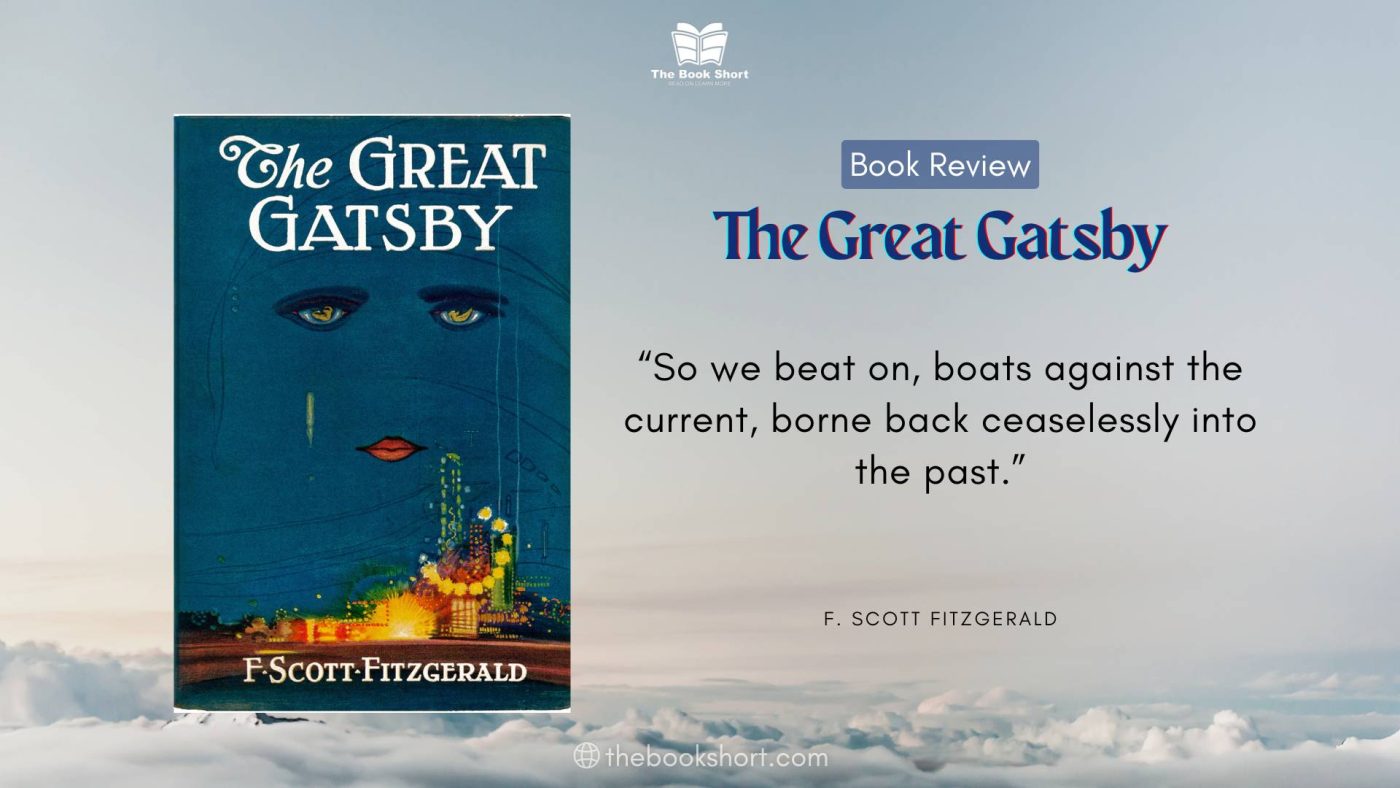
Explore F. Scott Fitzgerald’s The Great Gatsby, a timeless American classic on love, wealth, and the elusive dream. Read our deep dive and review.
Step into the shimmering, yet ultimately tragic, world of the Jazz Age with F. Scott Fitzgerald’s quintessential American novel, The Great Gatsby. This isn’t just a story; it’s an atmospheric plunge into a decadent era, a piercing exploration of illusion, overwhelming desire, and the profound decay of the American Dream. Analyzing this classic reveals its haunting beauty, exquisite prose, and timeless themes that resonate deeply even today.
As a literary editor and avid reader, The Great Gatsby has always held a particular fascination for me. Published in 1925, it perfectly captures the reckless spirit and underlying anxieties of the Roaring Twenties, while simultaneously delving into universal human aspirations and failures. Its unique and enduring value lies not just in its compelling, tragic narrative, but in Fitzgerald’s unparalleled ability to weave profound social commentary with lyrical, symbolic language, making it a compelling read that demands careful consideration. Let’s delve into why this book remains a cornerstone of American literature.
Basic Information About F. Scott Fitzgerald’s The Great Gatsby
To start our exploration of this iconic work, here are the foundational details you should know about the book:
- Title: The Great Gatsby
- Author: F. Scott Fitzgerald
- Year of Publication: 1925
- Genre: Novel, American Literature, Tragedy, Jazz Age Fiction, Social Commentary
- Page Count: Varies by edition (typically a concise 150-200 pages, making every word count)
- Target Audience: Adults, students of American literature, readers interested in 1920s history, social critique, classic novels exploring themes of wealth, class, and the American Dream.
The Great Gatsby Book Summary: A Gilded Cage of Illusion
The Great Gatsby unfolds through the retrospective lens of Nick Carraway, a young man from the sensible Midwest who arrives in the ostentatious world of West Egg, Long Island, in the summer of 1922. This locale, home to the newly rich, becomes Nick’s vantage point into the lavish, yet morally vacuous, lives of his neighbors, particularly the enigmatic Jay Gatsby. Nick’s initial goal is simply to learn the bond business, but fate, or perhaps destiny, quickly pulls him into a dramatic and ultimately tragic story.
Settling in West Egg
Nick secures a modest cottage perched ironically next to the sprawling, elaborate mansion owned by Jay Gatsby. Gatsby is a figure shrouded in rumor and mystery, notorious for hosting opulent, uninhibited parties every Saturday night that draw crowds from all walks of life, though few ever seem to meet the host himself.
Encounters with the Old Money Elite
Before becoming entangled with Gatsby, Nick reconnects with his second cousin, Daisy Buchanan, who resides across the bay in the established, old-money enclave of East Egg. She lives with her immensely wealthy, arrogant, and physically imposing husband, Tom Buchanan. During his first visit, Nick immediately senses the undercurrent of tension and profound unhappiness beneath the veneer of their privileged existence. He also quickly learns of Tom’s brazen affair with Myrtle Wilson, the wife of George Wilson, who runs a garage in the desolate, industrial wasteland known as the Valley of Ashes – a stark symbolic contrast to the Eggs.
Unveiling the Mystery of Jay Gatsby
Nick finally receives an invitation to one of Gatsby’s legendary parties. Amidst the swirling jazz music, flowing champagne, and superficial chatter, he meets the host. Gatsby is initially surprisingly reserved and formal, a stark contrast to the wild revelry he orchestrates. As Nick gets to know him, the truth behind Gatsby’s elaborate lifestyle and relentless party-throwing is slowly revealed: it’s all a grand, desperate performance orchestrated to win back Daisy Buchanan, the woman he loved years ago before leaving for war, before she married the wealthy Tom. Gatsby’s immense fortune and extravagant lifestyle are merely tools in his single-minded pursuit of a past that cannot be recaptured.
The Rekindled Affair and Escalating Tensions
Gatsby cleverly uses Nick as a bridge to arrange a reunion with Daisy. Their first meeting in years is awkward but quickly reignites their former passion. Gatsby and Daisy begin a clandestine affair, meeting frequently at Nick’s cottage or Gatsby’s mansion, attempting to recreate a love that existed only in Gatsby’s idealized memory. Gatsby’s dream isn’t just about being with Daisy; it’s about erasing the intervening years and restoring things exactly as they were, a clear sign of his fatal inability to accept reality.
The simmering tensions boil over on a sweltering summer afternoon in a suite at the Plaza Hotel in New York City. During a brutal confrontation, Tom, feeling his control slipping, exposes the shady foundations of Gatsby’s wealth, revealing his connections to organized crime and bootlegging. Gatsby desperately pressures Daisy to declare that she never loved Tom, but Daisy, torn between Gatsby’s passionate but unrealistic love and Tom’s brutal, stable reality (and their shared history and social standing), falters. She cannot fully renounce her life with Tom, and Gatsby’s carefully constructed dream begins to crumble under the weight of reality.
The Tragic Climax
On the drive back from the city, the emotional turmoil leads to tragedy. Daisy, visibly shaken and driving Gatsby’s car, accidentally strikes and kills Myrtle Wilson, who impulsively runs into the road in the Valley of Ashes. Instead of taking responsibility, Tom cunningly manipulates the heartbroken George Wilson, implying that Gatsby was not only the driver of the death car but also Myrtle’s secret lover – a calculated lie designed to protect himself and Daisy.
The Isolation of Gatsby’s End
Consumed by grief and fueled by Tom’s deception, George Wilson tracks Gatsby to his mansion. He finds Gatsby floating in his pool and shoots him before turning the gun on himself. Nick is left to navigate the devastating aftermath, increasingly repulsed by the carelessness and moral bankruptcy of the wealthy elite, particularly Tom and Daisy, who retreat into their world of money and privilege, leaving Nick to handle the details of Gatsby’s funeral. Tragically, few people attend, a stark testament to Gatsby’s ultimate isolation despite his outward popularity.
Nick’s Profound Disillusionment
The novel concludes with Nick reflecting on the events of that fateful summer, the true meaning of Gatsby’s life, the corruption of the American Dream he witnessed, and the profound disillusionment that has changed him forever. He recognizes Gatsby’s unique “greatness” not in his wealth or status, but in his extraordinary capacity for hope, his unwavering faith in his dream, however misguided. This stands in stark contrast to the casual indifference, moral emptiness, and corrosive cynicism of the established upper class. Repulsed by the moral decay of the East, Nick decides to return to the relative simplicity and decency of the Midwest.
In-Depth Analysis: Unpacking the Themes and Style of The Great Gatsby
The Great Gatsby is far more than a romantic tragedy; it’s a searing critique of American society during a period of unprecedented prosperity and shifting values. Fitzgerald masterfully explores complex themes through brilliant characterization, structure, and evocative prose.
Characters, Structure, and Major Themes
- Characters as Symbols: The characters in Gatsby function almost as archetypes, embodying different facets of the Jazz Age experience and the flawed pursuit of the American Dream. Jay Gatsby is the ultimate symbol of aspiration, ambition, and the painful yearning for reinvention, yet tragically chained to an idealized past. Daisy Buchanan represents the tantalizing, yet ultimately unattainable and corrupted, object of desire, embodying the allure and destructive power of old money and societal inertia. Tom Buchanan is the embodiment of brute force, entitlement, hypocrisy, and the destructive power of unchecked privilege. Nick Carraway serves as the crucial observer and moral compass (albeit an increasingly weary one), his grounded Midwestern sensibility providing a necessary contrast to the moral vacuum of the East. He is our guide, and his transformation is central to the story.
- Narrative Structure: The novel employs a retrospective narrative structure, with Nick recounting the events of the summer of 1922 some time later. This allows for layers of reflection, subtle foreshadowing, and the gradual unveiling of Gatsby’s mysterious past and motivations. The concise, seven-chapter structure builds with an almost inevitable, claustrophobic intensity, culminating in the devastating events of chapters 7 and 8, before winding down in the reflective final chapter.
- Central Themes: Fitzgerald’s core arguments revolve around the corruption of the American Dream when solely focused on wealth and materialism. The novel ruthlessly critiques the moral decay and profound carelessness of the wealthy elite, highlighting how their privilege allows them to escape consequences. It also deeply explores the deceptive power of illusion, the danger of idealizing the past, and the poignant contrast between genuine hope and cynical disillusionment.
Fitzgerald’s Masterful Writing Style
Fitzgerald’s prose is widely considered one of the greatest strengths of The Great Gatsby, elevating the story beyond simple plot. His writing is lyrical, deeply evocative, and rich with potent symbolism. He paints vivid sensory images, whether describing the dazzling, superficial extravagance of Gatsby’s parties or the desolate, ash-choked landscape of the Valley of Ashes. The language is precise, economical, and incredibly effective at conveying complex emotional landscapes and social dynamics with striking clarity.
The quality of the content lies in its profound thematic depth and unforgettable character portrayals, all filtered through Nick’s increasingly jaded perspective. Fitzgerald perfectly captures the essence of the 1920s – the frenetic energy, the forbidden pleasures of Prohibition, the flappers, the booming economy, and the underlying restlessness – while simultaneously crafting a narrative about human nature and the pursuit of dreams that remains timeless.
What truly sets The Great Gatsby apart from many other novels of its era is Fitzgerald’s seamless fusion of sharp social critique with a tragic, romantic narrative, all delivered in language that is both elegant and deeply symbolic. It never feels heavy-handed or overly sentimental, instead presenting a nuanced, complex reality that lingers in the reader’s mind long after the final page.
Iconic Quotes from The Great Gatsby
The novel is famous for its quotable lines that encapsulate its core themes and character insights:
- “Whenever you feel like criticizing any one,” he told me, “just remember that all the people in this world haven’t had the advantages that you’ve had.” – Nick’s father’s advice, setting a foundational irony for Nick’s observations.
- “I hope she’ll be a fool—that’s the best thing a girl can be in this world, a beautiful little fool.” – Daisy Buchanan, a chilling statement reflecting the constraints and expectations placed upon women in her social class.
- “Gatsby believed in the green light, the orgastic future that year by year recedes before us.” – Nick Carraway, articulating the central symbol of Gatsby’s boundless, yet elusive, dream.
- “So we beat on, boats against the current, borne back ceaselessly into the past.” – Nick Carraway, the novel’s famous closing lines, capturing the powerful, often detrimental, pull of the past and the struggle against it.
Evaluation and Personal Review: Is The Great Gatsby Worth Your Time?
Reading The Great Gatsby is a truly immersive and intensely atmospheric experience. Its advantages are manifold: the sheer beauty and power of Fitzgerald’s language, the compelling and ultimately heartbreaking story, and the powerful, enduring themes that feel as relevant now as they did a century ago. It’s remarkably concise, a true testament to Fitzgerald’s craft – not a single word feels wasted. For some modern readers, the primary disadvantage might be its laser focus on the very specific socio-economic bubble of the 1920s East Coast elite, but the underlying human desires, flaws, and societal critiques are universal.
The readability level could be described as moderately accessible but requiring thoughtful engagement. While the vocabulary isn’t overly complex, the prose is dense with symbolism, nuance, and emotional subtext, demanding attention to fully appreciate its layers. It’s not a casual beach read but a novel that rewards careful, reflective reading and is a staple for literary analysis in academic settings.
The Great Gatsby is highly recommended for anyone interested in:
- Foundational classic American literature
- The history and culture of the Roaring Twenties
- Nuanced stories about wealth, social class, and moral decay
- Literary tragedies exploring love, dreams, and disillusionment
- Experiencing truly beautiful and symbolic narrative prose
The practical value of engaging with this book lies in its ability to sharpen a reader’s critical lens, prompting reflection on the often-illusory nature of dreams, the complex influence of wealth, and the crucial distinction between superficial appearance and genuine substance. It serves as a powerful, poignant cautionary tale about the perils of living tethered to the past and the corrosive effects of inherited privilege and moral indifference. While it doesn’t offer explicit life lessons, it subtly but profoundly encourages a more discerning perspective on society and human aspiration.
Comparing The Great Gatsby to Similar Literary Works
The Great Gatsby stands as a unique work, but it shares thematic resonance and historical context with other significant novels from the modernist period and beyond that explore the American experience, wealth, and social dynamics.
- Exploring the Jazz Age/Lost Generation: Readers captivated by the atmosphere and setting of Gatsby might find kindred spirits in Fitzgerald’s other works, such as Tender Is the Night (a complex psychological portrait of American expatriates in the 20s) or his short stories collected in Flappers and Philosophers. The Sun Also Rises by Ernest Hemingway offers a different, more stark, portrayal of the “Lost Generation” in the post-WWI era.
- Critiques of Wealth and Society: For novels that dissect the intricacies of American class and wealth, consider The Age of Innocence by Edith Wharton, which examines the rigid constraints of old New York society in the late 19th century. Arthur Miller’s play Death of a Salesman, written decades later, offers a poignant, post-war critique of the failed American Dream through a different lens. Even contemporary works like Kevin Kwan’s Crazy Rich Asians or Lauren Weisberger’s The Devil Wears Prada, while vastly different in tone, touch upon themes of immense wealth, social hierarchy, and the pursuit of status.
- Narrators as Observers: If you appreciated Nick Carraway’s role as an outsider looking into a specific, insulated world, you might enjoy novels with similar narrative perspectives, such as Kazuo Ishiguro’s The Remains of the Day, where a butler’s meticulous recounting of his life reveals larger societal and personal truths.
If this Great Gatsby book analysis and summary resonated with you, exploring some of these comparative titles could offer further insights into the literary landscape and enduring themes it tackles.
Conclusion and Recommendations: Why The Great Gatsby is a Must-Read Classic
F. Scott Fitzgerald’s The Great Gatsby rightfully endures as a literary masterpiece. Its unparalleled prose, rich symbolic tapestry, and incisive commentary on the American Dream, wealth, and class structure solidify its place as a foundational text in American literature. Its outstanding value lies in its timeless, poignant portrayal of human aspiration, the seductive power of illusion, and the crushing weight of disillusionment, all set against the vividly rendered backdrop of a fascinating historical era.
Without hesitation, I recommend reading The Great Gatsby. It is a powerful, moving, and remarkably insightful novel that will undoubtedly spark meaningful reflection on universal human experiences and societal structures. It is particularly valuable for students seeking to understand the evolution of American literature and for any reader who appreciates nuanced storytelling, complex characters, and writing that is both beautiful and profound. Don’t let its status as a “classic” intimidate you; its relatively short length and compelling narrative make it an accessible entry point into deeper literary exploration.
Have you journeyed through the gilded world of West Egg? Share your thoughts on The Great Gatsby book review, analysis, or summary in the comments below – I’d love to hear your perspective!