
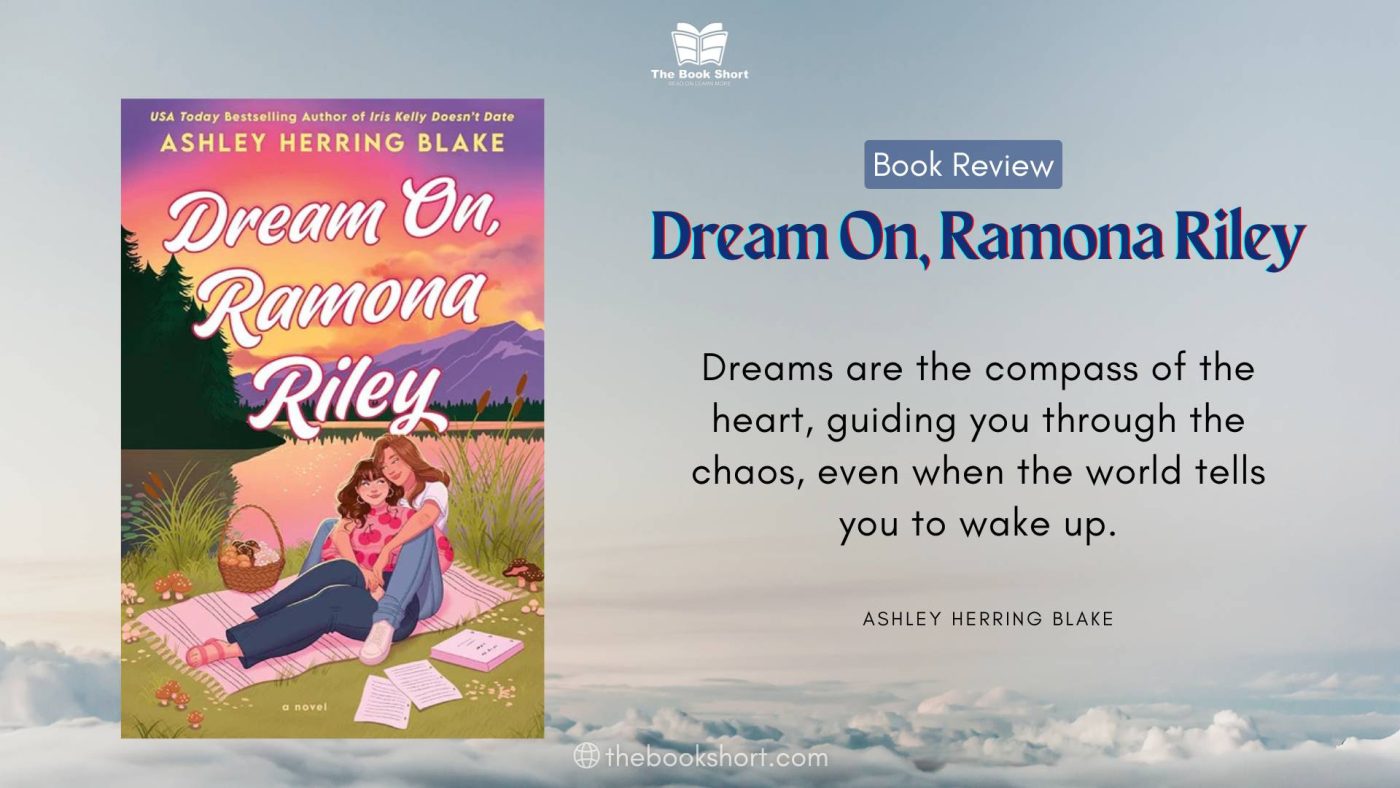
Dream On, Ramona Riley Review: A Journey of Second Chances and Finding Your True North
Step into the world of Ramona Riley, a woman whose life blueprint is meticulously drawn, only to be beautifully redrawn by fate. Why delve into this story? Because Ashley Herring Blake masterfully explores the tender, often messy, space where carefully laid plans collide with the unpredictable richness of life, revealing a more authentic path forward. Prepare for a truly heartwarming and insightful tale of unexpected detours leading to profound growth.
Dream On, Ramona Riley: Essential Details
- Title: Dream On, Ramona Riley
- Author: Ashley Herring Blake
- Publication Year: May 13, 2025
- Genre: Contemporary Romance / Women’s Fiction
- Length: 412 pages
- Perfect For: Adult readers seeking a blend of heartfelt romance, significant character development, and stories centered on self-discovery, second chances, and balancing ambition with life’s unexpected gifts.
Dream On, Ramona Riley: Plot Synopsis
Dream On, Ramona Riley introduces us to Ramona Riley, a woman whose existence is a testament to rigorous planning and singular focus. As a highly accomplished chef, Ramona’s sights are set squarely on one monumental goal: launching her own restaurant in her beloved hometown of Knoxville. Every choice, every sacrifice, has been calibrated for this culinary dream. Her life is a study in discipline, with career aspirations taking precedence over nearly everything else, including personal relationships and romance.
The narrative opens with Ramona standing on the precipice of realizing her long-held ambition – securing the ideal location and finalizing the intricate plans for her restaurant. However, life, in its unpredictable wisdom, intervenes. A sudden and deeply personal family crisis strikes: her sister, grappling with severe burnout, desperately needs Ramona’s help caring for her young daughter, Vada.
The Unexpected Detour
Reluctantly, Ramona hits pause on her cherished restaurant dreams and moves in with her sister and niece. This abrupt relocation yanks Ramona from her meticulously controlled environment, plunging her into the sometimes chaotic, always unpredictable reality of family life and the demands of childcare. It’s a stark and challenging contrast to the structured, high-pressure world of professional kitchens she knows so well. The initial adjustment is far from smooth as Ramona navigates the unfamiliar territory of bedtime stories, school pickups, and the complex emotional landscape of a child, all while wrestling with the gnawing anxiety of her own deferred aspirations.
A Chance (Re)Encounter
Amidst this profound disruption, Ramona’s path crosses unexpectedly with her high school nemesis, Everett “Rhett” Newton. Gone is the seemingly effortless rival from her past; Rhett is now a genuinely charming, successful, and content single father who runs a popular local bakery. Their shared history is colored by years of simmering competitive tension from their school days, when Rhett always seemed to glide through life with ease while Ramona felt she had to relentlessly fight for every single success.
Initially, their interactions crackle with the lingering charge of their old rivalry, expressed through witty banter and playful jabs. However, as they are drawn together – first by proximity, then by their shared connection to single parenthood (Ramona’s temporary, Rhett’s permanent) and the fabric of their local community – their dynamic undergoes a subtle yet significant shift. Ramona begins to witness a softer, more authentic side of Rhett – his deep devotion to his daughter, his quiet passion for baking, and his genuinely easygoing nature. Rhett, in turn, sees beyond Ramona’s formidable professional facade, recognizing her underlying vulnerability and a deep, often hidden, capacity for love and care that she rarely shows the world.
Shifting Priorities and Self-Discovery
The precious, often messy, time spent with Vada and the steadily evolving relationship with Rhett compel Ramona to confront the narrowness of her previous perspective. She begins to understand that her relentless pursuit of her dream restaurant, while valid, has come at the cost of neglecting other vital aspects of a full life – connection, family, joy found outside of work. The simple, repetitive routine of caring for Vada introduces a different kind of fulfillment, one less tied to external achievement and more rooted in presence, connection, and unconditional love. Her deepening interactions with Rhett challenge her long-held conviction that professional success is the sole metric of a life well-lived.
Ramona starts to seriously question if her dream restaurant remains the only dream she wants to chase, or if there’s now room, and perhaps a deeper desire, for other aspirations and relationships. The narrative beautifully explores her internal conflict as she grapples with the profound possibility of redefining what success and happiness truly mean to her now. Is the life she so meticulously envisioned the one she genuinely desires any longer?
The Turning Point and Resolution
As Ramona’s sister’s situation begins to stabilize and the time approaches when Ramona could realistically return to her original, carefully constructed plan, she faces a pivotal decision. She must choose between reverting to her old, singularly focused path or courageously embracing the new possibilities, perspectives, and profound connections she has discovered during her unexpected detour. This isn’t merely a career choice; it’s a fundamental decision about who she wants to be and what she values most deeply. The climax centers on Ramona making a choice that reflects her significant growth and fundamentally changed perspective on life’s priorities.
The resolution sees Ramona forging a new path – one that doesn’t necessarily abandon her passion for food but creatively integrates it with her newfound understanding of the paramount importance of family, meaningful connection, and personal fulfillment. While the specific details of her initial restaurant dream may shift, the core of her identity expands, revealing a greater capacity for love, joy, and adaptability. The story concludes with Ramona having found a balance, realizing with poignant clarity that sometimes, the most beautiful and fulfilling dreams are the ones that bloom unexpectedly, ones we didn’t even know we were capable of dreaming.
Dream On, Ramona Riley: In-depth Analysis
Dream On, Ramona Riley transcends a simple romance narrative; it’s a deeply thoughtful exploration of ambition, the evolution of identity, and the transformative power of life’s unexpected turns. Ashley Herring Blake skillfully intertwines themes of self-discovery, complex family dynamics, and the universal struggle of balancing personal aspirations with life’s unavoidable demands.
Characters, Structure & Core Themes
The narrative structure effectively mirrors Ramona’s journey, moving from a life strictly controlled by career ambition to one opened up by forced proximity to family and an unforeseen romantic connection. The core thematic argument is a compelling one: that sometimes, the most significant and valuable discoveries about ourselves and what truly matters are found not on the planned route, but during the biggest detours.
- Key Characters:
- Ramona Riley: Introduced as fiercely driven, disciplined, and emotionally guarded. Her character arc is the beating heart of the story, charting a powerful transformation from prioritizing external markers of success to embracing the value of genuine connection and inner fulfillment. Her initial, almost comical, resistance to the demands of caring for Vada serves as a clear benchmark for just how far she grows throughout the book.
- Everett “Rhett” Newton: Functions brilliantly as Ramona’s seemingly laid-back foil, embodying a different, less conventional definition of success rooted in joy, family, and community. His historical rivalry with Ramona adds a delicious layer of tension and context to their evolving dynamic, making their connection feel earned.
- Vada: Ramona’s niece acts as the primary catalyst for Ramona’s profound shift in perspective. Her simple, unwavering presence and needs force Ramona to confront her own emotional limitations and open her heart to a form of unconditional love she hadn’t previously prioritized.
- Narrative Structure: The story unfolds in a largely linear fashion, charting Ramona’s time living with her sister and Vada. Blake artfully weaves together Ramona’s present-day struggles and burgeoning romance with insightful flashbacks or reflections on her past ambition and competitive history with Rhett. This layering provides crucial context for her current mindset and internal battles. The temporary nature of her living situation inherently creates narrative tension and a palpable sense of a ticking clock, forcing Ramona’s eventual decision.
- Core Thematic Arguments:
- Life’s unplanned detours are often not obstacles, but crucial opportunities for significant personal growth and deeper self-discovery.
- True success is multifaceted, encompassing far more than just professional achievements; it richly includes relationships, genuine connection, and the ability to find joy in the present moment.
- Clinging rigidly to predetermined plans can ironically blind us to, and prevent us from embracing, new and potentially more fulfilling possibilities.
- Family bonds, even when challenging or unexpected, can provide an essential foundation for love, understanding, and personal transformation.
Writing Style & Emotional Depth
Ashley Herring Blake’s writing style in Dream On, Ramona Riley is consistently engaging, sharp, and deeply empathetic. She possesses a remarkable talent for crafting complex, highly relatable characters whose internal struggles feel utterly authentic.
- Language: The language is accessible, warm, and frequently infused with delightful humor, particularly evident in the sparkling banter between Ramona and Rhett. Blake masterfully utilizes internal monologue to convey Ramona’s anxieties, doubts, and the nuanced evolution of her feelings. Descriptions, especially those relating to the worlds of food and baking, are wonderfully vivid, sensory, and transportive.
- Style: Blake achieves a beautiful balance between lighthearted humor and genuine emotional depth. The narrative flows seamlessly, effortlessly drawing the reader into Ramona’s unfolding experience. She handles the sensitive themes of burnout, family strain, and the complex process of redefining personal success with grace and nuance.
- Content Quality: The overall content quality is exceptionally high. The plot is thoughtfully paced, the character development feels organic and believable, and the emotional beats resonate powerfully. The romance between Ramona and Rhett feels genuinely earned, blossoming authentically from their shared history, present circumstances, and growing mutual respect. The exploration of Ramona’s internal conflict – the tug between her old dreams and new desires – is particularly well-executed and compelling.
What Makes This Book Shine
What truly makes Dream On, Ramona Riley stand out within the contemporary romance and women’s fiction landscape is its profound emphasis on the protagonist’s internal journey and the slightly unconventional nature of the central “romance.” While the relationship with Rhett is undoubtedly significant and charming, the real, transformative love story here is Ramona’s journey back to herself, her discovery of a broader, more compassionate definition of happiness and fulfillment. The book doesn’t rely solely on the romantic relationship as the engine of change; instead, it’s the cumulative effect of her forced family responsibility, the unexpected emotional connection with Rhett, and the quiet, transformative moments spent simply caring for Vada that fundamentally reshapes Ramona. It’s a powerful narrative about finding your dream, even when that dream looks drastically different than you ever planned, with romance serving as a vital, but not exclusive, component of that self-discovery. The portrayal of a fiercely driven, career-focused woman having her meticulously planned world gently, yet completely, upended feels incredibly authentic and deeply resonant for many readers navigating their own life paths.
Illustrative Quotes from the Book (Themes Reflected)
- “My restaurant wasn’t just a building; it was the blueprint for my entire life.” (Captures Ramona’s initial rigid mindset and identification with her career goal).
- “Maybe life wasn’t meant to be a perfectly calibrated recipe. Maybe it was more like baking with a toddler – messy, unpredictable, and surprisingly sweet.” (Reflects Ramona’s dawning realization about embracing life’s imperfection and finding joy in the unexpected).
- “He had the kind of ease I’d always envied, the kind that came from not having to fight for every single thing.” (Highlights Ramona’s initial perception of Rhett and the contrast with her own perceived struggles, setting the stage for her understanding of his different kind of strength).
Dream On, Ramona Riley: Critical Evaluation & Expert Review
Dream On, Ramona Riley is a truly delightful and surprisingly poignant read that lingers long after the final page. From the very beginning, Ramona’s intensely focused nature and almost singular dedication to her career goal are presented with such clarity that they feel both entirely understandable and, at times, a little heartbreakingly isolating, making her subsequent journey of softening and opening up all the more compelling and rewarding to witness.
Key Strengths:
- Exceptional Character Development: Ramona’s transformation is handled with remarkable skill and authenticity. You genuinely feel and believe in her growth from a place of rigid ambition to becoming a more open, emotionally connected, and adaptable person.
- Authentic Emotional Resonance: The book bravely delves into the genuine messiness of family crises, the real anxiety that accompanies stalled life plans, and the inherent vulnerability of forming unexpected connections. It feels deeply true to life.
- Universally Relatable Themes: The core struggles presented – balancing career ambition with a desire for personal life, navigating life’s unexpected swerves, and the ongoing process of redefining success – are themes that resonate deeply with a wide audience.
- Charming & Earned Romance: The enemies-to-lovers dynamic between Ramona and Rhett is executed with warmth, wit, and undeniable chemistry. Their relationship builds believably, grounded in their shared history and the unique circumstances that bring them together. Rhett, in particular, is a wonderfully portrayed love interest – grounded, supportive, and genuinely good.
- Heartwarming Family Moments: The interactions between Ramona and young Vada are incredibly sweet, often funny, and absolutely fundamental to Ramona’s emotional opening and transformation.
Considerations:
- Ramona’s initial portrayal as intensely single-minded and almost pathologically career-focused might be challenging for some readers to connect with immediately, though it is crucial for the impact of her later character arc.
- While necessary for the plot catalyst, some readers might find the specifics of the sister’s crisis slightly less developed compared to Ramona’s personal journey and the romance.
Overall Readability: This book is exceptionally readable. The prose is clear, engaging, and the pacing is perfectly judged, making it a book you can easily lose yourself in for hours.
Ideal Reader: This book is ideally suited for adult readers who enjoy contemporary romance but also deeply appreciate narratives with significant character depth, emotional complexity, and a focus on personal growth journeys. It will particularly resonate with anyone who has ever felt their life plans unexpectedly disrupted, or who is actively grappling with finding a balance between professional ambitions and personal fulfillment. Fans of authors known for writing witty, emotionally resonant women’s fiction with a strong, believable romantic element will find much to love here.
Practical Insights: Dream On, Ramona Riley offers valuable food for thought on the importance of adaptability in life, the potential limitations of rigid adherence to plans, and the unexpected richness that comes from embracing new connections and responsibilities. It serves as a gentle yet powerful reminder that sometimes, the most fulfilling and authentic life is not the one we meticulously planned out step-by-step, but the one that gracefully unfolds when we remain open to its possibilities. The book encourages reflection on our own core values and what truly constitutes a successful and happy existence.
Comparing Dream On, Ramona Riley to Similar Books
Dream On, Ramona Riley sits comfortably within the popular subgenres of contemporary romance and women’s fiction that explore personal transformation, career pivots, and the impact of unexpected family circumstances.
Compared to purely plot-driven contemporary romance novels, it offers a deeper, more introspective focus on the protagonist’s internal journey and the complex process of re-evaluating long-held life goals. It’s less solely about the mechanics of falling in love and more about how love, in its various forms (romantic, familial), acts as a catalyst for profound self-discovery.
Readers who appreciate stories about driven women whose lives are unexpectedly altered, leading them to find love and fulfillment in ways they never anticipated, might find resonance with titles such as:
- The Love Hypothesis by Ali Hazelwood (Features a highly career-focused STEM protagonist whose unexpected relationship alters her professional trajectory and personal life).
- Beach Read by Emily Henry (Involves creative professionals in forced proximity, witty banter, and significant underlying emotional depth and personal reckoning).
- Evvie Drake Starts Over by Linda Holmes (Explores a woman rebuilding her life after loss, with an unexpected person entering her orbit, focusing heavily on personal healing alongside a developing romance).
- Hello Beautiful by Ann Napolitano (While not a romance, it deeply explores themes of found family, the impact of unexpected bonds, and redefining one’s life path).
If your enjoyment of Dream On, Ramona Riley stemmed from its winning combination of charming, well-developed romance, significant character growth, and the exploration of redefining life goals, you might also enjoy books by authors like Abby Jiminez, Katherine Center, or Linda Holmes, who consistently deliver emotionally resonant contemporary stories with strong, compelling romantic elements woven into narratives about women navigating life’s complexities.
Dream On, Ramona Riley: Final Recommendation
Dream On, Ramona Riley is an exceptional book that beautifully captures the messy, unpredictable, and ultimately deeply rewarding journey of gently letting go of a rigid life plan in order to embrace a more authentic and expansive existence. Its significant value lies in its heartfelt, believable portrayal of self-discovery spurred by unexpected circumstances and its compelling blend of sparkling, witty romance and genuine, resonant emotional depth.
Is this book worth reading? Absolutely, without hesitation. It’s a warm, engaging, and genuinely thought-provoking story that possesses the rare quality of staying with you long after you’ve finished the last page.
Who should read it? Anyone who enjoys contemporary romance but craves a story that offers substantial character development, explores meaningful life themes, and feels like a warm hug. It is particularly recommended for readers who appreciate narratives about women confidently redefining success on their own terms and finding happiness in unforeseen places. If you’ve ever felt like your own life isn’t going precisely according to the blueprint you drew, this book offers both comfort, insight, and hopeful inspiration.
Have you read Dream On, Ramona Riley? We’d love to hear your thoughts! Share your review in the comments below.