
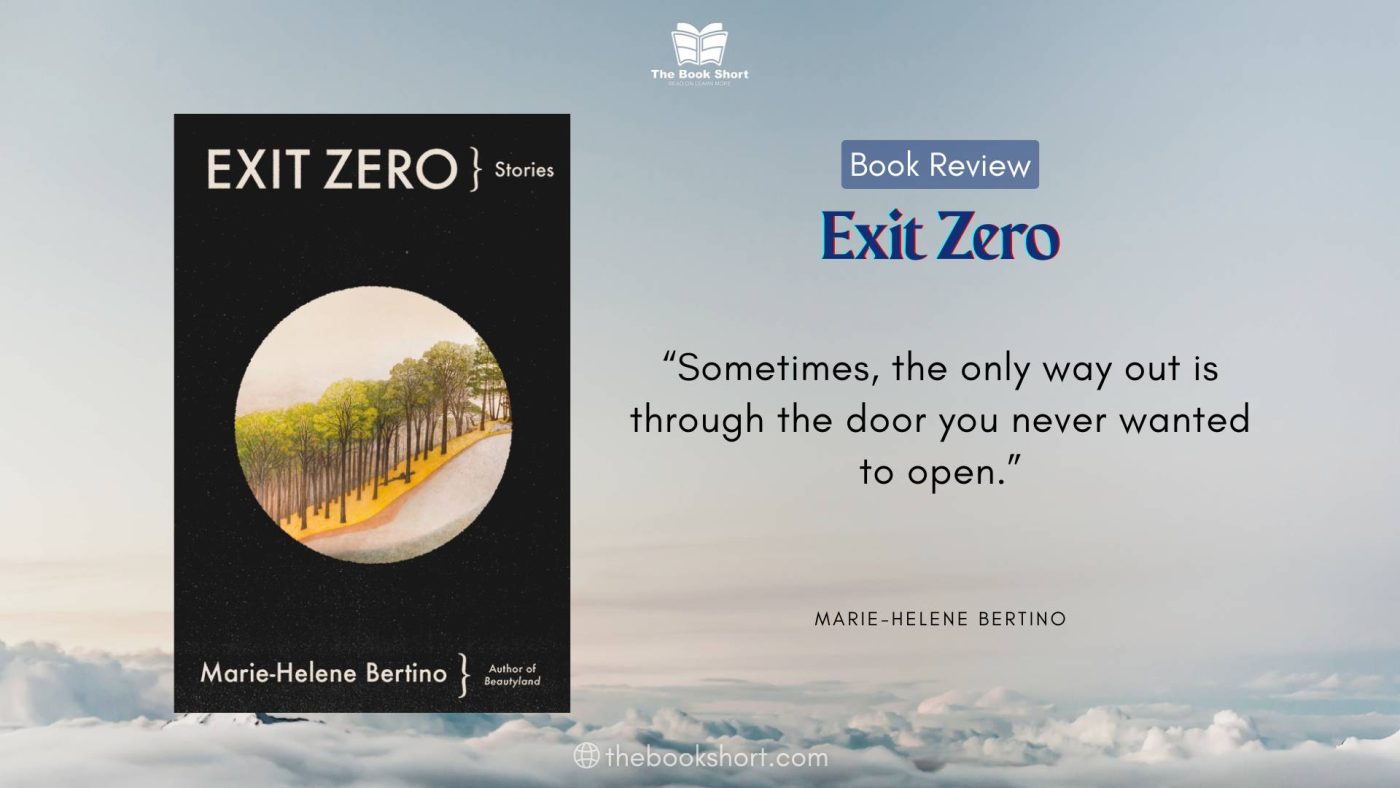
A haunting, moving look at family, grief, and Atlantic City’s forgotten corners. Marie-Helene Bertino captures fading life with stunning prose.
Marie-Helene Bertino’s Exit Zero offers a poignant, fragmented glimpse into a working-class family’s life in Atlantic City. This slender collection resonated deeply with its raw honesty and lyrical portrayal of a specific time and place, making it a compelling choice for analysis due to its unique structure and profound emotional depth. It captures the feeling of home and loss in a way that feels both intensely personal and universally human, a testament to Bertino’s precise and evocative writing.
Basic Information about Exit Zero
- Title: Exit Zero
- Author: Marie-Helene Bertino
- Year of publication: 2012
- Genre: Fiction (specifically, a collection of linked prose pieces, vignettes, and short narratives)
- Number of pages: Approximately 144 pages (may vary slightly by edition)
- Target audience: Readers interested in experimental and literary fiction, coming-of-age narratives, stories about family dynamics and grief, explorations of working-class life, and evocative prose focused on place.
Summary of Exit Zero
Exit Zero is not structured as a traditional novel with a linear plot, but rather as a luminous mosaic of loosely connected prose pieces, vignettes, and short narratives. These fragments orbit around a family navigating life in or near Atlantic City, New Jersey. The narrative voice often takes the perspective of a young woman, looking back on her childhood, her family relationships, the particular atmosphere of the fading shore town, and the pervasive shadow of tragedy—specifically, the profound loss of her mother.
The book builds its world not through chronological events, but through brief, resonant scenes and emotional snapshots. These individual pieces accumulate, creating a powerful cumulative impact and offering a nuanced, moving portrait of a family grappling with absence in a distinct, challenging environment.
Themes Explored Through Vignettes
- Family Life: The collection offers a vivid, often stark, portrayal of the intricate dynamics within a working-class family. The vignettes capture interactions between the narrator, her parents (both before and after the mother’s death), and sometimes siblings or other relatives. The focus is often on the small, telling moments, the unspoken tensions, and the complex ways love, resilience, and conflict intertwine. The figure of the father, often silently wrestling with grief and the harsh realities of their lives, is a recurring, impactful presence.
- Grief and Loss: The mother’s absence is a central, defining force in the book. The vignettes don’t just depict grief but explore its lingering, shape-shifting effects on the narrator and the entire family unit. Grief is presented not as a singular event to be overcome, but as an ongoing, integrated presence that colors memories, influences relationships, and transforms the very feeling of “home.”
- Atlantic City as a Character: The setting of Atlantic City is far more than a backdrop; it is integral to the narrative’s mood and meaning. Bertino depicts it not as the glitzy resort often seen in popular culture, but as a gritty, fading town defined by locals, seasonal struggles, and the forgotten streets behind the boardwalk’s transient glamour. Specific landmarks, the relentless presence of the ocean, the changing weather, and the symbolic feeling of being “Exit Zero”—the last exit before the city begins—contribute profoundly to the book’s emotional landscape and thematic resonance.
- Childhood and Memory: Many pieces are filtered through the tender, often melancholic, lens of childhood memory. The narratives capture the narrator’s perspective as she navigates growing up amidst her family’s struggles and the weight of loss. This approach imbues the stories with a powerful sense of nostalgia, frequently tinged with sadness, and underscores the subjective, sometimes unreliable nature of remembering.
- Coming-of-Age: As the narrator matures across the vignettes, her understanding of her family, her hometown, and her own identity subtly evolves. The book quietly tracks this development, showing her grappling with who she is becoming against the backdrop of profound loss and a challenging socioeconomic environment.
- Working-Class Realities: While not overtly didactic, the collection quietly highlights the economic realities and persistent challenges faced by the family. Hints at the struggles of making ends meet in a place built on seasonal tourism and fleeting opportunities form a quiet but powerful undercurrent to the personal dramas, rooting the emotional landscape in a specific social context.
Structure and Flow
Despite being composed of distinct pieces, the collection flows with a compelling, almost dreamlike coherence. Bertino moves fluidly between different time periods, connecting past and present through recurring emotional echoes, sensory details, or resonant images (like the ocean, specific street corners, or significant objects). The deliberate absence of a traditional, driving plot allows for an intense focus on atmosphere, fleeting character moments, and the deep exploration of emotional states. The inherent brevity of many vignettes creates a sense of acute intensity and emotional concentration, requiring the reader to actively participate in piecing together the larger emotional and thematic arc from these fragmented insights. The cumulative effect is remarkably powerful, building a complex, affecting emotional landscape piece by carefully placed piece.
In-Depth Analysis of Exit Zero
Exit Zero defies easy categorization, residing uniquely in the space between a short story collection, a novella-in-vignettes, and perhaps even a sequence of prose poems. This structural choice is not merely stylistic; it is fundamental to how Marie-Helene Bertino conveys her profound themes of memory, loss, identity, and the indelible mark of place.
Structure & Key Arguments
The non-linear, fragmented structure is arguably the most striking and effective aspect of Exit Zero. It serves as a formal analogue to the way human memory often functions—not as a smooth, unfolding narrative, but as a series of vivid, sometimes disjointed, images, sensory impressions, and intense emotional snapshots. By presenting the family’s story in this mosaic-like fashion, Bertino implicitly argues that life, particularly a life shaped by significant trauma, absence, and a specific, often harsh environment, is not a straightforward progression but a constellation of moments that must be held together by emotional gravity. The “plot,” in the conventional sense, is less about external events and more about the slow, cumulative understanding and emotional processing gained through these disparate pieces.
Key underlying arguments or critical observations embedded within the text include:
- Grief is not a process of overcoming or resolution, but rather a complex, ongoing process of integration into the fabric of one’s life and memory.
- Place is a powerful, shaping force, deeply informing identity and perceived possibilities, particularly within working-class communities tied to specific, often economically vulnerable, locations.
- Childhood memories, regardless of their objective accuracy, form a foundational layer that profoundly shapes our adult selves and our understanding of the past.
- Love within families is rarely simple or unconditional; it is inextricably linked with difficulty, sacrifice, and the complex, often challenging, history shared between individuals.
Writing Style & Content Quality
Bertino’s prose is exceptionally precise, lean, and often breathtakingly lyrical. She possesses a remarkable ability to distill complex emotions and vivid scenes into sharp, resonant language. Her use of imagery and metaphor is often surprising and deeply effective, bringing the mundane details of life in Atlantic City and the intricate inner world of the narrator into stark, luminous focus.
- Language: The language is spare yet potent. Bertino avoids unnecessary exposition, relying instead on meticulously chosen words and sensory details to evoke profound emotion and atmosphere. There is a compelling tension between the stark, almost unadorned presentation of reality and moments of startling beauty or unexpected tenderness woven through the text. It is a language that feels both grounded and subtly elevated.
- Style: The prevailing style is introspective, observational, and deeply felt. The narrative voice feels intensely personal, often carrying a weight of melancholy or nostalgia, yet it is also infused with a quiet strength and resilience. The fragmented structure necessitates a style capable of quickly establishing a scene, a feeling, or a memory with immediate impact, making each individual piece feel self-contained yet essential to the cumulative whole.
- Content Quality: The quality of the writing is consistently high, demonstrating a remarkable command of craft. Bertino approaches difficult subjects like loss, poverty, and family dysfunction with immense sensitivity and nuance, entirely avoiding sentimentality while achieving remarkable emotional depth. The character sketches, though brief, feel remarkably authentic and lived-in. The evocation of Atlantic City is particularly masterful, rendering the setting not just a backdrop but an active, breathing entity that shapes the characters’ lives.
What Stands Out
What truly distinguishes Exit Zero is its formal innovation and its absolute refusal to conform to conventional narrative expectations. Unlike most linear novels that track character development or plot progression over time, Bertino presents a constellation of luminous moments that the reader must actively assemble and interpret. This demands a different kind of engagement from the reader, inviting deeper reflection on the emotional and thematic connections between the pieces. The intense focus on place, rendering Atlantic City as both a physical reality and a complex emotional landscape, also sets it apart, elevating the setting beyond simple description into a character with its own history and weight. This is a book where form and content are inextricably linked, amplifying the emotional power of the story.
Notable Quotes from the Book
Bertino’s writing is marked by its concise power and evocative imagery. Notable “quotes,” or rather, moments of striking language, often:
- Capture the stark beauty or decay of the shore town – perhaps a phrase describing the specific quality of light on the ocean, the grittiness of streets hidden from tourist view, or the feeling of the wind off the water.
- Distill the profound feeling of grief and absence into brief, poignant remarks – a sharp observation about the mother’s missing presence at an everyday moment, or how a familiar object now feels different.
- Present vivid, specific sensory details from childhood that unlock layers of memory and emotion – the taste of a particular food, the feel of sand or rough fabric, the distinct sound of a specific place.
- Offer moments of quiet reflection on the nature of memory itself – how it selects, distorts, and persists, connecting past and present in unexpected ways.
The strength of Bertino’s prose lies in these concentrated, powerful moments – phrases or short paragraphs that resonate deeply, creating lasting impressions long after the book is finished.
Evaluation & Personal Review of Exit Zero
Exit Zero left a profound and lasting impression on me due to its distinctive voice, remarkable structure, and emotional honesty. My personal review of the book is overwhelmingly positive, though it’s important to note that its unique form means it might not resonate with every reader.
Advantages
- Exceptional Emotional Resonance: Despite its brevity and fragmented nature, the book is incredibly moving. Bertino achieves remarkable emotional depth through her spare, precise language and deeply affecting imagery. The cumulative emotional impact is surprisingly powerful.
- Original and Effective Structure: The fragmented, mosaic-like structure is a major strength. It doesn’t feel like a gimmick but rather an authentic representation of memory and the experience of grief. It offers a fresh, compelling way to engage with character and theme, creating a reading experience unlike a traditional novel.
- Masterful Atmospheric Setting: The depiction of Atlantic City is a triumph. It is rendered with such vivid detail and emotional significance that it truly functions as a character, shaping the lives and feelings of the human characters.
- Stunning Prose: Marie-Helene Bertino’s writing is simply beautiful – economical, sharp, poetic, and filled with memorable, often haunting, images. Each sentence feels carefully considered and essential.
- Raw Authenticity: The portrayal of family dynamics, the pervasive weight of grief, and the quiet realities of working-class life feels utterly genuine and unvarnished. There’s a profound sense of truth in these pages.
Disadvantages
- Lack of Traditional Plot Progression: Readers who strongly prefer a clear, linear narrative arc with conventional plot points and resolutions might find the fragmented nature of Exit Zero challenging or potentially unsatisfying. Its rewards are found in emotional and thematic accumulation rather than plot resolution.
- Brevity: While the conciseness contributes to the book’s intensity and impact, some readers might wish for more sustained exploration of certain characters, relationships, or events.
Readability Level & Suitability
Exit Zero is relatively short, and the vocabulary used is generally accessible. However, its readability level is higher than its page count might suggest, primarily due to the demands placed on the reader by its structure. It is not a book you can passively absorb; it requires active engagement to connect the disparate pieces and appreciate the cumulative emotional and thematic development.
It is eminently suitable for:
- Readers who appreciate experimental or non-traditional narrative structures and are willing to engage with ambiguity.
- Fans of literary fiction where character, atmosphere, and theme are prioritized over plot.
- Individuals drawn to introspective stories about grief, memory, family relationships, and the impact of place.
- Aspiring writers or readers interested in studying masterful prose and unique literary forms.
It might be less suitable for:
- Readers who primarily seek genre fiction with strong, fast-paced plots and clear resolutions.
- Those looking for light or straightforward reading experiences.
Practical Value
While Exit Zero is not a self-help book, its “practical value” lies in its profound human insights and its ability to cultivate empathy and offer new perspectives:
- Deepening Understanding of Grief: It provides a powerful, non-linear, and authentic portrayal of grief as an ongoing, shape-shifting process, offering valuable insight into its complex and enduring nature.
- Appreciating the Power of Place: It vividly demonstrates how deeply our environment, particularly the place we call “home”—and often leave behind—can shape our identities, histories, and emotional landscapes. This can prompt reflection on one’s own formative environments.
- Highlighting the Significance of Small Moments: By focusing on brief vignettes, the book underscores how seemingly small, everyday moments and sensory details contribute fundamentally to the larger tapestry of a life story.
- Enhancing Emotional Literacy: Through its nuanced and sensitive exploration of complex emotions related to loss, memory, and family dynamics, the book can help readers better understand and articulate their own feelings and experiences.
The primary and most significant value of Exit Zero is experiential and emotional, offering a deep, moving, and artistically significant dive into a specific world and its attendant human feelings.
Comparison with Similar Books
Exit Zero shares thematic concerns and stylistic sensibilities with several other notable works of literary fiction, particularly those that employ fragmented or linked structures or focus intensely on memory, family relationships, and the shaping power of place.
Like Elizabeth Strout’s Pulitzer Prize-winning Olive Kitteridge, Exit Zero utilizes linked prose pieces to build a complex, multi-faceted portrait of a community and the individuals within it navigating life’s inherent difficulties. While Strout’s links are more overtly character-driven across distinct stories, Bertino’s connections in Exit Zero are more thematic, formal, and emotionally cumulative. Readers who appreciate Strout’s keen eye for human nature and her strong sense of place might find a resonant chord in Bertino’s work, though Bertino’s prose is perhaps more overtly poetic and experimental.
It also bears thematic and atmospheric similarities to works that explore the profound impact of a specific, often economically challenged or geographically isolated, setting on its inhabitants. Think of Richard Russo’s novels set in fading working-class towns or some of Annie Proulx’s stark, powerful short stories. Bertino’s Atlantic City feels as palpably real and impactful as Russo’s North Bath or Proulx’s Wyoming landscapes; it’s a place that defines the characters’ struggles and resilience.
For readers specifically drawn to its fragmented structure, intense focus on interiority, and lyrical prose, Exit Zero might appeal to those who have appreciated Jenny Offill’s Dept. of Speculation or Weather, or certain works by writers known for their formal experimentation and mastery of brevity, such as Lydia Davis or Deborah Eisenberg. These authors also use concise, carefully crafted pieces to explore complex emotional and intellectual terrain.
If readers enjoyed Exit Zero for its profound emotional depth, unique structure, and poignant exploration of family, memory, and place, they might also find resonance in:
- Dept. of Speculation by Jenny Offill (for its fragmented form and exploration of marriage/motherhood)
- Olive Kitteridge by Elizabeth Strout (for its linked stories and focus on a community/character over time)
- Austerlitz by W.G. Sebald (for its non-linear, image-driven exploration of memory, history, and place, though much denser)
- Bluets by Maggie Nelson (for its blend of memoir, criticism, and poetic prose in numbered fragments)
- Short story collections by authors renowned for their distinctive voice, atmospheric power, and focus on the interior lives of characters in specific American landscapes, such as Denis Johnson or Joy Williams.
Conclusion & Recommendations for Exit Zero
Exit Zero is a remarkably powerful book contained within a small package. Its outstanding value lies in Marie-Helene Bertino’s masterful command of form and language, which she employs to explore universal themes of family bonds, the enduring weight of grief, and the indelible mark that our origins, particularly our hometowns, leave upon us. It stands as a luminous example of how structural innovation can profoundly amplify meaning, creating a reading experience that is both demanding and extraordinarily rewarding.
Is Exit Zero worth reading? Absolutely, for the reader it is intended for. It asks for attention and emotional investment, but in return, it offers profound insights into the human heart and mind, rendered with moments of breathtaking literary beauty.
Who should read Exit Zero? This book is highly recommended for enthusiasts of literary fiction, writers interested in studying unique and effective narrative structures, readers drawn to character-driven (albeit fragmented) narratives that prioritize emotional truth over plot, and anyone who appreciates poignant, deeply felt explorations of memory, loss, and the complex nature of “home,” especially when rooted in a specific, often overlooked, American setting like Atlantic City.
Have you experienced the emotional landscape of Exit Zero? Share your thoughts on this Exit Zero book summary and analysis in the comments below!