
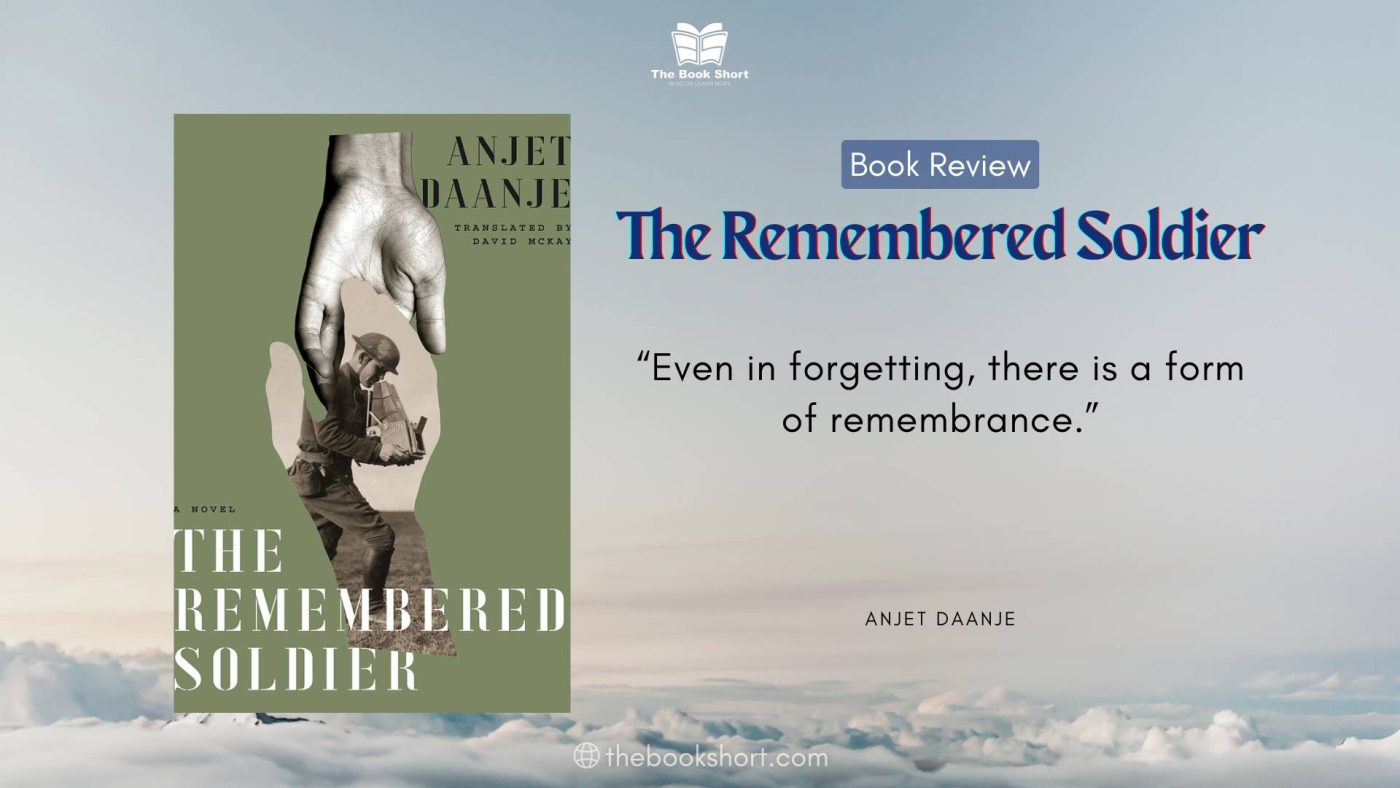
The Remembered Soldier: Unpacking Memory, War’s Echoes, and an Ambitious Narrative Structure
Step into the intricate landscape of memory and the lasting impact of conflict with Anjet Daanje’s acclaimed novel, The Remembered Soldier. This ambitious work transcends traditional storytelling, using a unique structure to explore the profound ways one life resonates across generations. I was drawn to The Remembered Soldier for its promise of a challenging yet deeply human portrayal of history’s imprint and the complex tapestry of human connection. Its unconventional approach offers a reading experience that is both intellectually stimulating and profoundly moving, revealing truths not just about its characters, but about how we understand the past itself.
Key Information on Anjet Daanje’s The Remembered Soldier
Here are the essential details for potential readers interested in this significant work of literary fiction:
- Title: The Remembered Soldier
- Original Dutch Title: Het lied van ooievaar en dromedaris (The Song of Stork and Dromedary)
- Author: Anjet Daanje
- Year of Dutch Publication: 2022
- Year of English Translation: 2024
- Genre: Literary Fiction, Historical Fiction, Saga
- Approximate Page Count: 672 pages (English edition)
- Target Audience: Readers who appreciate complex narrative structures, multi-generational stories, and deep explorations of memory, identity, and the long-term consequences of war.
The Remembered Soldier Summary: A Reverse Journey Through a Life Remembered
Anjet Daanje’s The Remembered Soldier defies simple summarization, as its narrative is not a chronological plot but a mosaic built from fragments of memory. The novel centers on the life and death of Eelco, a seemingly ordinary Dutch man who died during World War II. However, Eelco is primarily present through his absence, his story pieced together not by an omniscient narrator or his own voice, but through the distinct perspectives of eighty-five individuals who knew him – ranging from close family and friends to fleeting acquaintances.
The narrative embarks on a reverse chronological journey. It begins in 1997 with Eelco’s elderly great-niece, Eliza, whose reflections on family history introduce the spectral figure of the uncle she never knew but whose loss shaped her family. From this starting point, the book travels backward, chapter by chapter, year by year, life by life, tracing Eelco’s existence from his death in 1945 back to his birth in 1914. Each of the eighty-five chapters is a self-contained vignette offering one person’s memory or experience connected to Eelco.
Understanding the Book’s Structure Through Its Summary:
The summary of The Remembered Soldier is intrinsically linked to its unique reverse structure. Instead of recounting events in order, we understand the book by following its backward progression and observing how the image of Eelco, and the historical context, changes through the eyes of those who knew him at different times.
Part 1: The Echoes Decades Later (Chapters Set in Later Years)
- Beginning in the late 20th century, these chapters reveal how Eelco is remembered long after his death.
- Perspectives come from younger generations who knew him only through stories, or contemporaries whose lives were permanently altered by the war and his absence.
- Here, Eelco is a figure defined by loss, a silent space in family photos, a mystery, or a lingering sadness.
- These sections highlight the intergenerational trauma of war and the ways the past continues to shape the present.
Part 2: Lives Intersecting During Wartime (Chapters Set 1940-1945)
- As the timeline moves backward towards WWII, the perspectives shift to those who knew Eelco during the perilous years of German occupation.
- These narrators offer glimpses of his life during the war – his actions, relationships, and the circumstances leading to his demise.
- We see the direct pressures of wartime existence: resistance, hiding, collaboration, everyday survival, and sudden loss.
- Characters might be fellow soldiers, resistance members, neighbors, or family grappling with the immediate reality of conflict, providing fragmented but direct accounts of Eelco’s presence in this critical period.
Part 3: Eelco’s Formative Years (Chapters Set 1914-1939)
- Journeying further back in time, the book explores Eelco’s childhood, adolescence, and young adulthood before the war erupted.
- These chapters feature perspectives from his parents, siblings, schoolmates, early loves, and mentors.
- Here, we encounter Eelco as a young man, revealing his personality, dreams, challenges, and the seemingly ordinary life he was building.
- The reader witnesses his transformation, contrasting the vibrant, hopeful person he was becoming with the legend or gap he represents in later years. This part anchors the emotional weight, showing the potential lost.
The Cumulative Resonance:
- Each of the eighty-five voices adds a single brushstroke to an ever-evolving portrait of Eelco, revealing not just who he was, but the vast network of lives he touched.
- The reverse chronology creates a sense of poignant anticipation and revelation, building towards the root of his existence rather than his end.
- The overlapping memories and occasional contradictions underscore the inherent subjectivity and fluidity of memory itself.
- Beyond Eelco, the novel crafts a rich historical panorama of the Netherlands throughout the 20th century, illustrating how large historical forces play out in the smallest, most personal interactions.
- Ultimately, The Remembered Soldier isn’t a story about Eelco in a traditional sense, but a profound exploration of the enduring interconnectedness of human lives and the complex, shared process of remembering.
In-depth Analysis: Themes, Structure, and Literary Merit
Anjet Daanje’s The Remembered Soldier is a literary tour-de-force, where form and content are inextricably linked. The audacious structure is not merely a stylistic choice; it is the very mechanism through which the novel explores its central themes with exceptional depth and nuance.
Characters, Structure, and Thematic Core
While Eelco is the silent anchor of the novel, the true protagonists are the eighty-five narrators whose brief, focused vignettes collectively build his presence. This fractured, multi-vocal approach is the novel’s most striking feature. The reverse chronological structure disrupts our conventional understanding of biography and history, shifting the focus from a teleological plot towards an archaeology of self, memory, and impact. We know Eelco died, so the unfolding narrative isn’t about his fate, but about the intricate web of relationships and perceptions that constituted his life and afterlife in the memories of others.
Key thematic arguments powerfully conveyed through this structure and the diverse character perspectives include:
- The Subjectivity and Fragility of Memory: By presenting eighty-five distinct recollections, often containing subtle differences or competing interpretations of Eelco or shared events, the novel masterfully demonstrates that memory is not a static record but a dynamic, highly personal construct, shaped by individual experience, emotion, and the passage of time.
- The Generational Echoes of Trauma: The novel vividly illustrates how major historical disruptions, specifically World War II and the loss of life it caused, don’t simply fade away. The effects ripple outwards and forwards, leaving deep, often unspoken, imprints on subsequent generations, influencing family dynamics and individual identities decades later.
- Identity as a Collective Reflection: Eelco’s identity is not defined by a single viewpoint or internal monologue, but emerges from the accumulation of how eighty-five different people perceived him. This challenges the notion of a fixed, singular self, suggesting that perhaps a person’s true essence is the sum of their impact and how they live on in the minds and memories of others.
- The Interconnectedness of Humanity: The sheer breadth of the eighty-five narrators – from closest kin to mere acquaintances – underscores the novel’s argument that every interaction, no matter how brief or seemingly insignificant, contributes to the vast, invisible network that connects human lives and influences how individuals are remembered and understood.
Writing Style & Content Quality
Daanje’s prose, as conveyed through the translation, is remarkable in its ability to imbue eighty-five different voices with a sense of authenticity and individuality within the confines of brief, impactful chapters. While a thread of melancholic reflection often runs through the collection, each voice possesses its own cadence and perspective – some are sharp and pragmatic, others steeped in nostalgia, some marked by trauma, others by simple affection. The writing is generally clear, precise, and emotionally resonant, allowing the cumulative weight of the eighty-five perspectives to create a powerful and moving reading experience. The content quality is exceptionally high, demonstrating a deep historical understanding of the Netherlands during the 20th century and a profound psychological insight into how individuals process experience, memory, and loss. The novel seamlessly weaves the intimate personal vignettes with the broader historical context, creating a rich tapestry. The true triumph of the writing lies in the successful execution of the eighty-five-voice, reverse-chronological structure, which feels neither gratuitous nor confusing, but essential to the novel’s core themes, offering a democratic, polyphonic view of a single life and its legacy.
Notable Quotes and Passages
Given the novel’s structure, truly representative quotes are less about grand pronouncements and more about capturing the small, potent moments of memory and reflection that define each chapter. Key passages would likely be found in the individual narrators’ voices, expressing:
- Specific, sensory details of a memory involving Eelco, highlighting its vividness or, conversely, its fading quality.
- Direct reflections on the nature of memory itself, or the challenge of knowing someone fully.
- Statements about Eelco’s continuing presence or absence in their lives, even decades later.
- Observations that reveal the subtle ways historical events have shaped their personal circumstances.
- Sentences that illustrate the contrast between the man they knew and the figure he has become in family lore or history.
*Illustrative examples of the *type* of reflections found within the text (not direct quotes):*
- “Fifty years on, I still see him leaning against the bike shed, sun in his hair, asking about my exam. It’s that small kindness I remember, not the war.” (Capturing a specific, enduring memory)
- “My mother rarely spoke of him after the news came. He became a quiet room in our house, always there but empty.” (Illustrating the lingering impact of absence)
- “We all had our own Eelco. The boy who climbed the tallest trees, the young man who debated politics late into the night, the soldier whose fate became a family scar.” (Highlighting the multi-faceted, subjective nature of identity)
- “Sometimes, looking at a photo, I try to imagine the life he would have had. It’s like looking into a mirror that shows a path not taken, for him, and for all of us.” (Reflecting on lost potential and historical contingency)
These fragmented, deeply personal insights, layered over nearly 700 pages and eighty-five voices, constitute the emotional and thematic core of the novel.
Evaluation and Personal Review: Experiencing The Remembered Soldier
Reading Anjet Daanje’s The Remembered Soldier is an immersive and deeply affecting experience that lingers long after the final page. My personal takeaway is one of profound admiration for Daanje’s courage and skill in executing such an ambitious structural concept with such grace and emotional resonance. It is a novel that demands attention but generously rewards the dedicated reader.
Strengths of the Novel:
The primary strength lies in its utterly unique narrative architecture. The eighty-five voices and reverse chronology aren’t mere literary tricks; they are the beating heart of the book, enabling an unparalleled exploration of memory’s fluidity and the ripple effects of a single life. This structure compels the reader to become an active participant, piecing together the mosaic of Eelco’s life and the 20th-century Netherlands from disparate perspectives. The reverse journey creates an almost elegiac atmosphere, building a sense of poignant inevitability as we move closer to the point of loss. The thematic depth – covering memory, identity, history, and connection – is exceptional, offering genuine insights into the human condition. Daanje’s ability to render eighty-five distinct, believable voices is a significant literary achievement. The book is a powerful testament to the enduring presence of those we lose and the complex, shared nature of remembering.
Potential Challenges:
The unconventional structure can indeed be demanding. Readers accustomed to a continuous plot or a small cast of central characters might find the constant shift in narrators and perspectives initially disorienting. The cumulative nature of the storytelling means that the emotional impact builds gradually, rather than through intense focus on a few relationships. Some may find the lack of a single anchor character’s sustained internal life a barrier to immediate emotional connection. Its substantial length also requires a significant time investment.
Readability and Ideal Reader:
This is a book for the discerning literary fiction reader. It requires patience, attention to detail, and a willingness to engage with a non-linear narrative and a multitude of voices. The prose itself is accessible, but the complexity lies in the structure and the layering of perspectives. I would classify its readability as challenging but ultimately rewarding, best suited for experienced readers of literary fiction. It is particularly recommended for:
- Readers fascinated by experimental or ambitious narrative structures.
- Those with a deep interest in themes of memory, the construction of identity, and the impact of history.
- Readers who appreciate multi-generational sagas told from fresh, innovative angles.
- Anyone seeking a profound and unique perspective on the civilian experience of war and its long aftermath.
Enduring Value:
The practical value of The Remembered Soldier extends beyond mere entertainment. It offers profound insights that can genuinely shift a reader’s perspective on human relationships and the passage of time. It encourages contemplation on:
- How we are remembered by others, often in ways we might not expect.
- The invisible threads that connect us to countless individuals throughout our lives.
- The complex interplay between personal memory and collective history.
- The power and fragility of identity itself.
It’s a book that stays with you, prompting reflection on your own place within the intricate web of human connection and the historical currents that shape all lives.
Comparing The Remembered Soldier to Similar Literary Works
While The Remembered Soldier‘s specific combination of eighty-five perspectives and reverse chronology makes it quite singular, it shares thematic and structural DNA with several celebrated works of literary fiction that explore memory, history, and multi-vocality.
It stands alongside multi-generational sagas like Gabriel García Márquez’s One Hundred Years of Solitude or Isabel Allende’s The House of the Spirits, in that it traces the trajectory of a family and community over many decades, showing how the past deeply influences the present. However, Daanje’s focus is less on a central family line and more on the dispersed network connected to a single figure.
In its use of multiple, distinct narrative voices to build a complex portrait, it resonates with novels such as William Faulkner’s As I Lay Dying, which presents a fractured narrative through the perspectives of various characters surrounding a central event, or Jennifer Egan’s A Visit from the Goon Squad and Manhattan Beach, which use interconnected stories and shifting perspectives to explore themes of time and connection. Daanje’s scale, however, is dramatically larger.
Its deep dive into the nature of memory, subjective perception, and the construction of identity places it alongside the works of authors like Kazuo Ishiguro (The Remains of the Day, Never Let Me Go) or Julian Barnes (The Sense of an Ending), who meticulously examine how the past is remembered, distorted, and shapes our understanding of who we are.
As historical fiction focused on WWII, it shares ground with countless novels, but its unique structure highlights the diffuse, long-term impact of conflict on an entire community, told through the individual scars and memories of many, rather than concentrating on the direct war experiences of a few protagonists.
For readers who were captivated by the ambition, structural innovation, or thematic depth of The Remembered Soldier, other compelling reads might include:
- One Hundred Years of Solitude by Gabriel García Márquez (for sweeping multi-generational scope and rich historical context)
- A Visit from the Goon Squad by Jennifer Egan (for inventive structure and interconnected narratives across time and characters)
- The Vanishing Half by Brit Bennett (for a powerful exploration of identity, family history, and differing perspectives across generations)
- Cloud Atlas by David Mitchell (for its ambitious, interconnected narratives spanning vast periods and challenging conventional structure)
- The Sound and the Fury by William Faulkner (for a challenging, multi-perspective narrative exploring family dysfunction and the nature of memory)
These novels share The Remembered Soldier‘s willingness to experiment with form to deepen their exploration of complex human experiences.
Conclusion: Why The Remembered Soldier is a Must-Read for Serious Readers
Anjet Daanje’s The Remembered Soldier is an extraordinary literary achievement, a novel that redefines how we think about biographical narrative and historical impact. Its brilliance lies in its daring structure – the eighty-five voices, the reverse chronology – which serves not as a gimmick, but as a powerful lens through which to examine the profound nature of memory, the elusive construction of identity, and the enduring, far-reaching consequences of historical events like war. It is a moving meditation on how one individual life, even one tragically cut short, leaves an indelible mark on the vast, interconnected tapestry of human experience.
Is this book worth your time? Unequivocally yes, for readers seeking a challenging, deeply intelligent, and uniquely rewarding literary journey. It demands patience and engagement, but in return, it offers a reading experience that is both intellectually stimulating and profoundly emotionally resonant.
Who should pick up The Remembered Soldier? This novel is essential reading for avid readers of literary fiction, anyone fascinated by narrative innovation, students of memory and history’s impact, and those who appreciate novels that explore the intricate web of human relationships with exceptional depth and artistry. It is not a light read, but an immersive and contemplative one that will stay with you long after you’ve turned the final page.
Have you embarked on the journey of The Remembered Soldier? Share your thoughts and impressions on this remarkable book in the comments below!