
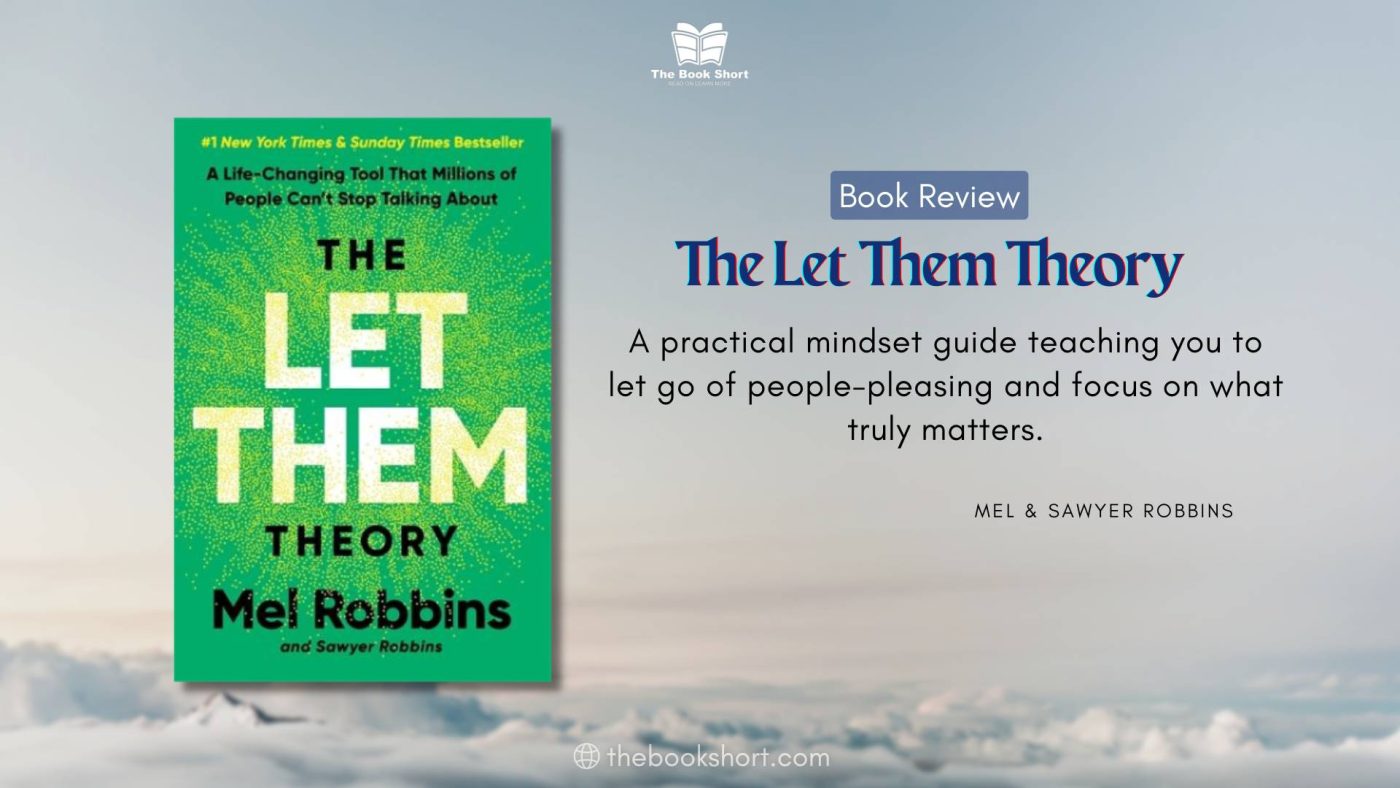
Discover simple shifts to reclaim control and peace in your life. The Let Them Theory by Mel & Sawyer Robbins offers a refreshing path to freedom from the burden of external expectations.
Ready to shed the weight of constantly worrying about what others think or do? The Let Them Theory by dynamic mother-son duo Mel and Sawyer Robbins offers a profoundly simple, yet incredibly powerful, perspective shift that resonated deeply with me. I chose to dive into this book because its central premise – letting go of the exhausting need to control or be defined by others’ actions, reactions, and opinions – addresses a universal human struggle. It promises a direct path to reduced anxiety, healthier relationships, and greater personal freedom, positioning it as a unique and valuable read in the crowded personal development space. Let’s take a closer look at how this small book delivers such a significant punch.
The Let Them Theory: Essential Book Information
- Title: The Let Them Theory: Scarlet Letters, Shame, and Freedom
- Authors: Mel Robbins, Sawyer Robbins
- Publication Year: 2024
- Genre: Self-Help / Personal Development / Mindset
- Page Count: Approximately 128 pages (note: page count can vary slightly by edition)
- Target Audience: Anyone who struggles with people-pleasing, anxiety stemming from external judgment, difficulty setting boundaries, fear of disapproval, or feeling overly responsible for others’ feelings or actions. It speaks particularly well to those seeking freedom from the burden of managing perceptions.

The Let Them Theory: A Life-Changing Tool That Millions of People Can't Stop Talking About
The Let Them Theory Book Summary
The Let Them Theory: Scarlet Letters, Shame, and Freedom offers a concise yet profoundly liberating exploration of the anxiety and suffering we create for ourselves by attempting to control how others think, feel, and act. Authors Mel and Sawyer Robbins distill a fundamental truth about personal freedom and peace: true liberation comes from accepting that you cannot, and indeed, should not, control other people. The book’s core message is distilled into a deceptively simple, yet incredibly powerful phrase: “Let Them.” This means actively choosing to allow others to have their opinions, make their choices, experience their consequences, and feel their feelings, without letting it disrupt your own inner peace or sense of self-worth.
The book is structured to gently guide the reader from the recognition of this common struggle to the empowering practice of release. It begins by identifying the universal human tendency to worry excessively about external validation, potential judgment, and the behavior of others. This worry often manifests as people-pleasing tendencies, endless overthinking of conversations, attempts to manipulate outcomes, or deep hurt caused by perceived slights or disagreements.
The Problem: The Exhausting Illusion of Control
The initial sections of the book powerfully articulate the root cause of much of our stress regarding others. The authors contend that a vast amount of our anxiety stems from a fundamental, energy-draining misunderstanding: we operate under the belief that we can, or should, be able to manage others’ perceptions of us and their reactions to our actions or inactions. We get caught in the anxious loop of asking:
- “What will they possibly think of this?”
- “Will my decision upset them?”
- “How can I make them finally understand my perspective?”
- “What do I need to do to get them to behave the way I want?”
This constant, futile effort to manage external factors – things entirely outside our actual control – is not only exhausting but ultimately prevents us from focusing on what is within our power. The book uses relatable, everyday examples to illustrate how this struggle manifests across various areas of life, from intimate personal relationships and family dynamics to professional settings and even the curated world of online interactions. It vividly portrays the unnecessary burden we carry when we try to hold onto this illusion of control over others.
The Solution: Embracing the Liberating Power of “Let Them”
The central tenet, the “Let Them Theory,” is introduced as the radical antidote to this suffering. It is crucial to understand that this principle is not about apathy, indifference, or condoning harmful behavior. Instead, it is presented as a profound, active act of self-liberation and self-preservation. “Let Them” means:
- Let them freely have their opinion about you, even if it’s critical.
- Let them disagree with your choices or perspectives.
- Let them feel angry or disappointed; their feelings are theirs to manage.
- Let them make their own mistakes and learn their own lessons.
- Let them misunderstand your intentions or actions.
- Let them judge you; their judgment is a reflection of them, not your inherent worth.
- Let them choose a path different from the one you hoped they would take.
This isn’t passive resignation; it’s an active, conscious acceptance of reality. The authors powerfully explain that when you consciously stop trying to control external outcomes and others’ internal states, you instantly reclaim your precious energy and focus. This freed-up energy can then be directed back towards your own actions, your own well-being, your own boundaries, and your own choices – the only things truly within your sphere of influence.
Addressing the Deep-Seated Fear: Shame and “Scarlet Letters”
A significant and insightful part of the book delves into the underlying fears that make practicing “Let Them” so challenging for many. These fears are often deeply rooted in shame – the painful feeling that you are fundamentally flawed, inadequate, or unworthy. The authors draw a compelling connection to the concept of “scarlet letters,” invisible marks we feel others place upon us based on perceived failures, past mistakes, or simply for daring to be different or make unpopular choices. The intense fear of these “scarlet letters” being exposed or reinforced by external judgment drives much of our people-pleasing, overthinking, and control-seeking behavior. We desperately try to manage others’ perceptions in a futile attempt to avoid triggering this deep-seated shame.
The book offers gentle guidance in recognizing these fears and understanding that the perceived power of these “scarlet letters” dramatically diminishes when you stop granting external judgment the authority to define your worth. By consciously choosing to embrace “Let Them,” you are asserting a powerful truth: others’ opinions, feelings, or judgments do not determine your value. Your worth is intrinsic, inherent, and not contingent upon external approval or validation.
Practical Application and the Path to Freedom
While intentionally concise, the book provides practical insights and encouragement for integrating the “Let Them Theory” into daily life. It is presented not as a magical switch to flip, but as a muscle to be intentionally built and strengthened over time. The authors suggest starting small, practicing the principle in low-stakes situations, and paying attention to the palpable feeling of relief and lightness that often comes with releasing the need to control.
Embracing the “Let Them Theory” actively encourages and facilitates:
- Authentic Boundary Setting: Feeling empowered to say “no,” express your needs, and define acceptable behavior without crippling guilt or the desperate need for others’ approval.
- Significant Reduction in Overthinking: Spending far less time agonizing over past conversations or trying to predict and preempt others’ potential negative reactions.
- Increased Self-Confidence and Self-Worth: Building a stronger sense of self that is based on internal values and actions rather than constantly seeking external validation.
- Greater Inner Peace: Experiencing a profound reduction in anxiety and stress related to potential conflict, disapproval, or external chaos.
- Living More Authentically: Feeling free and safe to be your true self without censoring your thoughts, feelings, or actions to conform to perceived external expectations for the sake of managing others’ reactions.
The book wisely emphasizes that implementing “Let Them” is an ongoing, lifelong practice. There will inevitably be moments of falling back into old patterns of worry and control, but the awareness the book provides, combined with the simple tool of the “Let Them” principle, offers a clear and immediate path back to freedom. The journey culminates in a powerful message of reclaiming personal agency and finding profound peace in the acceptance of what truly lies outside your control. By consciously choosing to let others be, you are simultaneously granting yourself the invaluable permission to simply be – free from the heavy burden of their expectations or judgments.
The Let Them Theory Book Analysis
The Let Them Theory distinguishes itself within the crowded self-help landscape primarily through its radical simplicity and unwavering directness. While themes of boundaries, anxiety, and self-worth are staples of the genre, Mel and Sawyer Robbins manage to distil a complex web of psychological principles and relational dynamics into a single, easily memorable, and immediately actionable phrase: “Let Them.” This isn’t merely a catchy title; it is the foundational principle, the entire framework, and the core solution presented without unnecessary jargon, convoluted steps, or lengthy therapeutic explanations.
Key Arguments & Structure
The core argument is crystal clear and relentlessly focused: a significant source of our suffering, anxiety, and relational stress originates from our persistent, yet ultimately futile, attempts to control the uncontrollable – specifically, other people’s thoughts, feelings, behaviors, and reactions. The authors powerfully posit that this struggle is not only doomed to fail but actively depletes our energy, hijacks our focus, and undermines our peace. The proposed solution, “Let Them,” is presented as the courageous and liberating act of radical acceptance of this fundamental reality.
The structure of the book mirrors its core message: it is lean, focused, and stripped of complexity. It moves logically and efficiently through its points:
- Identifying the universal problem: Our ingrained need to control external perceptions and behaviors, and the immense anxiety it generates.
- Exposing the underlying fear: Connecting this need to deep-seated shame and the metaphor of invisible “scarlet letters.”
- Introducing the powerful solution: Presenting and explaining “The Let Them Theory” as the key to release.
- Illustrating the practical implications: Showing how this principle translates into greater freedom, peace, and authenticity in daily life.
While there are no traditional “characters” driving a narrative, the book excels at using universal human experiences and highly relatable scenarios to illustrate its points, creating a strong sense of connection and making the reader feel seen and understood in their struggles. The structure feels more like an extended, deeply personal, and highly focused essay or manifesto rather than a typical self-help book broken into numerous parts with prescribed exercises. This streamlined, almost minimalist approach intentionally reinforces the striking simplicity of the core message.
Writing Style & Content Quality
The writing style is intentionally conversational, highly accessible, and imbued with genuine warmth and empathy. Mel Robbins’ signature direct, no-nonsense yet deeply compassionate communication style shines throughout, making the reader feel as though they are receiving tough love and practical wisdom from a trusted friend. Sawyer Robbins’ contribution feels authentic and adds valuable perspective, particularly in addressing the pressures faced by younger generations navigating constant external validation loops on social media. The language is deliberately simple, avoiding overly academic, clinical, or therapeutic terminology, ensuring that the concepts are immediately grasped by a wide and diverse audience.
The quality of the content lies not in groundbreaking psychological theory (the idea of acceptance is ancient) but in its incredibly effective reframing and practical application. While the concept of focusing on what you can control and letting go of the rest is a cornerstone of many philosophies and therapies (from Stoicism to CBT), the framing of “Let Them” is remarkably potent as an immediate mental shortcut and redirect. It provides an instant counter-thought to the ingrained impulse to worry or control. The book’s brevity is a distinct strength; it delivers its punchy, transformative message without dilution, repetition, or unnecessary complexity. However, readers seeking extensive psychological background, detailed case studies, or a wide array of step-by-step exercises might find its focused conciseness leaves them wanting more depth in the “how-to” beyond simply practicing the core principle itself. It offers the foundational key rather than a comprehensive toolkit.
Notable Phrases and Concepts
While this is not a book of flowery prose or memorable literary quotes, its power is in its repeatable, actionable core. The most notable phrase is, undeniably, the central mantra:
- “Let Them.” (This phrase is the beating heart of the book, repeated and explored as the fundamental principle and immediate tool.)
- The concept of “scarlet letters” as invisible, self-imposed or perceived marks of shame and inadequacy is a powerful and sticky metaphor used effectively to explain the deep-seated fear driving the need for external validation and control.
- The sharp contrast between the futility of trying to control others and the empowering liberation of reclaiming focus on one’s own agency is a constantly recurring and reinforcing theme.
The book’s strength isn’t in crafting beautiful sentences, but in forging a memorable, actionable phrase and providing clear, compelling reasons why adopting this simple principle can be profoundly life-changing. Its power resides in the concept itself and its immediate applicability as a mental interrupt and thought-reframing tool in moments of anxiety or control-seeking impulses.
The Let Them Theory Book Evaluation & Personal Review
The Let Them Theory by Mel and Sawyer Robbins doesn’t just offer a theory; it offers a dose of bracing reality packaged in a concept so simple it feels revolutionary. My personal impression is that the book’s immense strength lies almost entirely in the sheer power and straightforwardness of its core message: “Let Them.” This single phrase acts as a powerful, immediate mental interrupt – a circuit breaker – for anyone, like me, who is prone to people-pleasing, chronic overthinking, or crippling worry about external validation and judgment.
Advantages:
- Immediately Actionable: The core concept is not abstract; it’s instantly understandable and can be applied the very moment you feel triggered by another person’s behavior, potential reaction, or opinion.
- Highly Practical Tool: It provides a simple, repeatable mental tool to deploy precisely when you need it most – when you feel yourself getting caught in the trap of trying to control external variables.
- Offers Real Relief: The principle inherently points towards a path of tangible relief from the exhausting burden of carrying responsibility for others’ feelings or attempting to manipulate their outcomes.
- Wonderfully Concise: It’s a remarkably quick read that respects your time, cutting directly to the core message without unnecessary fluff, making it easy to revisit.
- Empathetic and Relatable Tone: The authors convey the message with genuine warmth, vulnerability, and deep understanding of the struggles readers face, making the tough-love message feel supportive.
Disadvantages (Minor Considerations):
- Limited Depth for Some: Readers seeking extensive psychological research, detailed therapeutic frameworks, or a wide variety of complex exercises may find the book’s singular focus and brevity less satisfying. It offers the foundational principle, not a comprehensive deep dive into every nuance of boundary work or anxiety management.
- Potential for Misinterpretation: While the authors clarify, some readers might initially mistake “Let Them” for promoting apathy, disengagement, or passive acceptance of genuinely harmful behavior. The nuance of practicing acceptance while still maintaining healthy boundaries requires careful consideration from the reader.
Readability Level: This book is exceptionally easy to read. The language is straightforward, the sentences are clear and direct, and the examples are highly relatable. It flows effortlessly, feeling less like reading a book and more like having a crucial, empowering conversation with a wise friend. It’s suitable for virtually any adult reader, regardless of their background or prior experience with self-help literature.
Who is This Book Most Suitable For? This book is a vital read for:
- Individuals who spend significant energy worrying about what others think of them.
- Chronic people-pleasers who struggle to say “no” or set healthy boundaries without guilt.
- Anyone who experiences significant anxiety related to potential conflict or the disapproval of others.
- Those who feel burdened by the perceived need to manage others’ expectations or feel overly responsible for their happiness or emotions.
- Parents navigating the challenges of adult children’s choices, or adult children struggling under the weight of parental expectations.
- Anyone seeking a simple, effective, and immediately applicable tool to reduce stress stemming from external factors and interpersonal dynamics.
Practical Value: The practical value of The Let Them Theory is immense precisely because the “Let Them” principle offers a direct, actionable, and repeatable mindset shift. It’s not abstract philosophy to ponder; it’s a tool you can actively deploy the very moment you feel yourself getting tangled in anxiety about someone else’s reaction, decision, or opinion.
Key lessons you can practically apply include:
- Understanding the profound sense of freedom that comes from releasing the futile illusion of control over others.
- Learning to recognize that other people’s behavior and opinions are primarily a reflection of them – their own experiences, fears, and perspectives – not necessarily a definitive statement about you.
- Grasping the crucial truth that your inner peace and well-being are too valuable to be held hostage by external opinions or unpredictable behaviors.
- Discovering how the simple practice of “Let Them” naturally leads to the ability to set stronger, more authentic boundaries and live with greater integrity.
Applying the “Let Them Theory” can fundamentally shift your mindset from one of anxious external management to one of empowered internal resilience. It elegantly simplifies the complexities of human interaction by providing a clear, freeing boundary: there is your side (what you think, feel, say, and do) and there is their side (what they think, feel, say, and do). Focusing only on your side is where true power and peace reside.
Comparison with Similar Books
The Let Them Theory occupies a fascinating and powerful niche within the self-help genre, specifically addressing anxiety, boundary setting, and self-worth through the lens of external control. While its core message of acceptance and focusing on one’s own sphere of control resonates with countless therapeutic approaches and philosophical traditions, its delivery is uniquely distilled and centered around a single, incredibly memorable phrase.
Compared to foundational texts like Boundaries by Henry Cloud and John Townsend, which provide a comprehensive Christian-based framework for understanding and implementing healthy limits in relationships, The Let Them Theory offers a more internal, mindset-first approach. Let Them focuses on releasing the internal need to manage others’ reactions, which then makes the external act of setting boundaries feel less scary and more possible. Boundaries provides the structural blueprint for healthy relationships; Let Them provides the mental fortitude required to live authentically within those structures without being derailed by others’ responses.
Books focused specifically on managing anxiety, often employing techniques from Cognitive Behavioral Therapy (CBT) or drawing from Stoic philosophy (like Epictetus or Marcus Aurelius, or modern interpretations like The Obstacle Is the Way by Ryan Holiday), also emphasize the importance of distinguishing between what you can and cannot control. However, The Let Them Theory‘s “Let Them” principle is a more targeted, almost mantra-like tool specifically designed to address the anxiety generated by the actions, opinions, and potential judgments of other people. It’s less about general cognitive restructuring of anxious thoughts and more about cutting the specific cord of worry tied to external human variables.
In relation to books addressing people-pleasing, co-dependency, or imposter syndrome, The Let Them Theory provides a foundational principle that directly supports overcoming these challenges. By genuinely internalizing the “Let Them” concept, the deep-seated need to constantly seek external approval or the crippling fear of judgment naturally begins to diminish. It addresses the root fear that drives these behaviors.


For readers who appreciated The Let Them Theory for its radical simplicity, focus on emotional freedom from external pressures, and practical mindset shift, they might also find value and resonance in:
- The Four Agreements by Don Miguel Ruiz: Like Let Them, this book offers simple, yet profoundly powerful, agreements for life (such as ‘Don’t Take Anything Personally’) that align perfectly with the theme of reducing the impact of others’ actions, words, and opinions on your inner state and self-perception.
- Untamed by Glennon Doyle: While broader in its exploration of female empowerment and shedding societal expectations, Doyle’s powerful narrative strongly resonates with the theme of releasing external pressures and finding internal truth and freedom, echoing the “reclaiming your power” aspect central to The Let Them Theory.
- Atomic Habits by James Clear: Although a different genre focused on habit formation, its core principle of focusing on tiny, actionable steps to build powerful systems parallels how practicing the “Let Them” theory repeatedly, in small moments, can accumulate into a significant and lasting shift in your peace and freedom over time.
Ultimately, The Let Them Theory doesn’t aim to replace in-depth therapeutic work, comprehensive relationship guides, or broad anxiety management programs. Instead, it serves as an incredibly effective, easily remembered, and repeatable core principle that can powerfully complement such work by providing a direct, accessible starting point for letting go of external control and reclaiming your precious personal peace.
The Let Them Theory: Conclusion & Recommendations
The Let Them Theory by Mel and Sawyer Robbins is a gem of a book that delivers outstanding value precisely because of its radical, unapologetic simplicity. In a world often overwhelmed by complex self-help strategies and endless to-do lists for personal growth, this book offers one core principle – one powerful phrase – that holds the potential to unlock significant emotional freedom, reduce debilitating anxiety, and bring a profound sense of peace into your life. The concept of simply allowing others to think, feel, act, and react as they will, without allowing their external reality to dictate or derail your own inner well-being, is a powerful and accessible antidote to the stress driven by external pressures. Its greatest strength lies in its immediate accessibility and its function as a powerful, deployable mental tool.
Is The Let Them Theory worth reading? Absolutely, especially if you find yourself frequently caught in the trap of stressing, worrying, or losing sleep over other people’s opinions, reactions, or choices. It’s a quick, impactful read that has the power to create a lasting and positive shift in your mindset and your daily experience of interacting with the world.
Who should make time for this book? Anyone who struggles with the urge to people-please, who overthinks social interactions to the point of exhaustion, who finds it difficult to set boundaries without feeling guilty, who fears judgment or disapproval, or who feels overly responsible for managing the happiness or emotional states of others. It offers invaluable perspective and a practical tool for navigating all kinds of relationships – with family, friends, colleagues, and even strangers online – with significantly less anxiety and much more authentic self-possession.
The Let Them Theory is far more than just a book; it’s a profound invitation to practice a new, more liberated way of being in the world – one where your peace, your worth, and your energy are paramount and not held hostage by the unpredictable actions, feelings, or opinions of others. Give yourself the incredible gift of releasing that burden. Give yourself permission to simply… Let Them.
Have you read The Let Them Theory by Mel & Sawyer Robbins? What impact did the “Let Them” principle have on your life? Share your thoughts and experiences in the comments below!