

A deep dive into Jessica Chen’s Smart, Not Loud, this book review and summary explores how to command respect and be heard without changing who you are.
Unlock your quiet power. This book review of Jessica Chen’s Smart, Not Loud analyzes a game-changing guide for introverts determined to communicate with confidence and impact. What drew me to this book is its refreshing refusal to simply celebrate introversion; instead, it provides a tangible, step-by-step framework for professional success. Its unique value lies in its practical, actionable advice that empowers quieter individuals to be heard without having to become the loudest person in the room.
Smart, Not Loud: Book Details at a Glance
- Full Title: Smart, Not Loud: How to Say More with Less and Command Respect
- Author: Jessica Chen
- Year of Publication: 2024
- Genre: Business Communication, Self-Help, Career Development
- Number of Pages: 288
- Target Audience: Introverted or quiet professionals, emerging leaders, and anyone looking to improve their communication impact and executive presence.

Smart, Not Loud: How to Get Noticed at Work for All the Right Reasons
Smart, Not Loud Book Summary: Unpacking the Core Concepts
Jessica Chen’s Smart, Not Loud serves as a practical manifesto for the undervalued quiet professionals of the world. The book is built on a liberating premise: you do not need to be loud to be influential. In fact, strategic, thoughtful communication is far more powerful. Chen, an Emmy-award-winning journalist and communications consultant, draws on her experience coaching top executives to forge a guide that is both aspirational and deeply practical. The summary of the book can be understood through its foundational philosophy and its core actionable framework.
The Philosophy: The Power of Quiet Influence
Before diving into techniques, Chen masterfully establishes why being “smart, not loud” is a modern superpower. She argues that the corporate world has long and mistakenly overvalued extroversion, equating loudness with competence and confidence. This has left countless brilliant, introverted individuals feeling overlooked and unheard. Chen refutes this outdated model, asserting that quiet professionals possess unique, potent strengths:
- Deep Listening: They naturally absorb more information, catching nuances that others miss.
- Thoughtful Preparation: They tend to think before they speak, resulting in more concise, potent, and impactful contributions.
- Calm Demeanor: Their steady presence can be a grounding, stabilizing force in high-pressure situations.
The book’s mission is not to transform introverts into extroverts, but to arm them with the tools to leverage their natural temperament effectively in environments that traditionally reward assertive communication.
The CAPTIVATE Framework: A Step-by-Step Guide to Impactful Communication
The heart of Smart, Not Loud is Chen’s proprietary CAPTIVATE framework. This seven-part system provides a structured, memorable approach to communication, from inner mindset to physical delivery. Each element is designed to build upon the last, creating a holistic strategy for commanding respect.
C is for Connection
Chen insists that all meaningful communication begins with connection, not content. Before you can persuade or inform, you must establish a genuine human link. This involves being present, showing authentic interest, and finding common ground.
- Key Strategies: Active listening, subtly mirroring body language, asking insightful open-ended questions, and using people’s names. Chen stresses the power of a “warm-up” period in any interaction to build rapport before diving into business.
A is for Authenticity
This chapter is a direct rebuttal to the soul-crushing idea of needing a “work persona.” Chen argues that authenticity is magnetic. Trying to be someone you’re not is exhausting and rings hollow. She encourages readers to identify their core values and unique communication style and lean into them with confidence.
- Key Strategies: Sharing relevant personal (but professional) anecdotes, having the courage to admit when you don’t know something, and aligning your communication with your personal values. Authenticity builds trust, the true foundation of influence.
P is for Preparation
For quiet professionals, preparation is the ultimate advantage. While others might be comfortable “winging it,” introverts shine when they’ve had time to process and structure their thoughts. This section is a blueprint for preparing for any communication scenario, from a casual one-on-one to a career-defining presentation.
- Key Strategies: Defining a crystal-clear objective for every interaction (the “What’s the one thing?”), anticipating questions, structuring your message with a compelling beginning, middle, and end, and practicing your key points out loud to build muscle memory.
T is for Thoughtfulness
Thoughtfulness is about being intentional with your words and actions. It’s the “smart” in Smart, Not Loud. This means choosing your words with surgical precision for maximum impact and demonstrating deep consideration for your audience’s time and perspective.
- Key Strategies: Using strategic pauses to add weight and gravitas to your words, ruthlessly editing emails to be more concise, and framing your message around the audience’s interests (“What’s in it for them?”).
I is for Intention
What is the true purpose of your communication? Chen pushes readers to move beyond simply sharing information to defining a clear intention. Do you want to persuade, inspire, inform, or build consensus? Defining your intention shapes your entire message, from your tone to your call to action.
- Key Strategies: Starting your preparation by writing down your single-sentence intention. This acts as a north star, keeping your communication laser-focused and preventing you from rambling.
V is for Vision
This section tackles non-verbal communication and executive presence. Chen explains that how you look and carry yourself often speaks louder than your words. Vision is about projecting confidence and credibility through your posture, gestures, and overall demeanor.
- Key Strategies: Maintaining an open and confident posture (uncrossed arms, spine straight), making deliberate and warm eye contact, using purposeful gestures to emphasize points, and dressing in a way that makes you feel powerful and appropriate for the situation.
E is for Emotion
The final, crucial piece of the framework is emotion. Chen argues that data and logic alone are not enough to move people; you must connect on an emotional level. This doesn’t mean being overly dramatic, but rather infusing your communication with genuine passion and conviction.
- Key Strategies: Using storytelling to bring data to life, modulating your vocal tone to convey enthusiasm or seriousness, and aligning your message with a larger purpose or shared value that resonates emotionally with your audience.
By masterfully weaving these seven elements together, Chen provides a comprehensive toolkit that empowers quiet individuals to be heard, respected, and influential without ever sacrificing their authentic selves.
In-depth Book Analysis of Smart, Not Loud
Jessica Chen’s Smart, Not Loud enters a crowded field of communication and self-help books but immediately distinguishes itself through its sharp focus, brilliant framework, and deeply empowering message. This analysis delves into the book’s structure, its core arguments, and its writing quality to understand what makes it such a vital contribution to the genre.
Structure and Key Arguments
The book’s greatest strength is its clear, memorable structure built around the CAPTIVATE framework. This is a deliberate and masterful choice. While other landmark books on introversion (like Susan Cain’s Quiet) provide the philosophical “why,” Chen delivers the actionable “how.” By creating an acronym, she makes her advice easy to recall and apply in real-world, high-pressure situations—precisely when you need it most.
The core argument—that impact is a result of strategy, not volume—is a powerful reframe for anyone who has ever been told they are “too quiet.” Chen dismantles the myth that leadership demands an extroverted personality. Instead, she argues that the most effective communicators are intentional. They connect before they convince, prepare diligently, and wield silence and conciseness as strategic tools. This shifts the goal from “learning to speak up more” to “learning how to make every word count.”
What truly sets this book apart is its seamless integration of both internal mindset shifts and external communication techniques. The framework brilliantly blends inner work (Authenticity, Intention) with outward skills (Vision, Connection). This holistic approach acknowledges that true communication confidence isn’t about faking it ’til you make it; it’s about building a foundation of self-awareness and purpose first.
Writing Style & Content Quality
Chen’s writing style is a perfect embodiment of her book’s title: it is smart, not loud. The prose is crisp, direct, and deeply empathetic. As a former news anchor and current executive coach, her credibility radiates from every page. She uses a compelling mix of:
- Client Anecdotes: Vivid, real-world examples from her coaching practice illustrate common struggles and successful transformations. These stories make the concepts relatable and prove their efficacy.
- Personal Stories: Chen vulnerably shares her own journey from a shy child to a confident on-air personality, building an immediate and powerful bond of trust with the reader.
- Actionable Exercises: Nearly every chapter ends with a “Your Turn” section, providing concrete steps, reflection questions, and checklists. This transforms the book from a passive read into an active, personalized workbook.
The content quality is exceptionally high and laser-focused. It sidesteps generic platitudes, instead offering specific, often counterintuitive advice. For example, her emphasis on a “warm-up” to build human connection before a meeting, or her technique of defining a single-sentence intention, are the small hinges that swing big doors. The book doesn’t try to be an encyclopedia of communication; it’s a targeted playbook for a specific audience: the quiet professional hungry to make a bigger impact.
Notable Quotes from the Book
The book is filled with memorable lines that crystallize its core philosophy.
On conciseness: “The goal is not to say the most, but to say what matters most.”
On presence: “Your physical presence arrives in a room before your words do. Make sure it’s sending the right message.”
On authenticity: “The most powerful communication strategy is to be unapologetically yourself. Your uniqueness is your advantage.”
On preparation: “Confidence is a byproduct of competence, and competence is a byproduct of preparation.”
These quotes powerfully capture the book’s central themes: intentionality, authenticity, and the strategic power of quiet strength.
Personal Review and Evaluation of Smart, Not Loud
Smart, Not Loud is a refreshing and profoundly practical guide that delivers exactly what it promises. My impression is overwhelmingly positive, primarily due to its actionable nature and its genuinely empowering tone. This is a book that doesn’t just inspire; it equips.
Advantages:
- Highly Actionable: The CAPTIVATE framework is the book’s crown jewel. It’s not a collection of abstract ideas but a step-by-step system that readers can implement immediately. The exercises and checklists are invaluable for turning theory into tangible skill.
- Empowering and Empathetic Tone: Jessica Chen writes with a deep, lived understanding of the challenges faced by quieter individuals. The book validates their experience of being overlooked while instilling a powerful sense of agency. The message is “you are enough, and here’s how to show it,” which is infinitely more effective than “you need to change.”
- Unimpeachable Credibility: Chen’s background as an Emmy-award-winning journalist and elite executive coach lends significant weight to her advice. Her stories are not theoretical but forged in the crucible of high-stakes communication.
Disadvantages:
- Primarily Corporate Focus: The book is heavily geared towards a corporate or professional office environment. While the principles are universal, individuals in more creative fields, academia, or non-traditional roles may need to do more work to translate the specific examples to their own context.
- Some Familiar Concepts: For readers well-versed in communication literature, some concepts (like the importance of body language or asking open-ended questions) will feel familiar. However, Chen’s genius lies in her synthesis—packaging these ideas within a fresh, cohesive, and easy-to-remember framework designed explicitly for the introverted professional.
Readability and Target Audience:
The readability is exceptional. Chen’s prose is clear, concise, and refreshingly free of jargon. The structure is logical, and the use of storytelling makes it an engaging and fast-paced read.
This book is perfectly suited for:
- Introverted or quiet professionals who know they have valuable ideas but struggle to get them heard in loud meetings.
- New managers or emerging leaders who want to develop an authentic executive presence without faking an extroverted personality.
- Anyone who has received feedback that they need to be “more vocal” or “have more presence” and wants a concrete plan to address it masterfully.
Practical Value:
The practical value of Smart, Not Loud is immense. A reader who diligently applies the CAPTIVATE framework will almost certainly see tangible, positive changes in their professional life. The lessons encourage a profound mindset shift: from viewing quietness as a liability to seeing it as a source of strategic strength. The most significant takeaway is the life-changing realization that influence is not about volume, but about intention and connection. This book gives you the playbook to master both.
Smart, Not Loud vs. Other Communication Books
Smart, Not Loud carves out a vital and unique niche in the landscape of communication and introversion literature. To appreciate its specific contribution, it’s helpful to see how it compares to other well-known titles.
Smart, Not Loud vs. Quiet by Susan Cain

- Quiet: This groundbreaking work is the philosophical and scientific cornerstone for understanding introversion. Cain makes the cultural and societal case for why introverts are valuable, drawing on extensive research. It’s the essential “Why.”
- Smart, Not Loud: This book is the practical application of Quiet‘s philosophy in the workplace. Chen takes the validated strengths of introverts and provides the definitive “How-To” manual for leveraging them to succeed professionally. It’s the actionable “How.”
If Quiet made you feel seen, Smart, Not Loud will make you feel powerful.
Smart, Not Loud vs. Crucial Conversations by Patterson, Grenny, et al.
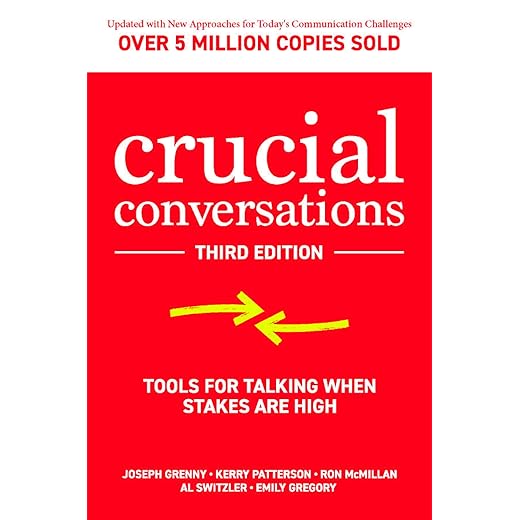
- Crucial Conversations: This classic offers powerful strategies for navigating high-stakes, emotional dialogues. Its focus is tactical and specific: how to create safety and mutual purpose in a single difficult conversation.
- Smart, Not Loud: Chen’s book is broader, focusing on developing an overall communication style and executive presence that makes all interactions more effective. It’s about building a baseline of influential communication so that fewer conversations escalate to become “crucial” in the first place.
Smart, Not Loud vs. How to Win Friends and Influence People by Dale Carnegie

- How to Win Friends: This is the timeless classic on interpersonal skills, centered on principles of likeability and persuasion. Its advice is universal but can sometimes feel geared towards a more traditionally outgoing, sales-oriented personality.
- Smart, Not Loud: This book is the modern, tailored update for a different temperament. It honors Carnegie’s principles but reframes them for individuals who are not naturally gregarious. It’s “influence for the modern introvert.”
If you liked Smart, Not Loud, you might also enjoy:
- Quiet: The Power of Introverts in a World That Can’t Stop Talking by Susan Cain: To explore the foundational science and cultural significance of introversion.
- Presence: Bringing Your Boldest Self to Your Biggest Challenges by Amy Cuddy: For a deeper, science-backed dive into the non-verbal aspects of confidence and influence.
- The Coaching Habit: Say Less, Ask More & Change the Way You Lead Forever by Michael Bungay Stanier: A fantastic guide for leaders on the power of asking questions—a natural superpower for many introverts.
Conclusion: Is Smart, Not Loud Worth Reading?
Smart, Not Loud is a resounding success and an essential read for its intended audience. Its incredible value lies in its ability to transform a perceived weakness—quietness—into a formidable strategic advantage. Jessica Chen provides more than just a confidence boost; she delivers a clear, actionable, and memorable framework (CAPTIVATE) that empowers introverted professionals to command respect and make their voices heard, entirely on their own terms.
Yes, this book is absolutely worth reading.
It is a must-read for any professional who has ever felt overlooked in a meeting, been told to “speak up more,” or struggled to project the quiet confidence they feel inside. It is especially crucial for emerging leaders who are determined to build an authentic and effective leadership style without faking extroversion. By brilliantly shifting the focus from volume to value and from noise to nuance, Smart, Not Loud provides the definitive playbook for quiet success in the modern workplace.
Have you read this book? Share your thoughts in the comments below