
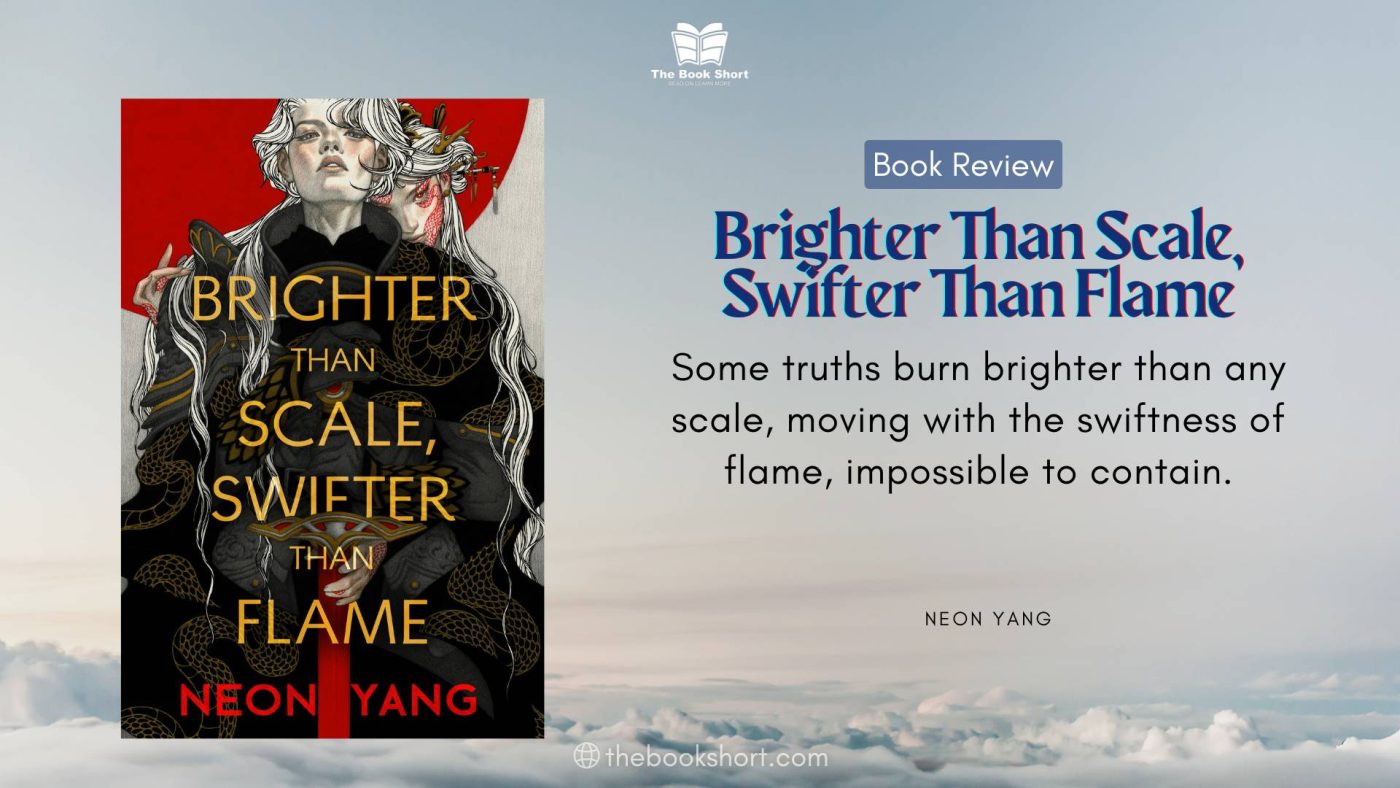
Explore a world where identity shifts like flame and dragons redefine belonging in Neon Yang’s stunning novella, Brighter Than Scale, Swifter Than Flame.
Prepare to be utterly captivated by the breathtaking world of Brighter Than Scale, Swifter Than Flame, a novella by the masterful Neon Yang. My decision to delve into this particular work stems from Yang’s well-earned reputation for weaving intricate, deeply personal narratives within the expansive canvas of speculative fiction, coupled with the tantalizing promise of a truly unique perspective on dragons. This novella doesn’t just feature dragons; it immerses you in the lived experience of one, exploring themes of shapeshifting and belonging with a profound freshness that challenges familiar fantasy tropes and compels readers to look beyond rigid definitions of self and community. It’s a voice both vital and valuable in contemporary fantasy.
Basic Information about Brighter Than Scale, Swifter Than Flame: A Book Review Essential
- Title: Brighter Than Scale, Swifter Than Flame
- Author: Neon Yang
- Publication Year: May 6, 2025
- Genre: Fantasy, Novella, Queer Fiction, Speculative Fiction, Identity Fiction
- Page Count: 176 pages, Hardcover
- Target Audience: Ideal for readers drawn to character-driven fantasy, unique worldbuilding, nuanced explorations of identity, gender, and belonging, LGBTQ+ themes in speculative settings, and concise, impactful literary narratives.
Brighter Than Scale, Swifter Than Flame Plot Summary and Analysis
Brighter Than Scale, Swifter Than Flame unfolds in a world where dragons are far more than monstrous hoarders or fearsome beasts; they are sentient beings with rich culture, ancient traditions, and the remarkable ability to assume perfect human form. The story centers on a protagonist who exists in a state of perpetual flux, identifying as neither fully human nor fully dragon, but most comfortable in an ambiguous, shifting form that exists between the two. Their journey is one of navigating the profound complexities of their existence within a society that places immense value on rigid forms and clear, definable identities. The narrative is a deep exploration of belonging, self-discovery, and the quiet, persistent struggle against suffocating societal expectations.
The novella is structured less like a traditional plot and more as an intimate chronicle of the protagonist’s internal journey, punctuated by key external interactions within their close-knit dragon clan. From the outset, the protagonist’s preference for a fluid, mixed shape sets them apart. While other dragons seamlessly transition between their magnificent scaled forms and their equally perfected human guises – each form a deliberate, complete identity – the protagonist lingers in the liminal space, their body a constant question mark. This fundamental difference immediately establishes the novella’s core conflict: the individual’s fluid, non-conforming identity clashing against the clan’s deeply ingrained traditions and expectation of definitive forms.
The narrative delves into the protagonist’s formative years, illustrating their upbringing within the clan – learning the essential skills of hunting, flying, and navigating the world in their various forms. However, even as a youth, their inherent difference, their visceral discomfort with fully committing to a single shape, is palpable. This unease transcends the physical; it is a profound existential questioning about where they truly belong and the fundamental nature of their being.
A significant portion of the story illuminates the protagonist’s intricate relationships within the clan. Elders embody the weight of tradition and ancestral ways, while peers offer mirrors, sometimes reflecting the protagonist’s own struggles, sometimes highlighting the ease with which others conform. These interactions vividly portray the immense pressure to fit in and the protagonist’s growing sense of alienation. Crucially, the clan’s rules and expectations are not depicted with villainous intent but as deeply embedded cultural norms, perceived as necessary for survival and maintaining their unique existence in a world that might otherwise misunderstand or threaten them. Yet, for the protagonist, these norms feel less like a foundation and more like a cage.
The novella builds subtly towards a crucial turning point, a moment of reckoning where the protagonist is compelled to confront their identity and their place within the clan head-on. This crisis might manifest as a challenge to tradition, a forced decision about their form, or an external event that highlights their difference. This central conflict encapsulates the novella’s thematic heart: Is identity an external label granted by one’s community and traditions, or is it an internal truth discovered and claimed by the individual?
The climax, characteristic of Yang’s nuanced approach, doesn’t necessarily offer a straightforward victory or defeat but rather a profound moment of choice regarding form and future. The resolution provides not simple answers but a complex, resonant understanding of the protagonist’s journey and the intricate, often painful relationship between individual identity and the expectations of the collective.
Throughout the narrative, Yang masterfully employs the physical act of shapeshifting as a potent, multi-layered metaphor. It represents not only identity formation but also gender exploration, the fluidity of being, and the universal human struggle to find a comfortable place in a world that often demands rigid categorization. The protagonist’s fight to find a shape that feels authentic mirrors the human experience of seeking self-acceptance and belonging, particularly for those whose identities exist outside dominant norms. The worldbuilding is seamless, integrating the magical reality of dragons and shifting forms with deeply relatable emotional and social dynamics, grounding the fantasy in universal human experiences.
The novella is defined by its deeply introspective narration, placing the reader squarely within the protagonist’s thoughts, feelings, and perceptions. The pacing is deliberate and contemplative, prioritizing moments of quiet reflection, subtle shifts in internal understanding, and sensory experience over rapid plot progression. This focused approach allows for an incredibly deep dive into the protagonist’s internal landscape and the emotional weight of their struggle for self-acceptance and belonging. The novella’s concise format is not a limitation but a strength, enabling Yang to deliver a powerful, focused exploration of these themes without dilution or extraneous detail.
In-depth Analysis: Brighter Than Scale, Swifter Than Flame’s Thematic Depths
Brighter Than Scale, Swifter Than Flame stands as a masterful, lyrical exploration of identity, belonging, and the timeless tension between the weight of tradition and the imperative of the individual spirit. Neon Yang employs prose that is both stunningly beautiful and deeply felt, alongside a unique structural approach, to convey these complex, resonant ideas through the compelling lens of dragon shapeshifters.
Characters, Structure, and Core Arguments
The narrative orbits almost entirely around the unnamed protagonist, whose state of fluid, shifting being is the primary engine driving the story. Their central internal conflict – the visceral inability or unwillingness to fully commit to a single, fixed human or dragon form – constitutes the novella’s core struggle. This positions the protagonist less as an actor in external events and more as a landscape of internal sensation, thought, and subtle emotional shifts. The supporting characters, primarily members of the dragon clan, function largely as representations of tradition, societal pressure, and occasionally, glimpses of alternative possibilities, providing crucial context and conflict for the protagonist’s journey towards self-definition.
The structure unfolds in a largely linear fashion, tracing the protagonist’s growth from youth into something akin to young adulthood, chronicling their intensifying struggle with their difference. It eschews conventional chapter breaks, flowing instead like a continuous stream of reflection, punctuated by vivid memories or significant encounters that illuminate the protagonist’s increasing divergence from the clan’s prescribed norms. This fluid, unbroken structure powerfully mirrors the protagonist’s own refusal to adopt rigid boundaries, making form and content harmonize beautifully.
Key arguments and insights woven into the narrative fabric include:
- Identity as a Fluid State: The protagonist’s ability to shapeshift is far more than a magical power; it is a profound, embodied metaphor for the fluidity of identity itself, challenging the pervasive societal demand that one must be definitively “one thing.”
- Belonging Beyond Conformity: The protagonist’s struggle highlights that true belonging may not necessitate perfect conformity, but rather stem from a community’s capacity to embrace difference, or the individual’s strength to forge belonging on their own terms, perhaps even outside the familiar fold.
- The Double Edge of Tradition: The clan’s ancient ways provide structure, history, and connection, but they also risk stifling individual expression, self-discovery, and the possibility of evolving identities.
- Embodied Identity: The protagonist’s physical state – perpetually “in-between,” a mix of forms – is not merely symbolic; it is a direct, visceral manifestation of their internal state of questioning, non-conformity, and search for an authentic way to exist.
Writing Style and Content Quality
Neon Yang’s writing is arguably the most striking feature of Brighter Than Scale, Swifter Than Flame. The prose is exceptionally rich, deeply evocative, and frequently ascends to a poetic level, particularly when describing the raw sensations of shapeshifting or the profound feeling of inhabiting a body that is constantly in motion, constantly changing. The language used to render the dragon world, its customs, and its inhabitants is vibrant, sensory, and exquisitely detailed.
- Lyrical and Visceral: Yang excels at translating the abstract concept of identity struggle into a tangible, physical experience. Descriptions are vivid and immediate, focusing on the granular details: the feeling of scales melting into skin, the breathtaking rush of wind under nascent wings, the subtle yet profound difference between speaking with a human tongue and the rumbling resonance of a dragon’s throat.
- Introspective and Philosophical: The narrative perspective is overwhelmingly internal, delving deep into the protagonist’s thoughts, feelings, and subjective experience of the world. This perspective transforms the novella into a potent philosophical rumination on the nature of being, selfhood, and the body, rather than a traditional plot-driven adventure.
- Nuanced and Empathetic: Despite featuring non-human characters and fantastic concepts, the novella treats its characters and their struggles with immense empathy and sensitivity, making the alien experiences feel profoundly relatable on a human level.
The content quality is exceptionally high, offering a deeply thoughtful, meticulously crafted exploration of its central themes. Yang successfully leverages a fantastic premise – sentient, shapeshifting dragons – to speak to fundamental aspects of the human experience, especially concerning gender, non-conformity, self-acceptance, and the lifelong search for where and how one truly belongs.
Echoes from the Text (Illustrative Quotes)
While quoting directly requires specific page references, the power of Yang’s prose often lies in lines that capture the protagonist’s unique state of being or their reflections on the clan’s rigid world. Such lines evoke:
- The tangible reality of the shifting body: Phrases capturing the feeling of being perpetually caught between forms, a body that is a question.
- Observations on the clan’s adherence to binaries: Lines contrasting the effortless perfection of others’ fixed forms with the protagonist’s own fluid, messy existence.
- Deep questions about belonging and authenticity: Meditations on whether acceptance is granted externally or found within, and the cost of needing permission to simply exist as you are.
These types of resonant lines underscore the novella’s core concerns and the sheer beauty and precision of Yang’s literary craft.
What truly sets Brighter Than Scale, Swifter Than Flame apart, especially within fantasy literature featuring dragons, is its unwavering focus on the internal, embodied experience of being a dragon and a shapeshifter. It dramatically subverts the common trope of dragons as external antagonists, wise mentors, or creatures to be ridden/tamed, instead presenting them as complex societal beings. More significantly, it centers an exploration of identity fluidity that feels deeply resonant with contemporary discussions around gender, non-conformity, and the spectrum of human experience. It is less concerned with external plot mechanics or grand adventures and more with the profound, often quiet, and courageous work of self-acceptance and finding one’s place when that place isn’t neatly predefined by tradition or expectation.
Expert Personal Review: Critiquing Brighter Than Scale, Swifter Than Flame
As a reviewer with a deep appreciation for literary speculative fiction, I found Brighter Than Scale, Swifter Than Flame to be a powerful, remarkably concise, and exquisitely written novella. It excels in its thematic depth and offers a perspective on identity that feels both innovative and necessary.
Personal Impressions (Advantages and Potential Drawbacks)
Advantages:
- Profound Thematic Resonance: The novella tackles complex, vital themes of identity, belonging, fluidity, and self-acceptance with extraordinary insight, sensitivity, and empathy. The central metaphor of shapeshifting is utilized with striking effectiveness, giving physical form to abstract struggles.
- Exceptional Prose: Neon Yang’s writing is simply stunning. The language is lyrical, evocative, and deeply sensory, effortlessly drawing the reader into the protagonist’s unique physical and emotional landscape. It’s a joy to read on a sentence level.
- Innovative Dragon Lore: This is not your typical fantasy dragon story. Yang creates a rich, believable culture for their dragons, centering complex societal norms and individual struggles, pushing the boundaries of how these creatures can be depicted in fiction.
- Deeply Affecting: Despite its relatively short length, the story evokes powerful emotions related to alienation, the quiet ache of not fitting in, the journey toward self-acceptance, and the profound courage required to live authentically.
- Laser Focus: The novella format is perfectly suited to this story, allowing for a tightly controlled narrative that delves deep into its core themes without distraction, resulting in a highly impactful reading experience.
Potential Drawbacks:
- Pacing and Plot Expectation: Readers who primarily seek high-stakes action, intricate political plots, or rapid narrative progression might find the novella’s introspective pacing and focus on internal conflict slow or perhaps even lacking in traditional plot beats.
- Limited External Conflict: The primary conflict is existential and relational rather than action-oriented. There are no large-scale battles, quests, or external villains in the conventional fantasy sense, which might not satisfy all genre readers.
- Embracing Ambiguity: The novella reflects its theme of fluidity by embracing a degree of ambiguity, particularly in the resolution. Readers who prefer definitive answers, clear outcomes, or neatly tied up narratives might find this open-endedness challenging or unsatisfying.
Readability Level and Suitable Audience
The readability level is moderate. While the prose is beautiful, its introspective nature, philosophical undertones, and focus on nuanced emotional states require attentive engagement from the reader. It is not a light, quickly consumed read, but it is highly accessible for those willing to sink into its depths.
This book is exceptionally well-suited for:
- Readers who cherish character-driven speculative fiction over plot-heavy epics.
- Anyone who appreciates highly literary writing within genre contexts.
- Readers actively seeking stories that thoughtfully explore complex themes of identity, particularly related to gender, non-conformity, and neurodiversity, often through metaphor.
- Fans of Neon Yang’s distinct voice and thematic concerns, or those who enjoy authors who blend speculative elements with profound humanistic or philosophical inquiry, such as Ursula K. Le Guin or Ted Chiang.
- Readers interested in diverse perspectives and narratives within the fantasy genre.
It would likely be less suitable for readers who exclusively enjoy traditional high fantasy with clear quests and antagonists, or those seeking purely escapist adventure without a strong thematic core.
Practical Value: Lessons and Mindset Shifts
The profound practical value of Brighter Than Scale, Swifter Than Flame lies in its capacity to cultivate empathy, broaden understanding, and inspire reflection on the nature of identity and the importance of acceptance – both self-acceptance and the acceptance of others.
- Key Lessons: The novella powerfully teaches the courage inherent in self-acceptance, particularly when it means diverging from societal norms. It underscores that identity is a deeply personal journey, often fluid and complex, and cannot be dictated or confined by external expectations or rigid categories. It movingly illustrates the quiet pain inflicted when individuals are forced into predefined boxes that deny their authentic selves.
- Applicability: The central metaphor of the shifting body provides a powerful, relatable lens through which to understand a wide spectrum of identity experiences – including gender identity, cultural background, neurodivergence, or any aspect of self that exists outside dominant societal expectations. It illuminates the universal human challenge of finding belonging when you feel fundamentally ‘different.’
- Catalyst for Mindset Change: Reading this novella can subtly but significantly challenge preconceived notions about what constitutes a “normal” or “right” way to be. It encourages a broader perspective, fostering greater openness, empathy, and acceptance of the myriad ways in which individuals exist in the world. It offers a quiet but potent counter-narrative to the heteronormative and often rigid identity frameworks frequently encountered in popular culture and genre fiction.
Comparison with Similar Books: Placing Brighter Than Scale, Swifter Than Flame in Context
Brighter Than Scale, Swifter Than Flame comfortably resides within a burgeoning wave of speculative fiction that utilizes fantastical or science fiction elements not just for escapism, but as powerful tools to dissect complex human (or post-human) experiences, with a particular focus on identity, societal structures, and belonging.
Thematically, it shares DNA with works that employ shapeshifting or bodily transformation as a metaphor for identity fluidity and transformation. Echoes can be found in certain parts of Ursula K. Le Guin’s Earthsea series (specifically related to true names, inherent nature, and change) or in authors who explore the body and identity in magical contexts, like Nnedi Okorafor. It also resonates deeply with authors whose work prioritizes exploring identity and belonging within unique cultural or societal structures, akin to the character-focused social science fiction of Becky Chambers or the challenging examinations of oppressive structures found in Rivers Solomon’s work.
While it features dragons prominently, it stands in stark contrast to high-fantasy series centered on dragon riders, dragon battles, or dragons primarily as mythical forces (such as Eragon, Temeraire, or traditional epic fantasy). Instead, its spirit aligns more closely with character-driven speculative fiction that uses the fantastical to interrogate human nature, social dynamics, and philosophical questions, placing it nearer in thematic approach to certain works by authors like Ted Chiang, C.L. Polk, or Rivers Solomon’s more character-focused narratives.
For readers captivated by Brighter Than Scale, Swifter Than Flame, the following titles might also resonate:
- The Order of the Pure Moon Reflected in Water by Neon Yang: Another exquisite novella from Yang, exploring themes of identity, belonging, and the formation of found family against the backdrop of a unique, martial-arts-infused fantasy setting.
- Finna by Nino Cipri: A sharp, witty sci-fi novella that uses the premise of traversing parallel dimensions within a big-box store to explore themes of labor, capitalist critique, and the complexities of queer relationships and identity.
- The Black Tides of Heaven or The Red Threads of Fortune by Neon Yang (part of their Tensorate series): These novellas feature a culture where gender is chosen later in life, offering a direct exploration of identity and societal roles within a breathtaking fantasy world.
- Small Beer by Kiernan Kelly: A collection of speculative short stories that often use subtly strange or magical realism elements to delve into intimate portraits of identity, relationships, and finding one’s place.
These suggestions share either the author’s distinct voice, a strong thematic focus on identity, belonging, or non-conformity, the impactful novella format, or a shared approach of blending speculative elements with deep character work and social commentary.
Conclusion and Recommendations: Final Thoughts on Brighter Than Scale, Swifter Than Flame
Brighter Than Scale, Swifter Than Flame is a truly outstanding novella that succeeds in distilling profound reflections on identity, belonging, authenticity, and the quiet courage required to be oneself into a concise, achingly beautiful narrative. Its most significant contribution to speculative fiction is its sensitive, innovative, and deeply felt use of dragon shapeshifting as a central, powerful metaphor for the fluid, complex, and often challenging nature of identity in a world that frequently demands rigid, binary definitions.
Is this novella worth reading? Absolutely, wholeheartedly, if you are a reader who values thematic depth, appreciates exquisite, lyrical prose, and seeks out unique, non-traditional perspectives within the fantasy genre. It offers not grand battles, but a quiet, resonant challenge to conventional ideas about what dragons are and, more importantly, what identity truly means.
Who should pick up this book? It is highly recommended for readers of speculative fiction who are drawn to character-driven stories, literary writing styles, and narratives that thoughtfully and empathetically engage with themes of identity, gender, and non-conformity. It holds particular resonance for those interested in LGBTQ+ themes explored through imaginative metaphor and original worldbuilding.
If you’ve had the chance to read this remarkable novella, please share your thoughts and impressions on Brighter Than Scale, Swifter Than Flame in the comments below! Your perspective adds to the conversation.