
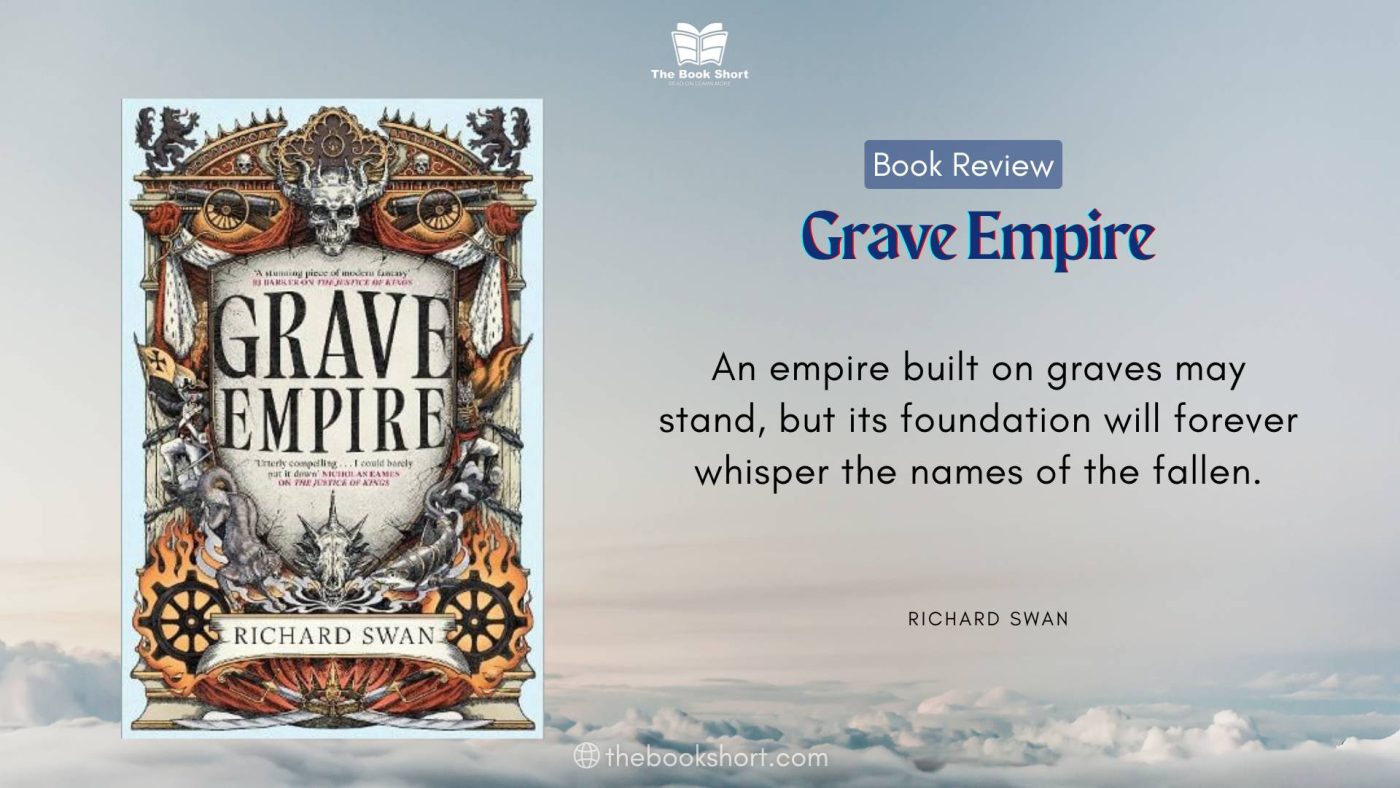
Uncover the Brutality of the Grave Empire: A Deep Dive into Richard Swan’s Grimdark Trilogy Conclusion. Delve into the heart of a crumbling world with Richard Swan’s Grave Empire, the devastating final chapter in The Empire of the Wolf trilogy. This article offers a comprehensive look at this gripping grimdark fantasy novel, exploring its intricate political landscape, potent magic system, and the compelling, morally complex characters caught in the empire’s final death throes.
Grave Empire Book: Essential Information
- Title: Grave Empire
- Author: Richard Swan
- Publication Year: February 4, 2025
- Genre: Fantasy (specifically Grimdark Fantasy, Political Fantasy, Epic Fantasy)
- Page Count: 544 pages
- Target Audience: Avid readers of grimdark and epic fantasy, enthusiasts of complex world-building, sharp political intrigue, and deeply flawed, compelling characters.
Grave Empire Summary: Navigating the Collapse
Richard Swan’s Grave Empire serves as the highly anticipated and brutal conclusion to The Empire of the Wolf trilogy, picking up the threads woven through the critically acclaimed The Justice of Kings and The Tyranny of Faith. This volume plunges readers back into the deeply grim and intricately realized Sovan Empire, a realm where the Emperor’s law is enforced with chilling finality, faith is a potent, often weaponized force, and ancient, terrifying magic claws its way back to the surface. The narrative skillfully shifts between multiple perspectives, centering primarily on Sir Konrad Vonvalt, a Justice whose unwavering adherence to the Emperor’s law is increasingly challenged by a lawless reality; Helena Sedlacek, his sharp-witted clerk whose burgeoning, forbidden necromantic abilities and profound moral conflicts form the emotional core of the story; and the newly introduced Baroness Lette von Brühl, offering a crucial, cynical insider’s view from the decadent, politically charged capital.
The story opens in the immediate aftermath of the catastrophic events that concluded The Tyranny of Faith, finding the Sovan Empire not merely weakened, but actively disintegrating. The central authority in the capital city of Magnimar is shattered, the Emperor’s power is tenuous, and the outlying provinces are either openly defiant or buckling under external threats and internal collapse. Even the mystical ‘divine right,’ or ‘God’s Breath,’ the very power that grants Justices like Vonvalt their authority, is proving volatile, unpredictable, and potentially corrupting to those who wield it.
The Emperor’s Desperate Gambit and Political Strife:
The overarching narrative thrust is centered around the Emperor’s ‘Calling’ – a last-ditch, desperate attempt to unify the splintered empire against the encroaching chaos. This summons brings together nobles, military leaders, and the remaining Justices to Magnimar, forcing uneasy and often dangerous alliances between rivals and enemies. Helena, now grappling more intensely than ever with her control over her necromantic powers, intimately linked to the vengeful spirit Bresson, accompanies Vonvalt to the capital. Their arrival immediately throws them into the treacherous currents of court politics, a world where betrayal is commonplace, power is the only currency, and assassination is a tool of statecraft. Lette von Brühl’s perspective is indispensable here, providing a sharp, cynical look at the machinations within the Emperor’s court and the futile, often self-serving attempts by loyalists to cling to order.
The Shadow of the Apostate and Forbidden Necromancy:
A relentless engine of the plot is the continued pursuit of the Apostate, the shadowy and enigmatic figure orchestrating the widespread resurgence of necromancy and sowing instability across the empire. As Vonvalt and Helena delve into the capital’s secrets, they uncover deeper layers of the Apostate’s horrifying plans and the true, terrifying scale of the necromantic network operating beneath the surface. Helena’s unique connection to Bresson and her own rapidly developing powers place her in an agonizingly precarious position – she is both a potential key to confronting the Apostate and a marked target for anyone who fears, or desires, her abilities.
The Erosion of Justice and the Crisis of Faith:
A central, amplified theme in Grave Empire is the profound unraveling of the very pillars the Sovan Empire was built upon: Justice and Faith. The Justices, once figures of absolute authority, are now viewed with suspicion, their ‘divine right’ seen as a fading, dangerous relic. The established Church’s doctrines are challenged not just by dissent, but by the undeniable, horrifying reality of forbidden magic. Vonvalt, the living embodiment of the old guard Justice, finds his rigid, black-and-white adherence to the law crumbling under the weight of a world where the law itself is irrelevant or actively perpetuates suffering. His complex relationship with Helena, a bond forged in mentorship and mutual respect, faces its greatest test as Helena confronts the terrifying moral implications of her powers and the deep hypocrisies inherent in the system Vonvalt still represents.
Rising Tides of Threat and Climactic Confrontations:
Beyond the internal decay of politics and the creeping horror of necromancy, the empire faces existential external dangers. The narrative expertly builds towards multiple climactic confrontations – political standoffs, desperate military actions, and horrifying displays of necromantic might. The very survival of the empire hangs in the balance, resting on the desperate efforts of the remaining loyal factions, including Vonvalt and Helena, to expose the Apostate’s ultimate objective and rally support against seemingly insurmountable odds. Swan masterfully weaves together intricate investigations, tense political encounters, brutal military engagements, and visceral magical duels, leading to a series of high-stakes conflicts that will irrevocably determine the fate of the Sovan realm.
Grave Empire delivers a sprawling, complex, and emotionally resonant conclusion that meticulously ties together the myriad threads introduced throughout the trilogy. It is a story deeply concerned with the devastating costs of power, the true nature of justice in a broken world, the corrupting influence of both magic and authority, and the sheer struggle for survival amidst a collapsing civilization. The narrative is dense with plot, rich in character development, and expansive in its world-building, demanding the reader’s full attention as it hurtles towards its brutal, impactful, and earned finale.
Grave Empire Analysis: The Weight of a Crumbling World in Grimdark Fantasy
Richard Swan brings The Empire of the Wolf trilogy to a resounding close with Grave Empire, a novel that fully embodies the grimdark aesthetic and thematic depth hinted at in its predecessors. The book is a profound exploration of decay – the physical and moral decay of an empire, the erosion of foundational faith and justice, and the literal decay unleashed by necromancy. This analysis reveals Grave Empire as a work deeply concerned with the crushing consequences of clinging to rigid ideals in a world steeped in moral compromise, and the terrible price individuals pay when crushed within the gears of history.
Characters, Structure, and Core Thematic Arguments:
The narrative structure relies heavily on multiple, shifting first-person perspectives, primarily those of Vonvalt, Helena, and Lette. This structural choice is not merely stylistic; it is essential to Swan’s purpose, allowing him to present the multi-faceted collapse of the empire from critically different angles: the staunch, aging Justice desperately trying to uphold a crumbling order; the gifted young acolyte grappling with forbidden power and questioning everything she once believed; and the sharp political operative navigating the viper’s nest of court intrigue with cynical pragmatism.
- Sir Konrad Vonvalt: Represents the dying, often contradictory, ideal of absolute, uncompromising justice. His arc in Grave Empire is one of heartbreaking confrontation with the limits of his authority and the potential hypocrisy woven into the very system he serves. He is forced to make agonizing choices that obliterate his strict moral boundaries, his internal conflict palpable as his black-and-white view of the world dissolves into shades of grey.
- Helena Sedlacek: Serves as the trilogy’s emotional and moral anchor. Her internal struggle with the entity Bresson and her terrifying necromantic powers is a powerful metaphor for grappling with inherent darkness, forbidden knowledge, and the burden of terrible gifts. Her perspective highlights the devastating human cost of the empire’s decline and offers a faint, complicated possibility of change, albeit one born from horrifying circumstances.
- Baroness Lette von Brühl: A vital and effective addition to the narrative. Her perspective provides an unvarnished, ground-level view of court politics, exposing the desperation, pervasive corruption, and ultimately futile power struggles occurring at the supposed heart of the empire. Her sharp pragmatism and fierce instinct for survival serve as a stark contrast to Vonvalt’s crumbling idealism and Helena’s profound internal turmoil.
Key arguments and themes powerfully explored by Swan include:
- The inherent fallibility, potential for corruption, and ultimate danger of absolute power and rigid, unyielding law.
- The corrosive nature of unchecked faith and its manipulation as a political or personal weapon.
- The brutal reality that significant change, even necessary societal shifts, often comes at a terrible cost and can arise from sources of profound darkness or destruction.
- The agonizing struggle between upholding idealism and succumbing to pragmatism in a world that relentlessly demands impossible, difficult choices.
Writing Style & Quality:
Swan’s prose maintains its signature clarity, precision, and evocative power throughout Grave Empire. He expertly employs a formal, almost archaic tone, particularly in Vonvalt’s sections, which lends an air of historical authenticity and gradually frays as the narrative spirals into chaos. The first-person perspectives excel at immersing the reader directly into the characters’ immediate thoughts, visceral fears, and painful experiences. Swan never flinches from the grim realities of his world; violence, death, political cruelty, and the sheer, unsettling horror of necromancy are depicted with unflinching realism, solidifying the novel’s grimdark bona fides.
The content quality remains exceptionally high, showcasing intricate plotting, consistent character development across the trilogy, and a masterful handling of pacing as the narrative builds towards its explosive conclusion. The world-building, drawing inspiration from early modern European history and infusing it with dark fantasy elements, feels richly detailed and lived-in. The political intrigue is genuinely complex and satisfying, and the magic system, while dark and often horrific, is deeply integrated into the narrative’s thematic concerns rather than feeling like a superficial addition.
Illustrative Passages:
- A passage capturing Vonvalt’s internal struggle between duty and doubt.
- A moment where Helena confronts the terrifying potential or cost of her powers.
- Dialogue or description that encapsulates the cynicism and backstabbing of the court.
- A vivid description highlighting the unsettling reality of necromancy and its impact on the world.
Swan’s unique blend of legal procedural elements (present in earlier books and echoed in Vonvalt’s mindset), political thriller, and visceral dark fantasy makes Grave Empire a standout conclusion. Unlike epic fantasies focused solely on grand battles, Swan grounds his story in the messy, often horrific realities of law, governance, and the profound personal cost of attempting to uphold a collapsing system. The concept of the Justice and their ‘Divine Right’, combined with the body-horror tinged necromancy and deeply cynical political landscape, carves out a distinct space for this trilogy within the fantasy genre. The sustained focus on internal character struggles, moral ambiguity, and the consequences of choice elevates the narrative far beyond simple good versus evil conflicts.
Grave Empire Review: A Brutal, Brilliant, and Unforgettable Finale
My personal impression of Grave Empire is overwhelmingly strong, albeit tempered by the sheer weight and bleakness of the narrative. Richard Swan has delivered a masterful, unflinching, and fittingly dark conclusion to his complex trilogy. The novel’s greatest strength lies in its virtuosic handling of multiple perspectives, each offering a distinct, compelling, and agonizingly personal window into the empire’s final moments. The character arcs, particularly those of Helena and Vonvalt, reach conclusions that feel deeply earned by their arduous journeys, even when they are tragic or morally compromised. The intricate political plotting is a major highlight, keeping the reader constantly engaged and uncertain of allegiances and motives until the very last pages. The grim, oppressive atmosphere is maintained with relentless consistency, making the threats, both mundane and magical, feel truly dire and impactful.
A potential point of caution for some readers is the book’s pervasive bleakness. Grave Empire offers virtually no traditional fantasy heroism or comforting, clear-cut victories. The tone is relentless, and while the ending is undeniably powerful and resonant, it is far from conventionally uplifting. Furthermore, the sheer complexity of the political landscape and the extensive cast of characters developed across the entire trilogy means that Grave Empire absolutely requires readers to have a solid grasp of the events and players from the previous two books. It is not designed as a standalone.
The readability level is best described as moderately high. While Swan’s prose is clear and precise, the density of the plot, the intricate political maneuvering, and the sophisticated philosophical and moral underpinnings of justice, faith, and power demand attentive reading. This is a book best suited for experienced fantasy readers who appreciate depth, intricate world-building, and narratives that delve into morally grey areas without offering easy answers. It is not a light beach read; it requires and rewards engagement with its dark themes and complex motivations.
The practical value of Grave Empire, and indeed the entire Empire of the Wolf trilogy, extends beyond mere entertainment. It serves as a potent fictional case study exploring themes of governance, the rule of law, the fragility of societal structures, and the ease with which ideals can be corrupted by power and circumstance. It offers profound, albeit dark, lessons on the dangers of absolute authority and prompts reflection on the nature of justice – is it a fixed, unwavering concept, or must it bend and break under the pressures of a chaotic world? It provides a stark, compelling narrative framework for contemplating the consequences of political and social decay. For aspiring writers, it stands as an exceptional example of how to bring a complex, multi-threaded epic fantasy narrative to a satisfying, thematically consistent, and emotionally impactful conclusion, even when that conclusion is steeped in darkness.
Grave Empire Comparison with Similar Grimdark Fantasy
Grave Empire firmly solidifies Richard Swan’s position as a significant voice within the modern grimdark fantasy landscape. Its compelling fusion of legalistic elements, intense political machinations, and visceral dark fantasy aligns it with several highly regarded series in the genre.
Readers who found themselves captivated by the harsh realities and complex characters of Grave Empire might also find themselves drawn to:
- The First Law series by Joe Abercrombie: Widely considered a benchmark for grimdark, Abercrombie’s work shares Swan’s focus on cynical characters, brutal realism, and a world where traditional heroes are absent and morality is a fluid, often inconvenient concept. Both series excel at character-driven narratives within a harsh political and martial landscape.
- The Faithful and the Fallen series by John Gwynne: While perhaps possessing slightly more conventional fantasy elements than Swan’s work, Gwynne’s series features sprawling political conflict, warring factions, and a strong sense of historical groundedness infused with fantasy, appealing to readers who enjoy large-scale conflicts and complex loyalties.
- The Broken Empire series by Mark Lawrence: A foundational series in modern grimdark, Lawrence’s trilogy, particularly the journey of Jorg Ancrath, explores themes of destruction, decay, and finding purpose in a ruined world, echoing the pervasive sense of collapse found in Grave Empire.
- The Powder Mage series by Brian McClellan: While featuring a unique gunpowder-era setting and magic system, McClellan’s work also delves into the aftermath of revolution, crumbling political structures, and characters navigating a chaotic, morally grey world, sharing Swan’s interest in the mechanics of power and conflict.
Swan’s trilogy, culminating in Grave Empire, distinguishes itself through its unique central concept of the ‘Justice’ and the unstable ‘Divine Right’ power, weaving it intricately into both the magical system and the political structure. This provides a fresh twist on the typical political fantasy narrative. Furthermore, the consistent use of intimate, first-person perspectives grants a level of personal connection and emotional weight to the grand-scale collapse that is not always present in epic fantasy, making the empire’s fall feel deeply personal to the reader through the eyes of Vonvalt, Helena, and Lette.
Grave Empire Conclusion and Final Recommendations
Grave Empire stands as the masterful, brutal, and entirely fitting conclusion to Richard Swan’s exceptional Empire of the Wolf trilogy. Its outstanding value lies in its unflinching portrayal of a world not merely threatened, but actively consumed by collapse, driven forward by complex, deeply flawed characters and intricate, often heartbreaking political maneuvering. It successfully weaves together profound themes of justice, faith, power, and decay into a narrative that is as intellectually stimulating as it is viscerally impactful and emotionally resonant.
Is Grave Empire worth reading? Absolutely, but with the crucial understanding that this is the final book in a meticulously constructed trilogy. Its full impact and meaning are entirely reliant on having read The Justice of Kings and The Tyranny of Faith. For those who have followed Vonvalt and Helena’s arduous, often painful journey, Grave Empire provides a powerful, dark, and ultimately satisfying resolution.
Who should read this book? It is essential reading for fans who have invested in The Empire of the Wolf trilogy. Beyond that, it is highly recommended for readers who appreciate rich, character-driven grimdark fantasy, complex political thrillers embedded within a fantasy setting, and stories that are unafraid to explore the darker aspects of human nature and the devastating consequences of societal breakdown. If you were captivated by the moral complexities and sharp prose of the previous books, this conclusion is unmissable. Newcomers to Swan’s world should unequivocally start with the first book.
Have you journeyed into the crumbling Sovan Empire with Grave Empire? Share your thoughts and impressions in the comments below!