
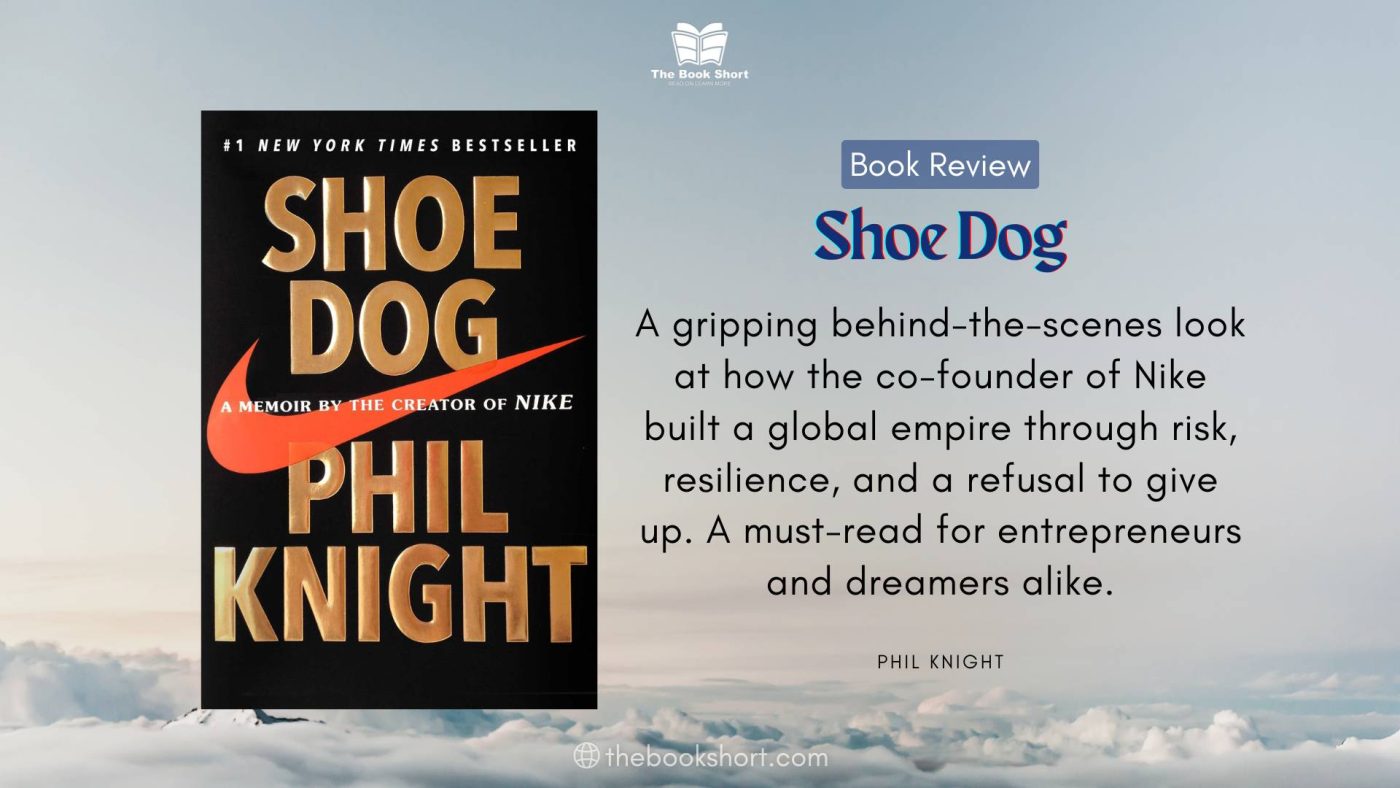
The unfiltered, gripping memoir of Nike creator Phil Knight. A must-read for entrepreneurs and dreamers seeking the raw truth behind an empire.
From a wild, audacious idea sparked in a quiet business class to a global cultural phenomenon, Shoe Dog is Phil Knight’s remarkably candid account of building Nike. I was drawn to this book because it bravely strips away the polished corporate veneer, revealing the gritty, chaotic, and intensely human reality of founding a groundbreaking company. Its raw honesty and intimate, behind-the-scenes look offer invaluable lessons that resonate far deeper than typical business platitudes. It’s less a blueprint for success and more a testament to sheer will, quirky visionaries, and the relentless pursuit of a “crazy idea.”
Essential Details: Shoe Dog by Phil Knight
- Title: Shoe Dog: A Memoir by the Creator of Nike
- Author: Phil Knight
- Year of Publication: 2016
- Genre: Memoir, Business Autobiography, Entrepreneurship
- Pages: Approx. 386 (Note: page count can vary slightly by edition)
- Ideal Reader: Aspiring entrepreneurs, business history enthusiasts, sports fans, anyone intrigued by underdog stories, and readers who appreciate authentic, personal narratives of struggle and triumph.
Shoe Dog Summary: The Nike Origin Story Unpacked
Shoe Dog dives deep into the foundational, often tumultuous, decades of Blue Ribbon Sports, the fledgling company that would ultimately morph into the global titan, Nike. It’s less a dry business history and much more a vivid, personal narrative fueled by struggle, relentless perseverance, and the kind of against-all-odds success that feels almost mythical – but is shown here in painstaking, human detail.
The Spark of a “Crazy Idea”
The story ignites with a young Phil Knight, fresh from Stanford Business School. His pivotal thesis paper, exploring the untapped potential of importing high-quality, low-cost running shoes from Japan to challenge the dominance of European giants like Adidas and Puma in the U.S. market, planted the seed he calls his “Crazy Idea.” But this wasn’t merely academic; it was deeply personal. A runner himself, albeit a modest one, Knight felt a profound, almost spiritual, connection to the sport and spotted a gaping hole in the market for truly innovative, affordable athletic footwear.
Fueled by ambition and a modest $50 loan from his father, Knight embarked on a transformative round-the-world trip in 1962. His primary mission: to visit Japan. In Kobe, he secured a pivotal meeting with the Onitsuka Tiger company. Standing before their executives, with no company name, no real business infrastructure, and just boundless belief, he improvised brilliantly. On the spot, he declared his nascent venture “Blue Ribbon Sports” and somehow secured the exclusive distribution rights for Onitsuka shoes in the Western United States. This audacious bluff, born of necessity and daring, marked the undeniable birth of the company.
Forging the Path: The Hustle and the Eccentric Team
Returning stateside, Knight began the relentless grind, selling shoes directly from the trunk of his car at track meets across the Pacific Northwest. This period vividly illustrates the grassroots hustle, the sheer grit, and the person-to-person marketing that defined Blue Ribbon’s infancy. Knight was a one-man band: salesman, accountant, inventory manager, and chief dreamer.
He quickly realized this impossible task required more than one pair of hands. The book introduces a remarkable, often eccentric, but fiercely dedicated cast of characters who became the soul of Blue Ribbon Sports:
- Bill Bowerman: Knight’s former track coach at the University of Oregon. A legendary, intensely focused innovator, Bowerman was constantly tinkering with shoe designs, driven by a singular passion for improving athletic performance. He became Knight’s partner, contributing essential technical expertise and groundbreaking prototypes, including the now-famous waffle sole, reportedly inspired by his wife’s waffle iron.
- Jeff Johnson: The company’s first full-time employee. A passionate runner, gifted salesman, and spiritual guide, Johnson became the company’s heart and soul on the ground. He tirelessly set up early retail stores, wrote thousands of personal handwritten letters to customers, and built the deep relationships that fostered early loyalty.
- The Early Crew (“Buttheads”): Knight affectionately dubs the core group of early hires this moniker. Many were former athletes, drawn not by lavish salaries or corporate stability, but by a shared love for running and an almost fanatical belief in the “Crazy Idea.” They were a motley crew of misfits, bound by shared hardship and a revolutionary spirit.
- Penny Parks (Later Knight): Phil’s future wife, who entered the chaotic world of Blue Ribbon Sports, providing much-needed stability, perspective, and unwavering support amidst the constant crises and relentless demands of the burgeoning business.
A Constant Tightrope Walk: Financial Crises and Near Collapse
The narrative is a relentless series of financial cliffhangers. Blue Ribbon Sports existed in a perpetual state of near-bankruptcy. Cash flow was a never-ending nightmare. Banks were deeply hesitant to lend to this unconventional, rapidly expanding, yet financially precarious operation. Knight recounts the gut-wrenching stress of scrambling to make payroll, the sheer anxiety of placing massive shoe orders they couldn’t technically afford, and the constant, exhausting struggle to find new lines of credit just to survive.
- The Strain with Banks: Knight details the often-antagonistic relationship with banks, particularly the First National Bank of Oregon, which seemed to perpetually threaten to cut off their credit lifeline. These moments of desperation forced the company into increasingly risky maneuvers just to stay afloat.
- The Breakup with Onitsuka: The partnership with Onitsuka Tiger, initially the company’s foundation, eventually fractured. As Blue Ribbon Sports grew, developing its own design capabilities influenced heavily by Bowerman’s innovation, tensions mounted. Onitsuka began seeking other distributors, leading to a dramatic, messy breakup and protracted legal battles. This crisis, terrifying at the time, ironically forced Blue Ribbon to take the leap and produce its own shoes – a pivotal, defining moment.
The Phoenix Rises: The Birth of Nike
The split from Onitsuka was a moment of existential terror, yet ultimately, it was the necessary catalyst. It compelled Blue Ribbon Sports to shed its skin and create its own distinct brand identity. The name “Nike” was proposed by Jeff Johnson, inspired by a dream of the Greek goddess of victory (Nike). The globally recognizable “Swoosh” logo was designed by a graphic design student, Carolyn Davidson, for a mere $35. These foundational elements were brought together under immense pressure and impossibly tight deadlines to launch their first independent line of athletic shoes.
Expansion, Growing Pains, and Fierce Competition
The book charts Nike’s expansion beyond running into other sports, detailing the painful learning curves in manufacturing, and the intense, often brutal, competition from established industry giants like Adidas and Puma.
- Navigating Global Manufacturing: Figuring out overseas production, ensuring consistent quality control, and managing timely, reliable delivery presented enormous logistical hurdles.
- Building the Brand: The focus gradually evolved from solely performance-driven design (Bowerman’s technical legacy) to strategically building a powerful brand identity, leveraging key athletes, and cultivating a distinct culture that resonated with consumers.
- Enduring Legal Battles: The contentious divorce from Onitsuka resulted in draining, years-long legal battles that diverted precious resources and relentlessly tested the company’s resolve and morale.
The Finish Line (and a New Starting Line): Towards the IPO
The final chapters build towards the company’s highly anticipated Initial Public Offering (IPO) in 1980. This landmark event represented both the culmination of nearly two decades of relentless struggle and a fundamental transition. Knight reflects candidly on the decision to go public, the significant wealth it created for the loyal early employees (the “Buttheads”), and his complex, mixed feelings about transforming from a scrappy, private company into a publicly traded corporate entity.
Knight doesn’t conclude with a simple victory lap. He offers a profound, introspective look at the personal cost of building this empire – the strain on his marriage and family, the missed moments, the crushing weight of constant stress. The book ends not just with financial success and global recognition, but with a deep sense of hard-won accomplishment and a moving meditation on the nature of work, competition, passion, and legacy. It is ultimately a story of visionary perseverance, unconventional thinking, the power of collaboration, and an almost fanatical belief in the transformative power of a “crazy idea.”
In-Depth Analysis: Why Shoe Dog Resonates
Shoe Dog stands as a masterclass in authentic storytelling within the often-sanitized world of business memoirs. Its profound success stems from its unwavering commitment to portraying the raw human experience of building a company, prioritizing personal truth over a polished corporate mythology.
Characters, Structure, & Underlying Themes
- The Human Element: The book’s greatest strength lies in its vivid, affectionate, yet honest portrayal of the early Nike team. These aren’t faceless corporate figures; they are passionate, deeply quirky, and often flawed individuals presented with genuine warmth and respect. Knight depicts himself as introverted, perpetually anxious, yet possessing a quiet, fierce drive fueled by an almost spiritual connection to his mission. He is surprisingly adept at navigating complex relationships and existential crises. The characters feel profoundly real, making their collective struggles, sacrifices, and eventual triumphs deeply relatable and inspiring.
- Narrative Flow: The structure is broadly chronological, tracing the company’s journey from 1962 through the 1980 IPO. However, it’s far from a dry timeline. Knight employs a compelling narrative voice, zeroing in on pivotal moments, moments of crisis, and deeply personal reflections. He masterfully uses cliffhangers, particularly surrounding financial deadlines and legal battles, to maintain tension and draw the reader forward. The structure itself mirrors the unpredictable, often chaotic nature of building the business – leaping across continents, grappling with production nightmares, and simultaneously battling competitors and skeptical bankers.
- Key Themes Explored:
- The Irresistible Pull of a “Crazy Idea”: The memoir powerfully underscores the vital importance of pursuing a genuine passion project with almost irrational determination, even when facing widespread doubt and overwhelming odds.
- The Power of Grit and Resilience: The narrative is a relentless testament to the nature of true entrepreneurship. Success was not a linear path; it was a continuous, exhausting battle against financial ruin, legal challenges, logistical nightmares, and internal friction. Knight vividly shows that survival often came down to sheer, stubborn refusal to give up.
- Team as Foundation: While Knight is the narrative’s core, the book makes it unequivocally clear that Nike was forged by a dedicated collective. The unique bond between these early employees, tempered in the fire of shared hardship and mutual belief, was absolutely crucial to their enduring success.
- Embracing Risk and Learning from Near-Failure: The book is punctuated by moments where everything hung precariously in the balance. Knight unflinchingly details these near-death experiences, illustrating that calculated (and sometimes desperate) risks are inherent to innovation and growth, and that learning from setbacks is not just essential, but unavoidable.
- Work as a Calling: Knight frequently frames his decades-long pursuit of building Nike in almost spiritual terms – not merely about commerce, but about creating something meaningful, fulfilling a deep personal calling, and pushing human potential, both for the athletes they served and the team he led.
Writing Style and Content Quality
Knight’s writing is remarkably intimate, reflective, and often possesses a surprising literary quality for a business memoir. He deliberately avoids corporate jargon, opting instead for evocative language, deeply personal anecdotes, and frank internal monologues. The tone is consistently humble, honest, and often endearingly self-deprecating. He openly admits his fears, his numerous mistakes, and the constant, crushing weight of stress he carried.
The content’s quality is exceptionally high precisely because of its unflinching authenticity. Knight doesn’t attempt to curate a flawless image of himself or the company’s journey. He lays bare the arguments, the betrayals, the moments of financial desperation, and the sheer physical and emotional exhaustion. This raw, vulnerable honesty provides a far deeper and more valuable insight into the entrepreneurial crucible than typical sanitized success stories. It is fundamentally a story of human effort, driven by passion, rather than a mere recital of business strategies.
What Makes Shoe Dog Stand Out
Unlike many business memoirs that focus primarily on strategic brilliance, market timing, or abstract leadership principles, Shoe Dog places the emotional and personal toll of entrepreneurship front and center. It’s less concerned with the how (in terms of replicable strategies for today’s market) and deeply invested in exploring what it felt like – the fear, the hope, the bone-deep exhaustion, the intoxicating exhilaration of building something from nothing. Knight doesn’t position himself as an infallible, visionary genius but as a determined, often overwhelmed individual holding chaos at bay through sheer force of will and the unwavering dedication of his core team. The focus on the dynamic relationships within the core team and the raw, precarious financial reality makes the book feel less like a corporate history and more like a gripping, unpredictable adventure story.
Memorable Shoe Dog Quotes
- “The cowards never started, and the weak died along the way. That leaves us.” (This quote powerfully encapsulates the relentless, almost Darwinian struggle of the early, lean years).
- “We were a band of brothers… bound by a common bond: the knowledge that working for Blue Ribbon was a little weird, a little off-center, and that was okay. If the world thought we were odd, fine. We’d show the world.” (Beautifully illustrates the unique, resilient culture and potent underdog mentality forged in shared purpose).
- “I’d tell men and women in their midtwenties not to settle for a job or a profession or even a career. Seek a calling. Even if you don’t know what that means, seek it. If you’re following your calling, the fatigue will be easier to bear, the disappointments will be fuel, the highs will be like nothing you’ve ever felt.” (A core piece of Knight’s personal philosophy on finding meaningful work).
- “Life is growth. If we stop growing, technically and spiritually, we are as good as dead.” (Highlights the persistent drive for innovation, adaptation, and personal evolution).
- “It’s never just business. It’s personal.” (A recurring theme emphasizing the deep emotional investment and personal sacrifice inherent in the entrepreneurial journey).
Shoe Dog Review: An Editor’s Perspective and Personal Take
Shoe Dog isn’t just a business book; it’s one of the most compelling and emotionally resonant memoirs I’ve had the pleasure of reading. My personal impression is overwhelmingly positive. It avoids the pitfalls of dry corporate narratives, instead unfolding as a deeply human story that reads with the pace and character depth of a great novel.
Strengths of Shoe Dog:
- Unvarnished Authenticity: Knight’s willingness to be brutally honest about the fears, doubts, and frequent screw-ups is incredibly refreshing and profoundly relatable.
- Captivating Narrative: The book is genuinely difficult to put down. It’s packed with dramatic turning points, moments of near-catastrophe, vivid characters, and unexpected bursts of triumph.
- Humanity First: It wisely centers on the people behind the global brand – their relationships, their individual quirks, and their collective, unwavering commitment.
- Real-World Inspiration: It offers inspiration not through platitudes, but by showing the sheer grit required to overcome constant, daunting obstacles. It’s motivating precisely because it doesn’t sugarcoat the difficulty.
- Unique Behind-the-Scenes View: It provides an unparalleled look into the messy, often chaotic, process of building a major global brand from a truly scrappy, uncertain start.
Minor Weaknesses:
- Occasional Repetition: At times, the detailed accounts of successive financial crises and legal battles can feel slightly repetitive, though this effectively conveys the relentless, cyclical pressure Knight and the team faced.
- Historical Context Specificity: While the underlying lessons are universal, the specific challenges of importing from Japan in the 60s/70s or dealing with banking regulations of that era aren’t directly applicable to today’s business landscape. Its value lies more in the mindset and principles than in a modern playbook.
Readability and Target Audience Suitability:
The book is exceptionally readable. Knight’s prose is engaging, accessible, and conversational. It’s well-suited for a broad audience, extending far beyond those with a specific business background. Anyone interested in history, sports, entrepreneurship, the history of iconic brands, or simply a powerful story about overcoming adversity will find it rewarding.
Practical Value for Readers:
- Mindset Transformation: It powerfully instills the values of perseverance, resilience, adaptability, and the courage to pursue a vision, even when others deem it “crazy.” It fundamentally reframes failure not as an endpoint, but as an inevitable, essential part of the journey.
- Realistic Entrepreneurial Insight: It provides a ground-level, honest view of the immense challenges involved in building a startup – the financial strain, the emotional toll, the constant need for creative problem-solving, and the loneliness at the top.
- Championing Team and Culture: It highlights with vivid examples how crucial the right group of passionate, dedicated individuals and a strong, shared culture are to navigating challenges and achieving enduring success.
- Understanding Risk: It demonstrates through compelling anecdotes that significant growth and innovation often necessitate taking calculated, sometimes terrifying, risks.
In summary, Shoe Dog doesn’t offer a simple formula for achieving success. Instead, it provides something arguably far more valuable: an utterly honest, deeply human account of what it truly takes – the sacrifices, the struggles, the sheer belief – to build something truly great from nothing. It is a profound testament to grit, passion, the power of an unconventional team, and the enduring impact of believing in the improbable.
Comparing Shoe Dog to Other Business & Entrepreneurship Books
Shoe Dog carves out a unique space for itself within the genre of business literature. While it shares themes with other entrepreneurial narratives and corporate biographies, its memoir format, deeply personal perspective, and unflinching focus on the emotional journey set it apart from more traditional or strategic business books.
Compared to books like:
- The Lean Startup by Eric Ries: This is a foundational text focused on a specific methodology for building modern, often tech-based, companies using iterative development and validated learning. Shoe Dog is a descriptive historical narrative, offering lessons embedded within the story rather than a prescriptive, repeatable framework.
- Delivering Happiness by Tony Hsieh (Zappos): While both memoirs emphasize the critical importance of company culture and customer dedication, Hsieh’s book focuses more on scaling a unique culture in the digital age, whereas Knight’s is rooted in the physical world of manufacturing, retail, and athlete relationships in an earlier era.
- Steve Jobs by Walter Isaacson: Isaacson’s is a comprehensive, external biography of a complex, often difficult figure based on extensive interviews. Shoe Dog is Knight’s own account, offering an inherently subjective and personal perspective, which provides unique intimacy but is less comprehensive in assessing external impact or multiple viewpoints.
If you were captivated by Shoe Dog, you might also appreciate:
- The Hard Thing About Hard Things by Ben Horowitz: Another refreshingly honest look at the brutal, emotional realities of building, leading, and managing a startup, particularly in the tech world, sharing a similar emphasis on navigating crises and difficult decisions.
- Let My People Go Surfing by Yvon Chouinard (Patagonia): A memoir from another unconventional founder who built a powerful, values-driven company. It shares insights into creating a unique culture, adhering to a core mission, and facing the challenges that come with growth, all told with a strong personal voice.
- Creativity, Inc. by Ed Catmull (Pixar): While focused on fostering creativity within a major animation studio, this book resonates with Shoe Dog through its exploration of building a unique company culture, empowering teams, and navigating growth challenges, all told with personal insights from a founder.
These books share Shoe Dog‘s commitment to authenticity, exploring the personal side of leadership and entrepreneurship, even as they operate in different industries and historical contexts.
Conclusion: Why You Should Read Phil Knight’s Shoe Dog
Shoe Dog transcends being merely the origin story of Nike; it is a profound, compelling testament to the entrepreneurial spirit, the indispensable value of relentless perseverance, and the critical human need to find meaning and purpose in one’s work. Its outstanding value lies in its raw, unvarnished honesty, bravely revealing the messy, anxiety-ridden, and often chaotic reality that existed behind the seemingly effortless rise of a global cultural icon. It makes it abundantly clear that Nike’s success was never a foregone conclusion; it was hard-fought, earned inch by painstaking inch, against formidable and often overwhelming odds.
Is Shoe Dog worth reading? Absolutely, unequivocally yes. It is an inspiring, gripping, and deeply educational read for anyone, regardless of their professional background.
Who stands to gain the most from reading Shoe Dog?
- Aspiring and current entrepreneurs seeking a realistic, non-sugarcoated view of the entrepreneurial journey.
- Business students desiring to understand the fundamental struggles and messy reality of building a major company from the ground up.
- Anyone interested in the fascinating history of Nike, the evolution of sports culture, or significant American business narratives.
- Individuals seeking genuine motivation drawn from a true story of overcoming immense, seemingly insurmountable challenges.
- Readers who simply appreciate a compelling, well-written personal memoir that delves into the depths of human drive and resilience.
Have you journeyed through the pages of Shoe Dog? Share your own insights and reflections on Phil Knight’s story in the comments section below!