
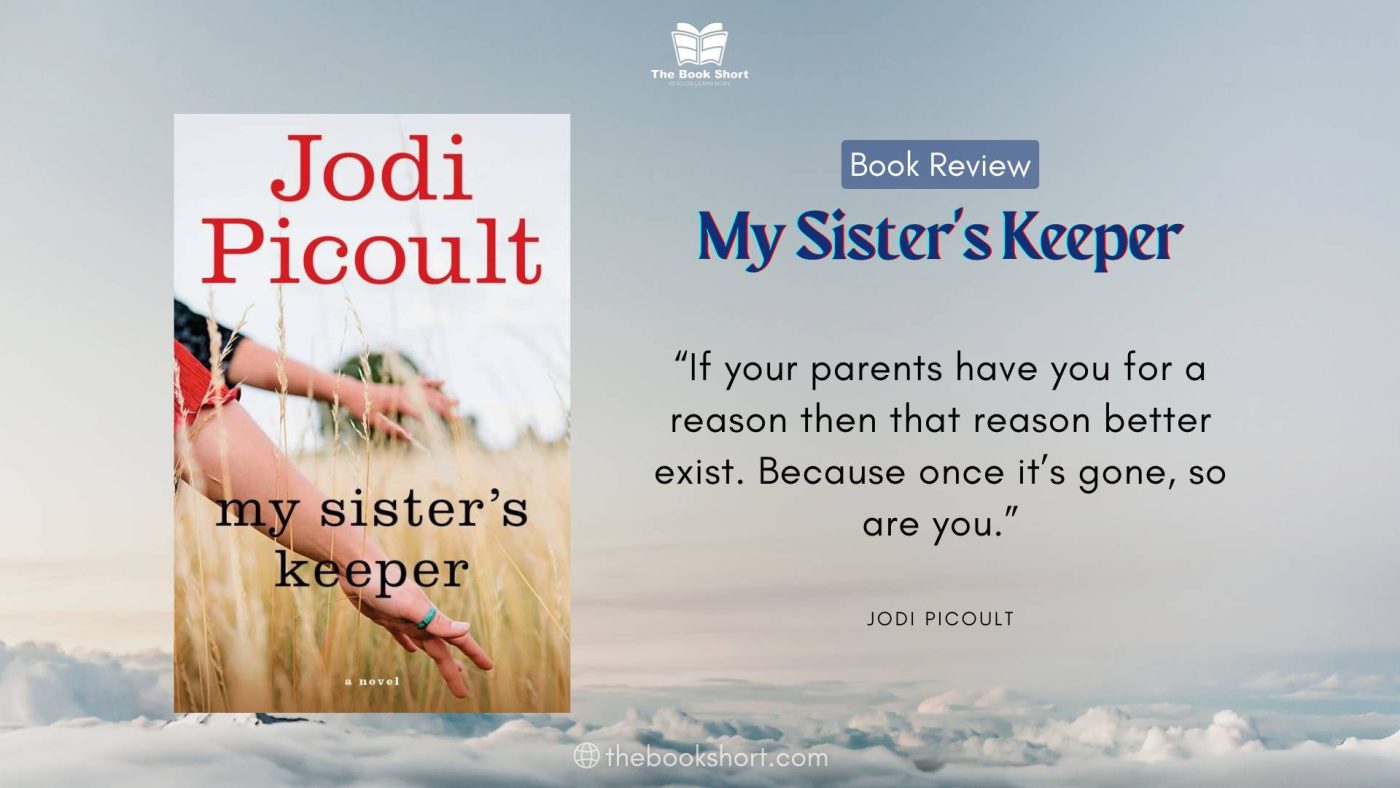
Prepare to be drawn deep into the heart-wrenching world of the Fitzgerald family, bound together by fierce love yet pulled apart by an almost unbearable choice. This review plunges into Jodi Picoult’s compelling novel, My Sister’s Keeper. I chose this title because it fearlessly confronts profound ethical questions surrounding family duty, personal sacrifice, and the fundamental right to control one’s own body. It weaves a narrative so emotionally charged and structurally inventive that it sparks significant debate and introspection, making it a truly unforgettable reading experience.
Understanding My Sister’s Keeper: Book Basics
- Title: My Sister’s Keeper
- Author: Jodi Picoult
- Year of publication: 2004
- Genre: Contemporary Fiction, Family Saga, Legal Drama, Medical Ethics
- Number of pages: Approximately 432 pages (Check your specific edition)
- Target audience: Adult and Young Adult readers interested in ethical dilemmas, complex family dynamics, medical issues, legal fiction, and thought-provoking reads.
Synopsis and Key Events in My Sister’s Keeper
Jodi Picoult’s My Sister’s Keeper unfurls the deeply emotional and morally intricate story of the Fitzgeralds, whose lives are entirely consumed by the battle against acute promyelocytic leukemia ravaging their eldest daughter, Kate. The narrative pulses with life through the shifting perspectives of multiple key characters: Anna, the younger sister; Sara, the mother; Brian, the father; Jesse, the older brother; and Campbell Alexander, the lawyer drawn into their crisis. This multi-voice approach is fundamental to grasping the multifaceted tension at the novel’s core.
The story opens with a premise designed to shock and immediately engage: thirteen-year-old Anna Fitzgerald is suing her own parents for medical emancipation. Her existence is inextricably linked to Kate’s illness; from birth, Anna was conceived through in vitro fertilization specifically to be a “savior sibling,” a genetic match intended to provide life-saving biological material for Kate. For thirteen years, Anna has undergone a series of procedures – blood draws, bone marrow aspirations, apheresis – acting as a living medical supply for her sister’s treatments and transplants.
But now, Kate’s condition is critical. Her kidneys are failing, requiring a transplant, and Anna is, predictably, the ideal donor. This demand becomes the line in the sand for Anna. Weary of a life defined solely by her sister’s medical needs and facing a major surgery with significant personal risks and long-term health implications, Anna seeks legal counsel to gain autonomy over her own body and medical decisions.
The central conflict explodes into a courtroom battle. The ensuing trial becomes the stage where the family’s history, hidden motivations, and long-held secrets are laid bare. Through vivid flashbacks woven into each character’s present-day narrative, the reader uncovers the painful reality of Kate’s lifelong struggle with cancer, Sara’s fierce, all-consuming determination to save Kate at any cost (often at the expense of others), Brian’s quieter, burdened attempts to hold the family together, Jesse’s rebellious facade masking deep feelings of neglect, and Anna’s poignant perspective on a life never truly her own.
Sara, a former lawyer herself, opts to represent her family against her own daughter and Anna’s attorney, Campbell Alexander. This decision elevates the legal fight into a deeply personal, emotionally devastating war played out in public. Campbell, a sharp lawyer with a mysterious past and his trusty service dog, Judge, takes on Anna’s seemingly impossible case, navigating the complex legal and ethical minefield. The trial proceedings dissect the arguments for and against Anna’s emancipation, probing sensitive issues like parental rights versus a child’s right to bodily autonomy, the ethical quandary of creating a child for medical purposes, the limits of family obligation, and the very definition of self.
Parallel to the courtroom drama, the novel portrays the family’s daily life and struggles outside the legal arena. Kate’s deteriorating health looms large, creating a palpable sense of urgency and a ticking clock. Jesse’s troubled behavior serves as a stark indicator of his own pain and feelings of displacement within the family unit. Brian, grounded by his profession as a firefighter, often finds himself caught between his wife’s relentless intensity and the individual needs of his children. Anna’s relationship with Kate, despite their extraordinary circumstances, is depicted with tender complexity, challenging any simple interpretation of Anna’s lawsuit as mere selfishness or rebellion.
As the trial unfolds, buried family truths and devastating secrets surface, particularly shedding light on Kate’s own feelings and the true catalyst behind Anna’s lawsuit. The tension mounts as the court weighs the arguments, forcing both the characters and the reader to confront uncomfortable questions about life, death, love, and the ultimate sacrifices we might be willing to make for those we hold dear. The novel culminates in a dramatic, controversial conclusion that forces a re-evaluation of everything that came before, leaving a powerful and lasting impact on the reader.
Deep Dive: Themes and Style in My Sister’s Keeper Analysis
My Sister’s Keeper transcends the typical medical drama; it’s a searing examination of complex ethical, moral, and emotional landscapes. Jodi Picoult masterfully employs a multi-perspectival structure to dissect themes that resonate long after the final page, inviting readers into the very heart of the family’s turmoil.
Characters, Structure & Key Arguments
The novel’s most distinctive and effective structural element is its rotation of first-person narrators. Chapters switch viewpoints between Anna, Sara, Brian, Jesse, Campbell Alexander, and occasionally, Kate. This allows Picoult to construct a 360-degree view of the central conflict, ensuring that the reader never settles into seeing any single character as purely right or wrong. Each voice offers a crucial, often heartbreaking, perspective on the family’s shared history, their individual motivations, and their unique burdens of pain and love.
- Anna: Her voice is often raw and vulnerable, portraying a life lived entirely in the shadow of her sister’s illness, raising fundamental questions about her own identity and right to exist independently.
- Sara: Driven by an almost primal maternal instinct, her perspective reveals the agonizing, sometimes blinding, choices a parent makes when faced with losing a child, even as it highlights her neglect of her other children’s emotional needs. Her chapters are intense and fiercely protective.
- Brian: Offers a quieter, more reflective voice, often caught between his wife’s intensity and his children’s suffering. His perspective provides moments of grounding and illustrates the struggle to maintain equilibrium under immense pressure.
- Jesse: Represents the often-overlooked older child, his narrative simmering with bitterness and rebellion, thinly masking deep pain, loyalty, and love for his sisters.
- Campbell Alexander: Provides the external, professional legal perspective, navigating the intricate ethical and legal landscape with sharp wit, though hints of his own past add layers of complexity to his involvement.
- Kate: Though her direct perspective appears less frequently, her voice is crucial, revealing the immense weight of her illness, her guilt, and her complex relationship with her role in the family’s dynamic.
This narrative structure is vital to the book’s power. It prevents the reader from forming easy judgments, compelling empathy for each character’s position, even Sara’s most controversial actions. The key arguments brought to the forefront, both in court and within the family’s internal struggles, revolve around:
- Bodily Autonomy: Exploring the rights of a minor to make life-altering decisions about their own body, especially when those decisions profoundly impact others.
- Medical Ethics: Grappling with the morality and implications of creating a child specifically to serve as a medical resource for another.
- Family Obligation vs. Individual Rights: Defining the boundaries of duty and sacrifice within a family unit. To what extent is one person obligated to give of themselves, physically and emotionally, for another?
- Identity Formation: How does one forge a sense of self when their very existence and purpose are defined by someone else’s illness?
- Grief, Loss, and Acceptance: Examining the varied and often painful ways individuals within a family cope with chronic illness and the ever-present specter of death.
Writing Style & Content Quality
Picoult’s writing is characteristically accessible and highly engaging, making incredibly heavy and complex topics approachable for a broad audience. She employs clear, direct language, allowing the raw emotional weight of the story and the urgency of the ethical dilemmas to propel the narrative. Her strength lies in crafting authentic dialogue and insightful internal monologues that deeply reveal character motivations and inner turmoil. The integration of medical facts and legal procedural details feels well-researched and organic, adding authenticity to the high-stakes drama without becoming overly technical.
The content’s quality is outstanding in its capacity to provoke thought and challenge deeply held assumptions. Picoult excels at presenting morally gray situations with remarkable nuance. Unlike some novels that might cast characters in clear heroic or villainous roles, My Sister’s Keeper ensures that every character, even Sara in her most relentless moments, is portrayed with compelling complexity, vulnerability, and humanity. The meticulous research into both the medical aspects of Kate’s illness and the legal intricacies of a medical emancipation case adds a layer of credibility that anchors the emotional intensity.
Notable Quotes from the Book
These quotes offer glimpses into the characters’ struggles and the novel’s core themes:
- “If you want to know the truth, maybe you should ask for it.” (A recurring whisper reflecting the unspoken burdens and hidden realities within the family.)
- “I am not a commodity. I am not a tank of organs.” (Anna’s powerful, desperate assertion of her own personhood and rights.)
- “Maybe we are like magnets, Kate and I… doomed to be forever intertwined.” (Capturing the inescapable, complicated bond between the sisters.)
- “When you are a parent, you are not a person anymore. You are a compass.” (Sara’s perspective, revealing the depth of her self-sacrifice and the narrow focus of her world.)
What truly distinguishes My Sister’s Keeper from other novels in the family drama or medical fiction genres is Picoult’s unflinching willingness to place the most uncomfortable ethical questions at the absolute center of the story. By structuring the novel almost entirely around the legal trial and relying heavily on the multiple, often conflicting, viewpoints, she makes the question of “who is right?” the driving force. This focus, combined with the controversial premise of the savior sibling and its exploration through a legal battle for bodily autonomy, sets it apart from more traditional narratives centered on illness or family struggles.
Review & Reader Suitability
My Sister’s Keeper is a profoundly moving and challenging read that undeniably left a significant and lasting impression on me.
My personal impression is one of deep engagement and emotional turmoil. Picoult masterfully pulls you into the raw, painful reality of the Fitzgerald family, making their impossible struggles feel intensely personal and real. The multi-perspective structure, while initially requiring a slight mental adjustment to shift voices, ultimately proves to be the novel’s greatest strength, constructing a rich, nuanced tapestry of conflicting emotions and valid viewpoints. The legal drama is utterly compelling, and the ethical questions it forces to the surface are genuinely complex, lacking easy answers.
One aspect that could be perceived as a disadvantage, depending on a reader’s preference, is the sheer intensity of the focus on the moral dilemma and the characters’ often agonizing internal and external conflicts surrounding it. The emotional pitch remains high throughout. Furthermore, some readers might find certain characters’ actions deeply frustrating or the novel’s widely discussed ending controversial – which, importantly, feels like Picoult’s deliberate intention: to provoke debate and challenge expectations.
In terms of readability, My Sister’s Keeper is highly accessible. Picoult’s prose is clear and direct, ensuring that the book is suitable for a wide range of adult and young adult readers. While the themes are weighty and the subject matter heavy, the writing style is not overly dense, allowing readers to become fully absorbed in the emotional and ethical drama without getting bogged down.
This book is particularly well-suited for:
- Readers fascinated by ethical debates, moral philosophy in action, and complex dilemmas.
- Fans of character-driven family sagas that explore deep emotional bonds under pressure.
- Individuals curious about medical ethics, patient rights, and the profound complexities chronic illness introduces into family life.
- Readers who enjoy legal dramas with significant moral stakes.
- Book clubs actively seeking a title guaranteed to generate lively discussion and diverse opinions.
The practical value of reading My Sister’s Keeper lies in its powerful ability to foster empathy and sharpen critical thinking skills. It compels readers to step into multiple perspectives within an agonizing situation, pushing beyond simplistic notions of right and wrong. It encourages profound reflection on the nature of sacrifice, the evolving definition of family in the face of modern medical possibilities, the limits of parental authority, and the fundamental human right to bodily autonomy. Engaging with this novel can absolutely shift one’s mindset, prompting deeper consideration of complex ethical situations in both personal life and the broader societal context.
Comparing My Sister’s Keeper to Similar Reads
My Sister’s Keeper stands out vividly for its direct, intense engagement with the savior sibling concept and its bold structure centered on the resulting legal battle for medical emancipation. However, it shares thematic territory with other powerful novels exploring stressed family dynamics, medical ethics, and the tension between individual rights and familial needs.
If you were captivated by the complex family relationships, the deep dive into ethical dilemmas, and the emotional intensity of My Sister’s Keeper, you might also find these reads compelling:
- Other novels by Jodi Picoult: Picoult frequently explores controversial social or family issues with multi-perspective structures and legal elements. Titles like The Pact (dealing with a suicide pact), Handle With Care (exploring a family suing over a child’s disability), or Nineteen Minutes (examining a school shooting from multiple angles) offer similar thought-provoking depth.
- My Sister’s Keeper by Claire Keegan: (Note: This is a different book entirely!) While a much shorter work set in Ireland, this stunning novella also deals with hidden family truths, vulnerability, and the quiet, often overlooked, needs of children within complicated family structures. It offers a different kind of emotional resonance.
- Five Feet Apart by Rachael Lippincott: This Young Adult novel explores the lives of teenagers with cystic fibrosis who must maintain strict physical distance due to their illness, raising questions about independence, connection, and living under the constant shadow of medical limitations, echoing the themes of life defined by illness.
- The Immortal Life of Henrietta Lacks by Rebecca Skloot: This acclaimed non-fiction work provides a crucial, real-world perspective on medical ethics, patient rights, and bodily autonomy through the true story of Henrietta Lacks, whose cells were taken and used for scientific research without her knowledge or consent, sparking a major ethical debate.
These books, much like My Sister’s Keeper, challenge readers to think critically about incredibly difficult situations and the often painful intersections of medicine, law, personal autonomy, and deeply human relationships.
Final Verdict: Should You Read My Sister’s Keeper?
My Sister’s Keeper offers outstanding value not just as a gripping family drama, but as a powerful, expertly crafted ethical case study. It doesn’t shy away from presenting an almost unthinkable scenario, forcing readers to confront uncomfortable questions about where the lines should be drawn when it comes to life, death, family obligation, and individual rights.
Is it worth your time? Absolutely. It is a book designed to stay with you, prompting passionate debate and significant personal reflection long after you’ve turned the final page.
Who should make space for it on their reading list? Anyone seeking genuinely thought-provoking fiction, especially those interested in ethical dilemmas, complex family stories, or legal dramas that probe beneath the surface. Its controversial nature and multi-layered narrative make it an exceptional choice for book clubs looking for a discussion catalyst.
Have you journeyed into the world of the Fitzgerald family? Share your thoughts and whether the book changed your perspective in the comments below!