
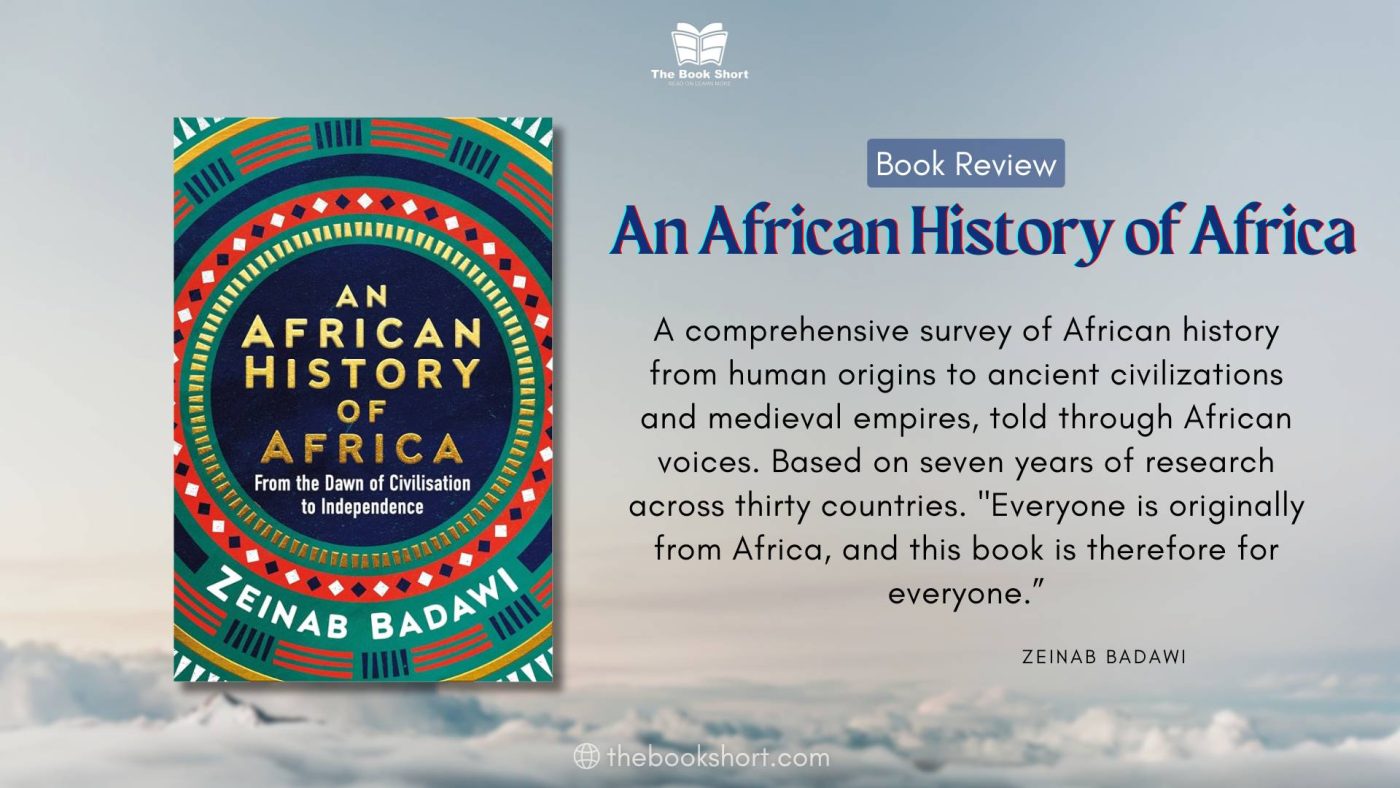
Uncover Africa’s true past. Zeinab Badawi challenges colonial narratives, sharing millennia of history from an African perspective. Essential reading.
Essential Information about An African History of Africa by Zeinab Badawi
Here’s what you need to know about this landmark publication:
- Title: An African History of Africa: From the Dawn of Humanity to Independence
- Author: Zeinab Badawi
- Year of Publication: 2024
- Genre: History, Non-fiction (specifically African History, World History, Decolonial Studies)
- Number of Pages: Approximately 600 pages (note: this may vary slightly depending on the edition)
- Target Audience: General readers interested in global history, students and educators seeking an accessible yet authoritative overview of African history from an African viewpoint, and anyone wishing to challenge Eurocentric historical narratives.

African History of Africa, An: From the Dawn of Humanity to Independence
Comprehensive Summary of An African History of Africa: Unpacking Millennia of African History
Zeinab Badawi’s An African History of Africa is a powerful and sweeping narrative that decisively shifts the focus of African history away from the often-dominant Eurocentric viewpoints. Born from her extensive travels across the continent and deep engagement with African scholars, communities, archaeology, and historical records, Badawi constructs a history that vividly portrays the agency, ingenuity, and complex societies of African peoples over millennia. The book masterfully covers a vast chronological and geographical landscape, charting the continent’s story from humanity’s earliest beginnings right up to the pivotal era of post-colonial independence.
The heart of the book explores key periods and enduring themes, revealing the richness and dynamism of African civilizations:
The Deep Past: Africa as the Cradle of Humanity and Ancient Civilizations
The journey begins by firmly rooting African history in its most ancient soil, acknowledging the continent’s unparalleled significance as the birthplace of humanity. It then explores the magnificent civilizations that flourished long before extensive European interaction.
- Early Human Origins & Societies: A look at the earliest stages of human development, the diverse hunter-gatherer societies that thrived across varied African environments, and the independent development of agriculture in different regions.
- Ancient Egypt Integrated: Crucially, Badawi integrates Ancient Egypt firmly within the African narrative, exploring its indigenous roots and its deep connections and interactions with neighboring African kingdoms, particularly the powerful and often-overlooked kingdom of Nubia (Kush), with its own remarkable legacy of pyramids, writing systems, and state formation.
- The Splendour of Axum and North Africa: Exploration of the influential Aksumite Kingdom in modern-day Ethiopia and Eritrea, a major player in Red Sea and Indian Ocean trade, and the complex histories of North African states like Carthage, followed by the distinct experiences under Roman, Vandal, and Byzantine rule, analyzed within the broader context of the African continent.
The Rise of Powerful Kingdoms and Empires Across Africa
The book extensively details the emergence and flourishing of sophisticated political, economic, and cultural systems throughout the continent, showcasing powerful states and intricate trading networks that shaped regional and global history for centuries.
- Great West African Empires: Compelling accounts of the renowned empires of the Sahel – Ghana, Mali, and Songhai. Badawi illuminates their immense wealth derived from the trans-Saharan trade in gold, salt, and enslaved people, their advanced administrative structures, celebrated centers of learning like Timbuktu, and the complex integration of Islam.
- Kingdoms of Central and Southern Africa: Exploration of significant states further south, including the centralized Kongo Kingdom in Central Africa, known for its early interactions with Europeans, and the Mutapa Empire and the awe-inspiring Great Zimbabwe in Southern Africa, evidenced by monumental stone architecture and control over lucrative gold trade routes.
- Vibrant East African City-States: The Swahili coast is brought to life as a dynamic melting pot of trade and cultural exchange, linking Africa to the vast Indian Ocean world. Badawi describes the prosperity of city-states such as Kilwa, Mombasa, and Zanzibar, built on a thriving trade in resources and goods, characterized by a unique Swahili culture blending African, Arab, and Indian influences.
Confronting the Devastating Impact of the Transatlantic Slave Trade
Badawi tackles the horrific reality of the transatlantic slave trade with unflinching honesty, examining the internal dynamics within Africa and the roles played by various African groups, while unequivocally condemning the barbaric system and its profound, enduring consequences for the continent and the diaspora.
- Context and Mechanisms: Explaining how pre-existing forms of servitude and warfare were tragically exploited and transformed by the insatiable demand from European and American colonies.
- Societal Impact and Disruption: Discussing the catastrophic depopulation, widespread destabilization, and economic distortion inflicted upon the most affected regions, and the fundamental alterations to social structures and political landscapes.
The Era of Colonialism and Fierce African Resistance
A substantial part of the book focuses on the period of European colonization, yet its strength lies in its unwavering focus on African experiences, agency, and the myriad forms of resistance rather than solely on the actions of the colonizers.
- The Scramble for Africa: Describing the rapid, brutal partition of the continent by European powers in the late 19th century, driven by ruthless economic exploitation, intense political rivalry, and deeply entrenched racist ideologies.
- Highlighting African Resistance: Emphasizing the diverse and sustained resistance to colonial rule, encompassing everything from large-scale armed revolts (like the Maji Maji Rebellion or the Anglo-Zulu War) to passive resistance, sophisticated political organizing, and the crucial efforts to preserve cultural identity and autonomy. The narrative consistently foregrounds the determination and agency of those who fought against or navigated the oppressive colonial system.
- Analyzing Colonial Rule’s Legacy: Examination of the different systems of administration (direct vs. indirect rule), the systematic economic exploitation (resource extraction, forced cash crops), social engineering (designed education systems, racial segregation), and the imposition of arbitrary borders whose effects continue to shape the continent today.
The March Towards Independence
The concluding chapters chronicle the rise of powerful African nationalist movements and the complex struggles that ultimately led to independence across the continent in the mid-20th century.
- Emergence of Visionary Leaders and Movements: Profiling the key figures, organizations, and ideologies (ranging from Pan-Africanism to socialism and democracy) that spearheaded the fight for self-determination and sovereignty.
- Paths to Freedom: Detailing the varied routes to independence, including negotiated settlements, protracted armed struggles, and massive waves of popular mobilization.
- Navigating the Challenges of Nationhood: Briefly exploring the immense complexities and difficulties faced by newly independent nations as they grappled with inherited colonial structures, economic development, political stability, and the task of forging national identity.
Throughout this expansive history, Badawi seamlessly integrates political events with vital social, economic, and cultural aspects, always centering African voices and lived experiences. She actively challenges long-held misconceptions and harmful stereotypes, presenting a narrative that pulsates with dynamism, complexity, resilience, and profound humanity.
In-depth Critical Analysis of An African History of Africa
Zeinab Badawi’s An African History of Africa is not merely a chronicle of events; it is a deliberate, impassioned act of historical recovery and reinterpretation. The book’s fundamental purpose is to offer a history from Africa, told through an African lens, serving as a crucial counterpoint to the centuries of external narratives that have often distorted, diminished, or ignored the continent’s true past, focusing instead on its interactions with outsiders.
Structure, Core Arguments, and Methodological Choices
The book follows a broadly chronological arc from deep prehistory to the independence era. Within this framework, Badawi navigates through time and space, often organizing by region or focusing on significant themes like the rise of empires, the slave trade, or colonialism. While this can mean shifting geographical focus, it effectively highlights the continent’s immense diversity and the complex interconnections between different regions and periods.
A defining structural element is the framing narrative provided by Badawi’s personal journey. The book is interspersed with accounts of her travels across Africa, meeting and interviewing historians, archaeologists, community elders, and everyday people. This is far more than anecdotal colour; it is a powerful methodological choice that foregrounds the importance of contemporary African scholarly perspectives, oral traditions, and local knowledge – sources often marginalized in conventional historical accounts. It brings a vivid, human dimension to the historical narrative.
The core arguments resonate throughout the text, powerfully reinforced at every turn:
- Affirming African Agency: Rejecting the pervasive myth of Africa as a passive entity shaped solely by external forces, Badawi consistently underscores the active roles of African leaders, communities, and societies in determining their own paths. Whether building vast empires, resisting invaders, establishing sophisticated trade networks, or creating rich cultural forms, Africans are shown as dynamic agents of history.
- Decentering Eurocentrism: The book directly confronts and dismantles deeply ingrained myths and stereotypes often perpetuated by colonial and post-colonial Western scholarship. It powerfully positions African civilizations, economies, and political systems as sophisticated, independent entities, not mere footnotes to European history or primitive precursors.
- Celebrating Diversity and Complexity: Badawi steadfastly avoids treating Africa as a monolithic whole. She meticulously illustrates the stunning array of distinct societies, languages, religions, political structures, and environmental adaptations across the continent, revealing its incredible internal variety and richness.
- Recognizing Continuity Amidst Change: While acknowledging the transformative impacts of forces like the spread of Islam, the slave trade, and colonialism, the book also subtly reveals the enduring threads of continuity in African history, such as persistent trade routes, resilient cultural practices, and adaptable forms of social organization.
Writing Style, Accessibility, and Historical Depth
Badawi’s writing style, honed over decades as a distinguished journalist and broadcaster, is arguably one of the book’s most significant strengths. She renders complex historical information remarkably clear, engaging, and accessible to a broad readership.
- Exceptional Accessibility: The language is direct, lucid, and refreshingly free of academic jargon, making this monumental history approachable for general readers without historical expertise.
- Compelling Narrative: Badawi seamlessly weaves together rigorous historical facts, archaeological discoveries, and evocative personal anecdotes from her travels, creating a compelling narrative flow. The inclusion of her own experiences connecting with people across Africa adds a vital human element, grounding the history in contemporary African perspectives and living memory.
- Authoritative Voice: Despite the accessible style, the content is clearly the result of extensive research, drawing upon a wide range of scholarly sources, often filtered and enhanced through her interviews with leading African experts today. This is not just a popular summary, but a carefully constructed synthesis of current historical understanding presented through a necessary and vital lens.
- Nuanced Perspective: While passionately advocating for an African perspective and sharply critical of the devastating legacies of colonialism and slavery, Badawi maintains a nuanced approach when discussing the roles of various actors, including African leaders involved in the slave trade or internal conflicts.
Illustrative Themes and Underlying Message
While specific quotes require direct access to the text, the powerful thematic thrust of Badawi’s work can be conveyed:
- On reclaiming the narrative: “Africa’s history has been too often viewed and interpreted through the eyes and interests of outsiders. My purpose is to illuminate the continent’s own story, as lived and told by Africans themselves.” (Reflecting the book’s core mission)
- On pre-colonial achievements: “Long before European explorers or colonizers arrived, Africa was a continent of powerful empires, sophisticated states, bustling trade networks, and vibrant centers of learning that stood alongside any in the world.” (Highlighting agency and achievement)
- On the lasting impact of colonialism: “The arbitrary borders imposed by colonial powers, drawn with scant regard for existing societies or ethnic identities, created a complex and often challenging inheritance for the newly independent nations.” (Addressing a key legacy)
- On enduring resilience: “Despite enduring immense traumas, from the transatlantic slave trade to the brutality of colonialism, African peoples have consistently demonstrated extraordinary resilience, adaptability, and an unyielding determination to shape their own futures.” (Emphasizing strength and hope)
In sum, the analysis reveals a book of profound significance, not only for the wealth of historical information it contains but for the transformative perspective it champions. It serves as a vital corrective history, deliberately crafted to empower African voices and provide readers with a far richer, more accurate, and deeply human understanding of the continent’s ancient and dynamic past. Its immense strength lies in its accessible synthesis of deep scholarship, its compelling narrative style, and its unwavering commitment to showcasing African agency.
Evaluation & Expert Personal Review of An African History of Africa
An African History of Africa by Zeinab Badawi is, without hyperbole, a genuinely essential book for anyone seeking a truthful and comprehensive understanding of world history. It offers a desperately needed counterpoint to the pervasive, often negative, and overwhelmingly Eurocentric narratives that have long dominated global historical understanding. My personal impression is one of deep admiration and gratitude for this work. The book succeeds brilliantly in its monumental ambition to present a sweeping history of an entire continent from its own perspective, achieving remarkable accessibility without sacrificing historical depth or critical insight.
Major Strengths (Why You Should Read This Book):
- Transformative Perspective: This is the book’s greatest contribution. Badawi doesn’t just add African details to a pre-existing Western framework; she fundamentally recenters the narrative. The story begins in Africa, focusing on internal developments, African innovations, and African responses to external pressures. It is a history viewed from the inside out.
- Immense Scope and Clarity: Covering thousands of years of history across a continent as vast and diverse as Africa is an astonishing feat. Badawi manages this with impressive clarity, providing a vital overview that effectively connects disparate periods, regions, and themes, from ancient kingdoms to the fight for independence.
- Exceptional Accessibility and Engagement: Badawi’s background as a world-class journalist shines brightly. The writing is clear, dynamic, and flows beautifully, making complex history utterly engaging. The inclusion of her personal journey, travels, and interviews adds a compelling human dimension that makes the history feel immediate, relevant, and deeply connected to the present.
- Powerful Myth-Busting: The book actively and convincingly dismantles common, harmful stereotypes about Africa being ‘without history,’ ‘primitive,’ or its people being passive recipients of external events. It powerfully highlights African achievements, complex societal structures, sophisticated political systems, and courageous acts of resistance throughout history.
- Synthesizing Complex Information: Badawi expertly synthesizes vast amounts of historical research, archaeological findings, and oral traditions into a coherent, readable narrative, making scholarly knowledge accessible to a wide public audience hungry for this information.
Minor Considerations (Points to Note):
- Pacing and Depth: Given the truly immense scope of covering an entire continent’s history from humanity’s dawn to independence in a single volume, some periods, regions, or specific events necessarily receive less detailed attention than others. At times, the rapid movement across centuries and geographies can feel slightly condensed, though this is almost an inherent challenge in a history of this scale.
- Structure: While generally chronological, the book’s shifts between regions and thematic focuses can occasionally require a reader less familiar with African geography and timelines to pause and orient themselves. However, this structure also effectively emphasizes diversity and interconnectedness.
Readability Level and Ideal Audience:
The book is exceptionally readable for a general audience. It assumes no prior in-depth knowledge of African history. It is highly suitable for:
- Enthusiastic General Readers: Anyone curious about world history, eager to broaden their perspective beyond Western-centric narratives, or simply looking for a compelling and well-written history book.
- High School and University Students: An invaluable primer or supplementary text that provides a crucial, decolonized perspective often missing from standard curricula. It makes complex historical periods accessible.
- Educators at All Levels: An essential resource for teachers seeking to enrich their understanding of African history, diversify their teaching materials, and challenge ingrained biases.
- Individuals with African Heritage or Connections: This book will likely resonate deeply, offering an empowering narrative that celebrates the rich legacy and agency of African peoples.
Practical and Intellectual Value:
The practical value of An African History of Africa extends far beyond the acquisition of historical facts; it lies in its profound capacity to reshape understanding and challenge ingrained biases.
- Transformative Understanding: It fundamentally challenges and corrects pervasive, often negative, and deeply inaccurate stereotypes about Africa and its peoples. Reading this book offers a powerful, essential corrective, fostering a far more informed, respectful, and nuanced view of the continent and its place in global history.
- Essential Knowledge Base: It provides readers with foundational, yet sophisticated, knowledge about Africa’s deep past, the complexity and achievements of its pre-colonial societies, the brutal realities of the slave trade and colonialism viewed from an African perspective, and the hard-won struggles for independence.
- Inspiration for Further Exploration: While comprehensive as an overview, the book also serves as an excellent springboard, likely sparking readers’ interest to delve deeper into specific periods, regions, or themes through more specialized works.
Fundamentally, this book is not just recounting history; it is performing a vital act of historical justice and reframing. It is an empowering, enlightening, and absolutely essential read that highlights the ingenuity, resilience, and enduring strength of African cultures, societies, and peoples throughout history.
Comparison with Similar Works on African History
An African History of Africa stands as a significant contribution within the growing body of scholarship and popular writing that aims to tell the continent’s story from an African or less Eurocentric standpoint. It distinguishes itself through its remarkable combination of sweeping historical scope, accessible narrative style informed by journalistic prowess, and the powerful framing provided by Zeinab Badawi’s personal research journey and extensive interviews.
Compared to older foundational texts, such as those by pioneering historians like Basil Davidson (The African Genius, Africa in History), Badawi’s book benefits from decades of crucial new archaeological discoveries, historical research, and evolving methodologies. While Davidson was instrumental in his time for challenging colonial narratives and highlighting pre-colonial African achievements, Badawi’s work feels more contemporary, synthesizing recent scholarship and, crucially, placing a stronger, more explicit emphasis on contemporary African scholarly perspectives and oral histories collected directly through her travels and connections.
More strictly academic works by renowned scholars like John Iliffe (Africans: The History of a Continent) or the numerous works by Professor Toyin Falola offer immense scholarly depth and detail but are often structured and written in a way that can be less immediately accessible to a broad general readership than Badawi’s book. Badawi masterfully navigates the space between rigorous scholarship and engaging popular history, drawing on deep historical knowledge while maintaining a compelling narrative flow perfectly suited for a wide audience. Her background as a seasoned journalist and broadcaster enables her to distill complex historical processes and information with remarkable clarity and impact.
Perhaps closer comparisons can be found in other recent efforts to popularize African history, but few manage Badawi’s unique synthesis of a personal research journey, continent-wide chronological scope from deep prehistory to independence, and consistent centering of diverse African voices and perspectives.


If You Found An African History of Africa Engaging, Consider Exploring:
- Walter Rodney – How Europe Underdeveloped Africa: A seminal and provocative text that argues forcefully that European exploitation actively hindered Africa’s independent development trajectories. While focusing more intensely on economic history and carrying an explicitly political analysis, it shares Badawi’s critical examination of external impacts on the continent.
- Basil Davidson – The African Genius / Africa in History: Classic works that were among the first to significantly challenge colonial-era histories and emphasize the complexity and achievements of pre-colonial African societies. They offer a valuable, slightly older, but still relevant perspective.
- Howard W. French – Born in Blackness: Africa, Africans, and the Making of the Modern World, 1471 to the Second World War: A powerful, more geographically focused history that argues compellingly for the centrality of Africa and Africans to the shaping of the modern world, particularly through the dynamics of the Atlantic economy and the slave trade. It offers a different, but complementary, perspective on a crucial period.
- Books on Specific African Empires or Regions: Having gained a broad overview from Badawi, readers might wish to delve deeper into specialized studies on areas like Ancient Nubia, the Mali Empire, the Kingdom of Benin, the Swahili Coast, or specific resistance movements during the colonial era.
Zeinab Badawi’s book serves as an exceptional and highly recommended entry point into the vast, complex, and fascinating field of African history, especially for those seeking a narrative that prioritizes African voices, experiences, and agency.
Conclusion and Recommendations: Is An African History of Africa Worth Reading?
An African History of Africa by Zeinab Badawi is, without doubt, a vital, accessible, and profoundly important account of the continent’s past, told with authority and insight from perspectives too often marginalized or ignored. Its outstanding value lies in its ambitious scope, its clear, engaging, and deeply human narrative style, and its unwavering commitment to centering African agency and correcting historical inaccuracies perpetuated for centuries. This is a history that not only educates but also empowers and offers a much-needed corrective lens on global history.
Is it worth reading? Absolutely, unequivocally yes. This book is far more than just another history book; it is a crucial counter-narrative, offering a more accurate, nuanced, and respectful understanding of African history than most traditional accounts. It is an essential read for anyone seeking a more complete picture of the human story.
Who should read it? This book comes highly recommended for a broad and diverse audience:
- Anyone interested in history: Particularly world history, who wants to gain a more comprehensive and less biased understanding of Africa’s immense contributions and experiences.
- Readers seeking context for contemporary Africa: The book provides vital historical background for understanding present-day issues and dynamics across the continent.
- Students of all levels: It serves as an engaging and accessible introduction to African studies, providing a solid foundation and a vital alternative perspective to conventional textbooks.
- Educators and curriculum developers: An invaluable resource for decolonizing syllabi and enriching teaching materials with authentic African historical perspectives.
- Anyone committed to understanding diverse perspectives: For those who recognize the importance of hearing history from those who lived it, rather than solely from external observers or colonizers.
An African History of Africa is an essential read for fostering a more equitable, informed, and truthful understanding of the past and its impact on the present. It’s a book that stays with you, challenging assumptions and opening eyes to the richness and resilience of a continent with a history far deeper and more complex than often acknowledged.
Have you read An African History of Africa? We’d love to hear your thoughts and impressions in the comments below!