
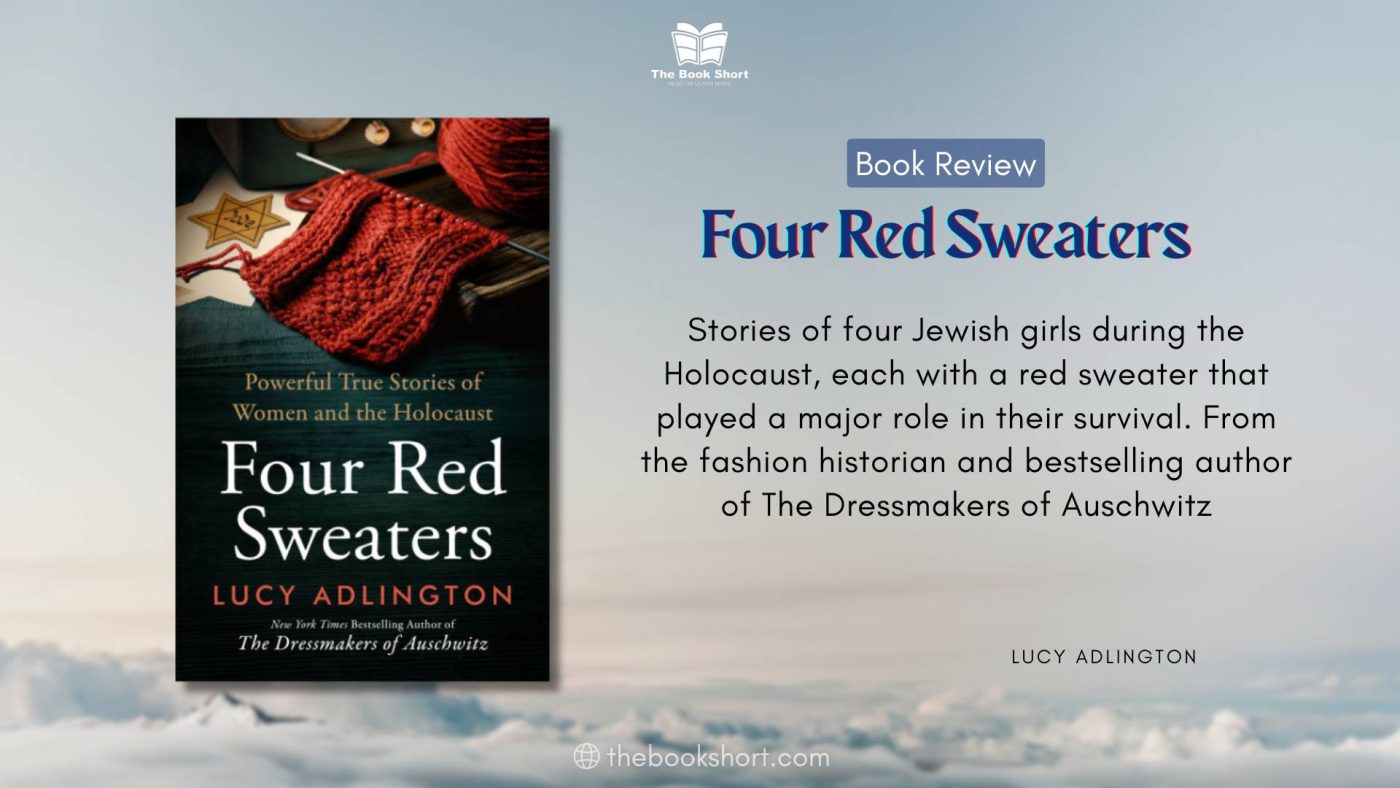
Discover how four simple sweaters tell powerful stories of survival and resistance during WWII. A unique look at history through the lens of fashion and textile craft.
The power of a single garment to hold history, identity, and defiance is profound. That’s precisely why Lucy Adlington’s Four Red Sweaters resonated so deeply with me. This profoundly moving book offers a unique and intimate window into the lives of women navigating the unfathomable challenges of World War II, using the seemingly ordinary act of knitting and wearing sweaters as a vibrant narrative thread. Adlington’s innovative perspective illuminates often-overlooked stories and celebrates the extraordinary resilience woven into the fabric of everyday objects, making Four Red Sweaters a compelling and essential read that prompts deep reflection on the enduring strength of the human spirit amidst conflict.
Four Red Sweaters by Lucy Adlington: Book Details & Information
- Title: Four Red Sweaters: Stitching Together the Stories of Four Remarkable Women During World War II
- Author: Lucy Adlington
- Year of publication: 2023
- Genre: Non-fiction, History, Social History, Women’s History, Fashion History, Material Culture Studies
- Number of pages: Approx. 304
- Target audience: Readers interested in World War II history, women’s stories, social history, the significance of everyday objects in history, textile arts, and narratives of resilience and resistance.

Four Red Sweaters: Powerful True Stories of Women and the Holocaust
Exploring the Stories: Four Red Sweaters Book Summary
Four Red Sweaters by acclaimed historian Lucy Adlington masterfully weaves together the disparate yet deeply connected stories of four women navigating the unfathomable complexities and horrors of World War II. Adlington, renowned for her expertise in historical dress and textiles, employs the evocative motif of a red sweater to explore profound themes of identity, resistance, survival, and the unexpected, often vital, roles clothing played in circumstances of extreme duress. The book is skillfully structured around the distinct experiences of these four remarkable individuals, revealing how threads of fabric and acts of creation or wear became potent forms of agency and testament to the unyielding human spirit.
The narrative unfolds by introducing each woman and her specific, harrowing context within the vast canvas of the war. While not presented as conventional, chapter-by-chapter fiction, the book dedicates significant, well-researched sections to detailing their lives and struggles:
- The Artist in Occupied Paris: One compelling section focuses on a French artist endeavoring to survive under Nazi occupation in Paris. Her story highlights the immense challenges of maintaining creative spirit, personal identity, and a sense of normalcy in a stifled, dangerous environment. The red sweater in her narrative might symbolize a defiant splash of artistic expression in a world turning grey, a necessity for warmth interwoven with a personal touch, or a subtle assertion of individuality. Adlington expertly explores how everyday life, including seemingly trivial choices like clothing, became infused with potent political and personal significance in occupied territories, touching upon the subtle acts of resistance and the desperate struggle to retain humanity and culture.
- The Dutch Resister: Another powerful narrative follows a woman deeply involved in the perilous Dutch resistance movement. Her story is one of immense courage, constant danger, and clandestine operations. Here, the red sweater could symbolize a crucial marker for identification, a simple disguise, or perhaps an item knitted for comfort and connection during tense waits and risky missions. This part of the book plunges into the hidden networks of resistance, detailing the extraordinary risks taken and the complex moral dilemmas faced by those actively fighting back against oppression. Adlington draws on meticulous historical records and personal accounts to reconstruct the precarious reality of underground work, where every detail, including what one wore, could be a matter of life or death.
- The British Intelligence Operative: Four Red Sweaters also brings to life the story of a British woman working in the shadowy world of intelligence services. Her role might have involved espionage, complex code-breaking, or the intricate planning of operations crucial to the Allied war effort. The significance of clothing here could relate to the need to blend seamlessly into various environments, the practicality of uniforms, or perhaps items created or sent as coded messages or comforts to resistance contacts abroad. This section explores the war from the perspective of those working tirelessly behind the scenes, often in roles previously dominated by men, powerfully highlighting the rapidly changing roles of women during the conflict and the unique, intense pressures they faced away from the front lines.
- The Jewish Prisoner in a Concentration Camp: Perhaps the most profoundly poignant and challenging narrative concerns a Jewish woman enduring the unimaginable brutality and dehumanization of a concentration camp. The inclusion of a red sweater in this context is particularly powerful and deeply symbolic—representing perhaps a fading thread of hope, a desperate link to a past life and dignity, or even an item somehow smuggled or created under the most horrific conditions imaginable. Adlington navigates this sensitive history with profound respect and insight, focusing on the individual’s experience and using textile work or the mere existence of such an item as a fragile, yet powerful, testament to the enduring will to survive, remember, and hold onto a shred of identity. This part shines a vital light on the often-overlooked acts of maintaining selfhood and finding small comforts in the face of utter devastation within the camps.
Throughout these four distinct narratives, Adlington provides essential historical context, seamlessly weaving in details about the broader events of the war relevant to each woman’s location and situation. She meticulously researches the period, drawing on extensive archives, compelling memoirs, and historical artifacts. The “red sweaters” serve as a central, unifying thread—sometimes a tangible, physical object, sometimes a potent symbol—connecting these diverse, powerful experiences and emphasizing how deeply personal stories are interwoven with global events. Four Red Sweaters brilliantly highlights how clothing was far more than merely utilitarian; it could be a profound carrier of meaning, a vital tool for survival, a quiet form of defiance, or a crucial link to humanity amidst inhumanity. Adlington’s approach makes history feel incredibly relatable and emotionally resonant by focusing on the intimate details of individual lives and the ordinary objects that became extraordinary symbols of their journey.
Four Red Sweaters Review: In-depth Analysis
Lucy Adlington’s Four Red Sweaters offers a compelling and refreshingly unconventional approach to World War II history by centering the narrative around material culture—specifically red sweaters—and the deeply personal lives of four women. The book’s core strength lies in its remarkable ability to use objects like clothing as a powerful lens through which to understand the profound and multifaceted human experience during times of intense conflict and oppression.
Characters / Structure / Key Arguments
The structure, built around the four distinct and geographically varied stories, allows Adlington to cover a wide spectrum of the wartime experience – from the quiet resistance of occupied city life and the active danger of underground networks to the strategic work of intelligence and the unimaginable suffering within concentration camps. This episodic, yet thematically linked, structure is immensely effective in showcasing the diverse and devastating impacts of the war on women across different contexts. The “characters,” being real historical figures, are portrayed with deep empathy, rigorous research, and a palpable sense of respect for their courage and resilience. The central argument woven throughout the book is that objects like clothing are not merely passive historical artifacts but active participants in history, carrying complex layers of meaning, facilitating actions, and serving as potent symbols of identity, resistance, and survival. Adlington compellingly argues that focusing on these intimate material details reveals crucial aspects of wartime experience—particularly the resilience, resourcefulness, and often-hidden agency of women—that might be overlooked in broader, more traditional historical narratives focused on battles and politics.
Writing Style & Content Quality
Adlington’s writing style is both accessible and deeply engaging, masterfully blending meticulous historical detail with compelling narrative storytelling. She possesses a remarkable ability to make complex historical contexts understandable while drawing the reader emotionally into the personal struggles and triumphs of the four women. Her background as a leading historical dress expert profoundly informs her ability to discuss clothing and textiles with insightful depth, explaining their practical functions and profound symbolic significance within the specific historical moment. The content quality is exceptionally high, reflecting years of dedicated research. Adlington seamlessly integrates historical facts, archival sources, and likely accounts from descendants or surviving records to build a rich, credible, and emotionally resonant picture of each woman’s life. The true power of Four Red Sweaters lies in her ability to discover, elevate, and connect these often-overlooked individual stories through such a unique, poignant, and deeply human thematic thread.
Illustrative Themes from the Book (Reflecting Quote Styles)
(Note: These examples illustrate the type of profound insights and thematic reflections found in the narrative, based on the book’s known focus and Lucy Adlington’s characteristic style.)
- On the significance of fabric: “In a world stripped bare by war, a single thread could hold the weight of a cherished memory, a fragile hope, or a defiant refusal to disappear.” – Captures the theme of material culture’s immense, disproportionate importance in times of scarcity and oppression.
- On the quiet power of craft: “Each quiet stitch was an act of reclaiming control, a small, persistent rebellion against the brutal unraveling of their lives and identities.” – Speaks to the therapeutic, resistant, and self-preserving nature of textile work during hardship.
- On identity through clothing: “She might have been reduced to a number by her captors, but the simple warmth and color of the wool whispered a truth they could not erase: she was still [Name], still defiantly herself.” – Illustrates how personal objects like clothing helped maintain a sense of self and dignity in dehumanizing conditions.
- On the hidden lives of women: “History often shouts about the grand sweep of battles and treaties, but it is in these quiet, personal stories, woven into the fabric of everyday survival, that we find the true measure of human courage.” – Highlights the book’s crucial focus on elevating overlooked narratives, particularly those of women’s multifaceted contributions and suffering.
What truly distinguishes Four Red Sweaters from many other excellent WWII history books is its profoundly original focus. While numerous histories cover military campaigns, political decisions, or the experiences of soldiers and prominent leaders, Adlington delves into the domestic, the intensely personal, and the often-feminine world of textiles, craft, and clothing. By using specific garments as a powerful, tangible narrative device, she offers a relatable and emotionally resonant entry point into the past, highlighting how seemingly ordinary objects were imbued with extraordinary meaning, serving as tools for survival, symbols of connection, or quiet acts of resistance during times of unimaginable crisis. This unique approach provides a fresh, vital perspective, emphasizing the critical role of social history and revealing the diverse, often hidden, ways women experienced, endured, and resisted the war, moving compellingly beyond typical military or political accounts.
Expert Review & Evaluation of Four Red Sweaters
Four Red Sweaters is, without question, a truly remarkable and deeply affecting piece of historical non-fiction. My personal impression of this book is overwhelmingly positive, primarily due to its sheer innovative brilliance and the profound emotional resonance achieved through its focus on individual lives and material culture. The central concept of using four distinct red sweaters as a connecting thread across such diverse, challenging, and often heartbreaking experiences is inspired; it lends a unique intimacy and tangibility to the history, making the vast, often overwhelming, scale of WWII feel personal through the lens of these women’s lives and their complex relationships with clothing and textile work. The book’s major strength lies in its powerful ability to illuminate often-marginalized narratives – those of women enduring occupation, engaging in resistance, contributing through intelligence work, and surviving the Holocaust – all through a relatable, tangible, and deeply human focus on material culture.
If there is a potential “disadvantage,” inherent in this type of historical reconstruction, it is the challenge of relying solely on available historical sources for deeply personal stories. This can sometimes mean there are unavoidable gaps or moments where the historical record limits the narrative detail, compared to a fictionalized account or a direct memoir. However, Adlington navigates this with exceptional skill, using rich historical context, empathetic prose, and careful interpretation to bridge these gaps and ensure the stories remain incredibly compelling, moving, and credible.
The readability level of Four Red Sweaters is remarkably accessible. Adlington writes with striking clarity, sensitivity, and a compelling narrative pace, making complex historical situations understandable without ever oversimplifying the horrors or profound complexities involved. It is a book suitable for a broad audience, from general readers with a burgeoning interest in history to students and specialists in women’s history, social history, or material culture studies. The clear narrative structure, focusing sequentially on distinct individuals, makes it easy to follow, even for those less familiar with the specific timelines and events of the war.
The practical value and lasting impact of Four Red Sweaters are significant. It offers powerful lessons on resilience, the critical importance of maintaining identity and dignity in the face of systemic dehumanization, and the multifaceted, often quiet, nature of resistance. It fundamentally encourages readers to look beyond grand, sweeping historical narratives and instead consider the vital micro-histories embedded within everyday objects, personal choices, and creative acts. It can profoundly change one’s mindset about the significance of things like clothing, knitting, or mending, revealing their immense potential as tools for survival, silent communication, self-preservation, and connection. The book powerfully underscores the enduring strength of the human spirit and the quiet, often invisible, acts of courage that sustained countless individuals through unimaginable hardship.
Four Red Sweaters: Comparing WWII Books & Further Reading
Four Red Sweaters sits comfortably and importantly within the genre of social history and women’s history focused on World War II, but its utterly unique angle sets it distinctly apart. It shares thematic similarities with books that explore personal experiences during the war, particularly those highlighting women’s roles and contributions, but its innovative use of material culture (specifically clothing and textiles) as a central, unifying narrative device is relatively uncommon and highly effective.
Compared to broader histories of women in WWII, such as Sarah Helm’s rigorous Ravensbrück (which provides an in-depth focus on a specific camp) or Kristin Hannah’s widely read historical fiction novel The Nightingale (which tells a fictionalized, though historically inspired, story of two French sisters in the resistance), Adlington’s book offers a non-fiction, multi-perspectival view tied together by a specific, unique, and tangible theme—textiles and clothing. It is less a comprehensive overview of all women’s wartime experiences and more an intensely focused, in-depth look at a select few, powerfully unified by this intriguing material link.
Another highly relevant comparison is with books specifically about fashion, textiles, or craft in historical contexts, particularly during the war. Lucy Adlington’s own acclaimed The Dressmakers of Auschwitz is a direct and powerful comparator, focusing specifically on a group of women whose dressmaking skills were instrumental to their survival in the concentration camp. Both books brilliantly highlight the unexpected and critical role of clothing and textile skills in survival during the Holocaust and war more broadly. Four Red Sweaters expands upon this theme, demonstrating that the significance of clothing and personal objects extended beyond the camps to women navigating diverse wartime challenges across different locations.


If readers were captivated by Four Red Sweaters for its focus on overlooked individual stories, the lives of women during wartime, and the fascinating intersection of personal objects with grand historical events, they might also find resonance in the following books:
- The Dressmakers of Auschwitz by Lucy Adlington: For a similarly focused, deeply moving account of the unexpected role of dressmaking skills in survival during the Holocaust.
- Code Girls: The Untold Story of the American Women Code Breakers of World War II by Liza Mundy: For another compelling account of women’s vital, often secret, intellectual contributions to the war effort, revealing their hidden impact.
- Books exploring the significance of everyday objects in history or the “secret life” of things, which share the quality of revealing complex, hidden narratives within seemingly simple or ordinary subjects.
- Memoirs, biographies, and non-fiction accounts of female resisters or survivors from WWII, which often delve into similar themes of courage, resilience, and the human will to endure.
Conclusion & Recommendations for Four Red Sweaters
Four Red Sweaters by Lucy Adlington stands out as a profoundly moving, intelligently structured, and essential piece of historical writing. Its outstanding value lies in its deeply innovative approach to history, using the humble, yet potent, red sweater as a powerful symbol and a vibrant narrative thread to connect the diverse, challenging, and ultimately inspiring experiences of four extraordinary women during World War II. By focusing on material culture and elevating these crucial personal stories, Adlington brilliantly illuminates the remarkable resilience, resourcefulness, and quiet courage of women navigating one of history’s darkest periods. The book offers a truly unique and intimate perspective on the war, revealing how seemingly ordinary objects could hold immense significance, becoming tools for survival, powerful expressions of identity, or vital symbols of hope and resistance against overwhelming odds.
Is Four Red Sweaters worth reading? Unequivocally, yes. This book is far more than just a history lesson; it is a powerful testament to the enduring strength of the human spirit, a celebration of women’s overlooked contributions, and a compelling exploration of the powerful, often hidden, stories embedded in the objects that connect us to our past.
Who should read it? This book is highly recommended for anyone interested in World War II history, particularly those seeking perspectives that go beyond military campaigns and political leaders to explore the war’s impact on civilian lives and the crucial roles played by women. It is essential reading for those interested in women’s history, social history, the history of textiles and fashion, and the fascinating role of material culture in understanding the past. Readers who appreciate deeply researched narrative non-fiction that brings history vividly to life through personal stories and unique angles will find Four Red Sweaters to be an immensely rewarding and unforgettable reading experience.
Have you read Four Red Sweaters by Lucy Adlington? Share your thoughts and reflections on this powerful book in the comments below!