
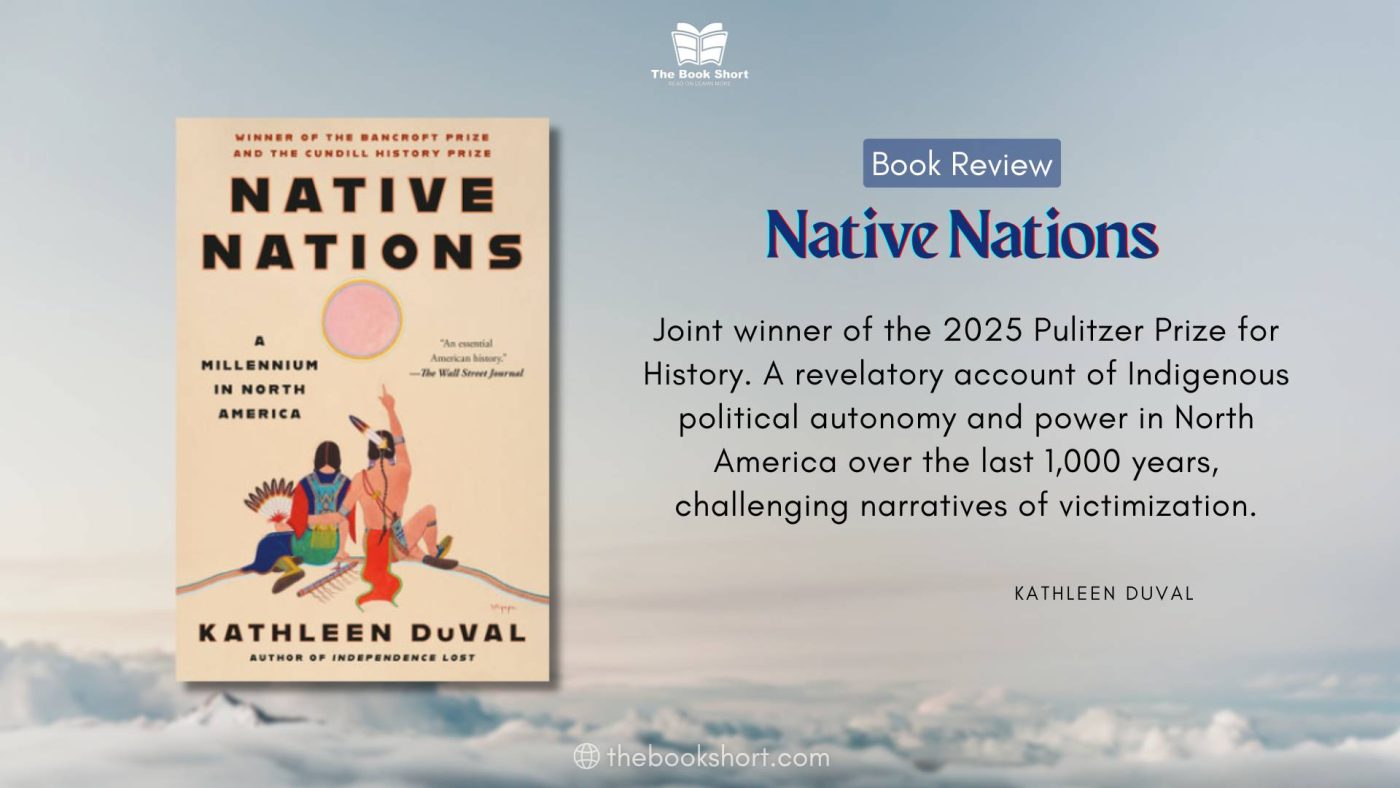
Engaging with Kathleen DuVal’s Native Nations: A Contested History of North America offers a profoundly illuminating journey through the continent’s intricate past. This book stands out because it doesn’t just add Indigenous voices to a familiar story; it fundamentally rewrites the script of North American history itself. By moving decisively away from a Eurocentric viewpoint, DuVal places the agency, power, and enduring presence of Indigenous peoples at the absolute center of the narrative. Its singular value lies in revealing a truly multi-polar continent for centuries, demonstrating how diverse Native Nations actively shaped their world and their interactions with various groups, including Europeans, long before and throughout the colonial era. This makes it far more than just a history book; it’s essential reading for anyone seeking a fuller, more honest understanding of the forces that shaped North America.
Basic Information about the Book Native Nations
- Title: Native Nations: A Contested History of North America
- Author: Kathleen DuVal
- Year of publication: 2023
- Genre: History, Indigenous Studies, North American History, Colonial Studies
- Number of pages: Approximately 640 pages
- Target audience: Historians, students, general readers interested in American history, Canadian history, Indigenous history, and colonial studies.

Native Nations: A Millennium in North America
Main Content Summary of Native Nations
Kathleen DuVal’s Native Nations is a sweeping, ambitious, and groundbreaking history of North America that boldly shifts the perspective, telling the continent’s story primarily through the eyes and experiences of Indigenous peoples. It moves the focus away from the narrative of inevitable European conquest towards the complex interactions, strategic negotiations, and remarkable endurance of Native Nations over vast stretches of time. The book powerfully challenges traditional accounts that often reduce Indigenous peoples to passive victims or mere obstacles to European expansion. Instead, DuVal vividly illustrates their active, crucial roles as sophisticated diplomats, powerful traders, formidable warriors, and central political actors who profoundly influenced the continent’s destiny for centuries.
While broadly following a chronological path, the book’s true innovation lies in its structure. DuVal deliberately organizes events around Native centers of power, influence, and interaction, rather than solely adhering to European colonial timelines or the national histories of the United States and Canada. She meticulously reconstructs a dynamic history where multiple powerful entities – a vast array of Native Nations, various European empires (Spanish, French, Dutch, English), and later the nascent United States and Canada – actively vied for control, formed and broke alliances, engaged in devastating warfare, and often negotiated uneasy coexistences.
Pre-Contact and Early Encounters: A Vibrant Continent
The narrative compellingly begins by establishing the rich, complex, and diverse world of North America long before the arrival of significant European numbers. It highlights the sophisticated political structures, extensive and ancient trade networks, and varied lifeways of countless Native Nations, dismantling the myth of an empty or undeveloped wilderness awaiting European “discovery.”
- Diverse and Complex Societies: DuVal explores major cultural centers like the Mississippian mounds, the intricate governance of the Iroquois Confederacy, and the resilient societies of the Pueblo peoples, showcasing their adaptability and long-standing complexity.
- Extensive Existing Networks: Details are provided on the sophisticated pre-contact trade routes, diplomatic ties, and communication networks that connected Native peoples across vast distances, demonstrating a continent already in dynamic interaction.
- Strategic First Interactions: The book examines the earliest, often hesitant and mutually uncertain, encounters with Europeans, portraying Native responses not as simple reactions to overwhelming foreign power, but as strategic, varied, and often powerful assertions of control within their own territories.
The Era of Pluralism: A Continent of Contested Powers
This pivotal section, covering roughly the 16th through the 18th centuries, is central to DuVal’s thesis. It focuses on the vibrant, multi-polar nature of North America, arguing that during this long period, no single European power, nor even the combined European presence, held unchallenged dominance across the continent. Native Nations, far from being mere subjects of distant empires, were independent political entities that shrewdly negotiated, strategically allied, fiercely fought, and often played European powers against one another to maintain their sovereignty, advance their own interests, and control trade and territory.
- Strategic Alliances and Maneuvers: DuVal vividly illustrates how Native Nations formed and dissolved alliances with and between European powers, often shifting allegiances based on their own geopolitical goals (e.g., the Iroquois expertly navigating relationships with both the French and English, or Southeastern nations allying alternately with the British, French, or Spanish).
- Trade as a Source of Native Power: The fur trade and other economic interactions are discussed not just as avenues for European exploitation but as complex arenas where Native peoples exerted significant control, dictated terms, and amassed influence.
- Sophisticated Diplomacy and Warfare: The book details the elaborate diplomatic protocols, complex treaty-making processes, and effective military strategies employed by Native Nations, demonstrating their parity, and often superiority, in these realms for extended periods.
- Fluid and Violent Borderlands: DuVal focuses on regions like the Great Lakes, the Mississippi Valley, the Southeast, and the Southwest, where multiple powers (Native Confederacies, European colonies, other Native Nations) overlapped and fiercely contended for influence, creating dynamic, unpredictable, and often violent borderlands fundamentally shaped by Native actions.
The Shifting Balance: Rise of the United States and Canada
As the 18th century waned and the 19th century dawned, the balance of power began a significant shift. The emergence of the United States after the American Revolution, with its explicit goal of continental expansion and settler colonialism, and the consolidation of British power leading to Canada, presented new, often more unified and aggressively expansionist forces. However, DuVal continues to emphasize Native resistance, adaptation, and persistence, showing how Native Nations continued to fight for their lands and sovereignty through various means, even as their circumstances became increasingly precarious.
- The Unique Threat of the U.S.: DuVal explores how the United States, driven by settler ambitions and a vision of territorial incorporation rather than just mercantilist trade, posed a distinct and ultimately more devastating threat to Native sovereignty than the earlier European empires.
- Diverse Resistance Strategies: The book details the multifaceted forms of Native resistance, including large-scale military confederations (such as those led by Tecumseh and Tenskwatawa), persistent diplomatic efforts, appeals to existing treaties, legal challenges, and determined efforts at cultural and political preservation.
- The Era of Removal and Displacement: DuVal covers the tragic and brutal period of forced removals, such as the Trail of Tears, but frames these events within the broader context of ongoing Native struggles for survival, resistance, and the maintenance of identity and community despite immense pressure and violence.
- Adaptation and Enduring Persistence: The narrative highlights the remarkable resilience of Native Nations as they adapted to radically changing political and economic landscapes, strategically navigating new challenges while striving to maintain their distinct identities, governance structures, and cultural integrity.
The Modern Era: Ongoing Struggles for Sovereignty and Self-Determination
Bringing the story into the 20th and 21st centuries, the latter parts of the book focus on the continuous struggles for self-determination, cultural revitalization, and the assertion of treaty rights and inherent sovereignty that define contemporary Native life. DuVal powerfully demonstrates that Native history is not a relic of the past but a living, evolving story of resilience, political action, and the ongoing assertion of nationhood.
- Challenges of the Reservation Era: Discusses the profound impacts of the reservation system, devastating assimilation policies (like residential schools), and the final chapters of the so-called “Indian Wars.”
- 20th Century Activism and Rights Movements: Covers crucial periods of activism, including the fight for civil rights, the rise of movements like the American Indian Movement (AIM), and the long push for federal recognition and self-governance policies.
- Legal and Political Battles for Nationhood: Highlights the persistent and crucial efforts in courts, legislatures, and international forums to affirm tribal sovereignty, secure land and resource rights, and hold governments accountable to treaty obligations.
- Cultural Survival and Resurgence: Emphasizes the incredible survival and resurgence of Native languages, traditional practices, governance structures, and cultural identities in the face of historical trauma and ongoing challenges.
Throughout Native Nations, DuVal masterfully integrates a vast array of sources, drawing from European colonial archives, the latest historical scholarship, and critically engaging with Native oral traditions and perspectives where appropriate and documented. She seamlessly moves between broad continental trends and specific, deeply human examples drawn from the distinct experiences of particular Native Nations, ensuring the narrative feels both grand in scope and intimately connected to individual and community lives. The core argument remains a powerful constant: the history of North America is a shared, complex history, fundamentally shaped by the dynamic presence, diverse power, and enduring persistence of Native Nations from time immemorial right up to the present day.
In-depth Analysis of Native Nations Book
Kathleen DuVal’s Native Nations is nothing short of a monumental achievement. It doesn’t merely tack on Indigenous perspectives to an existing framework of North American history; it courageously and successfully rewrites the history itself by fundamentally shifting its geographical and conceptual center of gravity. The central thesis resonates with striking clarity: North America was, for many centuries, a continent defined by multiple competing powers, and Native Nations were not peripheral figures but indispensable, central players in shaping its destiny. DuVal’s success in conveying this lies in her rigorous research and, crucially, a narrative structure that unflinchingly refuses to confine Native history to isolated chapters on “Indian relations” or treat it solely as a reaction to European actions.
Key Arguments, Structure, and Dynamic Characters
The book’s structural design is perhaps its most potent analytical engine. By organizing the early periods and the long colonial era around spheres of Native influence, interaction, and power dynamics, rather than strictly adhering to conventional European chronological or national timelines, DuVal effectively dismantles the Eurocentric assumptions that have long dominated the field. For instance, instead of discrete sections on “English Colonization” or “The French and Indian War” narrated from European capitals, she explores the intricate dynamics within regions like the Great Lakes, the Southeast, or the Plains, illustrating how the Native peoples inhabiting these areas were the primary actors who interacted with multiple European powers and with each other, often holding the delicate balance of power through strategic choices.
- Decentering and Reframing: This structural choice is a deliberate act of historical decolonization, placing Native agency, political complexity, and internal dynamics at the forefront of the narrative.
- “Contested Pluralism” as the Norm: DuVal’s central argument posits that North America was characterized by a dynamic and often volatile “contested pluralism” for a far longer period than traditional histories have ever acknowledged, pushing back against narratives of rapid, inevitable European dominance.
- Highlighting Native Agency and Leadership: The individual and collective actions, decisions, and strategies of Native leaders and communities are presented not as footnotes or mere reactions to external forces, but as crucial, independent historical drivers. DuVal brings to life figures like Powhatan, Metacom (King Philip), Pontiac, Tecumseh, and countless less-heralded leaders and communities not just as figures of resistance but as sophisticated politicians, shrewd diplomats, and brilliant military strategists operating within incredibly complex geopolitical landscapes they actively helped to create.
- An Interconnected Indigenous World: The book powerfully emphasizes the deep and often complex connections that existed between Native Nations themselves – through extensive trade networks, formal diplomatic ties, inter-tribal warfare, and shared cultural and political experiences. This portrays a dynamic, interconnected Indigenous world that interacted with European presences but was never solely defined or bounded by them.
Writing Style & Content Quality
DuVal employs a clear, accessible, and deeply engaging writing style that renders this complex, multi-layered history comprehensible and compelling for a broad audience, without sacrificing academic rigor. She masterfully weaves together broad, continental analysis with specific, vivid anecdotes, biographical sketches, and localized events, preventing the narrative from becoming dry or overly abstract. Her language is precise, evocative, and largely free of unnecessary academic jargon, making it remarkably suitable for non-specialists while still offering profound insights for scholars.
- Engaging Narrative Flow: The book moves seamlessly between sweeping accounts of large-scale historical processes playing out across the continent and detailed, specific examples drawn from the distinct experiences of different regions and individual nations, keeping the reader anchored and invested.
- Exceptional Accessibility: Despite the density of the subject matter and its scholarly depth, DuVal’s prose is genuinely captivating and maintains a strong narrative drive, drawing the reader into the often-overlooked human stories behind the grand historical shifts.
- Masterful Integration of Diverse Sources: DuVal synthesizes a vast and diverse array of primary and secondary sources, critically evaluating biased European accounts and skillfully incorporating insights from archaeology, linguistics, environmental history, and acknowledging the vital importance of Native oral histories and perspectives where feasible and ethically appropriate. The quality of the underlying historical research is demonstrably exceptionally high.
- Nuance, Empathy, and Critical Insight: While offering a necessary and often critical view of the brutal processes of colonialism and dispossession, DuVal avoids simplistic or monolithic portrayals. She acknowledges the complexities, internal divisions, and difficult choices faced by Native societies and their leaders, presenting a history that is both unflinching in its depiction of injustice and deeply empathetic to the people who lived it.
What truly makes Native Nations stand apart from many other general histories of North America is its consistent, unwavering, and successful commitment to presenting a multi-actor history from a genuinely Native-centered perspective throughout the entire narrative arc. Unlike books that might include a dedicated chapter or two on “the Indians” or focus only on moments of conflict, DuVal places Native Nations, their political structures, their economies, their diplomacies, and their internal lives at the very heart of almost every historical development she discusses, from deep antiquity to the 21st century. This is not merely an additive history; it is a profoundly transformative one. Her powerful emphasis on the prolonged era of “contested pluralism,” where European powers often desperately needed Native allies and trading partners far more than Native powers needed European ones, fundamentally alters the long-dominant, Eurocentric narrative of inevitable European dominance and passive Native decline.
Notable Quotes from the Book
- “For centuries, North America was a continent of Native nations, and its history is unintelligible without understanding them on their own terms.” (A concise statement of the book’s core thesis and methodology)
- “Instead of being overwhelmed or marginalized by the newcomers, Native people incorporated them into their own worlds and structures of power.” (Highlighting the early, active, and often controlling role of Native peoples in interactions)
- “No power, European or Native, held unchallenged sway across the continent for most of its history.” (Emphasizing the long era of dynamic, contested pluralism that is central to her argument)
- “Native nations made war and peace with one another and with Europeans, established rules of trade and diplomacy, offered refuge, formed confederations, and shaped the continent’s geography and environment.” (Illustrating the full spectrum of complex political life and historical agency exerted by Native peoples)
- “The history of North America is a story of contest, certainly, but it is also, always, a story of connection, of interaction, and of negotiation across cultural divides.” (Underscoring the interconnectedness and the persistent efforts, however fraught, to navigate relationships between diverse peoples on the continent)
These carefully chosen quotes powerfully encapsulate the essence of DuVal’s groundbreaking argument: that North American history is a shared, intricate story of interaction, negotiation, and contest between diverse nations, with Native peoples consistently playing central, active, and powerful roles from time immemorial to the present day.
Evaluation & Expert Personal Review of Native Nations
Kathleen DuVal’s Native Nations is, quite simply, an indispensable read for anyone seeking a genuinely comprehensive and accurate understanding of North American history. My personal impression, both as a reader and someone familiar with the historical landscape, is overwhelmingly positive; the book not only meets but exceeds expectations. It achieves its ambitious goal of recentering the narrative squarely on Indigenous peoples, offering a perspective that is not only vital for historical veracity but also deeply human and utterly engaging.
Advantages:
- Truly Transformative Perspective: This book doesn’t just offer a new angle; it fundamentally rearranges how one should view the entire history of the continent, from deep antiquity right through to the complexities of the modern era. It’s a paradigm shift.
- Exceptional Scholarship Meets Accessible Prose: It is clearly built on a foundation of extensive, meticulous scholarly research, yet DuVal’s writing is so clear, engaging, and fluid that it makes complex historical dynamics accessible and compelling for a wide audience.
- Powerful Emphasis on Agency: It serves as a crucial corrective to older, often harmful, portrayals of Indigenous peoples as merely victims or passive figures. DuVal vividly demonstrates their political acumen, economic power, military strength, and diplomatic skill for centuries.
- Sweeping Continental Scope: Covering a vast geographic area and an immense temporal range, the book effectively illustrates both shared historical experiences across the continent and the distinct histories of particular regions and nations.
- Rich and Nuanced Portrayals: DuVal avoids simplistic stereotypes, presenting the rich diversity within Native societies and acknowledging the complex, often challenging, nature of their interactions with European powers and, crucially, with each other.
Disadvantages:
- Breadth Necessitates Selectivity: Due to its necessary continental scope spanning thousands of years, Native Nations occasionally must move quickly across certain regions or specific historical events. Some readers might wish for a more in-depth focus on particular nations or moments, although DuVal does an exceptional job of balancing this breadth with illuminating specific examples.
- Challenges Deeply Ingrained Views: For readers whose historical understanding is rooted in traditional, Eurocentric narratives taught in older curricula, the profound shift in perspective offered by this book might initially feel challenging or even confronting. It requires a genuine willingness to reconsider previously held assumptions about who was in control and whose history matters most.
The readability level is remarkably high for a work of such historical depth and scope. While it is a substantial academic undertaking, DuVal’s compelling writing style ensures that the narrative flows well, making complex information not only understandable but genuinely engrossing. It successfully avoids academic jargon where possible, making it highly suitable for motivated general readers, advanced high school students, and undergraduate students, as well as offering significant value to graduate students and established scholars.
Who this book is highly suitable for:
- Students at the college and university level in history, Indigenous studies, American studies, Canadian studies, or colonial history.
- Dedicated history enthusiasts eager to move beyond conventional narratives and gain a deeper, more accurate understanding of North America’s past.
- Educators at all levels seeking to incorporate accurate, up-to-date, and Indigenous-centered perspectives into their teaching of North American history.
- Anyone interested in the historical roots of contemporary issues surrounding colonialism, sovereignty, treaties, land rights, and the enduring legacy of Indigenous peoples in the United States and Canada.
Practical Value:
Reading Native Nations offers immense practical value that extends far beyond simply acquiring historical facts. It is a book that has the power to fundamentally change a reader’s perspective and mindset.
- Challenges Fundamental Assumptions: It serves as a powerful lesson in how historical narratives are constructed and often reflect the perspective of the dominant power, forcing readers to question familiar stories.
- Fosters Empathy and Deeper Understanding: By placing Native experiences and perspectives at the center, it inevitably builds greater empathy for the historical challenges, immense resilience, and ongoing vitality of Indigenous peoples.
- Provides Crucial Context for Contemporary Issues: Understanding the long, complex history of contested sovereignty, broken treaties, land dispossession, and resistance is absolutely essential for comprehending contemporary issues facing Native Nations today and engaging respectfully with Indigenous peoples.
- Highlights the Necessity of Multiple Perspectives: The book itself is a compelling demonstration of why history must be told from multiple viewpoints to achieve anything close to a full and truthful picture of the past.
In essence, Native Nations provides the vital historical context required to understand the deep roots of Indigenous sovereignty and the continuous struggles for self-determination that define the present. It is a profoundly valuable, necessary, and eye-opening read that will reshape your understanding of the continent.
Comparison with Similar Books to Native Nations Book Analysis
Native Nations stands as a significant and necessary work within a growing and vital body of scholarship dedicated to challenging Eurocentric historical narratives and foregrounding the agency, power, and perspectives of Indigenous peoples in North America. While many excellent works exist in this field, DuVal’s book distinguishes itself through its sweeping continental scope and its explicit, sustained argument for a long period of multi-polar “contested pluralism” as the defining feature of early North American history.
Compared to numerous insightful books that focus on the history of specific regions or particular Native Nations (such as detailed studies of the Iroquois Confederacy, the Cherokee Nation, the Comanche, or Plains tribes), DuVal provides a crucial overarching framework. She demonstrates how interactions, power dynamics, and responses to European presence played out across the entire continent, illustrating both shared broad trends and crucial regional distinctions simultaneously.
Compared to older, more traditional surveys of North American history that have dominated curricula for generations, Native Nations represents a radical and essential departure. These older texts typically structure their narratives around the arrival, growth, and expansion of European powers (Spanish, French, British, and eventually the United States and Canada) and tend to portray Native peoples primarily in relation to these European endeavors – often confined to discussions of “Indian wars,” “Indian policy,” or cultural assimilation. DuVal completely flips this script, making the political structures, social dynamics, economies, and diverse experiences of Native Nations the baseline from which European interactions are then analyzed. The Europeans are the newcomers who must navigate existing Native worlds, rather than the other way around.


Other recent and influential books that share a similar spirit in their commitment to emphasizing Native agency, resilience, and challenging colonial narratives include:
- Pekka Hämäläinen’s Comanche Empire (2008): This highly influential work similarly argues for the existence of a powerful Indigenous “empire” that successfully dominated a vast region (the Southern Plains) for a considerable time, effectively dictating terms to surrounding European and later American powers. While its focus is regional, it makes a compelling case for Native power and influence akin to DuVal’s continental argument about pluralism.
- Jeffrey Ostler’s Surviving Genocide: Native Nations and the United States from the American Revolution to Bleeding Kansas (2017) (and his subsequent volumes): Ostler provides a deeply researched, devastatingly clear-eyed account of U.S.-Native relations, focusing on the systematic violence and dispossession inherent in American expansion but also highlighting persistent Native resistance and adaptation. He shares DuVal’s commitment to foregrounding Native agency, though his geographical and temporal focus is specifically on the United States’ westward expansion and its genocidal consequences.
- Ned Blackhawk’s The Rediscovery of America: Native Peoples and the Unmaking of U.S. History (2023): Published in the same year as DuVal’s book, Blackhawk’s equally powerful work also argues emphatically that U.S. history cannot be understood or told accurately without centering Native peoples and the continuous violence perpetrated against them, alongside their enduring influence. While DuVal’s scope encompasses the entire continent and delves deeply into the pre-U.S. colonial eras, Blackhawk’s primary focus is on how Native peoples have continuously shaped the history of the United States from its origins to the present.
If readers found Native Nations compelling for its comprehensive, Native-centered perspective on continental history, its powerful argument for Indigenous agency, and its detailed exploration of the long era of contested power, they might find valuable follow-up reading in:
- The Comanche Empire by Pekka Hämäläinen (for a deep dive into the history and power of a specific, regionally dominant Native Nation).
- The Rediscovery of America by Ned Blackhawk (for a forceful argument about the absolute centrality of Native history to understanding the United States’ past and present).
- More specific histories focusing on particular Native Nations or regions that were highlighted by DuVal and pique their interest, written by authors who also center Indigenous perspectives.
Native Nations is a landmark academic and narrative achievement. It provides a necessary and long-overdue corrective to entrenched historical narratives, making it an absolutely crucial read for anyone genuinely interested in the full, complex, and often difficult history of North America.
Conclusion & Recommendations for Native Nations Book Analysis
Kathleen DuVal’s Native Nations: A Contested History of North America offers extraordinary value by providing a truly transformative and comprehensive history that places the experiences, agency, and enduring presence of Indigenous peoples squarely at the heart of the narrative. The book successfully dismantles traditional, Eurocentric accounts that have long dominated the field, presenting instead a compelling and meticulously researched case for understanding the continent’s past as a dynamic, complex interplay between multiple sovereign powers – both Native and European – for centuries. Its combination of rigorous scholarship, engaging and accessible writing style, and expansive continental scope makes it a significant contribution to historical understanding and an absolutely vital resource for students, educators, and general readers alike.
Is Native Nations worth reading? Without hesitation, yes. It is not merely a good or interesting history book; it is a necessary and field-defining one that fundamentally reshapes how one should think about and understand North America’s past and its present implications.
Who should make time for this book? It is highly recommended for college and university students across disciplines related to history and social sciences, educators seeking to decolonize their curricula, and any general reader eager for a more accurate, nuanced, and complete history of North America, its Indigenous peoples, or the processes of colonialism. It is particularly valuable for those willing to have their assumptions challenged and who seek a deeper context for understanding contemporary issues related to Indigenous rights, sovereignty, and self-determination.
Native Nations is a powerful and necessary reminder that history is not a single, fixed narrative but a contested terrain, and that listening to the voices, experiences, and perspectives of those who have historically been marginalized is utterly essential for constructing a fuller, more truthful, and just picture of the past that informs our present and future.
Have you read Kathleen DuVal’s Native Nations? What aspects of the book resonated most with you, or what new insights did you gain about North American history from Indigenous perspectives? Share your thoughts and discuss the book’s impact in the comments below!