
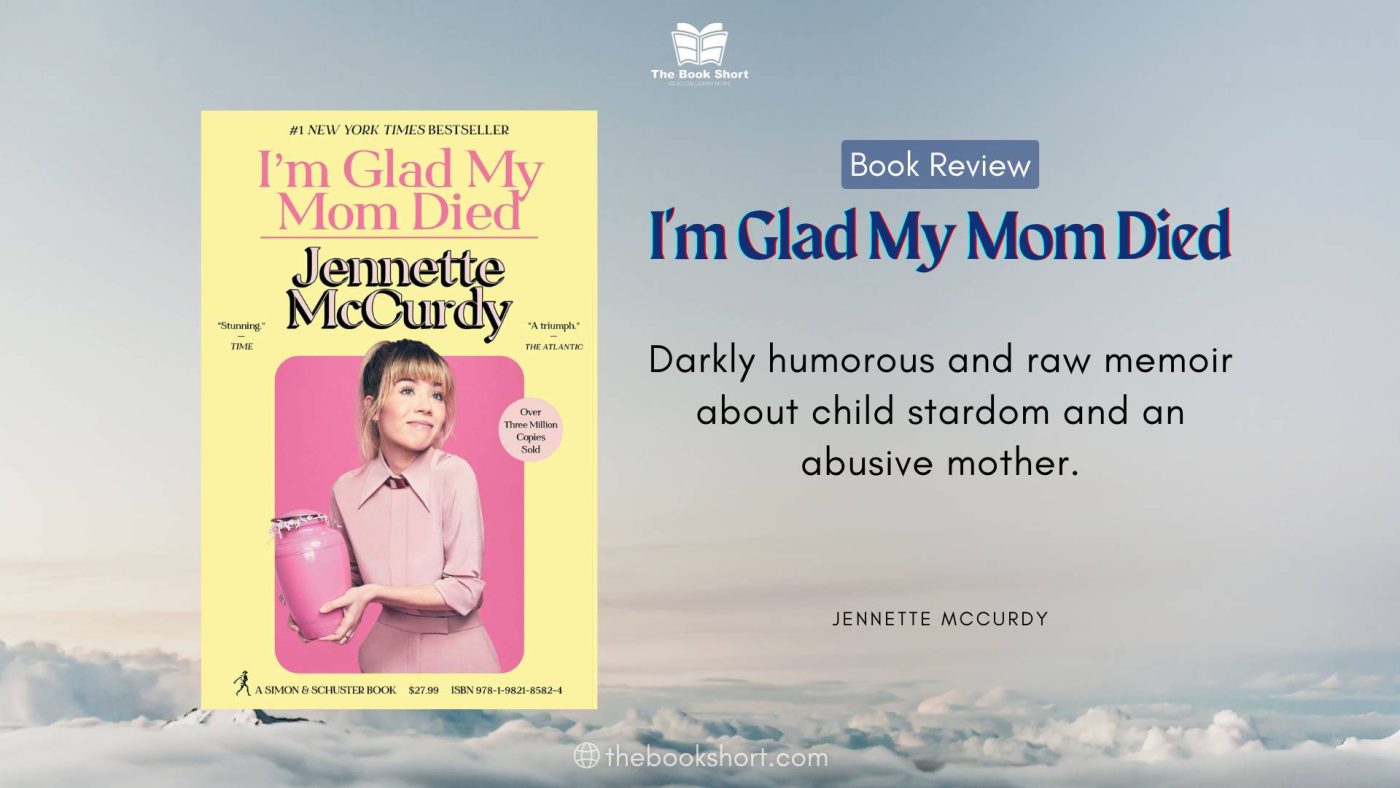
Jennette McCurdy’s memoir, I’m Glad My Mom Died, is a searingly honest look at the aftermath of a toxic mother-daughter relationship and the brutal cost of child stardom. More than just a tell-all, this book plunges into the complex, often agonizing journey of healing from abuse and finding one’s true self. It’s a narrative that refuses cliché, immediately signaling its raw, unconventional nature with its stark, unforgettable title. This memoir offers a unique and deeply personal perspective on trauma, resilience, and the complicated terrain of grief that challenges traditional expectations.
Book Essentials: I’m Glad My Mom Died
- Title: I’m Glad My Mom Died
- Author: Jennette McCurdy
- Publication Year: 2022
- Genre: Memoir
- Pages: Approximately 320 (may vary by edition)
- Audience: Adult readers interested in memoirs, particularly those exploring themes of child stardom, abuse, eating disorders, mental health, and complex family dynamics.
Exploring I’m Glad My Mom Died: Summary & Analysis
Jennette McCurdy’s I’m Glad My Mom Died is a brave, darkly funny, and profoundly moving account of her life under the shadow of her abusive mother, Debra McCurdy, and her subsequent, often messy, path toward independence and healing. The memoir unfolds chronologically, guiding the reader through Jennette’s tightly controlled childhood and adolescence as a Nickelodeon actor, dictated by her mother’s ambitions and anxieties, leading into her adulthood struggle to reclaim her own identity after her mother’s death.
The narrative begins with McCurdy’s earliest memories, dominated by her mother’s pervasive and volatile presence. Debra McCurdy is depicted as a woman who lived vicariously through Jennette’s burgeoning acting career, pushing her relentlessly while simultaneously undermining her self-worth. From forcing her into acting auditions she didn’t want to attend, to micromanaging every bite of food she ate, Debra’s control was absolute. The book vividly details Debra’s extreme measures to control Jennette’s weight, initiating severe calorie restriction and promoting disordered eating habits when Jennette was just a child, sowing the painful seeds for her long battles with anorexia and bulimia.
McCurdy recounts deeply disturbing instances of physical boundary violations, including her mother performing invasive, unnecessary breast and body checks well into Jennette’s teenage years, ostensibly for cancer prevention but serving to further erode Jennette’s autonomy and sense of safety. Coupled with constant criticism, emotional blackmail centered around her mother’s own health struggles, and the insidious belief that her value was contingent on her acting success and her mother’s approval, Jennette developed deep-seated anxiety, co-dependency, and a fractured sense of self.
A significant portion of the memoir is dedicated to her years working on iCarly. Despite the outward appearance of a successful child star, Jennette’s internal world was a constant battle against her mother’s demands and the pressures of the industry itself. She describes the surreal experience of playing Sam Puckett, a character whose volatile, aggressive personality eerily mirrored aspects of her own mother, a painful irony she grappled with daily. The memoir also touches upon unsettling dynamics on set, including interactions with a powerful, unnamed figure referred to only as “The Creator,” hinting at the broader systemic issues and lack of protection within the child acting world.
The narrative continues through her late teens, covering the end of iCarly and the controversial spin-off Sam & Cat. McCurdy is candid about her resentment towards her co-star, Ariana Grande, acknowledging her own jealousy, exacerbated by perceived preferential treatment from the network and their vastly different experiences and career trajectories. This period saw her eating disorders intensify, becoming a primary, albeit destructive, coping mechanism for the overwhelming stress and trauma.
Debra McCurdy’s recurring battle with cancer forms a tragic and manipulative thread throughout the book. Jennette describes how her mother often weaponized her illness, using it to maintain control, guilt-trip Jennette whenever she attempted independence, and demand constant attention.
The emotional core of the book shifts dramatically after Debra’s death from cancer in 2013. Instead of the expected wave of grief, Jennette is met with a profound, confusing, and guilt-ridden sense of relief. This taboo emotion is central to the book’s title and narrative, representing the liberation from the primary source of her trauma and control, even as societal and familial expectations demanded conventional mourning.
Freed from her mother’s direct influence, Jennette embarks on the challenging, often agonizing process of unpacking decades of trauma. She quits acting, recognizing it as her mother’s dream, not her own. Therapy becomes a crucial arena where she confronts her eating disorders, unravels her co-dependency, and begins the painstaking work of discovering who she is without her mother’s constant direction. The memoir details her struggles with finding healthy relationships, setting boundaries, and navigating the world as an independent adult, marked by relapses and setbacks, particularly with her eating disorders, but ultimately charting a path towards healing and self-acceptance.
McCurdy’s writing is defined by its distinctive voice – sharp, witty, sarcastic, and brutally honest. She confronts the most painful memories with disarming directness, using dark humor not to minimize the trauma but to highlight the absurdity and pain of her experiences and as a vital coping mechanism.
Ultimately, I’m Glad My Mom Died is a powerful and unflinching exploration of inherited trauma, the unique pressures faced by child stars, the devastating complexity of abusive parent-child relationships, and the difficult, non-linear journey toward healing, authenticity, and self-liberation after profound loss and complicated grief. It stands as a testament to McCurdy’s extraordinary strength in confronting her past and sharing her story with raw, unfiltered candor.
In-Depth Analysis: Themes, Style, & Significance
Jennette McCurdy’s memoir is a masterclass in using narrative as a tool for processing deep-seated trauma. Its impact stems from its fearless directness, emotional vulnerability, and utterly unique voice. The book masterfully tackles an array of heavy, interconnected themes: the devastating effects of parental abuse, the insidious nature of eating disorders and co-dependency, the isolating and exploitative pressures of child stardom, and the incredibly complex, often contradictory, experience of grief following the death of an abuser.
Characters, Structure, and Core Arguments
The gravitational center of the narrative is Jennette herself, portrayed as a child and adolescent desperately seeking love and approval within a deeply abusive dynamic, and later, as an adult painstakingly rebuilding her life. Debra McCurdy is the dominant force, depicted not merely as a villain but as a controlling, deeply troubled individual whose actions inflicted profound, lasting harm. While other figures like “The Creator” symbolize broader industry issues, and her siblings and father exist on the periphery, the core struggle is the intense, damaging bond between mother and daughter.
The structure is primarily chronological, beginning with early, often fragmented, childhood memories and moving through her defining years in Hollywood, her mother’s illness and death, and her subsequent years of intensive therapy and recovery. This linear progression allows readers to witness the cumulative impact of the trauma. However, McCurdy skillfully weaves in reflections from her adult perspective, demonstrating her current understanding and emotional processing of past events, adding layers of insight.
Key arguments powerfully conveyed throughout the memoir include:
- The immense psychological damage caused by living a life designed solely to fulfill someone else’s unlived dreams.
- How cycles of abuse distort self-perception, relationships, and the ability to identify one’s own desires separate from the abuser’s.
- The validity and emotional turmoil of experiencing relief, alongside or instead of conventional grief, upon the death of an abusive parent – challenging a powerful societal taboo.
- That healing from trauma is a long, non-linear process marked by setbacks, requiring immense courage and professional support.
- The specific vulnerabilities and ethical failures within the child acting industry that can enable exploitation.
Writing Style and Content Quality
McCurdy’s writing style is arguably the book’s most distinctive and effective element. It is sharp, accessible, witty, and disarmingly candid. She employs dark humor with surgical precision, often using it to underscore the absurdity, pain, or sheer dysfunction of her experiences. The prose is straightforward, avoiding overly complex literary flourishes, which makes the heavy subject matter remarkably readable and relatable.
The quality of the content lies in its unflinching authenticity and profound vulnerability. McCurdy does not present a sanitized version of events or herself. She is open about her own struggles, the poor choices she made while coping with trauma (including unhealthy relationships and eating disorder relapses), and moments of jealousy or less-than-flattering emotions. This radical self-awareness and lack of pretense lend the narrative immense credibility and emotional power.
The memoir is rich in vivid, specific details that illustrate the nature of the abuse – from detailed accounts of forced calorie counting to disturbing descriptions of the body checks and verbatim examples of emotional manipulation. These concrete examples anchor the narrative and make the impact of the trauma visceral for the reader.
Notable Insights from the Book
Beyond specific quotes, certain sentiments resonate deeply:
- The chilling realization that a parent’s love can be conditional and deeply damaging.
- The surreal experience of portraying a cheerful facade in public while living a nightmare in private.
- The profound difficulty of disentangling your own identity from a parent who has completely consumed it.
- The validation found in therapy, giving names to experiences that felt only like personal failings.
- The defiant act of choosing your own path, even if it means walking away from everything you’ve ever known or been pushed towards.
What distinguishes I’m Glad My Mom Died from many other memoirs, particularly those touching on difficult parents or childhood fame, is its central, unapologetic focus on the complex emotions surrounding the death of an abuser, specifically the relief. While many memoirs explore the impact of difficult parents, few dare to articulate the liberation found in their absence with such directness. The successful integration of dark humor with devastating subject matter also sets it apart, preventing it from becoming solely an account of victimhood and instead infusing it with resilience and a biting, insightful wit.
Expert Review & Evaluation: I’m Glad My Mom Died Book Analysis
I’m Glad My Mom Died is a truly remarkable and courageous memoir. Its strength lies precisely in its provocative title and the raw, unrelenting honesty it delivers. My personal take is that this book is not just impactful; it feels genuinely important. Its advantages are undeniable: the fearless exploration of parental abuse and its long-term consequences, a ground-breaking perspective on the taboo emotion of relief after an abuser’s death, a compelling narrative voice that is both darkly humorous and deeply moving, and a powerful message about the possibility and difficulty of healing and self-reclamation. It confronts subjects many shy away from, forcing a necessary conversation about family, love, trauma, and the messy realities of human emotion.
Potential disadvantages for some readers include the intense and at times graphic descriptions of abuse, particularly the details of physical and emotional control, which could be triggering for those with similar experiences. While McCurdy’s wit lightens the tone, the underlying subject matter remains profoundly heavy. The decision to refer to “The Creator” and other industry figures without explicit names might frustrate readers looking for specific call-outs, although the context makes the implications clear enough within the narrative’s purpose.
The readability is exceptionally high. McCurdy’s prose is direct, accessible, and engaging, drawing the reader in despite the difficult content. The chronological structure is easy to follow, and the pacing keeps the narrative compelling from start to finish.
Who is this book best suited for? It is essential reading for adults interested in memoirs, especially those by public figures or narratives centered on overcoming significant childhood trauma. It is particularly relevant for readers interested in the psychological impacts of abuse, eating disorders, and the complexities of family relationships. Individuals on their own healing journeys from trauma may find immense validation and a sense of solidarity in McCurdy’s story.
The practical value of I’m Glad My Mom Died is significant. It fosters empathy and a deeper understanding of trauma responses, challenging conventional, often simplistic, views of grief and family loyalty. It validates the complicated, sometimes shameful, emotions that can arise from abusive relationships ending, even through death. It provides a powerful, real-world example of the non-linear, challenging process of recovery and building an authentic self after profound control. By openly discussing her therapy journey and struggles, it highlights the importance of seeking professional help and setting healthy boundaries. Most profoundly, it shifts mindsets by showing that relief from an abuser’s death is a valid, understandable, albeit painful and confusing, emotional response, not a moral failing.
In sum, this is far more than a typical celebrity memoir; it is a courageous, deeply human story about survival, resilience, and the challenging but ultimately rewarding act of finding and embracing one’s own voice after years of being silenced. It is a powerful testament to the possibility of healing, even from the most traumatic beginnings.
Comparing I’m Glad My Mom Died with Similar Memoirs
I’m Glad My Mom Died carves out a distinct space within the memoir genre, particularly among books by former child stars or those focusing on difficult parent-child relationships. While many such narratives recount the pressures of fame, challenging upbringings, or personal struggles like eating disorders, McCurdy’s memoir is fundamentally set apart by its central theme: the complex, taboo experience of finding relief and liberation following the death of an abusive parent.
Compared to memoirs by other former child actors, such as Macaulay Culkin’s Junior or Melissa Joan Hart’s Melissa Explains It All, McCurdy’s book delves into a significantly deeper level of psychological abuse and the intricate, painful process of therapeutic recovery. While these books touch upon industry pressures and parental involvement, they typically don’t focus on the parent-child dynamic as a source of profound, life-defining trauma in the same way. Similarly, memoirs detailing struggles with eating disorders, like Portia de Rossi’s Unbearable Lightness, offer powerful accounts of body image and control issues but often lack the specific focus on the abusive parental relationship as the root cause that is central to McCurdy’s narrative.
Memoirs about surviving difficult or abusive parents exist, but few are willing to confront the nuances of grieving (or not grieving) an abuser with such directness and self-examination as I’m Glad My Mom Died. Tara Westover’s Educated, for instance, is a powerful story of escaping an isolated, abusive upbringing through intellect and forging an independent identity, but its focus is more on the process of physical and intellectual escape and building a new life apart from the family system, rather than the specific emotional aftermath tied to a parent’s passing. Jeannette Walls’ The Glass Castle vividly portrays a challenging and unconventional childhood under neglectful, deeply flawed parents, emphasizing resilience and resourcefulness, but again, the focus differs from McCurdy’s specific exploration of the post-mortem emotional landscape regarding an abuser.
McCurdy’s candor about the less glamorous, potentially exploitative aspects of the Nickelodeon environment, including interactions with specific (though unnamed) powerful figures, also adds a layer of relevance for readers interested in the darker side of the entertainment industry, a topic gaining increasing attention in memoirs by former child performers, but often without this level of personal psychological detail.
For readers who found I’m Glad My Mom Died compelling due to its raw honesty, exploration of complex trauma and healing, and unique perspective on difficult family dynamics, the following books might resonate:
- Educated by Tara Westover: For its account of escaping an abusive environment through the pursuit of knowledge and self-determination.
- The Glass Castle by Jeannette Walls: For its vivid portrayal of a challenging childhood and the resilience required to overcome difficult circumstances shaped by deeply flawed parents.
- Maybe You Should Talk to Someone by Lori Gottlieb: A memoir by a therapist that offers insight into the therapeutic process of unpacking personal history and trauma, mirroring Jennette’s own journey.
- The Yellow House by Sarah M. Broom: Explores themes of family history, place, trauma, and resilience across generations, though in a different context.
- Know My Name by Chanel Miller: While focusing on sexual assault trauma, Miller’s memoir shares a similar unflinching honesty, powerful voice, and focus on the difficult journey of reclaiming identity after profound violation.
These suggestions offer different avenues for exploring complex family dynamics, trauma, healing, and the courageous act of sharing a difficult personal story.
Conclusion and Recommendation: Reading I’m Glad My Mom Died
I’m Glad My Mom Died is an exceptionally brave, impactful, and necessary memoir. Its outstanding value lies in its unflinching honesty about the realities of parental abuse, its groundbreaking willingness to articulate the complex, often-shameful emotion of relief that can follow an abuser’s death, and its compelling, darkly humorous narrative of one woman’s arduous but ultimately triumphant journey to reclaim her identity and self-worth after years of profound control and trauma. It is a powerful testament to Jennette McCurdy’s resilience, intellect, and skill as a writer.
Is it worth reading? Without reservation, yes. It stands as a significant contribution to the memoir genre, offering a perspective rarely articulated with such candor, wit, and vulnerability. It challenges readers to confront uncomfortable truths about family bonds, the long shadow of trauma, and the messy, non-traditional paths that grief and healing can take.
Who should read it? This book is highly recommended for adult readers interested in memoirs, particularly those focusing on trauma, complex family dynamics, mental health struggles like eating disorders, and the unique experiences of child stars. It is especially valuable for anyone who has experienced difficult or abusive family relationships and is seeking validation for their complicated feelings about those experiences or the individuals involved. Readers should be advised that the book deals with heavy subject matter including emotional and physical abuse and eating disorders, which could be triggering.
I’m Glad My Mom Died is far more than just a glimpse behind the curtain of child fame; it is a profound story of survival, liberation, and the courageous act of building a life on one’s own terms.
Have you read Jennette McCurdy’s memoir? Share your thoughts and reflections on this powerful book in the comments below!