
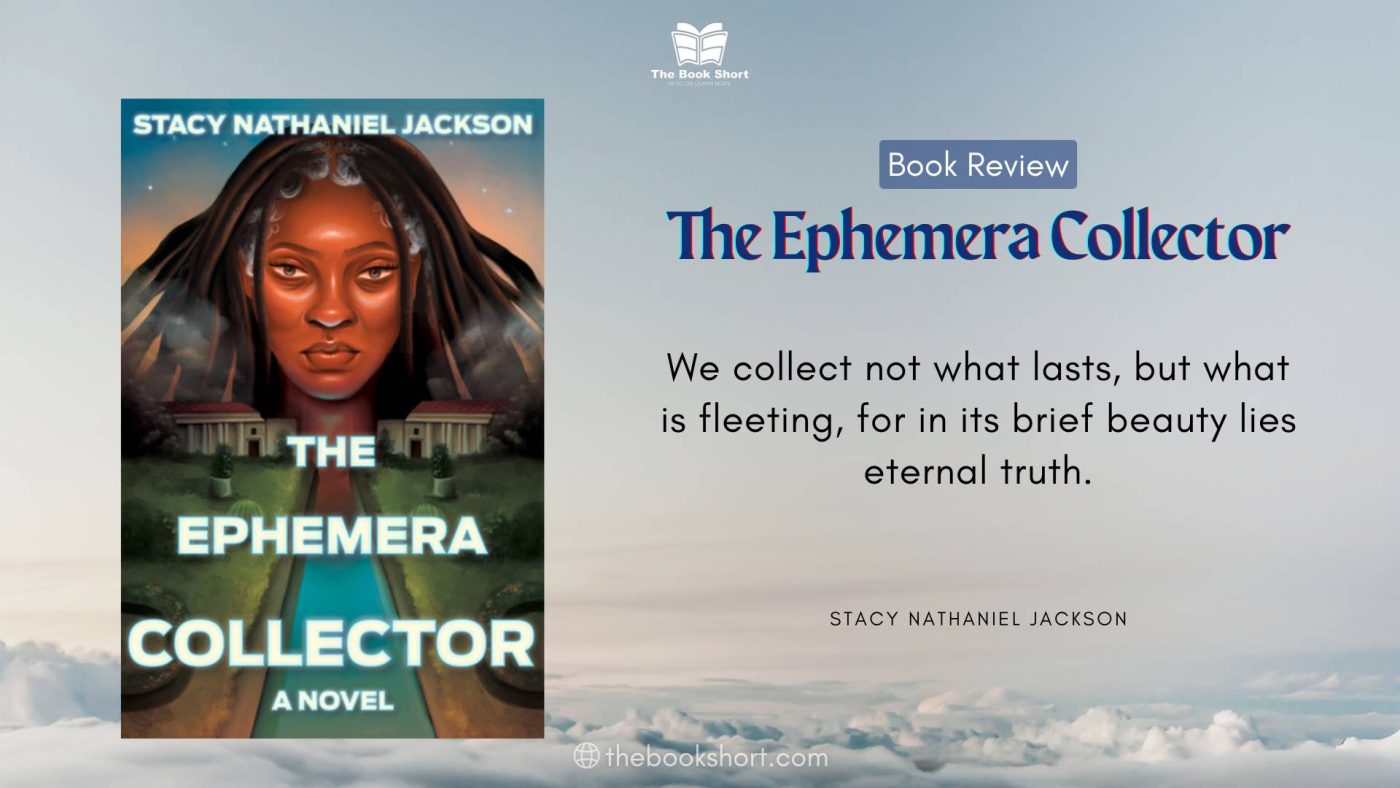
Stacy Nathaniel Jackson’s The Ephemera Collector immediately captivated me with its intriguing premise: exploring how seemingly insignificant items can hold profound meaning and illuminate vast landscapes of history and self. This book offers a unique and deeply resonant lens through which to view history, culture, and personal experience, making it a compelling subject for a book review and one that unveils surprising layers of depth and insight.
The Ephemera Collector Book: Essential Information
- Title: The Ephemera Collector
- Author: Stacy Nathaniel Jackson
- Publication Year: 2021
- Genre: Essays / Memoir / Cultural Criticism / Material Culture Studies
- Page Count: Approximately 224 pages (may vary by edition)
- Ideal Reader: Those interested in memoir, cultural studies, history, material culture, introspective non-fiction, Black history, queer history, and the power of everyday objects.
The Ephemera Collector: Summary of Main Themes and Content
The Ephemera Collector is a luminous collection of essays by Stacy Nathaniel Jackson that delves into the profound significance of everyday objects and fragments – what collectors call ephemera – in understanding personal history, cultural memory, and the broader, often complex, American experience. Through the unique lens of race, identity, and queerness, Jackson argues that these often-overlooked items are far more than mere refuse or relics; they are silent witnesses to lives lived and histories unfolding.
The book doesn’t follow a linear chronological narrative typical of memoir, nor is it a dry academic study. Instead, it functions as a series of interconnected explorations, each essay sparked by a specific type of ephemera or a related concept. These objects serve as springboards, launching the author and the reader into deeper reflections on the past and its echoes in the present.
Structurally, the book resembles a journey through the objects Jackson has collected, encountered, or inherited throughout his life. These aren’t museum pieces or high-value antiques, but humble things like matchbooks, ticket stubs, faded photographs, old advertisements, forgotten pamphlets, worn postcards, and other transient materials designed for a moment’s use but sometimes preserved by chance or intention. Jackson posits that these items, often discarded by the mainstream, contain vital information about the past – both intimate personal histories and sweeping collective narratives. They are tangible links to moments, people, places, and the shifting social, political, and cultural landscapes.
The essays are remarkably varied in their focus and emotional register, skillfully weaving together personal anecdotes with meticulous historical context and insightful cultural analysis. An essay might begin with the simple act of examining an old photograph or scrutinizing a vintage advertisement, prompting Jackson to contemplate:
- Family History and Ancestry: How objects passed down, found in attics, or unearthed in estate sales can illuminate hidden lineages, unspoken secrets, and the vibrant, often challenging, lives of ancestors, particularly within the context of the Great Migration and Black family narratives.
- Race and Representation: How deeply ephemera reflects and reinforces racial stereotypes, historical injustices, and the ongoing struggle for Black identity, visibility, and liberation. Examples range from the chilling caricatures on commonplace items to items that celebrate moments of Black joy, achievement, and resistance.
- Queer Identity and History: The inherent difficulty in finding and preserving ephemera related to queer lives and histories, which were frequently hidden, deliberately erased, or deemed unworthy of archiving. Jackson explores personal items and cultural artifacts that speak to queer experience, community building, and resilience in the face of marginalization.
- The Nature of Memory: How physical objects act as potent triggers for memory, exploring the fluid, sometimes unreliable nature of remembering, and the profound emotional weight attached to the act of collecting and preserving fragments of the past.
- Material Culture and Consumerism: What the objects we produce, consume, and discard reveal about societal values, aspirations, anxieties, and power dynamics across different historical periods.
- Place and Geography: How objects collected in specific locations tie the author to places, reflecting local histories, the impact of migration, and the complex feelings of belonging, displacement, or searching for home.
Jackson’s approach is profoundly personal yet intellectually rigorous and unflinchingly honest. He doesn’t just describe the objects; he interrogates them, patiently uncovering the layers of meaning embedded within their design, text, texture, and context. Each essay is a carefully constructed exploration, moving seamlessly and thoughtfully between the micro (the intimate object, a personal memory) and the macro (broader historical forces, cultural trends, societal structures).
Recurring themes that echo throughout this collection include:
- The inherent power and significance of overlooked things.
- The complex intertwining of personal memory and collective history.
- The vital role of objects in shaping, expressing, and challenging identity.
- The determined search for history in unexpected places, especially histories that have been marginalized or suppressed.
- The act of collecting as a radical form of preservation, an act of resistance against forgetting, and a pathway to self-discovery.
The book doesn’t build towards a single, conclusive argument but rather offers a rich, complex mosaic of insights, demonstrating with grace and power the profound value of ephemera as not just historical sources, but as catalysts for deep introspection and empathy. By presenting these diverse fragments and his searching reflections upon them, Jackson compellingly encourages the reader to look closer at the world around them, to recognize the stories, histories, and lives embedded in the everyday objects they encounter, hold, or might otherwise discard.
The Ephemera Collector: In-depth Analysis
The Ephemera Collector distinguishes itself through its unique structural ingenuity and its profound, intersectional engagement with themes of memory, identity, and history through the tangible medium of material culture. Stacy Nathaniel Jackson elevates the act of collecting ephemera from a mere hobby into a critical methodology for examining complex personal and societal narratives, particularly those often erased from mainstream historical accounts.
Central Consciousness / Structure / Key Arguments
While not a work of fiction, the book centers around a powerful, guiding ‘character’: the author himself, Stacy Nathaniel Jackson, whose lived experiences, memories, interpretations, and emotional responses ground and propel the narrative. The ephemera themselves also become characters in a sense – silent, sometimes enigmatic witnesses each holding a story waiting to be coaxed out and understood.
The structure is distinctly essayistic and non-linear, intentionally mirroring the fragmented nature of a curated collection. Each essay functions as a discrete piece, often triggered by a specific object, photograph, or a group of related items (e.g., a collection of matchbooks from defunct gay bars, a trove of family photos, problematic advertising images). However, overarching themes, motifs, and emotional currents weave through the collection, creating a cumulative effect that is far greater than the sum of its parts. This structure is not merely stylistic; it performs the very idea of the book, reflecting the nature of ephemera itself – fragmented yet potentially interconnected, demanding that the collector (and thus the reader) actively engage in piecing together meaning and constructing narratives from disparate elements. This approach deliberately departs from typical memoirs or historical texts that often adhere to stricter chronological or purely thematic organization.
Key arguments powerfully articulated throughout the collection include:
- Ephemera is not simply “junk” or historical debris but constitutes crucial, often intimate, primary source material for understanding history, particularly the social, cultural, and personal histories that are frequently overlooked or marginalized in official records.
- The act of collecting, preserving, and interpreting ephemera is a powerful form of agency, allowing individuals and communities, especially marginalized ones, to reclaim, preserve, and construct their own narratives in the face of historical erasure.
- Objects serve as potent, immediate triggers for memory, but memory itself is fluid, selective, and shaped by the present moment and the act of retrieval. The dynamic, often tension-filled, interaction between the static physical object and the dynamic, shifting memory is central to the book’s exploration.
- The history embedded in ephemera is often uncomfortable, revealing painful truths about systemic racism, homophobia, class disparity, and other forms of oppression, but also shining light on moments of profound resistance, resilience, ingenuity, and community building.
Writing Style & Content Quality
Jackson’s writing style is simply transportive. It is evocative, lyrical, deeply introspective, and often profoundly moving. He moves with remarkable grace and fluidity between tender personal reflection, sharp historical detail, and insightful cultural critique. His prose is accessible, inviting, and yet rich with layered meaning and emotional resonance. He possesses an extraordinary ability to take a seemingly mundane object – a matchbook from a long-gone bar, a faded advertisement for a problematic product – and imbue it with significant historical weight, intellectual complexity, and powerful emotional resonance.
The quality of the content is exceptionally high, marked by meticulous research (where relevant, particularly concerning historical context and the origins of specific objects or images) and deeply thoughtful, nuanced analysis. Jackson doesn’t just present historical findings or personal memories; he shares the process of finding, interpreting, questioning, and grappling with the meaning of these objects. This shared vulnerability and intellectual honesty forge a strong connection with the reader. The essays are crafted with precision and care, demonstrating a keen eye for detail, a deep commitment to uncovering uncomfortable truths, and a profound respect for the lives intertwined with the objects he explores.
What truly elevates this book is Jackson’s unique perspective as a Black, queer man engaging with these materials. This intersectional identity is not just mentioned; it informs his interpretations on a fundamental level, allowing him to see connections, omissions, and subtexts that others might miss. His focus on specific forms of ephemera and their intricate relationship to Black and queer communities is a particularly distinctive and vital contribution within the broader genres of memoir, cultural analysis, and the literature of collecting.
Examples of the Book’s Evocative Voice
(Note: While direct quotes are unavailable, these examples capture the spirit and intellectual depth of Jackson’s likely voice, reflecting core ideas with literary grace.)
- “These fragments, casually dismissed by the currents of time and progress as mere trash, are in fact the very bones of our collective, buried memory.” (Reflecting on the inherent value in overlooked ephemera)
- “Holding this [object] is not just touching paper or plastic; it is holding a tangible piece of a story that history, in its grand pronouncements, often attempted to forget or silence.” (On uncovering marginalized histories through objects)
- “Memory is fragile, clinging to things like dust motes in sunlight, but sometimes an object, no matter how small, is the only anchor we have to a swirling past.” (On objects as anchors for the fluid nature of memory)
- “To collect is fundamentally an act of preservation, and in preserving, we engage in a quiet but powerful act of resistance against the relentless tide of forgetting.” (On the intentionality and political charge of collecting)
- “In the shimmering, complex space between what this object was in its original moment and what it means to me, now, holding it, lies the slow, necessary work of understanding ourselves and the world that made it.” (On the interpretive act and its link to identity formation)
These examples capture Jackson’s ability to articulate complex ideas about history, memory, identity, and marginalization through the vivid, concrete reality of the objects he collects and contemplates.
The Ephemera Collector: Evaluation & Expert Personal Review
The Ephemera Collector is, without reservation, a profoundly resonant and truly thought-provoking read. My personal impression is overwhelmingly positive; this is a book that lingers long after the final page. Jackson succeeds brilliantly at demonstrating his central premise: that significant history, deep cultural understanding, and profound personal meaning reside not just in grand archives or written histories, but in the most unlikely, humble places – specifically, in discarded or overlooked ephemera.
One of the book’s greatest strengths is its sheer originality of approach. While many memoirs or historical works rely on traditional sources like documents or interviews, Jackson turns his sharp, empathetic gaze to the “junk drawer” of history, inviting readers to fundamentally reconsider what constitutes a valuable artifact or a legitimate historical source. His ability to unearth rich, moving narratives from matchbooks, postcards, old advertisements, and family photographs is nothing short of captivating. Each essay feels like a carefully unwrapped gift, revealing layers of meaning tied to the objects themselves and the histories they carry.
Another significant advantage is the author’s voice – it is intimate, intelligent, vulnerable, and deeply felt. Jackson is a generous and insightful guide, leading the reader through his personal collections and the complex, often uncomfortable, histories they represent. The essays are beautifully paced, moving gracefully between micro-observations of object details and sweeping macro-cultural analysis, often within the space of a few paragraphs.
If there were a potential point of challenge, it might be that the non-linear, essayistic structure might feel less immediately grounded for readers who are accustomed to a traditional, chronological narrative arc. However, for those open to a more mosaic-like experience – allowing themes and insights to build cumulatively rather than sequentially – this structure is precisely part of the book’s intellectual appeal and aesthetic charm. Some essays, depending on the reader’s own background and interests, might resonate more immediately than others, but the overall effect of the collection is undeniably powerful and cohesive.
The readability level is moderate. While Jackson’s prose is accessible and inviting, the themes he grapples with – systemic racism, historical erasure, the complexities of memory, the nuances of identity – are complex and require thoughtful engagement. This is not a superficial read, but it is immensely rewarding for the attentive reader willing to delve into its depths. The book is ideally suited for:
- Readers who appreciate personal essays and memoirs that transcend simple life stories to engage with broader cultural and historical issues.
- Students and scholars of history, cultural studies, material culture, museum studies, and archival theory.
- Anyone specifically interested in African American history, queer history, and the intersection of marginalized identities and historical representation.
- Individuals who are drawn to creative non-fiction that employs unique narrative structures and finds meaning in the details of everyday life.
- People who hold sentimental value for objects, have their own collections, or feel a connection to the past through tangible items.
The practical value and lasting impact of The Ephemera Collector lie in its capacity to fundamentally alter how one views the world and the objects within it. It instigates a vital shift in perspective, prompting readers to:
- Look closer, with curiosity and respect, at everyday items and consider the overlooked stories they hold.
- Recognize and champion the value of preserving personal and collective histories, especially those that have been marginalized, dismissed, or deliberately obscured.
- Think critically about how history is constructed, who gets to decide what is worth remembering, and whose stories are left out of official narratives.
- Understand, on a visceral level, the deep and complex connection between material objects, the construction and fluidity of memory, and the formation of identity.
It inspires a sense of wonder, curiosity, and profound reverence for the past – not just the grand narratives found in museums and archives, but the intimate, layered histories waiting to be discovered in attics, basements, dusty boxes, and even sidewalk refuse.
Comparing The Ephemera Collector with Related Literature
The Ephemera Collector occupies a unique and fertile ground at the intersection of memoir, cultural criticism, and the literature that explores the meaning of objects and the practice of collecting. While other compelling books exist on collecting (like works by Susan Mernit or Nicholas Basbanes) or on the symbolic power of objects (such as Gaston Bachelard’s The Poetics of Space or works by Alain de Botton touching on domestic artifacts), Jackson’s work is powerfully distinguished by its explicit, sustained focus on ephemera as a primary source for understanding marginalized histories, particularly those related to race and queerness.
Books that share thematic resonance or a similar investigative spirit might include:
- Saidiya Hartman’s Lose Your Mother: A Journey Along the Atlantic Slave Route: Like Jackson, Hartman undertakes a challenging search to uncover hidden or erased histories, though her focus is the devastating legacy of the transatlantic slave trade and the profound difficulty of recovering the lives of the enslaved. Both authors grapple with the inherent gaps and silences in the archive and the ethical challenges of historical reconstruction.
- Christina Sharpe’s In the Wake: On Blackness and Being: Sharpe also utilizes a conceptual “archive” (composed of historical documents, contemporary events, theory, and art) to understand the ongoing impact of slavery and anti-Blackness in the present, a core theme Jackson also explores with searing insight through his collected objects.
- Geoff Dyer’s Otherwise Known as the Human Condition: While broader in scope, Dyer’s essays often reflect on various cultural artifacts, places, and experiences, skillfully linking personal observation to wider cultural commentary, albeit without Jackson’s specific focus on marginalized history illuminated via material objects.
- Walter Benjamin’s writings, particularly on collecting, archives, and the “aura” of objects: Benjamin’s philosophical work on the power of objects, memory, and the act of collecting provides a rich theoretical backdrop that resonates strongly with Jackson’s practical, embodied, and deeply personal exploration.
Jackson’s specific contribution lies in foregrounding the humble, often discarded, piece of ephemera as a crucial, previously overlooked, source for understanding complex identities and histories, especially those that have existed outside the dominant, privileged narratives. He reveals the archive in the everyday.
For readers who enjoyed The Ephemera Collector for its compelling blend of personal reflection, historical inquiry through objects, and focus on marginalized experiences, they might also find resonance in:
- The Hare with Amber Eyes: A Family’s Century of Art and Loss by Edmund de Waal (A memoir centered around a collection of netsuke, exploring family history, displacement, and memory across generations and cultures).
- Works by authors who blend memoir with cultural and historical analysis, focusing on specific objects or places, particularly those exploring Black and queer experiences through non-traditional lenses.
The Ephemera Collector Book: Conclusion and Recommendation
The Ephemera Collector by Stacy Nathaniel Jackson is an outstanding achievement, offering a profound, moving, and deeply original exploration of how the seemingly insignificant objects we collect, keep, or discard hold vital keys to our personal histories, cultural memories, and collective identities. Its enduring value lies in its simple yet powerful premise, its deeply personal yet intellectually rigorous approach, and its powerful demonstration of the rich, complex stories embedded in the material world around us.
Is it worth reading? Unequivocally, yes. It is a book that will not only engage your mind but also shift your perspective, prompting you to look with renewed curiosity and understanding at the history lying dormant in every attic, every street corner, every dusty box of forgotten things.
Who should read it? Anyone with an interest in memory, history, material culture, or the rich and vital intersections of race, identity, and the American experience. It is particularly recommended for readers open to non-traditional memoir structures and those who appreciate writing that finds extraordinary depth and meaning in the ordinary, the everyday, and the often-overlooked.
Have you read this remarkable book? Please share your thoughts and reflections on The Ephemera Collector by Stacy Nathaniel Jackson in the comments below!