

Unpack The Subtle Art of Not Giving a F*ck by Mark Manson. A raw, honest review & summary of this unconventional self-help guide.
Tired of the relentless pressure to be positive all the time? Yearning for a self-help book that feels less like a cheerleading squad and more like a dose of bracing reality? Then dive into Mark Manson’s The Subtle Art of Not Giving a F*ck. This isn’t another guru peddling feel-good platitudes; it’s a sharp, irreverent challenge to conventional wisdom about happiness and success. What drew me to this book was its audacious honesty – a refusal to gloss over life’s inherent difficulties. Its blunt, counter-intuitive perspective slices through the noise of superficial positivity, offering a potent reminder of what truly merits our emotional investment. This book argues that the path to a better life isn’t about avoiding struggle, but about learning what to struggle for.
The Subtle Art of Not Giving a F*ck Book Information
- Title: The Subtle Art of Not Giving a F*ck: A Counterintuitive Approach to Living a Good Life
- Author: Mark Manson
- Year of Publication: 2016
- Genre: Self-help / Psychology / Personal Development (with a heavy dose of philosophy and memoir)
- Number of Pages: Approximately 224
- Target Audience: Adults navigating modern anxieties, those skeptical of traditional positive thinking, readers seeking a realistic and pragmatic framework for personal growth, anyone ready to confront uncomfortable truths about themselves and society.

The Subtle Art of Not Giving a F*ck: A Counterintuitive Approach to Living a Good Life
The Subtle Art of Not Giving a F*ck Book Summary
The Subtle Art of Not Giving a F*ck boldly confronts and dismantles common self-help narratives that equate happiness with the elimination of problems or the constant pursuit of positive feelings. Mark Manson presents a compelling, albeit provocative, argument: life is fundamentally built on challenges and suffering. He posits that genuine fulfillment doesn’t arise from avoiding these difficulties, but from cultivating the discernment to choose what problems are worth enduring and what values are worth upholding, even when it’s painful. The book is a call to arms for embracing discomfort, accepting our inherent flaws and limitations, and facing the often-unpleasant truths about ourselves and the world around us.
Manson constructs his thesis through a series of interconnected principles, often structured as distinct chapters, each building upon the last to forge a path towards a more grounded, value-driven existence.
The Feedback Loop From Hell
Manson kicks off by dissecting a peculiar modern malaise: the anxiety derived from feeling anxious or insecure. In an age saturated with curated perfection on social media, experiencing negative emotions is often perceived as a failure, creating a vicious cycle where we feel bad about feeling bad. He argues that the superficial desire for positive experiences is easy; the transformative power lies in wanting negative experiences – the discomfort of confrontation, the sting of failure, the effort of discipline – for the sake of a greater purpose. Learning to “not give a f*ck” isn’t about cultivating apathy towards everything; it’s about choosing what you do give a f*ck about, reserving your energy for what truly aligns with your chosen values, and being indifferent to the inevitable adversity that comes with pursuing those things.
Happiness Is a Problem
Here, Manson delivers a counter-punch to the relentless modern pursuit of happiness. He contends that happiness isn’t a destination or a state achievable by simply solving all your problems. Why? Because problems are perpetual and unavoidable features of life. Instead, he argues, happiness is found in having problems you enjoy solving. The metric of a good life isn’t a problem-free existence (an impossibility), but the quality of the problems you face. Embracing this truth requires accepting that pain, difficulty, and struggle aren’t exceptions to a happy life, but integral components of it. Striving for better problems becomes the actual goal.
You Are Not Special
In a society that frequently inundates individuals with messages of unique potential and boundless exceptionalism, Manson offers a bracing dose of humility: most people are, in fact, average. He argues that the widespread belief in one’s inherent specialness often breeds a crippling sense of entitlement, a deep fear of failure, and a pervasive reluctance to confront one’s own shortcomings. Accepting your potential average-ness is surprisingly liberating. It frees you from the crushing pressure to constantly prove your extraordinary nature and allows you to find meaning and value in the process of struggle, in the act of building competence through effort, and in appreciating the often-overlooked richness of ordinary life.
The Value of Suffering
Manson draws a crucial link between the quality of our inevitable suffering and the nature of our values. What we choose to suffer for is the clearest indicator of what we truly deem important. He distinguishes between “bad” values (like seeking constant pleasure, always needing to be right, avoiding conflict or rejection) which lead to shallow, detrimental suffering, and “good” values (such as honesty, vulnerability, self-respect, standing up for others) which lead to meaningful, constructive suffering. Choosing good values means you suffer for something worthwhile, a paradox that ultimately leads to a deeper sense of purpose, resilience, and contentment than the avoidance of suffering ever could.
You Are Always Choosing
This principle centers on the profound concept of responsibility. Manson asserts that while we may not have control over everything that happens to us, we possess absolute control and responsibility over how we respond to it. He provocatively suggests that victimhood, even in the face of genuine hardship, is ultimately a choice – the choice to relinquish agency over one’s reaction and perception. Taking radical responsibility for your problems and emotional state, even when external factors contributed, is deeply empowering. It places the power to change your perspective and actions back in your own hands, whereas blaming others effectively gives that power away.
You’re Wrong About Everything (And I Am Too)
Manson champions the often-uncomfortable embrace of uncertainty and the willingness to question one’s own beliefs. He argues that our minds are inherently fallible, and true growth stems from acknowledging our potential for error and being profoundly open to being proven wrong. The compulsive need to always be right is a significant barrier to learning, vulnerability, and authentic connection. Embracing uncertainty fosters humility, intellectual flexibility, and the crucial ability to shift perspective – essential tools for navigating the inherent complexities of life and relationships with greater wisdom.
Failure Is the Way Forward
This chapter directly challenges the paralyzing fear of failure that grips many. Manson posits that failure isn’t the antithesis of success; it is its necessary, often painful, precursor. The fear of failure, he argues, stems from prioritizing the feeling of comfort over the experience of necessary struggle and pain. Learning to tolerate failure, extract its lessons, and persist despite setbacks is fundamental to resilience and growth. Action, even imperfect action leading to failure, generates momentum and motivation – the reverse of the common belief that motivation must precede action.
The Importance of Saying No
Setting clear boundaries and cultivating the ability to both reject and be rejected are presented as crucial pillars for fostering healthy relationships and a robust sense of self. Manson contends that an inability or unwillingness to say no, driven by a need to please everyone, is indicative of poor values. Saying no is an act of defining yourself – clarifying what you stand for, what you will and will not tolerate. Embracing rejection, whether giving or receiving it, is necessary for maintaining authenticity and self-respect in your interactions.
And Then You Die
The book culminates with a stark, yet surprisingly life-affirming, confrontation with the inevitability of death. Manson uses mortality not as a source of despair, but as a powerful lens through which to clarify values and understand the ultimate significance (or insignificance) of our earthly struggles. Facing our finitude provides essential perspective, stripping away trivial concerns and highlighting what genuinely matters. Accepting death, in Manson’s framework, paradoxically frees you to live more fully, purposefully, and authentically in the present, aligning your life with your chosen values rather than getting lost in superficial pursuits.
Throughout these principles, Manson liberally employs anecdotes, personal experiences, historical examples, and psychological concepts, all delivered with his signature blend of humor, directness, and profanity. This provocative style serves to challenge readers’ assumptions and ingrained societal conditioning. The overarching message resonates: stop trying to eradicate problems or negative feelings; instead, learn to identify and choose the problems you are willing to engage with, anchored by the values you hold most dear.
The Subtle Art of Not Giving a F*ck Book Analysis
The Subtle Art of Not Giving a F*ck carves out a distinct identity within the sprawling self-help landscape by resolutely rejecting saccharine platitudes in favor of confronting unvarnished realities. Mark Manson’s core argument is compellingly simple yet profoundly challenging: the quality of your life is not measured by the abundance of positive experiences you accumulate, but by your capacity to skillfully navigate negative ones, guided by deliberately chosen, meaningful values.
Key Arguments and Structure
The book’s architecture is thoughtfully designed, progressing from the immediate (the cyclical nature of modern anxiety) to the foundational (the primacy of values and responsibility) and finally to the often-avoided truths (our average-ness, the necessity of failure, the reality of death). Manson’s key arguments are woven throughout, reinforced by his examples and provocative tone:
- Life is suffering: Problems are not obstacles to a good life, but the raw material from which it is built. The goal is to cultivate better problems.
- Values are the compass: The quality of your suffering, and thus your life, is directly determined by the quality of your underlying values.
- Responsibility is power: While external events may be outside your control, you are always accountable for your reaction and response. Taking this responsibility is empowering.
- Embrace the negative: Pain, discomfort, and struggle are not feelings to be avoided at all costs, but essential catalysts for growth, learning, and developing resilience.
- Accept your limitations: The liberating truth is you are not special, you are not always right, and you cannot control everything. Humility is key.
- Prioritize your fucks: True freedom and clarity come from discerning what genuinely matters according to your deepest values and deliberately choosing to invest your energy there, letting go of everything else.
Manson eschews prescriptive step-by-step guides, offering instead a robust philosophical framework designed to provoke introspection and a fundamental re-evaluation of personal priorities. While not characters in a traditional sense, the historical figures, psychological archetypes, and personal anecdotes serve as vivid illustrations of the principles he espouses concerning values, responsibility, and the consequences of different life approaches.
Writing Style & Content Quality
Manson’s writing style is arguably the book’s most distinctive feature: unapologetically direct, conversational, frequently laced with profanity, and darkly humorous. This unfiltered, edgy approach is central to the book’s appeal and impact. It doesn’t feel like an academic lecture or a preachy sermon; it reads more like a brutally honest, insightful conversation with a cynical but ultimately wise friend.
The quality of the content resides in its courage to challenge prevailing cultural narratives around happiness and achievement. It provides a much-needed counterpoint to the often-toxic positivity pervasive in mainstream self-help. Manson’s arguments concerning the inherent value of values, the necessity of suffering, and the empowering nature of responsibility resonate deeply because they feel authentic to the messy, imperfect reality of the human condition. He tackles fear of failure, the pressure to be extraordinary, and the discomfort of mortality head-on, offering a genuine sense of relief for readers weary of feeling inadequate in the face of unattainable ideals.
Notable Quotes from the Book
These lines encapsulate the raw, counter-intuitive wisdom at the heart of Manson’s message:
- “This is the most basic and fundamental component of the Subtle Art of Not Giving a F*ck: only give a f*ck about what is true and immediate and important.”
- “The desire for more positive experience is itself a negative experience. And, paradoxically, the acceptance of one’s negative experience is itself a positive experience.”
- “You are not special.”
- “Don’t hope for a life without problems… Instead, hope for a life full of good problems.”
- “The only way to be comfortable with death is to understand and see yourself as something greater than your body and mind. This is why we get so invested in the values of this world—money, success, being liked—because we are distracting ourselves from the inevitable, from the fact that one day our physical body will die.”
- “The path to happiness is a path of struggle.”
What truly distinguishes The Subtle Art is its unapologetic rejection of forced optimism. While much of the self-help genre encourages suppressing negative emotions or manifesting perfect futures, Manson insists on acknowledging pain, accepting limitations, and finding meaning within the very fabric of struggle. This foundational focus on values and the acceptance of discomfort, rather than the relentless pursuit of fleeting happiness, is a profoundly refreshing deviation from the norm and undoubtedly a key driver of its immense popularity.
Evaluation & Personal Review of The Subtle Art of Not Giving a F*ck
Mark Manson’s The Subtle Art of Not Giving a F*ck stands out as a book I found not only thought-provoking but genuinely transformative precisely because it eschews the conventions of its genre.
My personal engagement with the book was overwhelmingly positive. It is blunt, genuinely funny in places, and possesses a remarkable depth of insight beneath its casual, sometimes crude, surface. I deeply appreciated the directness – the utter lack of sugarcoating – which felt like a necessary antidote to the relentless positivity and pressure for exceptionalism that define so much of modern culture. Manson’s arguments about valuing suffering and discerning which problems are truly worth engaging with resonated profoundly. He masterfully reframes difficulties not as obstacles to a good life, but as the essential material from which a meaningful life is forged. The chapter titled “You Are Not Special” is particularly jarring upon first encounter, but its message is ultimately incredibly liberating; accepting that you are not inherently destined for greatness allows you to focus authentically on building value through effort and finding satisfaction in process rather than status.
One aspect that could be perceived as a drawback is the language. The frequent use of profanity, while integral to Manson’s persona and the book’s edgy appeal, may alienate some readers. Furthermore, while the central tenets are powerful, some anecdotes feel occasionally stretched to serve the overarching argument. However, these are relatively minor points when weighed against the book’s substantial value and impact.
The readability is exceptionally high. Manson employs a clear, conversational, and highly engaging style that draws the reader in. It genuinely feels less like consuming dense material and more like being in a frank, lively discussion. This accessibility makes complex philosophical ideas about values, responsibility, and the nature of happiness remarkably easy to grasp and internalize.
This book is particularly well-suited for:
- Individuals who feel overwhelmed by the societal imperative to project constant happiness or achieve relentless success.
- Readers who have grown cynical or disillusioned with traditional self-help approaches that feel superficial, unrealistic, or out of touch with reality.
- Anyone grappling with anxiety, pervasive insecurity, imposter syndrome, or the feeling of not being “enough.”
- Those open to a provocative, unconventional perspective that challenges deeply ingrained assumptions about life’s challenges.
- Readers interested in understanding the foundational role of values in shaping their experiences and decisions.
The practical value offered by this book is significant, centering on actionable shifts in mindset and perspective rather than specific behavioral steps:
- Key Lessons: It teaches you to critically examine and identify superficial or harmful values, accept the inevitability of pain and struggle, take radical responsibility for your responses to life’s challenges, and ruthlessly prioritize what truly matters by consciously choosing what you do give your energy and attention to.
- Application: The principles can be applied by conducting a personal audit of your life: Where are you investing your emotional energy? What problems are you focused on? Do these align with values you consciously choose and deem meaningful? It encourages setting firm boundaries (the power of saying no) and accepting that seeking universal approval is a losing game.
- Mindset Shift: The most profound impact is a shift from the impossible task of trying to eliminate problems or negative feelings to the more realistic and empowering goal of choosing better problems and embracing discomfort as a necessary part of growth. It fosters a more resilient, authentic, and grounded approach to navigating life, emphasizing integrity and meaning over fleeting pleasure or external validation.
Ultimately, The Subtle Art is a book that will challenge you, likely make you laugh awkwardly, and has the potential to fundamentally alter the lens through which you view your struggles, your priorities, and your own worth.
Comparison with Similar Books
The Subtle Art of Not Giving a F*ck belongs to a contemporary wave of self-help literature that moves away from the often-unrealistic optimism of earlier generations towards a more grounded, even gritty, embrace of reality and difficulty. It shares conceptual DNA with works that advocate for confronting discomfort and finding strength in vulnerability.
In stark contrast to traditional self-help manuals emphasizing unwavering positive thinking, affirmations, and visualization (epitomized by authors like Tony Robbins or Napoleon Hill), Manson actively argues against the relentless pursuit of positivity and the belief that mere belief guarantees achievement. He presents a far more nuanced, and arguably more realistic, perspective grounded in action and values.
Thematically, the book holds a strong kinship with Stoic philosophy, which has seen a resurgence in popular culture. Ancient Stoics like Marcus Aurelius or Epictetus focused on differentiating between what is within our control (our judgments, actions, values) and what is not, and cultivating resilience through accepting adversity. Manson’s focus on internal locus of control, responsibility for response, and prioritizing values echoes Stoic principles, though his language, examples, and overall tone are undeniably modern and informal, making the philosophy accessible without the academic baggage.
Manson’s subsequent book, Everything Is F*cked: A Book About Hope, explores some of the themes introduced in Subtle Art on a broader societal and philosophical scale, particularly regarding hope and despair in the modern world. However, Subtle Art remains his more focused, direct, and personal guide to individual mindset transformation.


Readers who resonated with The Subtle Art of Not Giving a F*ck might find value in exploring:
- Everything Is F*cked by Mark Manson: For a deeper dive into the broader philosophical and societal context of similar ideas.
- Meditations by Marcus Aurelius: To explore the ancient philosophical roots of accepting discomfort and focusing on internal values.
- The Antidote: Happiness for People Who Can’t Stand Positive Thinking by Oliver Burkeman: A journalistic exploration of the merits of embracing negativity, uncertainty, and failure as pathways to a more robust form of happiness.
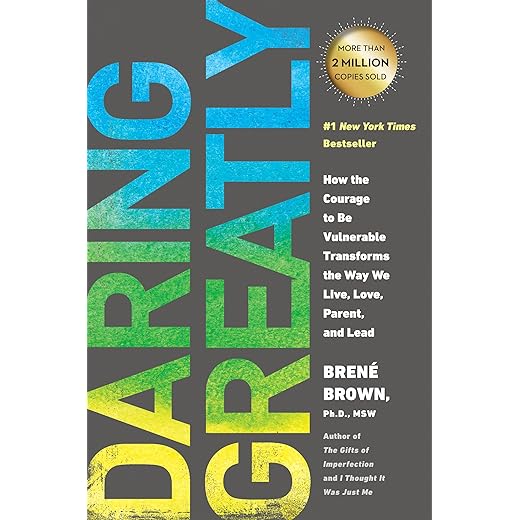
- Daring Greatly by Brené Brown: While different in tone and focus (vulnerability research), Brown’s work on shame and vulnerability aligns with Manson’s arguments about authenticity and the importance of accepting imperfection, offering a complementary perspective.
The Subtle Art successfully carves its unique space by blending sharp psychological insight with an explicitly irreverent, values-centric approach, delivering its message with a memorable, non-traditional voice that strongly resonates with a contemporary audience seeking authenticity over idealism.
Conclusion & Recommendations
The Subtle Art of Not Giving a F*ck delivers outstanding value by offering a profoundly refreshing, honest, and pragmatic framework for navigating the inherent challenges and complexities of life. Its central, counter-intuitive message – that a good life isn’t about minimizing problems or maximizing happiness, but about identifying what genuinely matters and committing to the struggle required to uphold those values, while consciously letting go of the rest – is potent and holds significant potential for transformative personal insight for those willing to engage with it.
Yes, this book is absolutely worth reading. It is particularly essential for anyone feeling overwhelmed by the relentless societal pressure to maintain a facade of perfection and constant happiness, or for those who have become disillusioned with traditional self-help narratives that often feel superficial or detached from reality.
This book should be read by:
- Young adults entering adulthood and grappling with societal expectations, identity, and the fear of not measuring up.
- Individuals experiencing burnout or skepticism towards conventional self-help promises of easy fixes and endless positivity.
- Anyone wrestling with anxiety, insecurity, fear of failure, or difficulty setting personal boundaries.
- Readers seeking a more resilient, authentic, and grounded approach to personal development that acknowledges life’s inherent difficulties.
- Those who appreciate blunt, intelligent prose and dark humor.
Have you embarked on the journey of Mark Manson’s The Subtle Art? Share your thoughts and what resonated with you most in the comments below!