
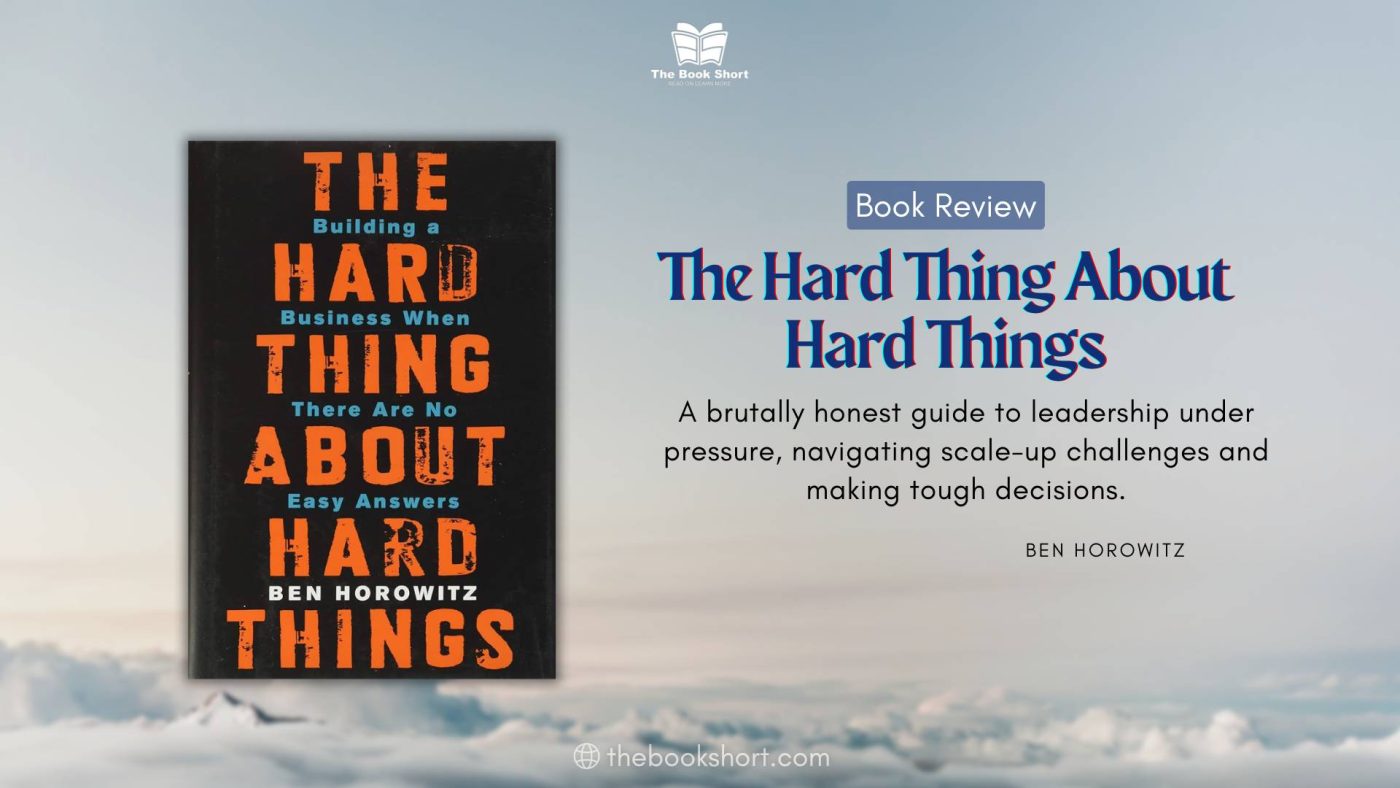
A raw, honest guide for leaders navigating the messy, brutal realities of running a business when things go horribly wrong.
Most business books sell you a dream—a clean formula for success. Ben Horowitz’s The Hard Thing About Hard Things jolts you awake with a nightmare. This isn’t a book about how to succeed; it’s a book about how to survive when failure is breathing down your neck. It rejects easy answers, offering something far more valuable: a companion for the lonely, terrifying moments of leadership. Its brutal, unfiltered honesty is precisely what makes it an indispensable guide for anyone steering a ship through a storm.
The Hard Thing About Hard Things: Key Facts at a Glance
- Title: The Hard Thing About Hard Things: Building a Business When There Are No Easy Answers
- Author: Ben Horowitz
- Year of publication: 2014
- Genre: Business, Management, Leadership, Memoir
- Number of pages: 304
- Target audience: CEOs, founders, entrepreneurs, managers, and aspiring leaders.

The Hard Thing About Hard Things: Building a Business When There Are No Easy Answers―Straight Talk on the Challenges of Entrepreneurship
The Hard Thing About Hard Things: A Comprehensive Book Summary
The Hard Thing About Hard Things is less a manual and more a collection of scars, a series of dispatches from the front lines of startup warfare. Ben Horowitz, co-founder of the legendary venture capital firm Andreessen Horowitz and former CEO of Opsware, structures the book around his own harrowing experiences, blending visceral personal narrative with razor-sharp management doctrine. The core message is stark: the easy things are strategy and vision; the hard things are the emotionally draining, soul-crushing decisions that have no clean solutions.
The Struggle: The Core of Leadership
Horowitz’s central concept is “The Struggle.” It’s the universal, gut-wrenching experience every CEO faces when the company is bleeding cash, top talent is walking out the door, and the pressure becomes a physical weight. It is a state of constant, ambient dread where every problem feels both urgent and insurmountable.
Horowitz is adamant that The Struggle is not a sign of incompetence—it is the price of ambition. The goal isn’t to avoid it, but to learn how to manage your own psychology and lead through it. He offers no platitudes, only hard-won tactics:
- Embrace the truth: Don’t insulate yourself. Share the bad news with your inner circle. Solitude is a killer.
- Focus on the kill: When surrounded by enemies, you can’t fight them all at once. Isolate the single deadliest threat and pour all your energy into neutralizing it.
- It’s not your fault, but it is your problem: Remember that everyone who builds something great endures a similar ordeal. The Struggle is where leaders are forged.
The CEO’s Toughest Jobs: Managing People Through Crisis
A significant portion of the book is a masterclass in the people-centric nightmares that keep leaders awake. These are the “hard things” of the title, as they are tangled in emotions, loyalty, and painful conversations.
Firing People, Especially Executives and Friends
Horowitz argues that while hiring is critical, learning to fire with grace and precision is a non-negotiable skill for building a healthy, high-performance culture. He provides a painfully practical framework for letting people go.
- Firing an executive: Be ruthlessly clear about why—it’s almost always a skills mismatch for the company’s current stage, not a personal failing. Take full responsibility for your hiring mistake. Then, manage the narrative inside the company to prevent political chaos.
- Firing a friend: This is one of the deepest cuts a leader can endure. Horowitz’s advice is to be direct, brutally honest, and give the friendship the respect it deserves, even as the professional chapter closes.
- Managing Layoffs: Horowitz details the “right way” to conduct layoffs, a protocol forged in the fire of his own agonizing experiences. The key steps are:
- Get your head right: The CEO’s first job is to project calm and resolve, not panic.
- Don’t drag it out: Once the decision is made, act swiftly. Delay is toxic.
- Address the company: Clearly explain the business rationale for the layoff to everyone.
- Train your managers: Provide managers with a clear script and train them to deliver the news with humanity and respect.
- Be visible and present: After the cuts are made, the CEO must stand before the remaining employees, take the heat, and answer every question.
Peacetime CEO vs. Wartime CEO
One of the book’s most enduring concepts is the distinction between two leadership modes, dictated entirely by the company’s circumstances.
- Peacetime CEO: Leads when the company has a dominant position in a stable market. They focus on broadening the company’s reach, fostering creativity, and empowering employees with expansive goals.
- Wartime CEO: Leads when the company is fighting for its life—against a ferocious competitor, a market collapse, or an existential technological threat. The Wartime CEO must be a commander, issuing direct orders, demanding strict adherence, and often violating conventional management wisdom to ensure survival. They are singularly focused and operate with extreme prejudice.
Horowitz argues that nearly all management literature is written for peacetime, yet the moments that define a company and its leader happen in wartime. A great CEO must know which era they are in and transform their style accordingly.
Building and Maintaining Culture
Culture isn’t free lunch and ping-pong tables; it’s the sum of your actions under duress. Horowitz insists that culture is defined by what you do, not what you say. He offers practical advice, like designing a shockingly effective onboarding process and ensuring promotions and compensation are ironclad reflections of stated values. He powerfully illustrates this by citing the Haitian Revolution leader Toussaint Louverture, who used shocking but purposeful actions to forge a resilient and unbreakable slave army culture.
Book Analysis: Themes and Style in The Hard Thing About Hard Things
Horowitz’s book is a landmark because it rips away the sanitized, theoretical veneer of leadership and exposes its raw, chaotic, and intensely human core. It is a potent cocktail of memoir, management manual, and psychological survival guide.
Characters, Structure, and Key Arguments
The book’s protagonist is Ben Horowitz himself, portrayed not as a heroic visionary but as a besieged, anti-heroic leader perpetually on the verge of collapse. The narrative follows his gut-wrenching journey as CEO of Loudcloud and then Opsware, from near-bankruptcy and multiple death spirals to a stunning $1.6 billion acquisition by Hewlett-Packard.
The structure is intentionally unconventional, weaving personal war stories with chapters that dissect specific management challenges. This reinforces his central argument: there are no universal formulas for the hardest problems. He preaches a philosophy of context over dogma. Wisdom is situational. His famous memos, like “Good Product Manager/Bad Product Manager,” are not rigid checklists but powerful mental models designed to be adapted, not blindly followed.
Writing Style and Content Quality
Horowitz’s writing style is the book’s signature, and it is unforgettable. It is:
- Brutally Honest: He openly discusses his panic attacks, his mistakes, and the immense psychological toll of the job. He admits to vomiting from stress and crying in front of his team, shattering the myth of the unflappable CEO.
- Direct and Profane: The language is blunt, raw, and laced with profanity. This isn’t for shock value; it’s a tool for authenticity, conveying the life-or-death urgency of the situations he describes.
- Anecdotal and Gripping: By grounding every lesson in a personal story of pain or triumph, he makes abstract concepts tangible and memorable. These aren’t theories; they are lessons paid for in blood, sweat, and tears.
- Uniquely Referenced: Horowitz masterfully quotes rap lyrics from artists like Nas and Jay-Z, treating them as modern parables that distill complex truths about ambition, competition, and survival. It connects the timeless challenges of leadership to contemporary culture in a way that feels fresh and electrifying.
The content quality is exceptional. While other books tell you how to find product-market fit, Horowitz tells you what to do when you lose it and the whole world is caving in.
Notable Quotes from the Book
- “The hard thing isn’t making a big, bold strategic decision. The hard thing is laying people off when you miss the big goal.”
- “There are no silver bullets. There are only lead bullets.”
- “Take care of the people, the products, and the profits—in that order.”
- “Peacetime CEO knows what to do with a big advantage. Wartime CEO is paranoid.”
- “Every time I read a management book, I think, ‘That’s great, but what happens when you f*ck it all up?'”
The Hard Thing About Hard Things Book Review: Is It Worth Reading?
The Hard Thing About Hard Things is not a business book; it’s a leadership lifeline. Its profound value lies in its unflinching focus on the ugly, painful problems that most authors—and most leaders—pretend don’t exist.
Advantages:
- Psychological Armor: The book’s greatest gift is its ability to mentally prepare a leader for the abyss. By normalizing “The Struggle,” it provides immense comfort and helps founders and CEOs feel less isolated in their darkest hours.
- A Playbook for the Impossible: It offers clear, actionable guidance for emotionally charged situations like layoffs, firing friends, and demoting loyalists—tasks rarely covered with such practical and empathetic detail.
- Unimpeachable Authenticity: Horowitz’s raw, first-person narrative is intensely compelling and credible. You feel his anguish and learn from his scars in a way that no academic text could ever replicate.
Disadvantages:
- Hyper-Specific Focus: The advice is unapologetically geared towards the high-stakes, venture-backed tech world. Leaders in more stable, traditional industries might find the “wartime” ethos overly aggressive or less relevant.
- Polarizing Tone: The unfiltered, profane, and intense style is a feature, not a bug, but it won’t resonate with every reader. Those seeking a more measured or data-driven treatise should look elsewhere.
Readability and Audience:
The book is compulsively readable, structured more like a gripping memoir than a dry textbook. The personal stories and direct tone pull you in and don’t let go.
This book is essential reading for:
- Founders and CEOs: This is a non-negotiable, foundational text—perhaps the most important book you can read after you’ve taken the leap.
- Executives and Senior Managers: It is an empathy engine, providing priceless insight into the pressures your CEO faces and fostering true alignment.
- Aspiring Entrepreneurs: It serves as a potent reality check, painting a vivid, unvarnished picture of the immense challenges that await.
Practical Value:
The primary value is the powerful mindset shift it provokes. It teaches that leadership isn’t about having the right answers; it’s about having the courage to make the hard decisions when there are no good options. It equips you with the mental models to stay functional and lead with conviction when your company—and your own psyche—is under siege.
How It Compares: The Hard Thing About Hard Things vs. Other Business Books
The Hard Thing About Hard Things occupies a sacred, lonely space in the business canon.
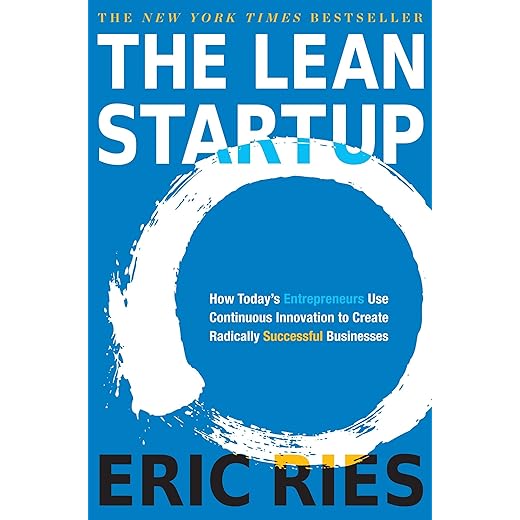
- vs. The Lean Startup by Eric Ries: The Lean Startup is the blueprint for the lab; The Hard Thing About Hard Things is the survival guide for the battlefield. One is about process, the other is about psychology when the process fails.
- vs. Good to Great by Jim Collins: Good to Great analyzes what makes companies succeed over decades. Horowitz’s book is about the brutal, short-term fights a company must win just to survive long enough to even dream of becoming great.
- vs. High Output Management by Andy Grove: Horowitz considers Grove’s book the bible of management mechanics (how to run meetings, set objectives). The Hard Thing About Hard Things is its spiritual successor, addressing the emotional and psychological superstructure that rests upon those mechanics.


If you valued the raw honesty and practical wisdom of this book, you might also enjoy:
- Shoe Dog by Phil Knight: A gripping memoir detailing the chaotic, near-impossible journey of founding Nike.
- High Output Management by Andy Grove: The tactical management “bible” that Horowitz himself considers foundational.
- Creativity, Inc. by Ed Catmull: An inside look at managing creative genius and fostering a culture of radical candor at Pixar.
Conclusion: A Must-Read for Modern Leaders
The Hard Thing About Hard Things is an indispensable resource because it tackles the single most neglected aspect of leadership: managing your own psychology and your team’s morale through periods of intense, soul-crushing struggle. Its enduring value lies in its defiant refusal to offer platitudes. Instead, it offers the profound comfort of a shared experience and the hard-won wisdom of a general who has been to hell and back.
Is it worth reading? Absolutely. For anyone in a leadership role, particularly in a volatile environment, this book is not just recommended; it’s required. It is the guide you will turn to not on your best day, but on your worst.
Have you read this book? Share your thoughts in the comments below.