
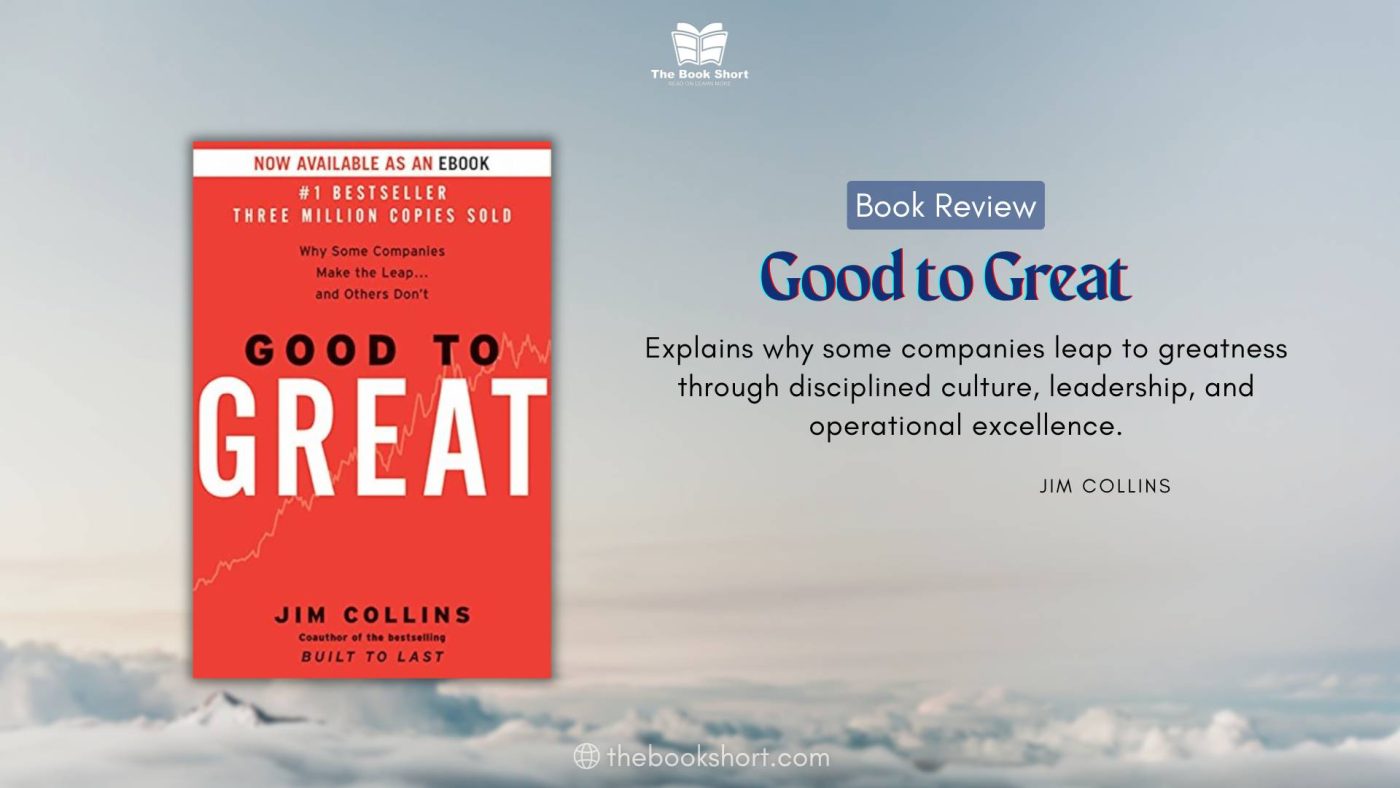
A deep dive into Jim Collins’s “Good to Great,” this book review and summary explores the timeless principles that separate enduringly great companies from the merely good.
Have you ever looked at a successful company and wondered: was it luck, or was it strategy? What truly separates the titans of industry from the forgettable names of yesterday? Jim Collins’s landmark book, “Good to Great,” delivers a startlingly clear, data-driven answer. We chose this book for analysis because it dares to defy the trend of opinion-based business advice. Its power lies in a rigorous five-year study that uncovered a framework of timeless principles for achieving enduring excellence. This isn’t just another business book; it’s a foundational guide for any leader committed to building something that lasts.
Good to Great: Core Book Information
- Title: Good to Great: Why Some Companies Make the Leap… and Others Don’t
- Author: Jim Collins
- Year of publication: 2001
- Genre: Business, Management, Leadership
- Number of pages: 320
- Target audience: CEOs, managers, entrepreneurs, and any leader aspiring to build a truly exceptional organization.

Good to Great: Why Some Companies Make the Leap...And Others Don't (Good to Great, 1)
Good to Great Book Summary: From Good to Greatness
“Good to Great” by Jim Collins tackles a monumental question: Can a good company become a great one, and if so, how? Rejecting simple theories, Collins and his research team spent five years analyzing 28 companies. They meticulously identified 11 elite “good-to-great” companies that made a sustained leap from average performance to spectacular results, crushing the stock market average for at least 15 years. The book distills their transformative journey into a powerful framework of concepts that distinguish these breakout companies from their less successful peers.
The journey is best understood through three core pillars: Disciplined People, Disciplined Thought, and Disciplined Action. Each pillar is supported by clear, actionable concepts.
Disciplined People
Collins famously declares that the path to greatness begins with who, not what. Before vision, before strategy, before anything else, great companies focused on getting the right people on the bus and, just as crucially, the wrong people off.
Level 5 Leadership
The flywheel of greatness is first nudged by a unique kind of leader: the Level 5 Leader. This is not the high-profile, charismatic celebrity CEO celebrated by the media. Instead, Level 5 leaders embody a paradoxical mixture of profound personal humility and intense professional will.
- Personal Humility: They are modest, quiet, and reserved, consistently shunning public praise and attributing success to their team, to others, or even to good fortune.
- Professional Will: Beneath their unassuming exterior lies an unwavering, ironclad resolve to do whatever it takes to make the company great. They are fanatically driven to produce sustained results and will settle for nothing less than enduring excellence. When things go wrong, they look in the mirror to accept responsibility, never out the window to assign blame.
First Who… Then What
The unwavering mantra of good-to-great leaders was “First Who… Then What.” Instead of charting a course and then trying to rally a crew, they dedicated themselves to assembling a superior management team first.
- Get the Right People on the Bus: They prioritized innate character, work ethic, and personal values over specific technical skills, operating on the belief that the right people can adapt and thrive in any new direction.
- The Rigor of People Decisions: These companies were ruthlessly rigorous in their people decisions. This meant not only hiring well but also acting decisively when a person was in the wrong seat. The guiding principles were clear: when in doubt, don’t hire—keep looking. And when you know you need to make a people change, act without hesitation.
Disciplined Thought
With the right people in place, the organization earns the right to confront hard truths and find its unique path. This phase is about developing disciplined thought—facing reality head-on while finding a single, powerful concept to guide every decision.
Confront the Brutal Facts (Yet Never Lose Faith)
You cannot make good decisions without facing the unvarnished truth. Greatness requires an unwavering commitment to confronting reality, no matter how bleak. This fosters a climate where truth is not just spoken but heard and acted upon.
- The Stockdale Paradox: This powerful concept is named for Admiral Jim Stockdale, who survived seven years as a POW in Vietnam. It describes the psychological duality of retaining absolute faith that you will prevail in the end, regardless of the difficulties, AND at the same time, confronting the most brutal, soul-crushing facts of your current reality.
- Creating a Climate of Truth: Leaders cultivate this environment by:
- Leading with questions, not answers, to foster genuine inquiry.
- Engaging in fierce dialogue and debate, not coercion.
- Conducting autopsies of failures without assigning blame.
- Building “red flag” mechanisms that turn information into unignorable truths.
The Hedgehog Concept
Drawn from Isaiah Berlin’s famous essay, this concept contrasts the cunning fox (who knows many things) with the simple hedgehog (who knows one big thing). Good-to-great companies acted as hedgehogs, simplifying a complex world into a single, piercingly clear concept that guided all their actions. This unifying idea emerges from the intersection of three circles:
- What you can be the best in the world at: This demands a sober assessment of what your organization can uniquely do better than any other company, and equally important, what it cannot be the best at.
- What drives your economic engine: This means identifying the single economic denominator (like profit per customer or profit per branch) that has the most profound and sustainable impact.
- What you are deeply passionate about: Great companies focused on work that ignited genuine passion and aligned with their core values.
Disciplined Action
With the right people and a unifying concept, the final piece of the puzzle is to translate that potential into superior performance through disciplined action.
A Culture of Discipline
This is not about creating a tyrannical, rule-laden hierarchy. A true culture of discipline exists when you have disciplined people who take disciplined action, fanatically consistent with the three circles of the Hedgehog Concept.
- Freedom within a Framework: When you combine a culture of discipline with an ethic of entrepreneurship, you get the magical alchemy of greatness. With disciplined people, you don’t need bureaucracy. With disciplined thought, you don’t need excessive controls.
- Rinsing Your Cottage Cheese: This memorable metaphor describes a deep-seated commitment to discipline in all things. It signifies a culture of responsibility where people are self-motivated to go the extra mile, fulfilling their commitments as a matter of personal honor.
Technology Accelerators
The good-to-great companies saw technology not as a creator of momentum, but as an accelerator of it. They avoided the trap of chasing technological fads. Their approach was methodical: first, they dialed in their Hedgehog Concept, and only then did they pioneer the application of carefully selected technologies to amplify their results and push the flywheel even faster.
Building Greatness to Last: The Flywheel and the Doom Loop
The transformation from good to great is never a single, dramatic event. There is no “miracle moment” or revolutionary launch.
- The Flywheel Effect: The process feels like pushing a giant, heavy flywheel. The first few turns are agonizingly slow, requiring immense effort for almost imperceptible movement. But with persistent, disciplined pushing in a consistent direction, the flywheel builds momentum. It turns faster and faster, accumulating energy until—breakthrough! The wheel’s own weight works for you, spinning with unstoppable force. Every concept in the book is another push on that flywheel.
- The Doom Loop: In stark contrast, comparison companies were trapped in the “doom loop.” They would frantically launch new programs with great fanfare, only to be disappointed by the lack of results. This led to a lurch in a new direction, a new leader, or a new fad, which would also fail. This vicious cycle of reaction and restructuring eroded all credibility and condemned them to mediocrity.
In-Depth Book Analysis of Good to Great
Jim Collins’s “Good to Great” stands as a titan in the business literature, not for its flash, but for its substance. Its authority comes from being rooted in empirical data rather than charismatic anecdotes, a methodical approach that shapes its structure, message, and enduring impact.
Key Arguments & Structure
The book’s core argument is that greatness is not born of circumstance but is a matter of conscious choice and disciplined execution. Collins systematically dismantles cherished business myths—the need for a celebrity CEO, a single grand strategy, or a tech-first approach.
The book’s structure is its analytical masterstroke. It’s not a mere collection of findings but a causal framework. The progression from Disciplined People to Disciplined Thought and finally to Disciplined Action is profoundly logical. This structure demonstrates a reinforcing loop: having the right people allows for honest, disciplined conversations, which in turn leads to focused, unstoppable execution.
Key arguments that challenge conventional wisdom include:
- Level 5 Leadership as the Bedrock: The book’s opening gambit—championing the humble-yet-driven leader—is a powerful counter-narrative to the ego-centric “rockstar CEO.” It asserts that sustainable greatness is built on quiet diligence, not charismatic command.
- People First, Strategy Second: The “First Who, Then What” principle remains a revolutionary concept. It posits that human capital is the ultimate asset and that with the right team, a winning strategy will inevitably emerge from dialogue and discovery.
- The Piercing Simplicity of the Hedgehog Concept: Collins argues against the sprawling complexity of most corporate strategies. The Hedgehog Concept is a forcing function, compelling an organization to distill its essence into a single, brutally simple idea. This focus is what enables the compounding momentum of the Flywheel.
Writing Style & Content Quality
Collins’s writing style is a primary reason for the book’s staying power. He translates dense research into clear, accessible, and highly memorable language. He achieves this through:
- Vivid, Sticky Metaphors: Concepts like the “Bus,” the “Hedgehog,” the “Flywheel,” and the “Doom Loop” are brilliant. They serve as a mental shorthand for complex ideas, making them incredibly easy to recall, discuss, and implement within an organization.
- Data-Driven Storytelling: Every claim is reinforced with evidence. Collins masterfully weaves data charts and sharp comparisons between the “great” companies and their less successful counterparts, lending the book an unshakeable authority that opinion-based books simply cannot match.
- Methodical Clarity: Collins is a master of structure. He introduces a concept, illustrates it with compelling case studies (like the disciplined rise of Walgreens over the reactive Eckerd), and then summarizes how it clicks into the overall framework. This deliberate repetition ensures the reader internalizes the interconnected nature of these ideas.
The content quality is exceptional. By anchoring the research to a concrete, measurable outcome—15 years of market-crushing performance—the study filters out fleeting successes and isolates the principles of enduring greatness. This distinguishes it from countless books that analyze “flavor-of-the-month” companies that later falter.
Notable Quotes from the Book
- On leadership: “Level 5 leaders are a paradoxical blend of personal humility and professional will. They are ambitious, to be sure, but ambitious first and foremost for the company, not themselves.”
- On people: “The executives who ignited the transformations from good to great did not first figure out where to drive the bus and then get people to take it there. No, they first got the right people on the bus (and the wrong people off the bus) and then figured out where to drive it.”
- On reality: “You must retain faith that you will prevail in the end, regardless of the difficulties, AND at the same time, confront the most brutal facts of your current reality, whatever they might be.” (The Stockdale Paradox)
- On transformation: “Good to great comes about by a cumulative process—step by step, action by action, decision by decision, turn by turn of the flywheel—that adds up to sustained and spectacular results.”
Good to Great Book Review: An Expert Evaluation
More than two decades after its publication, “Good to Great” remains one of the most vital and influential business books ever written. Its rigorous, evidence-based approach provides a timeless blueprint for organizational excellence. Yet, like any seminal work, its immense strengths are best understood alongside points worthy of critical reflection.
Personal Impressions: Advantages and Disadvantages
Advantages:
- An Actionable, No-Nonsense Framework: The book’s greatest triumph is its clarity. Concepts like the Hedgehog Concept and getting the right people on the bus are not abstract theories; they are practical, powerful tools that leaders can begin implementing tomorrow.
- Enduring, Human Principles: While the company data is from a specific era, the principles themselves—humility, discipline, focus, and valuing people—are profoundly human and feel more relevant than ever in today’s volatile business climate.
- Inspirational Yet Sobering: The book inspires a belief that greatness is achievable through conscious choice. It masterfully grounds this optimism in the sobering reality of relentless discipline and confronting brutal facts. The Flywheel concept is a perfect antidote to our culture’s obsession with overnight success, teaching the crucial lesson of patient, compounding effort.
Disadvantages:
- The Fate of the “Great” Companies: The most common critique is that some featured companies, like Circuit City and Fannie Mae, later stumbled spectacularly. This doesn’t inherently invalidate the principles—Collins compellingly argues they failed precisely when they abandoned the disciplines that made them great—but it does spark a vital debate about how to ensure greatness is truly sustainable across generations of leadership.
- The Risk of Oversimplification: The very power of the metaphors can be a double-edged sword. In the hands of an undisciplined leader, these concepts can be reduced to a simplistic checklist, missing the deep, nuanced thinking required to truly apply them.
Readability Level and Target Audience
The book is exceptionally readable and accessible. Collins writes with the clarity of a great teacher, avoiding academic jargon in favor of direct prose and gripping stories. While packed with information, its logical flow and sticky metaphors make it a surprisingly easy and engaging read.
This book is essential for:
- CEOs and Senior Executives: It offers a strategic framework to guide an entire organizational transformation.
- Mid-Level Managers and Team Leaders: The principles of Level 5 Leadership and “First Who” provide a direct playbook for building and leading elite teams.
- Entrepreneurs and Startup Founders: It provides a crucial roadmap for building a company with a foundation for lasting success, not just short-term growth.
- Students of Business and Leadership: It is a foundational text for anyone seeking to understand the mechanics of long-term organizational excellence.
Practical Value: Lessons and Application
The practical value of “Good to Great” is immense. It forces a profound mental shift away from searching for a “silver bullet” and toward cultivating a deep-seated culture of discipline. The key lessons are transformative:
- True leadership is about stewardship, not ego.
- Your team is your primary asset; build the team before the vision.
- Unwavering focus on what you can be the best at is far more powerful than chasing every shiny new opportunity.
- Extraordinary success is the result of slow, persistent, compounding momentum, not a single breakthrough moment.
Readers can apply these lessons immediately by conducting their own “autopsy without blame” on a recent project, initiating honest dialogues to confront their own brutal facts, and working with their teams to begin the search for their Hedgehog Concept.
Comparison with Similar Books to Good to Great
“Good to Great” carved out a unique space in business literature, but understanding its context alongside other classics illuminates its specific contribution.
It is best viewed as a thematic sequel to Collins’s earlier work, “Built to Last: Successful Habits of Visionary Companies,” co-authored with Jerry I. Porras. While “Built to Last” dissected companies that were great from their inception, “Good to Great” tackles the more common and relatable challenge of transforming a perfectly average organization into a world-beater.
Compared to “The 7 Habits of Highly Effective People” by Stephen R. Covey, “Good to Great” operates at the organizational level, whereas Covey focuses on personal and interpersonal effectiveness. Yet, they are deeply complementary. A Level 5 leader is the living embodiment of Covey’s habits, from “Begin with the End in Mind” (the Hedgehog Concept) to “Put First Things First” (the essence of a disciplined culture).
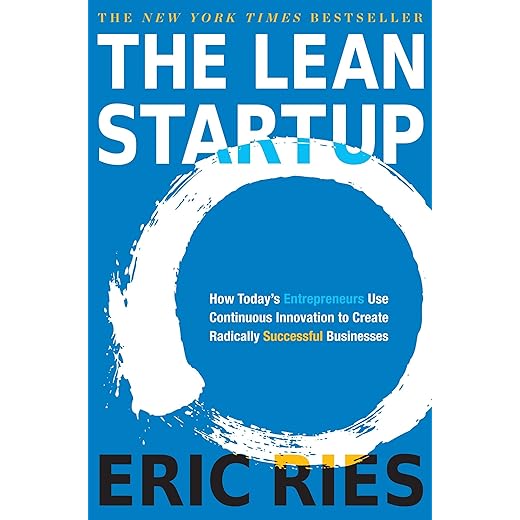
Against modern classics like “The Lean Startup” by Eric Ries, “Good to Great” feels more established and foundational. “The Lean Startup” is the perfect guide for navigating the high-uncertainty phase of a new venture with its emphasis on speed and validated learning. Collins’s framework, in contrast, is the blueprint for taking a proven concept and building it into an institution with unstoppable momentum. One might use “Lean Startup” principles to find their flywheel, then use “Good to Great” principles to make it spin for decades.




If you value the data-driven, principle-based approach of “Good to Great,” you will also appreciate:
- “Built to Last” by Jim Collins and Jerry I. Porras: To understand what makes visionary companies endure from the very beginning.
- “Principles: Life and Work” by Ray Dalio: Offers another brilliantly systematic framework for decision-making in both business and life.
- “The Five Dysfunctions of a Team” by Patrick Lencioni: A compelling fable that masterfully diagnoses team failure, making it a perfect companion to the “First Who… Then What” concept.
Conclusion: Is Good to Great Worth Reading?
Without question, “Good to Great” by Jim Collins has earned its hallowed place on the shelf of every serious leader. Its enduring value lies in its rigorous, research-backed framework that cuts through the noise of business fads, offering timeless, actionable principles. The core message—that disciplined people who engage in disciplined thought and take disciplined action are the architects of greatness—is more potent and necessary today than ever.
Yes, “Good to Great” is absolutely worth reading. It is an investment in a new way of thinking—a clear, focused path toward building something of genuine, lasting value.
Who should read it? Any leader, manager, or ambitious professional who refuses to settle for “good enough.” It is an essential manual for anyone committed to the hard, rewarding work of building a high-performing team, a market-leading company, and a legacy of excellence.
Have you read “Good to Great”? Share your biggest takeaway in the comments below