
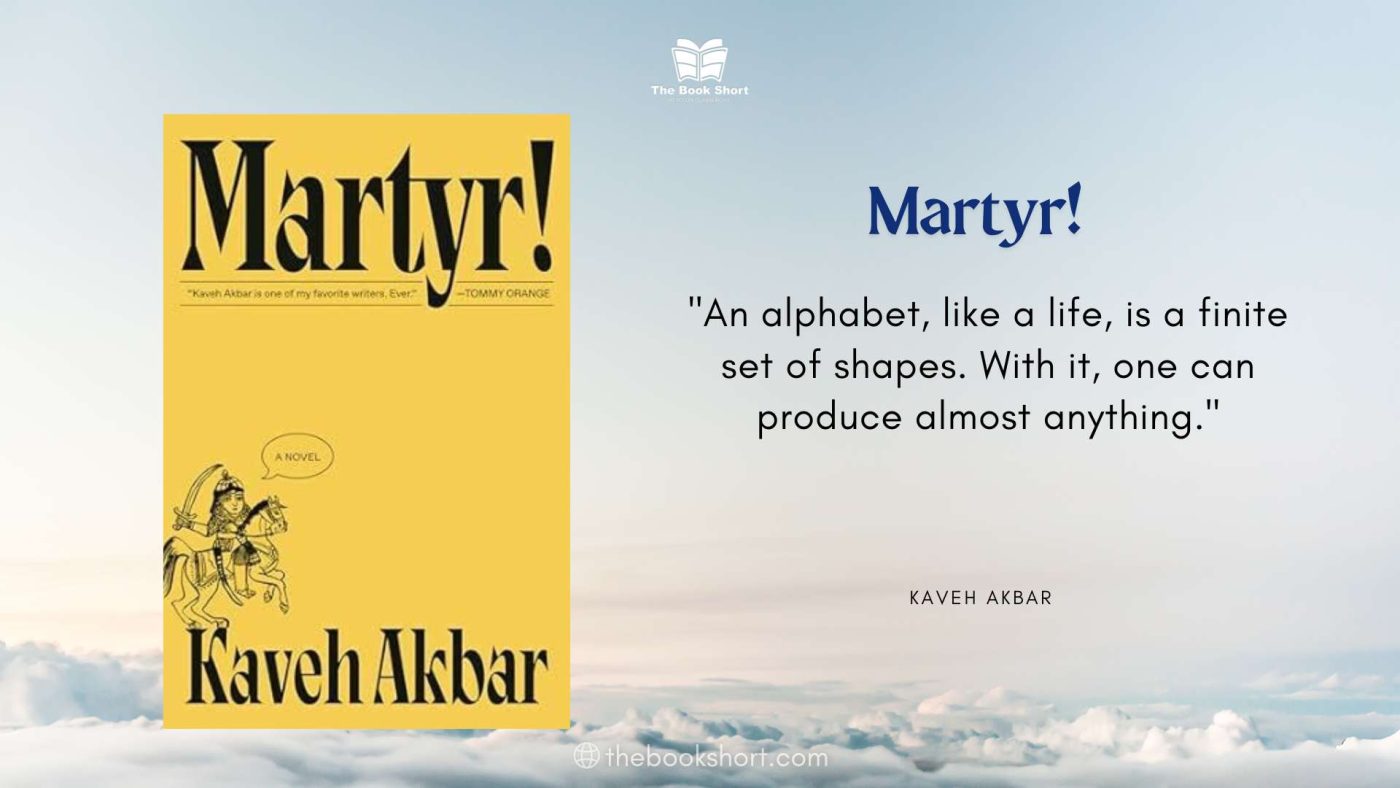
A searing debut novel explores inheritance, addiction, and identity. Discover the power of Kaveh Akbar’s Martyr! Dive into the vibrant, often turbulent, world of Cyrus Shams in Kaveh Akbar’s debut novel, Martyr!. This book immediately grips the reader with its unique voice and unflinching exploration of complex themes. I chose Martyr! for analysis because of its ambitious scope, its lyrical prose, and its bold engagement with history, trauma, and the search for meaning. It offers a distinctive blend of humor, profound sadness, and intellectual curiosity that sets it apart and promises a deeply rewarding reading experience.
Martyr! Book Information: Title, Author, and More
Here is some basic information about Kaveh Akbar’s novel, Martyr!:
- Title: Martyr!
- Author: Kaveh Akbar
- Year of publication: 2024
- Genre: Novel / Literary Fiction
- Number of pages: (Note: This varies slightly by edition. Specify the edition if possible, e.g., approx. 350 pages)
- Target audience: Readers interested in literary fiction, themes of addiction, cultural identity (specifically Iranian-American), trauma, history, and philosophical/existential questions.
Exploring the Story: Martyr! Book Summary
This section provides a summary of the core narrative and thematic concerns within Kaveh Akbar’s novel, Martyr!. The story primarily follows Cyrus Shams, a young, formerly addicted poet grappling with his past, his Iranian heritage, and his place in the world.
Cyrus Shams and His Quest
The narrative centers on Cyrus as he navigates sobriety, attends recovery meetings, and prepares for a significant artistic undertaking. His journey is not linear; it is marked by flashbacks, philosophical musings, and encounters with various characters who represent different facets of his history and potential future.
The Legacy of Martyrdom
A central thread is Cyrus’s fascination with martyrdom, particularly figures from Iranian history and culture, as well as his own family’s unspoken traumas related to the Iranian Revolution. He is preparing a performance art piece related to martyrs, which serves as both a coping mechanism and a way to confront his inheritance of pain and silence.
Key Relationships and Encounters
- Family: Cyrus’s relationship with his distant father is explored, highlighting the emotional distance and cultural gaps that exist. The novel delves into the family history and the impact of events in Iran on their lives in America.
- Recovery Community: Interactions within recovery meetings provide a grounding element, showcasing the shared struggles and fragile support systems of individuals dealing with addiction.
- Other Characters: Cyrus encounters various individuals who challenge or illuminate aspects of his identity and beliefs. A significant late encounter with a famous artist who has ties to Iran becomes a focal point for Cyrus’s search for connection and understanding.
Themes Woven Throughout
The summary touches upon the major themes explored:
- Addiction and recovery
- Iranian identity and the immigrant experience
- Historical trauma and inherited memory
- Art as a means of processing pain and history
- The search for meaning and connection
- Mortality and the concept of martyrdom
The novel does not follow a conventional plot structure strictly but rather moves through Cyrus’s consciousness, blending present-day experiences with memories, historical reflections, and internal monologues.
Martyr! Book Analysis: Themes, Style, and Uniqueness
Kaveh Akbar’s Martyr! is a complex literary work that defies easy categorization. This analysis delves into its thematic depth, the author’s distinct style, and what makes it stand out within contemporary fiction.
Characters, Structure, and Key Arguments
The novel is primarily character-driven, focusing intensely on the internal landscape of Cyrus Shams. The structure is fragmented, mirroring Cyrus’s own fractured sense of self and reality. It weaves between present moments, memories, historical anecdotes, and reflections on art and philosophy. There isn’t a single clear “argument” but rather an exploration of interconnected ideas: how trauma is inherited, the difficulty of true connection, the ongoing negotiation of identity (especially between cultures), and the possibility (or impossibility) of finding redemption or meaning after profound loss and addiction.
- Cyrus Shams: A richly drawn protagonist whose voice is both vulnerable and intellectually sharp. His struggles with sobriety, heritage, and existential questions drive the narrative.
- Structure: Non-linear, associative, often moving via Cyrus’s thoughts and internal connections rather than external plot events. This requires active engagement from the reader.
- Key Themes Explored: As noted in the summary, addiction, identity, history, trauma, art, and martyrdom are central. The book argues implicitly for the importance of confronting difficult histories and finding ways to articulate pain, even when words feel insufficient.
Writing Style and Content Quality
Akbar, an acclaimed poet, brings a distinct poetic sensibility to his prose. The language is often lyrical, image-rich, and precise. Sentences can be long and complex, imbued with metaphor and philosophical weight.
- Lyrical Prose: The writing is beautiful and often reads like prose poetry, with attention paid to rhythm and sound.
- Intellectual Depth: The novel is filled with references to art, literature, history, and philosophy, inviting readers to think deeply alongside Cyrus.
- Humor and Pathos: Despite the heavy themes, the book contains moments of dark humor and unexpected wit, balancing the profound sadness.
- Content Quality: High. Akbar tackles challenging subjects with nuance and sensitivity, offering a deeply personal yet universally resonant exploration of human struggle. The emotional rawness is palpable.
What Stands Out or Differs
- Poetic Voice: Unlike many contemporary novels, Martyr! foregrounds language and internal thought in a way more common in poetry. The prose itself is a significant part of the reading experience.
- Focus on Iranian Identity: While there are many novels by Iranian-American authors, Akbar’s specific lens on historical martyrdom, Sufism, and the weight of history feels particularly distinctive and deeply researched.
- Integration of Art and History: The way Cyrus uses art and delves into history as coping mechanisms and investigative tools is central to the narrative structure and thematic development.
Notable Quotes from Martyr! Book
(Note: Specific quotes would be inserted here, capturing the essence of Cyrus’s voice, the lyrical prose, or key thematic ideas. Examples might touch on sobriety, history, language, or faith).
Evaluation & Personal Review of Martyr!
Martyr! is a powerful and challenging debut novel that leaves a lasting impression. My personal impression is overwhelmingly positive, though it’s not an easy read. The greatest advantage is Kaveh Akbar’s breathtaking prose and the intellectual depth he brings to profoundly human struggles. The way he connects personal addiction to historical and cultural trauma is incredibly moving.
A potential disadvantage for some readers might be the non-linear structure and the intense focus on Cyrus’s internal monologue, which can sometimes feel dense or disorienting if you prefer a more traditional plot.
The readability level is moderate to challenging. It requires a reader willing to engage with complex language, fragmented structure, and heavy themes. It is most suitable for readers who appreciate literary fiction that prioritizes voice, theme, and character introspection over plot.
The practical value lies in its capacity to foster empathy and understanding for the complex layers of addiction, intergenerational trauma, and the immigrant experience. It changes your mindset by offering a visceral understanding of how history and personal struggle are deeply intertwined, highlighting the human need for connection and narrative in the face of pain. It’s a book that makes you think and feel deeply.
Comparison with Similar Books
Martyr! shares thematic concerns with other works exploring Iranian-American identity, trauma, and the search for meaning.
- It can be placed alongside authors like Hisham Matar (The Return), who writes movingly about loss, memory, and the weight of political history on personal lives, albeit from a different national perspective.
- Comparisons could also be drawn to novels that delve deeply into the internal lives of protagonists grappling with addiction and recovery, such as Denis Johnson’s work, though Akbar’s style and cultural context are distinct.
- Readers who appreciate authors who blend poetic sensibility with prose, like Ocean Vuong (On Earth We’re Briefly Gorgeous), might find Akbar’s style appealing.
If readers liked Martyr! for its exploration of Iranian identity and history, they might also enjoy memoirs like Tara Conklin’s The Last Romantics (for family history and legacy themes) or non-fiction works exploring the nuances of the Iranian diaspora. If they enjoyed the blend of addiction narrative and literary prose, they might explore works by authors known for unique voices in recovery literature.
Martyr! Conclusion & Recommendations
Kaveh Akbar’s Martyr! is an outstanding novel, marked by its searing honesty, intellectual rigor, and stunning prose. Its value lies in its unflinching look at addiction, historical trauma, and the intricate weaving of identity, presented through a truly unique voice.
Is it worth reading? Absolutely, if you are seeking a challenging, beautifully written, and deeply resonant literary experience.
Who should read it? Readers interested in contemporary literary fiction, especially those exploring themes of addiction, cultural heritage (specifically Iranian-American), trauma, and the role of art and history in processing pain. It’s a book for those who enjoy language-driven narratives and complex character studies.
Have you read this book? Share your thoughts on Kaveh Akbar’s Martyr! in the comments below!