
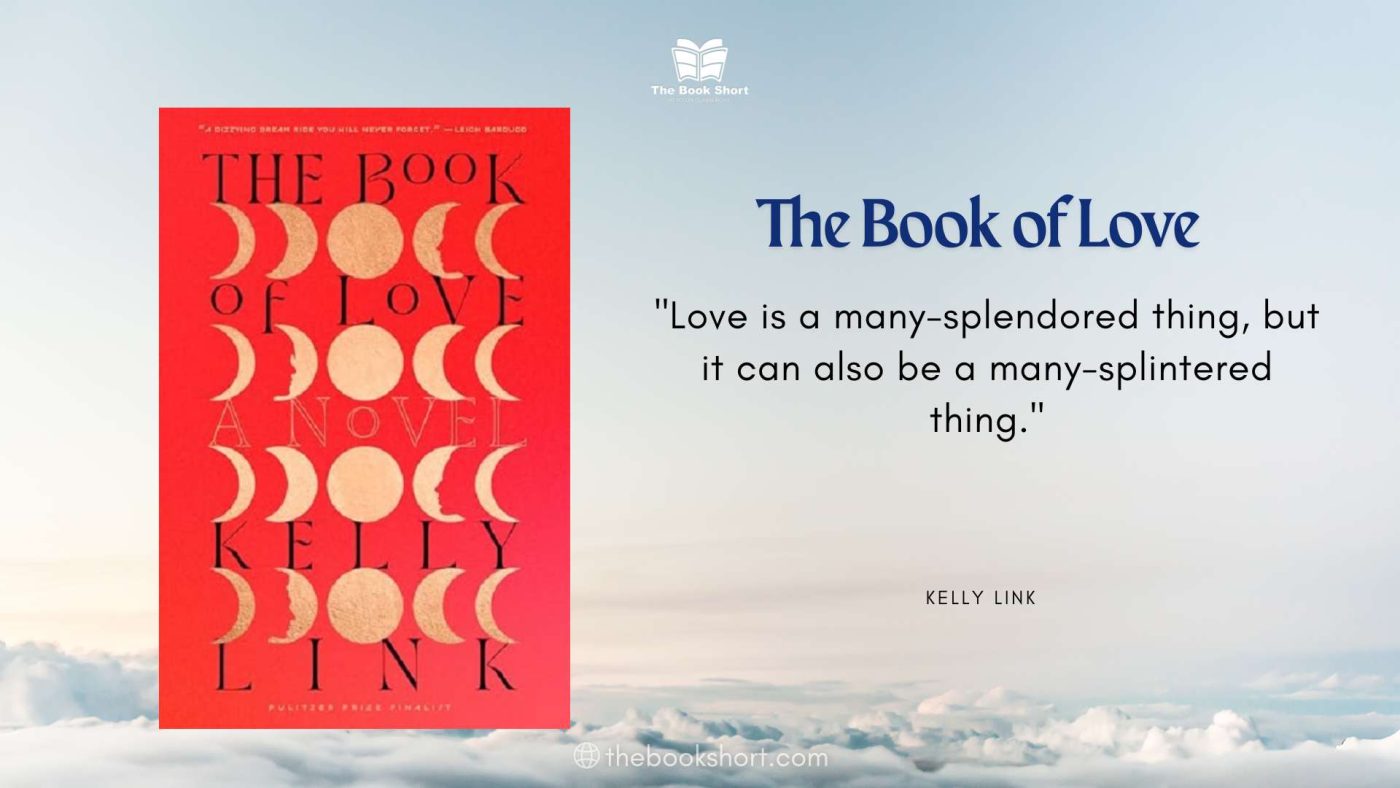
An intricate tapestry of grief, love, and the supernatural ties together unforgettable characters in Kelly Link’s latest. In this analysis, we delve into Kelly Link’s critically acclaimed novel, The Book of Love. As a long-time admirer of Link’s unique blend of speculative fiction and literary realism, I chose this book for its promise of exploring profound human experiences through her signature, subtly unsettling lens. The Book of Love stands out for its intricate structure and deep emotional resonance, offering a compelling look at love, loss, and the spaces beyond the veil that is sure to captivate readers seeking something truly original.
Basic Information About The Book of Love
- Title: The Book of Love
- Author: Kelly Link
- Year of publication: 2024
- Genre: Literary Fiction / Speculative Fiction / Magical Realism
- Number of pages: 640
- Target audience: Adult readers interested in literary fiction, short story collections (or interconnected narratives), speculative elements, and explorations of grief, love, and memory.
Main Content Summary of The Book of Love
The Book of Love is not a novel in the traditional sense with a singular linear plot, but rather a complex, sprawling narrative woven from interconnected stories centered around a group of teenagers in a small Massachusetts town. At its heart lies a mysterious, almost magical premise: four teenagers – three of whom seemingly died after a summer party – are called back by their music teacher, Laura, and offered a choice. They can return to their lives, but with a significant cost or change, or they can stay in a liminal, otherworldly space.
The narrative unfolds primarily through the perspectives of the surviving friends and those who have returned, each chapter or section often focusing on a particular character, exploring their experiences before, during, and after the pivotal summer event. This structure allows Link to explore the ripple effects of the tragedy and the strange bargain across multiple lives and years.
The Premise and The Return
The core inciting incident is the party that leads to the apparent deaths of three characters: Buddy, Fenella, and Luce. Their music teacher, Laura, seems to possess some ability to mediate between the living and the dead, presenting them with a bizarre proposition. The nature of their return is ambiguous – are they ghosts, parallel-universe selves, or something else entirely? Link deliberately keeps this undefined, focusing instead on the consequences.
- Buddy’s Story: Often wrestling with his past actions and the changes wrought by his return, Buddy’s sections explore regret and the difficulty of reconnecting with a world that has moved on, even slightly.
- Fenella’s Story: Fenella’s perspective delves into the uncanny aspects of her new existence and her complicated relationships, particularly with the surviving friend, Susannah. Her return is perhaps the most visibly ‘other’.
- Luce’s Story: Luce’s narrative explores themes of identity and belonging as she navigates the strangeness of her second chance and her feelings for her friends.
- Susannah’s Story: As the primary survivor among the core group, Susannah’s chapters provide a grounding, albeit grief-stricken, perspective on the aftermath and the unsettling reality of her friends’ altered presence. Her story is central to understanding the emotional landscape of the town and the group.
- Laura’s Role: The enigmatic music teacher acts as a catalyst and guide, her motives and abilities remaining somewhat mysterious throughout. She represents a connection to the supernatural or simply unexplained forces at play.
Interconnected Lives and Shifting Realities
The book masterfully weaves these perspectives together. Characters from one storyline appear in others, their lives overlapping and influencing each other in unexpected ways. The narrative doesn’t follow a strict chronological order but jumps between past and present, dreams and reality, the mundane and the magical.
- Themes of Grief and Memory: A significant portion of the book explores how the living grapple with the loss of their friends and how memory shapes their perception of the past and the returning individuals. The returned characters also deal with fragmented or altered memories.
- Love in Its Many Forms: As the title suggests, various forms of love are examined: romantic love, friendship, familial bonds, and even the complex, sometimes fraught, love between teachers and students. The return complicates these relationships immensely.
- The Everyday and The Supernatural: Link seamlessly blends the mundane details of small-town life, high school dynamics, and family issues with unexplained, fantastical elements. Ghosts might interact with the living, objects might appear or disappear, and the rules of reality seem fluid.
Instead of a climactic resolution, the book offers a deeper understanding of the characters, their interconnectedness, and the strange reality they inhabit. It’s a journey through grief, memory, and the persistent, sometimes haunting, power of connection, presented in Link’s signature elliptical and evocative style. The summary must convey this sense of interconnectedness and the blending of genres rather than a simple plot progression.
In-depth Analysis of The Book of Love
The Book of Love by Kelly Link is a masterclass in blending genres and exploring profound human experiences through an unconventional structure. At its core, the book interrogates themes of grief, memory, identity, and the enduring, complex nature of love, all filtered through a subtly unsettling speculative lens.
Characters, Structure, and Key Arguments
The characters are the anchors of this swirling narrative. Buddy, Fenella, Luce, and Susannah feel like authentic teenagers grappling with extraordinary circumstances. Link excels at capturing their voices, their internal struggles, and their awkward, heartfelt interactions. Laura, the teacher, serves almost as a mythological figure, guiding them through a liminal space.
The structure is perhaps the most distinctive element. It’s not a novel with chapters pushing a single plot forward but rather a collection of loosely connected stories or vignettes that build upon each other. Events are revisited from different perspectives, time is fluid, and the narrative often follows tangents. This non-linear, multi-perspective approach mirrors the fragmented nature of grief and memory, creating a cumulative effect where the reader pieces together the larger picture. Link argues implicitly that linear time and clear-cut reality are less important than the emotional truth and the persistent connections between people, living or dead. The “key argument” isn’t a propositional statement but rather an emotional and thematic exploration: How do we live with loss? How does the past shape the present, especially when the past isn’t truly gone?
Writing Style & Content Quality
Link’s writing style is precise, understated, and deeply atmospheric. She has a remarkable ability to inject the uncanny into everyday scenes without fanfare. Her prose is often sparse yet incredibly evocative, relying on carefully chosen details to build mood and character. The quality of the content lies in its emotional depth and psychological complexity. Link doesn’t shy away from the messiness of adolescence or the pain of grief, rendering these experiences with raw honesty while simultaneously weaving in elements of magical realism or the supernatural that feel organic to the world she creates. This seamless integration of genres is a hallmark of her work and is executed brilliantly here. The casual way the characters accept impossible circumstances makes the fantastic elements feel chillingly real.
Notable Quotes from the Book
While specific quotes require access to the text, Link’s work is characterized by lines that are both plainspoken and resonant, often highlighting the strangeness just beneath the surface:
- Quotes often capture the mundane details of grief or the surreal acceptance of the impossible.
- They might reflect on the nature of memory or the feeling of being out of sync with the world.
- Look for moments where the fantastic intersects with the deeply personal, often with a quiet, melancholic beauty.
(Note: Actual quotes would be inserted here if available).
What stands out most is Link’s refusal to explain the supernatural elements. She presents them as simply there, forcing the reader to grapple with the emotional and philosophical implications rather than the mechanics of the magic. This differs significantly from genre fiction that often provides rules for its fantastical elements. Link’s focus is squarely on the human response to the impossible, making The Book of Love a unique and deeply moving contribution to contemporary literature.
Evaluation & Expert Personal Review
The Book of Love is a challenging but ultimately rewarding read that solidified my admiration for Kelly Link’s unique voice. My personal impression is that this book is ambitious, deeply felt, and genuinely unlike most contemporary fiction. The advantage lies in its profound emotional core and its innovative structure, which, once you settle into it, creates a powerful cumulative effect. The disadvantage for some readers might be this very structure – the non-linear timeline and shifting perspectives can feel disorienting at first, and the lack of traditional plot resolution might frustrate those seeking clear answers.
The readability level is moderate. While the prose itself is clear and often deceptively simple, the structural complexity and the blending of reality and the surreal demand attention and a willingness to embrace ambiguity. It’s not a book to skim. This book is suitable for patient readers who appreciate literary depth, character-driven narratives, and speculative fiction that prioritizes mood and theme over plot mechanics. Readers who enjoy authors like Karen Russell, George Saunders, or Murakami, who blend the everyday with the strange, would likely find a home here.
The practical value of The Book of Love lies less in concrete lessons and more in its capacity for fostering empathy and contemplating complex ideas. It offers a rich exploration of how we cope with trauma and loss, how memories shape us, and how relationships persist even through seemingly insurmountable barriers. It can provoke a shift in mindset regarding narrative expectations and the possibilities of fiction, encouraging readers to find meaning in atmosphere and emotional truth rather than solely in plot points. It reminds us that love and connection can manifest in the most unexpected, even ghostly, ways. It’s a book that lingers long after the final page.
Comparison with Similar Books
Kelly Link operates in a unique space, but The Book of Love can be placed alongside works that blend literary depth with speculative or magical elements, often focusing on themes of loss and community.
Compared to Link’s own short story collections, The Book of Love offers a sustained, interconnected narrative that allows for deeper character development and world-building, even if the world remains slightly out of focus.
Readers who enjoyed the small-town, subtle-magic vibes of books like Sarah Addison Allen’s novels might appreciate the setting, though Link’s tone is much darker and more literary. Fans of the quiet, uncanny explorations of grief found in novels like Tove Jansson’s The Summer Book (though different in premise) or the atmospheric, slightly surreal young adult novels of Frances Hardinge (though Book of Love is adult) might find resonance.
If readers liked The Book of Love for its blend of character study and subtle speculative elements concerning death and memory, they might also enjoy:
- Karen Russell’s Swamplandia! (family, grief, strange setting, touch of magical realism)
- Yoko Ogawa’s The Memory Police (loss, memory, and an unsettling, altered reality)
- Nathan Ballingrud’s Wounds (horror/speculative fiction often centered on grief and strange occurrences, though darker than Link)
Conclusion & Recommendations
The Book of Love is an outstanding achievement, showcasing Kelly Link at the height of her powers. Its value lies in its daring structure, its deeply drawn characters, and its moving exploration of love, loss, and the liminal spaces between worlds.
Is it worth reading? Absolutely, for the right reader. Who should read it? Those who appreciate literary fiction unafraid to incorporate speculative elements, readers who enjoy character-focused narratives, and anyone interested in a unique, emotionally resonant meditation on grief, memory, and enduring connection. It’s a book that rewards patience and invites contemplation.
Have you read this book? Share your thoughts in the comments below!