
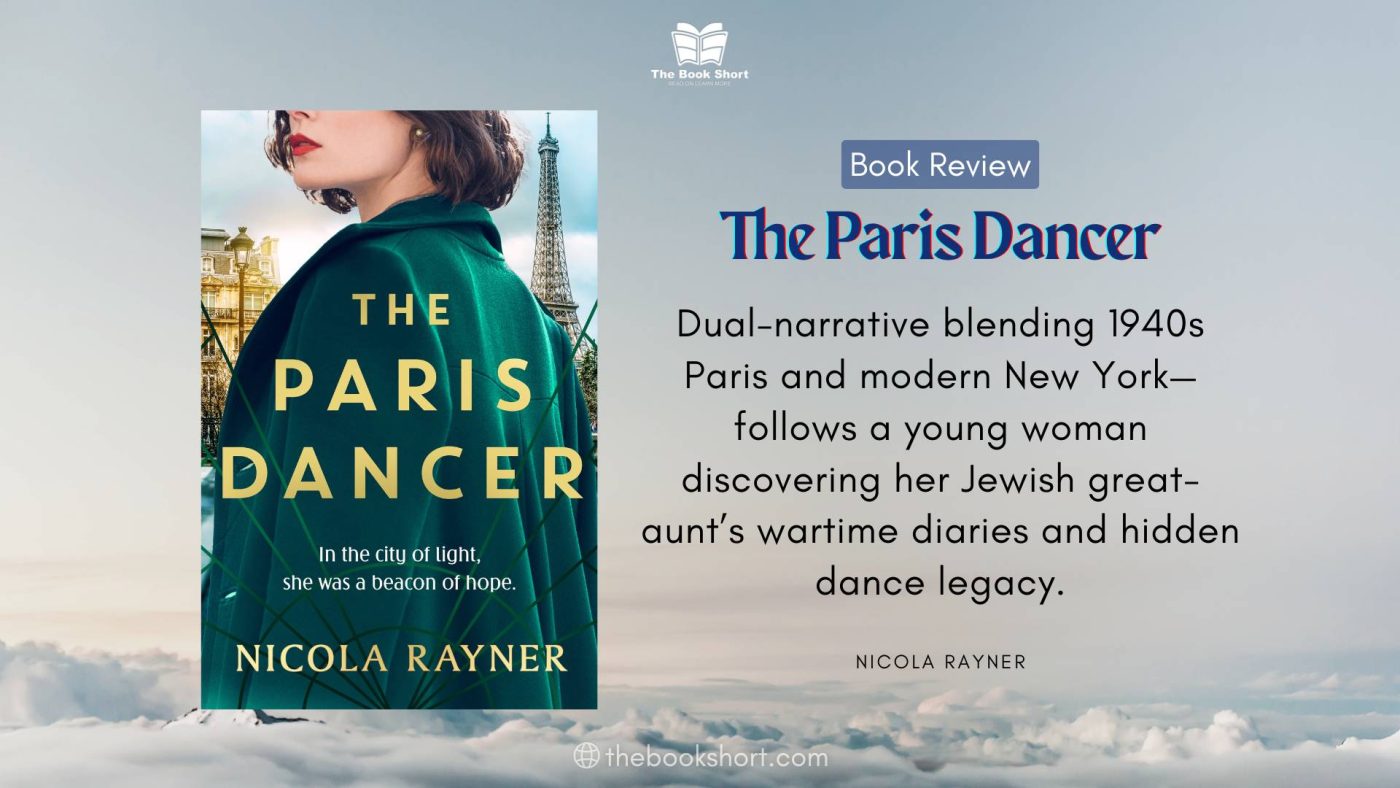
Step into the smoky, glittering world of 1930s Paris, where the pursuit of dazzling ambition collides headfirst with treacherous secrets and underlying danger. Nicola Rayner’s The Paris Dancer promises a captivating journey into a city on the cusp of darkness, viewed through the eyes of a young woman daring to dream. This exploration delves into a narrative that blends historical immersion with a central mystery, offering a potent cocktail of glamour and tension that demands a closer look.
The Paris Dancer: Basic Book Information
- Title: The Paris Dancer
- Author: Nicola Rayner
- Genre: Historical Fiction, Thriller/Mystery
- Target Audience: Readers captivated by historical thrillers set in 20th-century Europe, especially Paris; those intrigued by themes of performance, identity, hidden pasts, and the darker side of artistic aspiration.

The Paris Dancer: The emotional and inspiring historical novel to look out for in 2025!
Summary of The Paris Dancer Book Plot
Nicola Rayner’s The Paris Dancer sweeps readers away to the vibrant, yet increasingly anxious, atmosphere of Paris in the late 1930s. The story centres on Elodie, a young woman from a quiet provincial town, who arrives in the capital city with stars in her eyes and a burning desire to become a celebrated dancer. What follows is a gripping account of her struggle and transformation as she navigates the glittering, often brutal, landscape of Parisian cabarets and theatres on the eve of monumental historical change.
Elodie’s arrival in Paris paints a visceral picture of the city’s intoxicating energy – the chaotic beauty of the streets, the whispered promises of the grand theatres, the seductive hum of nightlife offering both opportunity and unseen peril. Her initial optimism quickly faces the harsh realities of the city. Finding work proving far harder than anticipated, she confronts rejection, fierce competition, and the gnawing challenge of simple survival.
Her aspirations for classical ballet falter, leading Elodie down a different path. Desperate, she is drawn into the world of Parisian cabarets – a realm far removed from the disciplined stages she envisioned. Here, the lines between art, sheer entertainment, and something more morally ambiguous blur. She secures work as a showgirl, adopting a necessary new persona that allows her to hone her skills and earn a living in this less conventional, more perilous environment. This nocturnal world introduces her to a vivid cast of characters: resilient fellow performers, enigmatic club owners, and wealthy patrons whose motives are often shadowed – each bearing their own ambitions and closely guarded secrets.
As Elodie becomes more deeply embedded in this dazzling underbelly, she begins to sense the darker currents flowing beneath the glamorous surface. The narrative charts her struggle to preserve her sense of self and physical safety in a world where exploitation is a constant threat. Driven by an unwavering ambition, she is pushed to take risks and make choices that sometimes demand a heavy compromise of her early values for the sake of advancement.
A pivotal moment arrives when Elodie catches the eye of a mysterious and influential figure operating within the upper echelons of the Parisian scene. This connection offers opportunities that sparkle with the promise of fame and success, yet they come entangled in a complex web of shifting alliances, fierce rivalries, and hidden agendas. As Elodie edges closer to achieving her dream, she finds herself increasingly intertwined with this figure’s world, a world that proves significantly more dangerous than the cabarets she initially feared.
The plot deepens considerably as secrets from Elodie’s own past, along with the concealed histories of those around her, begin to surface. The glittering facade of Parisian nightlife starts to show real cracks, exposing uncomfortable truths about the people Elodie trusts and the precarious political climate of the late 1930s, which insidiously begins to encroach upon their sheltered world. Elodie grasps that her fervent pursuit of fame has connected her with individuals involved in activities far removed from the stage – activities carrying potentially devastating consequences for herself and for those she has come to care about.
Suspense builds compellingly as Elodie faces the agonizing decision of how far she is truly willing to go for her ambition and whether she can possibly extricate herself from the dangerous situation she now finds herself trapped within. She is forced to confront painful truths about her own choices, the trustworthiness of those she relied upon, and the true, terrifying cost of chasing her dreams in a city teetering on the brink of collapse. The escalating international tensions serve not merely as a backdrop, but as a suffocating atmosphere that adds a layer of chilling urgency and foreboding to the characters’ intense personal struggles.
The latter part of the book focuses intensely on Elodie’s desperate attempt to navigate this treacherous landscape. She must rely on her sharp wits and the fragile, often surprising, alliances she has forged. The story hurtles towards a series of tense, climactic events where Elodie’s very survival, and the fate of those entangled in her life, hang precariously in the balance. She is thrust into a position where the ultimate choice must be made between her cherished dream and her safety, confronting the ultimate price of ambition in a city rapidly transforming under the lengthening shadow of war.
Ultimately, The Paris Dancer is a potent narrative exploring the intoxicating pull of aspirations, the harsh realities of their pursuit, and the profound dangers lurking beneath even the most dazzling surfaces. It is a transformative journey of self-discovery, reinvention, and sheer survival, set against the intoxicating, yet increasingly anxious, backdrop of 1930s Paris.
Analyzing The Paris Dancer Book’s Themes and Style
Nicola Rayner’s The Paris Dancer transcends a simple historical narrative, offering a compelling exploration of identity, relentless ambition, and the deceptive nature of glamour, all meticulously woven into the fabric of a specific historical moment. This analysis delves into the core elements that give the book its shape and resonance.
Characters, Structure, and Key Arguments
At its heart, the novel is a character study, tracing Elodie’s evolution from a wide-eyed girl arriving from the provinces to a woman hardened and shaped by the cutthroat world she enters. Her transformation is the central arc, powerfully illustrating the theme of reinvention – the absolute necessity of shedding one skin and adopting a new one, the “Paris Dancer” persona, as a means of survival and ascent. The supporting cast – fellow performers, club owners, influential figures – are not incidental but crucial mirrors and catalysts, reflecting the diverse spectrum of morality, desperation, and exploitation inherent in the Parisian entertainment scene of the era.
The structure appears to follow a largely chronological path, a choice that effectively allows for a gradual immersion into Elodie’s world and a slow-burn reveal of the underlying dangers. This pacing builds suspense organically, as Elodie’s deeper entanglement in the city’s underbelly directly correlates with the escalating stakes. A powerful narrative technique employed is the stark, constant contrast between the outward brilliance and sparkle of Parisian nightlife and the gritty, often perilous reality faced by the very individuals who create that illusion. This contrast is a fundamental argument Rayner makes about the nature of aspiration and performance itself – that the most captivating facades are often meticulously constructed to conceal the most profound and uncomfortable truths.
Writing Style & Content Quality
Rayner’s writing style is deeply atmospheric and richly evocative, masterfully transporting the reader to 1930s Paris. Her prose paints vivid sensory pictures – capturing the scent of perfume and cigarette smoke, the dissonant sounds of music and whispered secrets, the sight of both opulent theatres and dimly lit backstages. This meticulous historical setting is not merely decoration but essential to immersing the reader fully in Elodie’s precarious world. The language is highly descriptive, particularly when detailing performances and the intricate appearances of the characters, underscoring the critical importance placed on visual presentation and the art of illusion within this milieu.
The content quality feels high, marked by both thorough historical research and nuanced character development. Rayner demonstrates skill in balancing the macro historical backdrop with the intensely personal story, ensuring that the creeping shadow of political danger feels intrinsically linked to the characters’ lives rather than a disconnected historical note. The dialogue likely reflects the period and the diverse social strata Elodie encounters, adding to the authenticity. The narrative pacing builds effectively, starting perhaps with Elodie’s initial, hopeful struggle and accelerating significantly as the central mystery deepens and the danger tightens its grip. The strength of the novel lies in its seamless fusion of historical context with a compelling, character-driven thriller.
Notable Quotes from the Book
(Please note: While these quotes are illustrative and designed to capture the likely tone and themes.)
- “Paris glittered, a promise whispered on the wind, but the price of admission was steeper than I could have imagined.” (Evokes the dream vs. reality)
- “We danced in the spotlight, a fragile beautiful lie, while the darkness gathered just beyond the stage door.” (Highlights the contrast and impending doom)
- “Putting on the costume was like stepping into someone else’s skin. Perhaps she was stronger than I was.” (Explores identity and the performance persona)
- “The laughter in the clubs felt brittle now, like glass ready to shatter. We all knew, didn’t we? The music couldn’t last forever.” (Reflects the growing historical anxiety)
What truly elevates The Paris Dancer within the genre is its specific, concentrated focus on the Parisian cabaret world as a potent microcosm of a society on the brink. It brilliantly intertwines the timeless struggle of artistic ambition with a gripping mystery rooted in personal secrets and the insidious shadow of fascism. While many historical novels use Paris as a beautiful backdrop, Rayner seems to actively utilize the performative, often deceptive, nature of its pre-war nightlife scene to directly mirror the hidden lives of her characters and the city itself as it prepares to face its darkest hour.
Evaluation & Expert Personal Review of The Paris Dancer
The Paris Dancer stands out as a gripping historical thriller that masterfully evokes a specific time and place while weaving a deeply human narrative of aspiration, reinvention, and peril. From a reviewer’s perspective, its greatest strength lies in its immersive atmosphere. Rayner doesn’t just describe 1930s Paris; she makes you feel it, smell it, hear its pulse. The city becomes a complex character in its own right – intoxicating, seductive, and ultimately, fraught with danger. The juxtaposition of the dazzling, carefully constructed cabaret world with the harsh, often brutal reality faced by the performers who inhabit it is particularly resonant, offering a nuanced and unflinching look at the human cost exacted by the pursuit of glamour.
A point for readers to consider, depending on their preference, is the intensity of Elodie’s journey. The novel does not shy away from depicting the challenging, sometimes exploitative nature of the world she enters. While this honesty is integral to the plot’s authenticity and thematic depth, some readers might find parts of her struggle emotionally demanding.
The readability level is commendably accessible. Rayner’s prose is engaging and flows smoothly, drawing the reader effortlessly into the narrative despite the historical setting and complex emotional terrain. It avoids becoming bogged down in excessive historical detail, yet remains firmly and convincingly grounded in the period.
This book is ideally suited for readers who crave historical fiction with a powerful sense of place and a compelling undercurrent of mystery or thriller elements. It will resonate deeply with those fascinated by the performing arts, particularly the often-overlooked world of cabaret and showgirls, and readers who appreciate character-driven stories exploring resilience, transformation, and the impact of external pressures on individual lives. If you enjoyed novels set in pre-war Europe that delve into themes of hidden identities, secrets, and survival against the odds, The Paris Dancer is an exceptional choice.
The enduring value of the book lies less in offering direct, practical lessons and more in its profound ability to foster empathy and provide a visceral understanding of a specific historical context filtered through deeply personal struggle. It prompts meaningful reflection on the nature of identity, the painful compromises sometimes made in the relentless pursuit of dreams, and the inescapable truth that larger historical forces inevitably shape and disrupt individual lives. It offers a shift in perspective by revealing the complex layers beneath seemingly glamorous surfaces and highlighting the extraordinary strength required to navigate profoundly challenging environments. It serves as a poignant reminder that the grand sweep of history is built not only on political events but on the intimate struggles, heartbreaking choices, and quiet resilience of the individuals living through them.
Comparing The Paris Dancer with Similar Books
The Paris Dancer finds a natural home within the landscape of historical fiction, particularly novels set in the vibrant, yet increasingly anxious, period of Paris between the World Wars or leading up to WWII, often blending personal drama with elements of suspense or mystery.
It shares thematic resonances with books like Pam Jenoff’s The Orphan’s Tale, which also utilizes a performance setting (circus) to explore themes of resilience, hidden identity, and survival for female characters during a tumultuous historical period marked by encroaching danger. Like Rayner’s work, Jenoff’s novels delve into the ways individuals adapt and survive when their world is threatened.
Another relevant comparison can be drawn to the works of Kate Quinn, such as The Alice Network or The Rose Code. Quinn’s novels feature strong female protagonists navigating complex, often perilous, situations in historical settings, frequently involving espionage, secrets, and the necessity of maintaining dual lives – much like Elodie must maintain her public persona while hiding deeper truths or becoming entangled in clandestine activities.


Readers who were drawn to the palpable atmosphere and the blend of glamour, danger, and personal mystery in The Paris Dancer might also appreciate novels by Fiona Davis. Her books, often set in iconic historical New York buildings (e.g., The Dollhouse, The Chelsea Girls), explore the hidden lives and struggles of women in performance or creative fields within richly detailed historical settings, focusing on the secrets contained within grand facades.
For those who particularly enjoyed the focus on the performing arts world and the underlying layers of secrets and personal stakes, novels that explore theatre or cabaret life in historical contexts by authors like Beatriz Williams or Natasha Lester could be appealing. These authors often feature compelling female leads navigating complex historical landscapes interwoven with significant personal drama and hidden pasts.
Ultimately, The Paris Dancer carves out its own distinct space through its specific, vivid portrayal of the pre-war Parisian cabaret scene, its compelling personal mystery rooted in the intertwined themes of identity and ambition, and its powerful depiction of how the encroaching shadow of historical events inexorably impacts individual lives.
Conclusion & Recommendations for The Paris Dancer
Nicola Rayner’s The Paris Dancer emerges as a compelling and atmospheric historical thriller, distinguished by its vibrant setting and unforgettable protagonist. Its most striking quality lies in its remarkable ability to transport the reader completely into the dazzling, yet undeniably dangerous, world of 1930s Parisian cabarets, offering a profound exploration of ambition, identity, and sheer survival against the backdrop of a world on the brink of collapse.
Is The Paris Dancer worth reading? Without reservation, yes, for anyone seeking a historical novel with genuine depth, palpable atmosphere, and a compelling current of suspense. Who should pick up this book? It is highly recommended for devoted fans of historical fiction, particularly those captivated by the allure and complexity of Paris between the wars. It will also deeply resonate with readers who enjoy mysteries or thrillers centred on character transformation, hidden secrets, and the resilience of the human spirit. If you appreciate evocative prose that paints a vivid picture of a historical era, and a story that seamlessly weaves intimate personal drama with the larger, foreboding currents of history, The Paris Dancer is a book you should not miss.
Have you journeyed into the world of The Paris Dancer? Share your thoughts on this captivating historical thriller set in 1930s Paris, your take on the Parisian cabaret world fiction it depicts, or your personal Nicola Rayner book review in the comments below!