
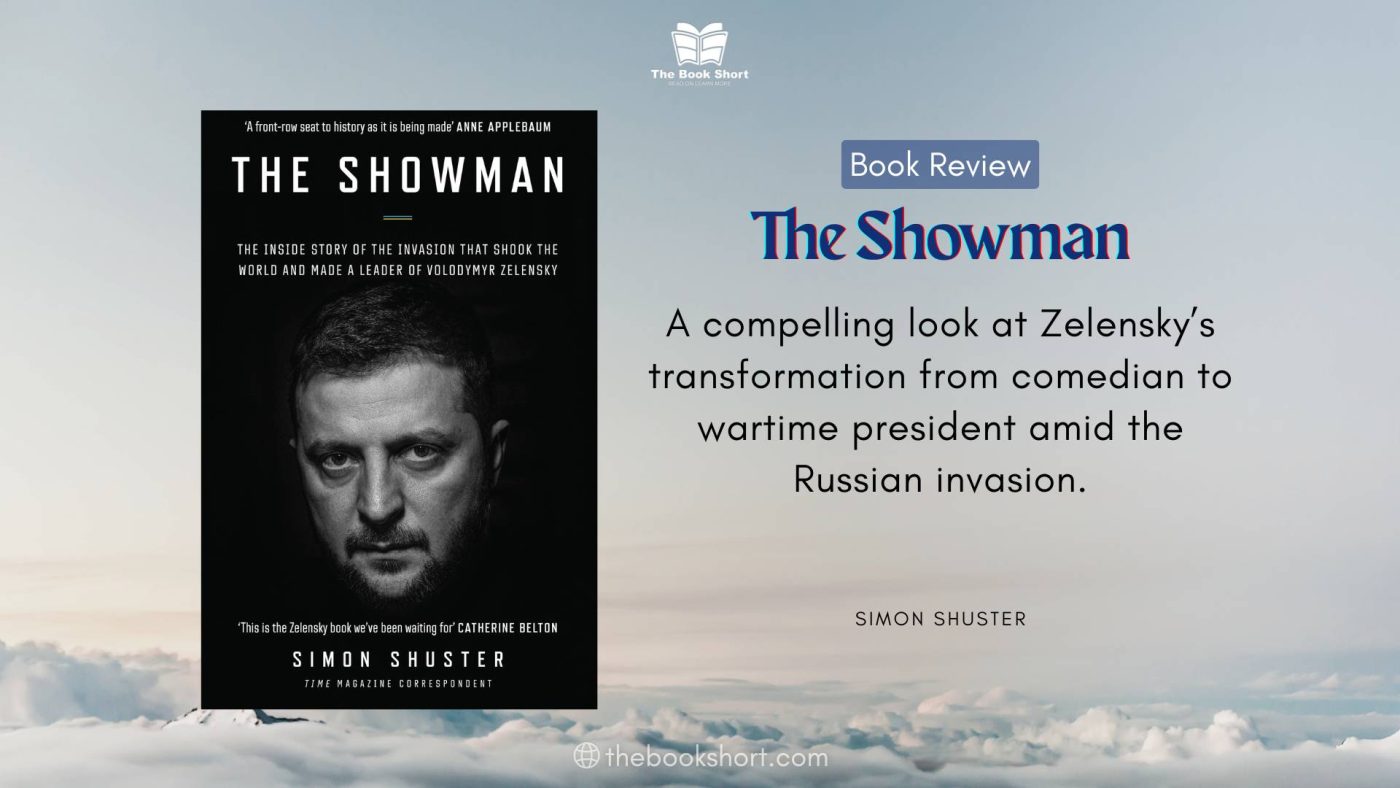
Discover how comedian-turned-president Zelensky faced invasion, his leadership forged in crisis, revealed through unprecedented access in Simon Shuster’s vital account.
Navigating the Storm: An Introduction to The Showman
When the world watched in stunned disbelief as tanks rolled into Ukraine, one figure emerged from the unfolding chaos, embodying defiance: Volodymyr Zelensky. Simon Shuster’s The Showman: Inside the Invasion That Shook the World and Made a Leader of Volodymyr Zelensky plunges readers directly into the heart of Zelensky’s bunker during those raw, critical days of 2022. Choosing this book felt essential because it promised more than headlines – a truly unique, ground-level perspective on a leader’s sudden, profound transformation under unimaginable pressure. Its unparalleled access offers a compelling, humanizing look at history being forged in real-time, far beyond standard news reports.
Key Information about The Showman by Simon Shuster
- Title: The Showman: Inside the Invasion That Shook the World and Made a Leader of Volodymyr Zelensky
- Author: Simon Shuster
- Year of publication: 2024
- Genre: Non-fiction, Biography, History, Current Events, Journalism
- Number of pages: Approx. 336 pages (may vary by edition)
- Target audience: Readers deeply interested in the war in Ukraine, the leadership of Volodymyr Zelensky, political responses to crisis, modern history, and international relations.
Unpacking The Showman: A Comprehensive Book Summary
Simon Shuster’s The Showman delivers an intimate, on-the-ground chronicle of Ukrainian President Volodymyr Zelensky and his tight-knit inner circle during the brutal initial phase of Russia’s full-scale invasion in 2022. Drawing on truly extraordinary access – Shuster spent significant time embedded with Zelensky and his team within the fortified Presidential Administration building in Kyiv during the invasion’s first harrowing months – the book peels back the layers of public image to reveal the raw, human story of leadership under siege.
The narrative unfolds largely chronologically, starting just before the invasion’s shockwave and delving deep into the first terrifying weeks and months. It vividly captures the palpable tension, crippling uncertainty, and sheer existential fear that gripped Kyiv as Russian forces closed in.
The Uneasy Before and the Invasion’s Shock
The book opens by setting the stage, contrasting the lingering skepticism and relative calm in Kyiv with the increasingly urgent intelligence warnings emanating from the West. It highlights Zelensky’s pre-war persona – the former comedian still finding his footing as a politician, often underestimated by both allies and adversaries. Shuster powerfully portrays the initial shock and ensuing chaos within the government building as the invasion explodes, detailing the frantic scramble to secure personnel, establish emergency communications, and simply grasp the terrifying scale of the assault.
Inside the Bunker: Leadership Forged in the Crucible
A substantial core of the book is dedicated to the surreal existence inside the Presidential Administration building, which rapidly became a makeshift, subterranean bunker. Shuster describes the physical reality – the cramped, airless spaces, the absence of natural light, the constant, unnerving presence of armed guards. More profoundly, he captures the psychological atmosphere: the gnawing fear, the bone-deep exhaustion, and the immense, crushing pressure bearing down on Zelensky and his core advisors.
- Daily Life Under Siege: Shuster recounts the stark routines that emerged – minimal sleep, basic, often repetitive meals, relentless meetings, and the constant, difficult struggle to maintain basic hygiene and fragile morale. He details the challenges of staying connected to a crumbling outside world and the pervasive fear of spies or saboteurs lurking even within their own ranks.
- The President’s Transformation: The book meticulously tracks Zelensky’s evolution from a figurehead finding his footing to a wartime leader embodying national resistance. Shuster shows how the initial shock and uncertainty hardened into fierce determination and unwavering resolve. He highlights Zelensky’s reliance on a small, fiercely loyal group of advisors, many veterans of his pre-political life, and vividly depicts the intense dynamics within this besieged leadership team. The narrative compellingly illustrates how Zelensky, initially perceived as unprepared, quickly mastered the art of wartime communication in the digital age, rallying his besieged people and issuing urgent, often moving appeals to the world.
- Defining Decisions and Immense Challenges: Shuster touches upon the pivotal decisions made during this crucible period, such as the courageous refusal to evacuate Kyiv despite credible threats to Zelensky’s life, the strategic choices regarding defense priorities, and the complex, exhausting process of communicating with international partners while simultaneously managing a collapsing domestic reality. He portrays the immense challenges of maintaining control, coordination, and basic governance across a sprawling country under relentless military attack.
Communication as a Weapon of War
One of The Showman‘s most insightful central themes is Zelensky’s unexpected mastery of communication as a strategic tool. Shuster details how Zelensky and his team brilliantly leveraged social media, raw video addresses filmed on phones, and direct, impassioned appeals to foreign parliaments to counter pervasive Russian disinformation, bolster fragile morale among Ukrainians, and galvanize essential international support. The book reveals the deliberate strategy behind his now-iconic appearance – often visibly tired, unshaven, and clad in simple military-style clothing – designed to project authenticity, shared hardship, and unwavering resolve.
- Winning the Narrative War: Shuster explains how Zelensky’s team actively and strategically worked to control the information space, understanding that the narrative battle was as critically important as the military one. They expertly used platforms like Telegram and Instagram to bypass traditional media gatekeepers and speak directly, urgently, to their own people and the world.
- Mobilizing Global Support: The book describes the intense, often desperate effort required to secure life-saving military and financial aid from Western nations. Shuster details the frequently difficult, frustrating conversations and the constant, necessary need to remind a distracted world of Ukraine’s existential plight.
The Raw Human Element
Beyond the strategic and political maneuvers, Shuster focuses heavily on the profound human cost and the crushing personal toll on Zelensky and his dedicated team. He captures moments of stark fear, seething frustration, and deep grief, but also surprising instances of dark humor, shared resilience, and fierce camaraderie forged in shared danger. The book highlights the immense sacrifices made by those who stayed in Kyiv, often separated from their families, living under constant, immediate threat.
- Portraits of the Inner Circle: Shuster introduces key figures surrounding Zelensky, offering illuminating glimpses into their diverse personalities and their indispensable roles in navigating the crisis. This provides a richer, more human understanding of the core team that served as the president’s lifeline.
- Moments of Vulnerability: The author includes revealing anecdotes that show Zelensky’s moments of doubt, profound fatigue, or even fear, making him a more relatable, though still extraordinary, figure grappling with an impossible burden.
Looking Beyond the Siege: The Long Haul
While its focus is firmly on the white-hot intensity of the initial invasion period, the book also touches upon the complex challenges that inevitably emerged as the war ground on – the immense strains on national resources, the intricate complexities of international negotiations, and the difficulty of sustaining crucial global attention and support. It effectively positions the events of the first months not just as a period of immediate crisis, but as the bloody, chaotic foundation upon which Ukraine’s determined resistance was built and Zelensky’s surprising international leadership was solidified.
In essence, The Showman offers a fly-on-the-wall view of a presidency confronting an existential threat head-on. It dissects with clear-eyed precision how a leader, unexpectedly thrust into the most brutal circumstances imaginable, adapted, learned, and ultimately managed to rally both a nation and garner crucial global support, revealing the core of the invasion not merely as a geopolitical event, but as a profound, human, and unprecedented test of leadership.
Deeper Look: Analysis of The Showman by Simon Shuster
Simon Shuster’s The Showman sets itself apart by offering a level of access and startling intimacy rarely, if ever, seen in books chronicling ongoing conflicts and sitting heads of state. The analytical core of the book resides in its unflinching exploration of leadership under the most extreme duress, the surprising power of authentic communication in the hyper-connected digital age, and the raw, brutal reality of war viewed from the absolute center of national power.
Characters, Structure, and Core Arguments
The undeniable central figure is Volodymyr Zelensky, but the book functions equally as a collective portrait of his dedicated inner circle and, by powerful extension, the defiant spirit of Ukrainian resistance embodied by those who chose to remain in the besieged capital. The structure is predominantly chronological, meticulously tracing the terrifying trajectory from pre-invasion warnings through the claustrophobic, intense first months inside the bunker. This linear approach masterfully builds tension and allows the reader to viscerally experience the escalating crisis alongside the book’s subjects.
Shuster’s key analytical arguments resonate throughout the narrative:
- Zelensky’s Metamorphosis: The book posits that the invasion was not merely a test for Zelensky, but the crucible that fundamentally forged him into a wartime leader. His unconventional background in media and performance, initially perceived as a potential vulnerability, became an unexpected, potent weapon in the information war.
- The Power of Presence and Authentic Communication: Shuster compellingly demonstrates how Zelensky’s unwavering decision to remain in Kyiv, coupled with his authentic, consistent, and emotionally resonant communication strategy, were absolutely critical in preventing the collapse of national morale and securing vital international backing.
- The Profound Human Cost of Leadership: The book powerfully highlights that leadership in an existential crisis isn’t merely about strategic thinking; it’s about the brutal, daily management of pervasive fear, crushing exhaustion, and immense personal sacrifice.
- Mastering the Information Battlefield: Shuster vividly illustrates how effectively countering Russian disinformation and strategically controlling the narrative were just as vital to survival as military defense on the ground.
Writing Style & Content Quality
Shuster employs an immediate, immersive journalistic style that places the reader directly into the tense, uncertain environment he witnessed. His prose is commendably clear and accessible, skillfully balancing factual reporting with vivid sensory descriptions and deeply personal anecdotes gathered during his unique embedding. The quality of the content is exceptionally high, precisely because of the unparalleled access he was granted. He deliberately doesn’t shy away from showing the chaotic, uncertain, and frankly fearful moments, providing a far more nuanced, complex, and human picture than sanitized official accounts could ever allow.
What truly distinguishes The Showman from many other books on the war in Ukraine or biographies of political figures is this singular level of access granted during the most critical, chaotic phase. Many accounts are retrospective, based on interviews conducted long after the fact, or compiled from publicly available sources. Shuster’s physical presence inside the Presidential Administration building during the siege offers a unique, almost real-time perspective on the pressures, the atmosphere, the difficult decision-making process, and the raw personal impact on the individuals at the epicenter. It’s not just history recounted; it is vital, immediate eyewitness testimony from the command center under fire.
Notable Echoes from the Book
While specific quotes require direct access to the text itself, the book is filled with moments and sentiments that vividly capture the essence of the experience within the bunker. Descriptions of the surreal, claustrophobic nature of bunker life, the gallows humor used as a defense mechanism against fear, or Zelensky’s determined yet sometimes weary pronouncements are central to the narrative’s emotional core. Key echoes would likely reflect:
- The initial, disbelieving scramble for safety and understanding.
- Zelensky’s now-famous, resolute refusal to flee Kyiv (“I need ammo, not a ride”).
- The team’s frantic, creative efforts to maintain morale and control the rapidly fracturing information landscape.
- Profound reflections on the immense personal and emotional toll of leadership under constant, existential threat.
These resonant moments and echoed sentiments, woven within Shuster’s meticulously detailed reporting, serve to underscore the deep human drama underpinning the geopolitical crisis, powerfully reinforcing the book’s core themes of unexpected leadership, defiant resilience, and the raw human experience of surviving war at its most intense.
Evaluation & Personal Review of The Showman
The Showman: Inside the Invasion That Shook the World and Made a Leader of Volodymyr Zelensky by Simon Shuster stands as an indispensable, deeply compelling read for anyone seeking to understand the raw, terrifying early days of Russia’s full-scale invasion of Ukraine and the figure of Volodymyr Zelensky who became synonymous with the nation’s defiance. My personal impression is overwhelmingly, unequivocally positive. The unparalleled, intimate access Shuster secured elevates this book far beyond standard journalism or even comprehensive historical accounts written from a distance. It feels profoundly authentic, immediate, and vital.
Compelling Strengths:
- Unrivaled Access: This is, without question, the book’s greatest strength and its defining feature. Being inside the bunker, witnessing the interactions, and feeling the tension alongside Zelensky and his core team provides a singular, intimate perspective on leadership navigating an existential crisis.
- Profound Humanization of Zelensky: Shuster masterfully portrays Zelensky not merely as the global icon of defiance, but as a human being wrestling with immense pressure, fear for his life and nation, and the crushing weight of responsibility. His moments of doubt, his reliance on a small group of loyal friends, and his visible exhaustion are shown alongside his extraordinary courage and unwavering determination.
- Masterclass in Crisis Leadership: The book offers invaluable, real-world insights into how a government attempts to function – or simply survive – under direct, overwhelming military attack. It powerfully highlights the critical importance of trust, rapid communication, maintaining morale, and even the sheer logistical challenges of basic survival.
- Propulsive, Engaging Narrative: Despite the grim and serious subject matter, Shuster’s immersive, journalistic style keeps the reader utterly gripped, unfolding the events like a high-stakes, real-life political and survival thriller.
Inherent Limitations:
- Specific Time Focus: While the intense focus on the initial invasion period (roughly the first few months) is the source of the book’s unique strength and access, it inherently means the book does not cover the subsequent, lengthy developments of the war in the same depth. Readers seeking a comprehensive military history of the entire conflict might need supplementary reading.
- Perspective Limitation: As it is primarily viewed from the perspective inside the Presidential Administration’s bunker, it offers less direct insight into the experiences of soldiers fighting on the front lines, the devastating impact on civilians in besieged cities, or the complexities of life in occupied territories (though these realities are acknowledged as the dire context for the bunker’s actions).
Readability and Audience Suitability:
The book is exceptionally readable. Shuster’s direct, clear journalistic style makes complex events and the high-pressure environment easy to follow. It is highly suitable for a very wide audience, from those with limited prior knowledge of Ukrainian politics but a strong interest in the war, to seasoned readers of international affairs and history. No specialist knowledge is required, making it remarkably accessible to the general reader.
Lasting Value & Impact:
- Invaluable Lessons in Leadership: The book serves as a compelling, real-world case study in leadership under unthinkable pressure, resilience in the face of overwhelming odds, and the vital importance of authenticity and effective communication during moments of national crisis.
- Profound Shift in Perspective: Reading this book can fundamentally change one’s understanding of the war, moving beyond abstract statistics and geopolitical analysis to the intensely personal, lived experience of those at the very center of the storm. It fosters a deeper, more empathetic understanding of the immense human stakes involved and the extraordinary courage required.
- Illuminating Modern Conflict: It powerfully highlights the critical, intertwined role of information warfare, strategic digital communication, and personal presence in contemporary conflicts.
Overall, The Showman is a vital, compelling contribution to understanding this pivotal moment in recent history. It is a powerful testament to human endurance, defiant national will, and the unexpected, often messy, ways in which individuals rise to meet the most crushing of challenges.
Comparing The Showman with Similar Books on Ukraine
Placing The Showman within the landscape of books about the war in Ukraine and its key figures reveals its distinctive contribution while also highlighting the value of other perspectives needed for a fuller understanding of the conflict.
Books covering the war in Ukraine generally fall into several categories: broad historical and geopolitical analyses tracing the conflict’s deep roots, immersive reportage from the front lines focusing on military realities and civilian experiences, or deeper dives into specific political figures, periods, or events.
The Showman distinguishes itself most significantly through its almost unparalleled access to the highest echelon of Ukrainian leadership during the most acute and dangerous phase of the invasion. While essential historical context can be found in works like Serhii Plokhy’s The Gates of Europe or The Russo-Ukrainian War, which expertly explain the centuries of complex, contested history between Ukraine and Russia, these scholarly works necessarily lack the immediate, personal, bunker-level perspective that defines Shuster’s narrative.
Similarly, powerful works of immersive journalism from the front lines – written by war correspondents embedded with military units or reporting from devastatingly besieged cities like Mariupol or Kharkiv – offer vital, harrowing accounts of the war’s human cost and the brutal military realities experienced by soldiers and civilians. These perspectives are crucial and often heartbreaking, but they originate from the periphery, outside the command center walls that Shuster penetrates. Books about Zelensky written before the full-scale invasion, while potentially insightful about his background and political rise, simply cannot capture the transformative, crucible experience of leading a nation fighting for its very survival.
Readers who found The Showman compelling for its focus on leadership under pressure and the raw human dimension of crisis management might also find value in:
- Chernobyl: The History of a Nuclear Catastrophe by Serhii Plokhy: While centered on a different type of disaster, this book offers a gripping narrative of a crisis managed (and tragically mismanaged) under Soviet rule. It explores profound themes of state control, information suppression versus transparency, and human courage in the face of overwhelming, unseen danger. It also provides crucial historical context about Ukraine’s relationship with Moscow and its own past.
- Biographies or accounts of other leaders navigating existential crises: Reading about figures like Winston Churchill during the darkest days of the Blitz (The Splendid and the Vile by Erik Larson comes to mind) or leaders confronting other pivotal historical moments can resonate deeply for those fascinated by the theme of leadership forged and defined by unimaginable historical challenge.
The Showman‘s unique power lies precisely in its hybrid nature: it functions as immediate, high-level journalistic account, a raw biographical sketch of a leader in the white heat of crisis, and a vital historical document of a nation’s desperate fight for survival – all filtered through an unprecedented vantage point. It effectively fills a critical niche by showing the war’s initial phase from the perspective of the command center, providing essential context and a human anchor for the broader accounts originating from the front lines, occupied territories, and historical analyses.
Conclusion and Recommendations for Reading The Showman
The Showman: Inside the Invasion That Shook the World and Made a Leader of Volodymyr Zelensky by Simon Shuster stands out as an exceptionally valuable and deeply compelling record of a pivotal historical moment. Its singular value rests on the unparalleled access granted to the author, allowing for an intimate, unvarnished portrayal of President Zelensky and his dedicated inner circle as they navigated the terrifying, chaotic initial months of Russia’s full-scale invasion from the confines of a besieged bunker.
This book is absolutely, emphatically worth reading. It is far more than just a summary of events; it is a profound, humanizing deep dive into the raw experience of leadership, fear, resilience, and defiance under unimaginable, life-threatening pressure.
This book is highly recommended for:
- Anyone seeking a truly intimate and human understanding of the war in Ukraine beyond standard news coverage.
- Readers fascinated by political leadership, crisis management, and how individuals, even unlikely ones, rise to meet moments of existential national threat.
- Students of modern history, international relations, and the critical role of communication and narrative in contemporary conflicts.
- Anyone looking for an inspiring, though often harrowing, account of courage, determination, and the enduring strength of the human spirit in the face of overwhelming tyranny.
The Showman offers a unique, essential window into history as it unfolded in its most intense phase, powerfully revealing how a former comedian was forged into a wartime leader and rallied a nation to stand against invasion. It is a testament to the vital power of presence, authentic communication, and the indomitable human will to survive and resist.
Have you read Simon Shuster’s The Showman? Share your thoughts and impressions in the comments below!