
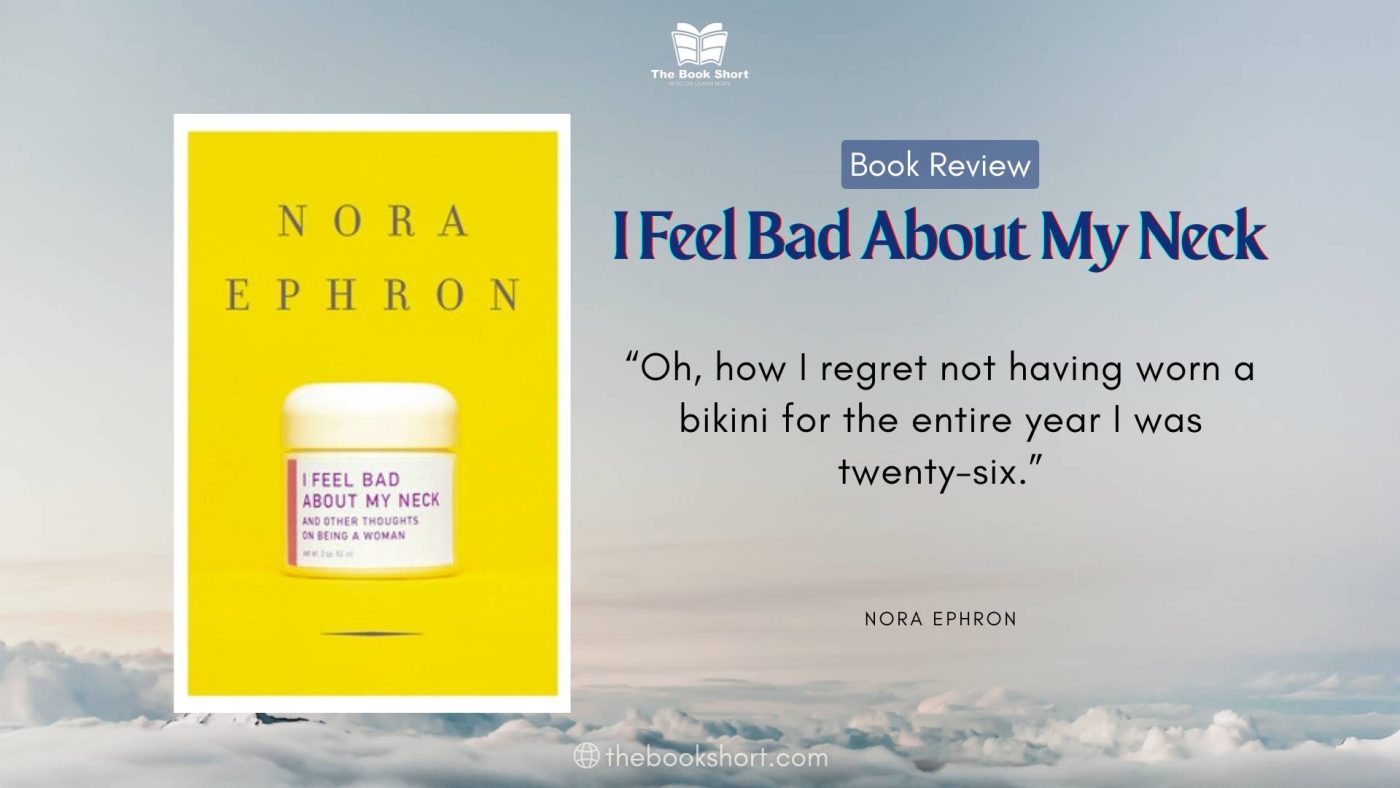
Aging isn’t easy, but Nora Ephron makes it hilarious and relatable. Dive into her witty essays on life, love, and everything in between.
Welcome, fellow readers, to a deep dive into the brilliantly sharp, often poignant, and always hilarious observations of Nora Ephron in her iconic collection, I Feel Bad About My Neck: And Other Thoughts on Being a Woman. As a book review editor with a love for literature that speaks uncomfortable truths with wit, this book stands out. I chose to revisit and analyze it because it offers such a uniquely candid and humorous perspective on the inevitable march of time, tackling the universal themes of aging and womanhood with a voice that feels both intimately personal and universally resonant. Its enduring charm lies in its unflinching honesty, its laugh-out-loud moments, and its quiet wisdom, making it an essential read for anyone grappling with the complexities of life, especially as the decades accumulate.
Key Details About I Feel Bad About My Neck by Nora Ephron
Before we delve into the heart of Ephron’s wisdom and wit, here is some essential information about this acclaimed collection of personal essays:
- Title: I Feel Bad About My Neck: And Other Thoughts on Being a Woman
- Author: Nora Ephron
- Year of publication: 2006
- Genre: Essays, Memoir, Humor, Women’s Studies, Reflections on Aging
- Number of pages: Approximately 140-160 pages (may vary slightly by edition)
- Target audience: Primarily resonates with women, particularly those in middle age and beyond, yet its sharp wit and universal themes make it enjoyable for anyone who appreciates insightful, humorous writing about the human condition.
Summary of I Feel Bad About My Neck Essays: What’s Inside?
I Feel Bad About My Neck is a collection featuring fifteen distinct essays where Nora Ephron candidly reflects on myriad aspects of life, primarily filtered through the lens of a woman navigating her 60s and beyond. The book isn’t structured as a linear narrative; instead, it presents a series of brilliant, often laugh-out-loud, meditations on themes ranging from the genuinely trivial to the deeply profound. It’s a mosaic of a life lived, observed with piercing intelligence and disarming honesty.
Exploring the Key Themes and Essay Highlights:
The collection famously kicks off with the titular essay, “I Feel Bad About My Neck,” which immediately establishes the book’s tone of candid, self-aware humor. Ephron dryly laments the undeniable physical signs of aging, specifically focusing on the neck, which she declares is the ultimate betrayer of age, nearly impossible to conceal gracefully. This essay, while seemingly focused on a superficial concern, cleverly serves as a witty metaphor for the broader challenges, indignities, and societal pressures associated with growing older, particularly for women in a culture obsessed with perpetual youth.
Building on this introduction to the physical realities of aging, Ephron expertly pivots to other relatable frustrations and sharp observations about life.
- The Perpetual Pursuit of Maintenance: Several essays humorously and sometimes despairingly explore the endless, often Sisyphean tasks involved in maintaining one’s appearance as the years pass. These include candid discussions about the rituals of hair coloring, the ever-expanding routines of skincare, and the sheer effort required to simply “keep up appearances.” These pieces brilliantly highlight the intense societal pressure on women to wage war against the visible signs of aging and the significant costs—both financial and emotional—involved in this never-ending battle.
- Home, Hearth, and the Accumulation of Life: Ephron dedicates significant and warm space to her relationship with her home and the texture of domestic life. Essays touch upon the simple pleasures and occasional frustrations of cooking (famously in “What I Miss Most,” mourning the loss of certain dishes as her culinary life evolves), the bewildering challenges posed by modern technology (“Serial Monogamy: A Relationship Story” on her relationship with various tech gadgets), and the emotional weight and stories held by the possessions accumulated over a lifetime. She muses on the deep connection to physical spaces and objects, recognizing how they reflect and contain the different stages of our lives.
- Reflections on Motherhood, Friendship, and Connection: While not the sole focus, Ephron offers tender and often funny insights into her experiences as a mother (“Dealing with the Boss”) and reflects on the evolution of past relationships and enduring friendships. These reflections are marked by a blend of affection, occasional exasperation, and ultimately, a deep acceptance of the roles people play in shaping us. Her writing on connection is marked by its realistic portrayal of love and friendship’s complexities.
- Confronting Aging and Mortality: Beneath the surface of the humor, many essays carry a quiet acknowledgment of the relentless passage of time and the inevitable approach of mortality. Ephron confronts the fear of death and the practical realities of aging with her characteristic defiance and wit. She discusses changing energy levels, the poignant loss of contemporaries, and the profound shift in perspective that comes with realizing you’ve lived more years than you likely have left. Despite the somber undercurrents, her approach remains remarkably buoyant, finding levity and resilience even in the face of decline.
- The Enduring Pleasure of Food: A celebrated food lover, Ephron includes essays that warmly celebrate the simple, grounding pleasures of eating and cooking. These pieces often serve as nostalgic reflections or humorous accounts of culinary adventures and mishaps, anchoring the more abstract themes in sensory experience and shared human enjoyment. Food, for Ephron, is a source of comfort, memory, and pure, unadulterated pleasure.
- The Soul of New York City: As a quintessential New Yorker, Ephron’s acute observations are often deeply rooted in the city’s unique energy, rhythm, and culture. The urban landscape, with its specific challenges and unexpected comforts, frequently serves as a vibrant backdrop or is a direct subject for her musings, lending a distinct, knowing flavor to her reflections.
Throughout I Feel Bad About My Neck, Ephron moves effortlessly between personal anecdote, sharp cultural commentary, and moments of quiet, insightful reflection. The essays are relatively short and perfectly formed, making the book easily digestible, yet each piece contributes to the rich, complex tapestry of a life lived fully, observed keenly, and recounted with unparalleled wit. This summary merely provides a map; the true treasure lies within Ephron’s inimitable voice and the specific, unforgettable details she shares within each essay.
In-depth Analysis of I Feel Bad About My Neck: More Than Just Laughs
I Feel Bad About My Neck transcends the label of a simple collection of humorous essays; it is, in fact, a masterclass in the art of personal, reflective writing that resonates deeply because of its honest exploration of aging, identity, and the nuanced female experience. Ephron takes universal themes—the passage of time, the struggle with self-image, the search for comfort—and makes them feel intensely personal through specific, often hilariously candid, anecdotes. The result is a book that makes the grand sweep of life feel intimate and the intimate details feel universally recognizable.
The Unforgettable “Character,” Structure, and Underlying Themes:
The central and most compelling “character” is, of course, Nora Ephron herself. The book is structured as a series of standalone essays, each a complete thought, a finished reflection, or a perfectly formed observation on a particular topic. There is no overarching narrative arc propelling the reader forward; instead, the book possesses a powerful thematic coherence centered on the experience of being a woman, specifically navigating the often-challenging terrain of aging, in the modern world. This structure invites readers to dip in and out, perhaps revisiting a favorite essay, but the cumulative effect of reading the collection sequentially is a richer, more complete portrait of Ephron’s remarkable wit, hard-won wisdom, and disarming vulnerabilities.
While not presented as formal arguments, several powerful thematic takeaways emerge organically throughout the book:
- Aging, particularly for women, involves an ongoing, frequently absurd, and often ultimately futile battle against physical decline and the relentless pressure of societal expectations.
- Life is inherently full of absurdities, small indignities, and the constant, unavoidable need for “maintenance”—and finding humor in these realities is not just coping mechanism, but essential for maintaining sanity and joy.
- Our complex relationships with our physical selves, the spaces we inhabit (our homes), and the objects we accumulate are not trivial; they are profound reflections of our identity and how we navigate and make sense of the world around us.
- Despite the inevitable challenges and losses that come with age, life continues to offer enduring, simple pleasures, whether found through the comfort of food, the solace of friendship, or the simple joys of domesticity.
- Ultimately, some level of acceptance—even if it’s reluctant or tinged with exasperation—of the realities of aging is a necessary step towards finding peace, but it’s absolutely okay, and perhaps even necessary, to still feel bad about your neck along the way.
Ephron’s Signature Writing Style & The Quality of Content:
Nora Ephron’s writing style is undoubtedly her greatest strength and the primary reason this book resonates so deeply. It is immediately recognizable and consistently characterized by:
- Effortless Wit and Disarming Humor: Her signature dry, self-deprecating humor permeates every single essay. She possesses an unparalleled ability to find comedy in the most mundane, frustrating, or even slightly painful aspects of life, rendering difficult subjects palatable and incredibly entertaining.
- Unflinching Candor and Radical Honesty: Ephron is remarkably, almost startlingly, honest about her own insecurities, perceived failures, and deepest fears. This willingness to be vulnerable is incredibly disarming and creates an immediate, powerful connection with the reader, who sees their own anxieties reflected with humor and grace.
- Crystal-Clear, Direct Prose: She writes with the precision and economy of a seasoned journalist—her prose is concise, clear, and powerfully impactful. There is absolutely no wasted language; every sentence serves a purpose, often delivering a sharp punchline, a profound observation, or both simultaneously.
- Profound Relatability: Despite her status as a highly successful writer and filmmaker, her struggles with baffling technology, fluctuating body image, and the chaos of domestic life are profoundly relatable. She writes about universal experiences—feeling inadequate, grappling with change, wrestling with memories of the past—in a way that makes readers feel seen, understood, and much less alone.
The quality of content throughout I Feel Bad About My Neck is consistently exceptional. Each essay feels carefully crafted, offering insightful observations peppered with moments that will genuinely make you laugh out loud. What truly makes this collection stand out compared to other books in the personal essay or memoir-on-aging genres is Ephron’s specific, inimitable brand of humor and her willingness to be truly, unsparingly honest about the less glamorous, often-taboo realities of getting older, particularly for women. While some might offer gentle, wistful reflections, Ephron delivers sharp, witty jabs, frequently aimed squarely at herself, that feel both incredibly insightful and riotously funny. She doesn’t sugarcoat the difficulties; she simply finds the deeply human, often absurd, funny bone embedded within the truth.
Memorable & Notable Quotes from the Book:
Ephron’s writing is eminently quotable. Here are a few lines that capture the essence of her humor, cynicism, and brutal honesty:
- “Our necks are sending messages to our brains that we are old and soon we will die.” (Perhaps her most famous line from the book)
- “Maintenance is what’s missing from all the great notions in life.” (A classic Ephron take on the unsung work behind everything)
- “The amount of maintenance involving one’s hair is inversely proportional to one’s age.” (A relatable truth for many)
- “The scary truth about eating is you can’t get fat if you don’t eat fat.” (A deceptively simple, frustrating truth)
- “If you haven’t got a good story, it’s a good idea to make one.” (A writer’s mantra, perhaps)
These quotes perfectly encapsulate the unique blend of wit, self-deprecation, cynicism, and sharp honesty that defines this essential collection and Nora Ephron’s enduring voice.
Evaluation & Personal Review of I Feel Bad About My Neck: Why It Resonates
I Feel Bad About My Neck is, for me, a comfort read and a revelation—a book I find myself returning to whenever I need a potent dose of reality delivered not with judgment, but with a healthy, bracing dose of laughter. My personal impression of this collection is overwhelmingly positive, bordering on reverential. The primary, undeniable advantage of this book is the sheer power and magnetism of Nora Ephron’s voice. Reading her essays feels less like reading a book and more like settling in for an intimate, hilarious, and deeply truthful conversation with your wisest, funniest friend, the one who isn’t afraid to tell you the unvarnished truth about life, age, and the general absurdity of it all. Her unparalleled ability to find genuine humor in the most frustrating, depressing, or anxiety-inducing aspects of aging and daily life is nothing short of inspiring.
Are there disadvantages? Very few, honestly. Some readers might find the focus quite specific, centered on the experiences of a particular demographic—a privileged, aging, East Coast urban woman. However, to dismiss the book on this basis would be a mistake. The underlying themes she tackles—navigating profound physical and societal changes, grappling with identity as you age, confronting mortality, finding joy amidst difficulty—are remarkably, undeniably universal. While the specifics might be rooted in her life, the feelings and insights resonate broadly. Another minor point is its relative brevity; at around 150 pages, you often finish wanting more of her company, but perhaps that is the mark of truly exceptional writing.
The readability level of I Feel Bad About My Neck is excellent, bordering on effortless. Ephron’s prose is not only clear and direct but also possesses a natural, engaging rhythm that pulls you along. The essays are short, distinct, and self-contained, making it an ideal book to pick up for a few minutes or devour in a single sitting. This collection is highly suitable for a wide audience, but it holds particular resonance for women entering or navigating middle age and beyond. It speaks directly to many of the unique challenges, physical changes, and societal pressures they face, offering both solidarity and comic relief. Yet, men too can deeply appreciate the sharp, insightful writing and the universal themes of aging, finding humor in life’s inevitable difficulties, and the simple, profound act of observation.
The true practical value of I Feel Bad About My Neck doesn’t lie in offering concrete solutions or acting as a self-help guide. It doesn’t provide skincare tips for your neck or advice on how to achieve eternal youth. Its value is far more profound: it offers solidarity, perspective, and the liberating power of shared laughter. It doesn’t tell you how to feel better about your neck; it simply acknowledges, with brilliant humor, that feeling bad about it is a perfectly valid, and often hilarious, shared human experience. The subtle but powerful lessons gleaned from the book are about acceptance (even if it’s begrudging), the vital importance of finding humor in the mundane and the difficult, and the enduring significance of maintaining connection, pleasure, and a fierce sense of self as you age. It encourages a gentle, often humorous, shift in mindset, urging readers to embrace the inherent absurdity of life and the inevitability of aging with as much grace and wit as they can muster, even—especially—when you feel bad about your neck.
Comparing I Feel Bad About My Neck with Similar Books
I Feel Bad About My Neck holds a distinguished place within the genre of personal essays and humorous memoirs written by women reflecting on life, aging, and societal pressures. It shares DNA with other candid, witty works, but maintains its unique flavor. Its closest literary cousins often include:
- David Sedaris’s Essay Collections (e.g., Me Talk Pretty One Day, Dress Your Family in Corduroy and Denim): Like Ephron, Sedaris is a master of mining his own life and observations for uproarious humor. Both writers possess an incredibly keen eye for detail, a sharp wit, and a willingness to be self-deprecating. However, Ephron’s collection is specifically and deeply focused on the female experience of aging—the physical changes, the societal expectations, the unique indignities—whereas Sedaris’s scope is typically broader, encompassing family dynamics, cultural observations, travel mishaps, and quirky human behavior in general.
- Anne Lamott’s Memoirs (e.g., Operating Instructions, Bird by Bird, Plan B): Lamott also writes with remarkable honesty, vulnerability, and humor about life’s struggles, often touching on themes of motherhood, faith, imperfection, and finding your way. While both authors are incredibly candid and insightful, Lamott often delves more deeply into themes of spirituality, mental health struggles, and grappling with overtly serious, sometimes darker, issues. Ephron, while equally profound, maintains a generally lighter, though still deeply insightful, tone, finding the profound within the mundane realities of daily life and aging.
- Collections by Modern Humor Essayists (e.g., Sloane Crosley, Samantha Irby, Jenny Lawson): Writers like Crosley, Irby, and Lawson continue the tradition of witty, highly personal essays reflecting on contemporary life, often with sharp humor and relatable anxieties. However, Ephron’s collection is specifically situated at a later, distinct stage of life, offering reflections born from decades of experience and grappling with the specific, universal challenges and perspectives that come with aging past 60.
If the candid humor, sharp observations, and warm wit of I Feel Bad About My Neck resonated with you, you might also thoroughly enjoy exploring:
- Anything else by Nora Ephron: Her second collection of essays, I Remember Nothing, offers further, equally brilliant reflections on a similar stage of life, loss, and memory. Her novels (Heartburn) and screenplays (When Harry Met Sally…, Sleepless in Seattle) also showcase her distinctive voice and sharp wit.
- Books by the authors mentioned above: David Sedaris for consistently hilarious observational humor, Anne Lamott for honest and insightful reflections on faith, life, and imperfection, or modern essayists like Sloane Crosley or Jenny Lawson for relatable, contemporary laughs often centered on anxiety and everyday struggles.
- Collections focusing on later-life experiences: Consider books like The Middleplace by Kelly Corrigan (slightly more sentimental but also reflects on life stages and aging with warmth) or other memoirs by women reflecting on navigating their 50s, 60s, and beyond.
Conclusion & Recommendations for I Feel Bad About My Neck: A Must-Read
I Feel Bad About My Neck: And Other Thoughts on Being a Woman stands as an outstanding, utterly delightful, and truly valuable collection of essays. Nora Ephron, with her unparalleled wit, radical honesty, and razor-sharp observational skills, finds humor, profound truth, and unexpected grace in the often-unspoken, sometimes-dreaded realities of aging and simply being a woman in the world. Its enduring, widespread appeal lies squarely in its profound relatability; Ephron articulates feelings, anxieties, and experiences that countless women have but rarely express with such perfect clarity, intelligence, and disarming humor.
So, is I Feel Bad About My Neck worth reading? An emphatic, resounding YES. It’s a relatively quick, effortlessly engaging read that manages to be both deeply comforting and genuinely hilarious. You’ll finish it feeling understood, seen, and perhaps a little less alone in your own private battles with the passage of time and the relentless demands of maintenance.
Who should pick up this book? This collection is an absolute must-read for women, particularly those who are approaching, entering, or navigating middle age and beyond. They will find immense comfort, solidarity, and liberating laughter in Ephron’s shared experiences and candid observations. However, limiting the audience there would be a disservice. Anyone who appreciates brilliant, clear-eyed writing, sharp, intelligent humor, and honest, vulnerable reflections on the universal human condition will find this book thoroughly enjoyable and insightful. It’s a perfect book to turn to when you need a reminder not to take life (or your neck, or your thighs, or your technological mishaps) quite so seriously.
Have you read Nora Ephron’s I Feel Bad About My Neck? What are your thoughts? Share your favorite essays or observations in the comments below!