
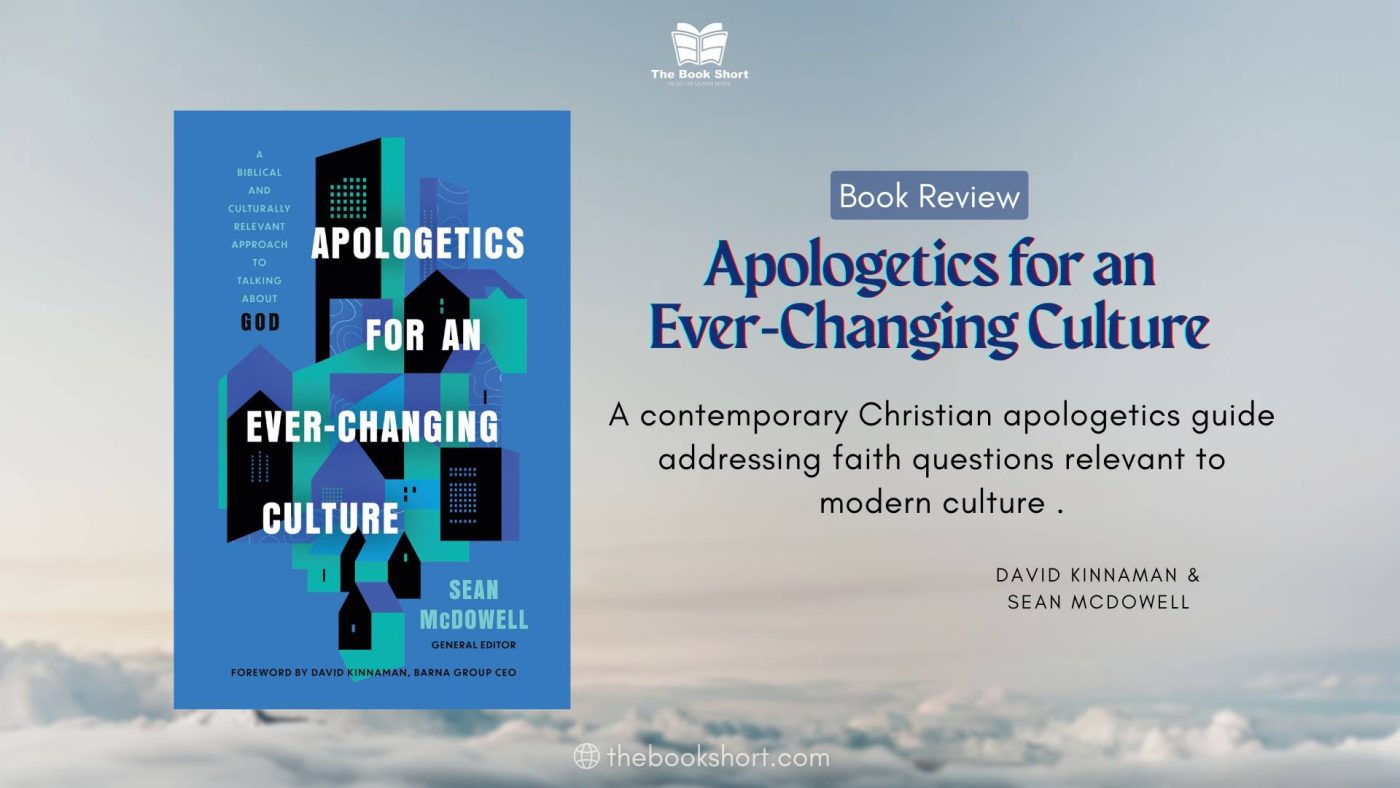
Navigating faith in a changing world? Kinnaman & McDowell offer a vital guide for Christian apologetics today. Essential insights await!
Apologetics for an Ever‑Changing Culture: Book Summary and Review
Understanding and defending Christian faith in our rapidly evolving society is more crucial and complex than ever before. “Apologetics for an Ever‑Changing Culture: How to Speak Courageously and Compassionately About Faith” by David Kinnaman and Sean McDowell directly addresses this pressing challenge, offering a deeply thoughtful and eminently practical approach for contemporary believers. As a reviewer, I found this book particularly compelling because it moves beyond traditional apologetic arguments to grapple with the unique nuances of our modern cultural landscape and the diverse individuals navigating it. Its profound value lies not merely in equipping Christians with intellectual answers, but in fundamentally reshaping how those answers are delivered – with courage, compassion, cultural intelligence, and genuine relational sensitivity. This emphasis on both the substance what you say and the spirit how you engage makes it an indispensable resource for anyone seeking to share their faith effectively and winsomely in the 21st century.
About Apologetics for an Ever‑Changing Culture
Here is a brief overview of this timely guide to contemporary Christian apologetics:
- Title: Apologetics for an Ever‑Changing Culture: How to Speak Courageously and Compassionately About Faith
- Authors: David Kinnaman & Sean McDowell
- Year of publication: 2022
- Genre: Christian Apologetics, Cultural Analysis, Theology, Evangelism
- Number of pages: Approximately 256 (varies slightly by edition)
- Target audience: Christians interested in understanding contemporary culture, engaging in evangelism or discipleship, youth leaders, pastors, and anyone seeking to articulate their faith in a complex world.

Apologetics for an Ever-Changing Culture: A Biblical and Culturally Relevant Approach to Talking About God
Apologetics for an Ever‑Changing Culture: Main Content Summary
“Apologetics for an Ever‑Changing Culture” is expertly structured to guide readers through diagnosing the current cultural climate, identifying the key challenges to faith prevalent today, and developing effective, relationally-centered responses rooted in courage and compassion. The book powerfully argues that effective Christian apologetics in our current context requires more than just logical arguments; it demands a deep understanding of the cultural moment and a genuine love for the people with whom one is engaging.
The book unfolds in several key parts, each building upon the foundation of the last:
Part 1: Understanding the Culture
The initial chapters lay crucial groundwork by diagnosing the contemporary cultural landscape. Drawing heavily on extensive research from Barna Group (led by David Kinnaman), this section illuminates why traditional apologetic approaches might feel less effective today and highlights the profound shifts in how people perceive truth, identity, and authority.
- The Changing Landscape: The authors detail a significant societal transformation, moving away from a culture even nominally influenced by Christian norms towards one that is increasingly secular, diverse, pluralistic, and skeptical of traditional institutions and authority, including religious ones. They introduce valuable frameworks, building on Kinnaman’s previous work, to categorize different postures towards faith observed in the culture.
- Identifying Cultural Currents: Key cultural forces shaping modern thought are explored, such as the rise of expressive individualism, the prioritization of personal authenticity and subjective experience over objective truth, the pervasive impact of digital technology and social media, and the increasing polarization of society. The book explains how these currents profoundly shape the questions people ask about truth, identity, morality, and the relevance of religion.
- Understanding Contemporary Skepticism: The authors provide insightful analysis into the nature of skepticism today. They explain that objections to Christianity often stem less from purely intellectual doubts about classical arguments (like God’s existence or the historical resurrection) and more from deeply felt moral, emotional, or experiential concerns related to issues like science, suffering, the perceived exclusivity or intolerance of Christianity, and the visible failures of Christians and the Church.
Part 2: Developing a Relational Apologetic
This section pivots from cultural diagnosis to practical application, emphasizing the critical importance of how apologetics is communicated and embodied in today’s world. It makes a compelling case that authentic relationships and credible character are paramount, often paving the way for intellectual engagement.
- Courage and Compassion: Kinnaman and McDowell stress that effective apologetics requires a delicate and powerful balance of courage to speak biblical truth clearly and compassion to genuinely care for the person listening. They advocate for a posture that avoids both aggressive confrontation and passive silence, championing humble confidence grounded in love.
- Listening and Understanding: A foundational principle highlighted is the vital need to listen deeply to others’ stories, questions, objections, and underlying concerns before offering answers. Understanding someone’s background, emotional landscape, and intellectual framework is presented as essential for offering a truly relevant and resonant response.
- Building Trust and Credibility: In a culture deeply skeptical of institutions and inherited authority, personal credibility becomes crucial. The authors discuss the non-negotiable importance of living a life that aligns with the message shared, demonstrating love, integrity, humility, and authenticity. They argue that building trust is often the essential precondition that opens the door for truth to be heard.
Part 3: Addressing Key Cultural Questions
The latter half of the book delves into specific challenges and questions that are most prevalent and pressing in contemporary culture. While acknowledging the importance of traditional apologetic topics, the primary focus here is on issues that are top-of-mind for people today, particularly those related to identity, ethics, social justice, and the nature of truth itself.
- Truth in a Post-Truth Age: The book directly tackles the difficulty of communicating the concept of objective truth when many prioritize personal truth or are wary of universal claims. It explores practical ways to discuss truth winsomely and intelligibly in a skeptical age.
- Science and Faith: This section addresses common misconceptions and perceived conflicts between scientific understanding and Christian faith, offering frameworks to show the compatibility or even complementary nature of scientific inquiry and biblical revelation.
- Suffering and Evil: The perennial problem of pain is explored within the context of contemporary struggles and personal narratives, offering a compassionate and honest framework for wrestling with the reality of suffering in a broken world.
- Sexuality and Identity: Recognizing the profound significance and sensitivity of these topics today, the authors provide thoughtful guidance on how to approach complex and often emotionally charged conversations related to sexuality, gender identity, and personal formation with grace, clarity, and a perspective rooted in biblical understanding. This is a particularly significant and timely focus.
- Christian Exclusivity: In an increasingly pluralistic and tolerant society, the Christian claim that Jesus is “the way, the truth, and the life” can be a major stumbling block. The book explores how to articulate this core belief with both firm conviction and genuine humility, addressing concerns about intolerance or arrogance.
- The Church and Its Failings: The authors honestly acknowledge that the actions of Christians and the historical and contemporary failings of the Church itself are often significant barriers to faith for many. They discuss how to navigate these realities truthfully while still pointing to the enduring hope found in Christ and his perfect work.
Part 4: Putting Apologetics into Practice
The concluding chapters offer practical, actionable advice on integrating apologetics into everyday life and various ministry contexts.
- Everyday Apologetics: The book encourages Christians to view apologetics not as a specialized task reserved for experts or formal debates, but as a natural, ongoing part of authentic conversations about life, meaning, and faith. It provides simple, practical tools for recognizing opportunities and engaging in meaningful dialogue organically.
- Apologetics for Different Contexts: Practical considerations are given to tailoring apologetic approaches effectively for different audiences and settings, such as engaging with youth, friends, family members, colleagues, or specific community groups.
- Cultivating a Lifelong Practice: The authors emphasize that developing effectiveness in apologetics is a lifelong journey that requires ongoing learning, humble dependence on the Holy Spirit, and a consistent posture of love and understanding.
Overall, “Apologetics for an Ever‑Changing Culture” delivers a comprehensive and compelling framework that is both theologically sound and acutely culturally sensitive. It effectively elevates apologetics from a potentially dry, purely intellectual exercise to a vibrant, holistic practice deeply rooted in love, informed by cultural understanding, and marked by genuine relevance for the modern world.
Apologetics for an Ever‑Changing Culture: In-depth Analysis
“Apologetics for an Ever‑Changing Culture” distinguishes itself through its successful integration of rigorous cultural analysis with practical, relationally-focused theological application. Kinnaman and McDowell expertly bridge the gap between understanding the world we live in and understanding how to graciously and effectively speak about faith to the people within it.
Key Arguments, Structure, and Content
The book’s central, compelling argument is that effective apologetics in the 21st century demands a significant shift in emphasis. While intellectual evidence remains valuable, the primary focus must expand to addressing the moral, emotional, experiential, and cultural objections people hold against Christianity today. The authors persuasively contend, backed by data, that the most significant obstacles to faith are often not intellectual puzzles but relational wounds, moral concerns, or perceived cultural irrelevance. This thesis is powerfully supported by the weaving in of Barna research data throughout the book, providing concrete, data-driven evidence of evolving attitudes towards Christianity, particularly among younger generations like Gen Z.
The book’s structure is commendably logical and progressive. It begins by providing a macro-level view of sweeping cultural shifts, then narrows to explore the essential posture and character needed for authentic engagement (courage, compassion, deep listening), before finally tackling specific, challenging contemporary issues head-on. This flow is highly effective, first helping the reader grasp the ‘why’ – why traditional methods might fall flat today – before equipping them with the ‘how’ – how to thoughtfully and lovingly adapt their approach. The dedicated chapters on sensitive, hot-button issues like sexuality, identity, and the failings of the church are particularly relevant and demonstrate the book’s commitment to addressing the actual questions and objections people are wrestling with today, rather than merely rehearsing debates from previous eras.
A major strength lies in the book’s nuanced approach to complex topics. When discussing science, suffering, or controversial social issues, the book avoids offering simplistic platitudes. Instead, it provides thoughtful frameworks for honest engagement, encouraging readers to listen, understand, and respond with both conviction and genuine humility towards those who hold different views.
Writing Style & Content Quality
The writing style is highly accessible and engaging, successfully avoiding overly academic or theological jargon, making the book readable for a broad audience within the church and beyond. Kinnaman and McDowell effectively blend personal anecdotes, compelling research findings, and insightful theological reflections. The content quality is excellent, grounded in both robust sociological research (Kinnaman’s expertise) and deep theological/apologetic knowledge (McDowell’s strength). This collaborative synergy is a unique and powerful feature, offering readers both critical, data-informed insights into cultural trends and biblically grounded, practical guidance on how to respond effectively.
The book does more than just tell you what to think or say; it helps you deeply understand why a different approach to apologetics is needed in this specific cultural moment. The consistent use of Barna data throughout significantly enhances the book’s credibility and relevance, providing empirical backing for the authors’ observations about the seismic shifts in cultural attitudes towards faith. This data-informed perspective sets it apart from many other apologetics resources.
What Stands Out
What truly distinguishes “Apologetics for an Ever‑Changing Culture” is its profound emphasis on cultural context and relational dynamics. While many classic apologetics texts focus primarily on presenting evidence and logical arguments in a more formal, propositional manner, Kinnaman and McDowell prioritize understanding the questioner, building authentic trust, and approaching conversations with genuine empathy and humility. They champion an apologetics that unfolds organically within the context of relationship, recognizing that even the most brilliant arguments land differently depending on the listener’s background, personal experiences, and existing relationship with the speaker.
Furthermore, the book’s pointed focus on addressing moral and emotional objections, rather than solely intellectual ones, demonstrates a keen understanding of the modern mind. People today are often less preoccupied with abstract philosophical proofs and more concerned about whether Christianity is perceived as good, just, loving, and relevant in their lived experience, especially in relation to sensitive issues or marginalized groups. By dedicating significant space and compassionate reflection to these topics, the book provides invaluable, practical guidance for navigating the kinds of conversations Christians are actually having (or perhaps more often, avoiding) in the real world.
Notable Quotes from the Book
These quotes, while sometimes capturing the essence rather than being direct verbatim lines, powerfully encapsulate the book’s core message:
- “Apologetics today is less about winning arguments and more about winning trust and understanding people.” (Capturing the core relational shift)
- “In a culture that values authenticity and lived experience, our character and compassion often speak louder than our cleverest logic.”
- “Effective apologetics in an ever-changing culture demands courage to speak truth with clarity and compassion to genuinely care for the person you’re speaking with.”
- “We don’t just need to provide pre-packaged answers; we need to help people rediscover the beauty and relevance of the deep questions Christianity was designed to answer.”
- “For many today, the primary obstacles to faith are not rooted in intellectual arguments against God’s existence, but in relational hurts, moral concerns, or emotional barriers.”
These sentiments collectively call for an apologetics that is deeply grounded in biblical truth, acutely informed by cultural realities, and expressed through courageous compassion within the framework of authentic relationship.
Apologetics for an Ever‑Changing Culture: Evaluation & Personal Review
“Apologetics for an Ever‑Changing Culture” is, in my estimation, a timely, essential, and highly effective read for anyone seeking to engage thoughtfully and faithfully about Christian truth in the modern world. My personal impression after reading it is overwhelmingly positive. The book successfully identifies a critical gap in much of contemporary apologetic discourse and provides a robust, practical, and deeply compassionate framework for filling it.
Advantages
- Acute Cultural Relevance: The book’s greatest strength lies in its profound understanding of the current cultural climate, rigorously supported by empirical data. It is invaluable in helping readers grasp why people think the way they do about faith today, which is the crucial first step for effective communication.
- Exemplary Balance: It masterfully balances the non-negotiable importance of biblical truth with the absolute necessity of grace, empathy, and authentic relationship. It avoids being either overly academic and detached or simplistically superficial.
- Highly Practical Guidance: Moving beyond theoretical discussions, the book offers concrete, actionable ways to approach conversations on difficult and sensitive topics like sexuality, science, doubt, and suffering with both truth and grace.
- Strong Relational Focus: The consistent, unwavering emphasis on listening deeply, seeking to understand, and intentionally building trust is a much-needed correction and vital component often underdeveloped in more traditional apologetics approaches.
- Powerful Collaborative Expertise: The unique combination of Kinnaman’s extensive research background and McDowell’s seasoned apologetics and theological expertise results in a singularly insightful and authoritative resource.
Disadvantages (Minor)
- Readers primarily seeking exhaustive, detailed defenses of classic arguments for God’s existence or the historical evidence for the resurrection might find the book’s focus more on how to engage culturally than on providing deep dives into historical or philosophical proofs of Christian claims. While these are referenced and assumed, the primary depth lies in the cultural interface.
- Given the inherently dynamic nature of culture, some specific examples or statistics referenced, while accurate now, might become slightly dated over time. However, the core principles and framework offered are enduring and applicable across changing specifics.
Readability and Suitability
The book is remarkably readable. The language is clear, accessible, and free of unnecessary academic or theological jargon, and the structure is logical and easy to follow. This makes it highly suitable for a wide audience, including laypeople, students, pastors, youth workers, and even scholars interested in culturally relevant apologetics. It is particularly valuable for:
- Young adults and university students: Grappling with faith in diverse, often skeptical academic and social environments.
- Parents: Seeking guidance on how to discuss faith and challenging cultural issues with their children effectively.
- Church leaders: Looking to equip their congregations for evangelism, discipleship, and engaging their communities courageously and compassionately.
- Anyone: Who regularly interacts with friends, family, colleagues, or neighbors who hold different beliefs, are questioning, or express skepticism about Christianity.
Practical Value
The practical value of this book for equipping Christians to share their faith today is immense. It’s not merely an informative read; it’s a transformative guide.
- Lessons Learned: It teaches the essential lessons of humility, the power of active, empathetic listening, the necessity of cultural intelligence, and the importance of integrating apologetics naturally into everyday life rather than treating it as a separate, formal activity.
- Application in Practice: Provides practical frameworks and approaches for navigating conversations on specific difficult topics with grace and truth. It helps readers identify their own blind spots and potential unhelpful habits when engaging with others about faith.
- Mindset Shift: Perhaps most significantly, it encourages and facilitates a profound shift in mindset – moving away from a defensive, argumentative, or fearful posture towards one of courageous compassion, seeing skeptics not as opponents to be debated and defeated, but as beloved people to be understood, listened to, and loved.
This book powerfully equips Christians to engage with the world around them not just by providing answers, but by demonstrating genuine empathy, cultural sensitivity, and authentic care, making their faith both intelligible and winsomely attractive in a skeptical age.
Comparison with Similar Apologetics Books
Compared to traditional apologetics texts that might focus heavily on presenting classical arguments for God’s existence, marshalling historical evidence for Christianity, or offering philosophical defenses of specific Christian doctrines (typified by works from figures like William Lane Craig or the more argument-driven writings of C.S. Lewis), “Apologetics for an Ever‑Changing Culture” places a distinctly stronger and more integrated emphasis on understanding the cultural context and cultivating the relational aspect of sharing faith.
While other contemporary apologists like Timothy Keller also emphasize cultural engagement, Kinnaman and McDowell’s work is uniquely informed by extensive, recent data on the beliefs, attitudes, and objections prevalent among younger generations and post-Christian individuals. This provides a research-backed foundation for understanding the specific audience being addressed. Books focusing on worldviews, like James Sire’s “The Universe Next Door,” are related in that they help identify different belief systems, but Kinnaman and McDowell are more practically focused on how to interact with individuals holding those worldviews within the specific challenges of the current social climate.
This book doesn’t aim to replace classic apologetics but rather serves as an essential complement. It effectively argues that while knowing the intellectual arguments is important, it is often insufficient or even counterproductive in a culture that is wary of perceived authority, highly prioritizes personal experience and authenticity, and is particularly sensitive to issues of identity, justice, and perceived intolerance.


If readers resonated with the approach of this book, they might also find value in:
- “Faith for Exiles” by David Kinnaman & Mark Matlock: This book, also drawing on Barna research, focuses specifically on helping young Christians develop resilient faith in a post-Christian world.
- “Tactics: A Game Plan for Discussing Your Christian Convictions” by Gregory Koukl: Provides practical, conversation-oriented guidance on how to engage others using strategic questions, aligning with the relational emphasis.
- “Mere Christianity” by C.S. Lewis: A timeless classic presenting core Christian beliefs in accessible language, valuable for its clarity, though less focused on contemporary cultural dynamics.
- “Generous Justice” by Timothy Keller: Addresses issues of social justice from a Christian perspective, directly relevant to many moral and ethical objections raised against Christianity today.
“Apologetics for an Ever‑Changing Culture” thus carves out a necessary and impactful space in contemporary apologetics literature by intentionally centering the conversation on the culture itself and the person being engaged, alongside the timeless truth of the Gospel message.
Apologetics for an Ever‑Changing Culture: Conclusion & Recommendations
“Apologetics for an Ever‑Changing Culture” by David Kinnaman and Sean McDowell offers outstanding value by providing a critically needed contemporary, culturally informed, and relationally focused approach to defending and sharing Christian faith effectively today. Its unique blend of rigorous sociological research and practical theological application makes it exceptionally relevant for navigating the complex challenges of our time.
Is it worth reading? Absolutely. It is far more than just another book on arguments for faith; it is a vital, compassionate, and courage-building guide for engaging a world that desperately needs to encounter the hope of Christ presented winsomely, authentically, and relationally.
Who should read it? Every Christian who possesses a desire to effectively share their faith, genuinely understand contemporary skepticism, and navigate difficult cultural conversations with grace, truth, and humility. It is particularly indispensable for parents, youth leaders, pastors, educators, and anyone who frequently interacts with younger generations or those outside the traditional church context.
Reading this book will equip you not only to understand the questions people are actually asking today but also to respond not just with intellectual answers, but with genuine love, deep listening, and cultural intelligence.
Have you read “Apologetics for an Ever‑Changing Culture”? Share your thoughts and insights in the comments below!