
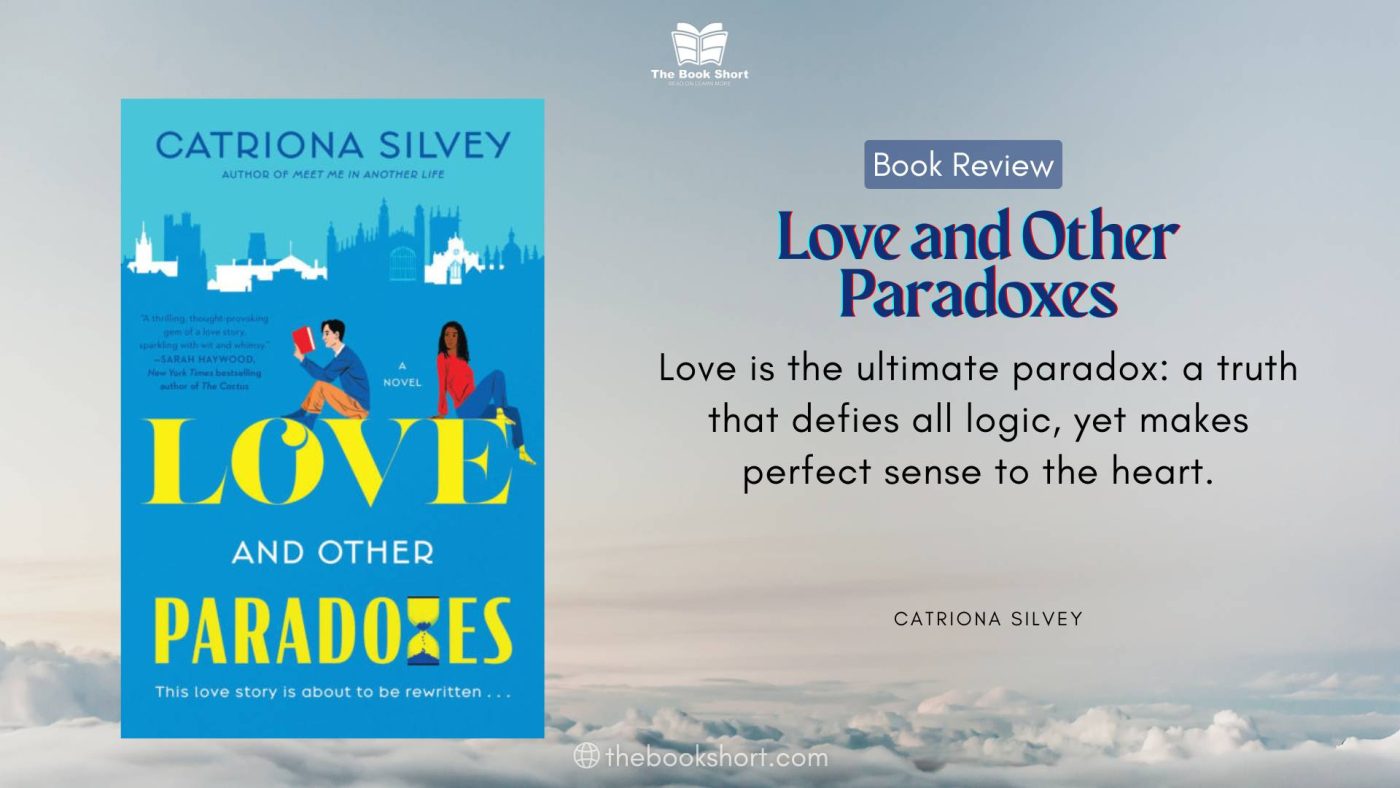
What if the person you loved woke up a stranger each morning? Catriona Silvey’s Love and Other Paradoxes grapples with this heartbreakingly inventive premise, delving deep into identity, memory, and the enduring nature of connection. This book stands out for its unique blend of speculative fiction and profound emotional exploration, making it a compelling read that is both intellectually stimulating and deeply felt.
Essential Details: Love and Other Paradoxes by Catriona Silvey
Before diving into the heart of this extraordinary novel, here are the basic details:
- Title: Love and Other Paradoxes
- Author: Catriona Silvey
- Publication Year: March 11, 2025
- Genre: Speculative Fiction / Contemporary Fiction / Relationship Drama
- Page Count: Varies by edition (typically around 320 pages)
- Ideal Reader: Those who appreciate unique concepts in fiction, introspective narratives, and stories that use speculative elements to explore profound human truths about love, identity, and memory.
Love and Other Paradoxes Summary: A Daily stranger in Your Lover’s Place
The narrative engine of Love and Other Paradoxes is Lia’s impossible reality. She wakes up one morning to find that her beloved partner, Kit, is fundamentally changed. He doesn’t just have amnesia; each day, he awakens with an entirely new personality, a different life history, distinct memories, and even varied skills and beliefs. One day he might embody a quiet, unassuming librarian, the next a boisterous musician, followed by a rigidly logical accountant. Yet, his physical form remains undeniably Kit.
The story unfolds primarily through Lia’s perspective, placing the reader squarely within her bewildering grief and desperate hope. She is irrevocably in love with the Kit she knew – the one who shared their intimate history, their inside jokes, the quiet comfort of their shared life. But every morning confronts her with a new iteration of the man she loves, a stranger now occupying his body and sharing her space.
Lia’s journey becomes a poignant exploration of unwavering devotion against impossible odds. She tries everything to reach the ‘real’ Kit: revisiting places significant to their past, showing him photographs, recounting their shared stories, attempting to rekindle their connection through familiar experiences. However, the “new” Kit is often confused by her intensity, sometimes wary, occasionally indifferent, and rarely, fleetingly, intrigued by her persistent presence. He is anchored solely by the memories he wakes up with, having no context for Lia’s claims about a shared past.
As Lia navigates this daily crisis, she probes deeper into the mystery of Kit’s condition, which remains deliberately vague for much of the novel. This lack of a concrete scientific or fantastical explanation heightens the sense of paradox and forces the focus onto the human element. Lia is compelled to confront fundamental questions about what truly constitutes a person: Is it memory, personality, the physical body, or something deeper, more intangible? If Kit’s identity shifts daily, is he still the same person she fell in love with? Can love endure and find expression when the object of that love is a constantly moving target?
While the focus is mainly on Lia, the novel offers glimpses into Kit’s fragmented experience. These moments underscore his disorientation and the profound isolation of waking up in a familiar body within a world he doesn’t recognize, armed with a past that isn’t his. This provides a crucial counterpoint to Lia’s experience of loss, highlighting the unique challenge Kit faces in simply existing.
The book’s structure often mirrors the cyclical nature of Lia’s life – each day is a new attempt to connect, a fresh encounter with a different Kit, followed by frustration and the difficult choice to persist. This repetition, while emotionally taxing for Lia, effectively emphasizes the central theme: the extraordinary persistence required to love and seek connection when identity is fluid and history is erased daily.
The story builds towards a turning point where Lia must shift her approach, gaining a deeper understanding of the complex nature of Kit’s state. The path forward requires acknowledging the present reality rather than solely yearning for the past. The resolution offers a thoughtful, albeit challenging, answer to the central paradox, centering on themes of adaptation, acceptance, and the possibility of connection transcending fixed identity. The summary culminates in Lia’s profound decision: can she build a future, day by day, with a person who is different each time she meets them, or is her love inextricably bound to the specific Kit she lost?
Love and Other Paradoxes Analysis: Unpacking Identity and Enduring Love
Love and Other Paradoxes is less a plot-driven science fiction story and more a philosophical meditation woven into the fabric of a poignant love story. Catriona Silvey masterfully uses her high-concept premise to dissect fundamental questions about human connection, identity, and the fluid nature of the self.
Characters, Structure, and Core Themes
The novel is overwhelmingly character-focused, anchoring itself in Lia’s emotional landscape and her internal struggle. Lia is depicted as remarkably determined, resilient, and deeply devoted, yet her journey is also marked by profound vulnerability and understandable grief. Her unwavering love for Kit, across his many transient iterations, serves as the novel’s powerful emotional core. The various Kits function primarily as catalysts, each daily version highlighting how different combinations of memories, experiences, and personalities shape our sense of self and forcing both Lia and the reader to question which aspects are truly essential to identity.
The structure, with its recurring pattern of Lia’s daily encounters, effectively mirrors the emotional weight and unique challenge of her situation. While repetition could feel tedious in other contexts, here it deepens empathy for Lia’s plight and underscores the central paradox: how is a lasting relationship possible when one person’s identity resets daily? The narrative progression is less about external events and more about Lia’s internal evolution as she learns, adapts, and questions her understanding of love itself.
Key questions explored with nuance include: What constitutes personal identity – is it memory, personality, the physical form, or something more enduring? Can love truly adapt to fundamental, daily shifts in identity? Does love necessitate a shared past, or can it be forged and sustained anew each day? The book subtly suggests that while shared history provides a vital foundation, perhaps the deepest connection lies in the capacity to adapt, to truly see and appreciate the person in the present moment, and to find ways to connect on a level that transcends fixed identity.
Writing Style and Quality
Silvey’s prose is both lyrical and deeply introspective, focusing intensely on Lia’s internal state and emotional reactions. The writing is often beautiful, capturing the aching sense of longing, confusion, and quiet desperation that defines Lia’s experience. Despite the fantastical premise, the emotional reality feels remarkably grounded and authentic. The dialogue, particularly in the strained, often awkward interactions between Lia and the various Kits, highlights the difficulty of bridging the chasm created by Kit’s condition, while occasionally allowing for unexpected glimmers of connection. The novel’s quality is high; the premise is original, thematically rich, and skillfully executed, avoiding simplistic answers. The speculative element serves to illuminate the emotional truth, rather than overshadow it.
Insightful Quotes from Love and Other Paradoxes
- “He was a stranger. But he was Kit.” (A concise encapsulation of the book’s central, heart-wrenching dilemma)
- “How do you love someone you have to meet for the first time, every single day?” (Articulates the core, impossible question Lia faces)
- “Maybe identity wasn’t a solid thing after all, but a pattern, shifting and reforming.” (A key reflection on the novel’s central theme of identity)
- “She loved the Kit she knew. But which Kit was that, now?” (Highlights the painful challenge of defining the beloved person amidst constant change)
What truly distinguishes Love and Other Paradoxes within the landscape of speculative fiction, particularly those touching on romance or identity, is its unwavering commitment to exploring the profound emotional and philosophical repercussions of its premise. It deliberately avoids providing a scientific explanation for Kit’s condition, choosing instead to keep the focus squarely on Lia’s experience and the fundamental human questions about love and identity. It’s not a mystery to be solved with a sci-fi reveal, but an impossible emotional reality to be lived through and understood.
Love and Other Paradoxes Book Review: Expert Evaluation
My personal Love and Other Paradoxes book review finds the novel to be a uniquely moving and thought-provoking reading experience. Catriona Silvey navigates her challenging premise with remarkable grace and emotional intelligence. The book’s greatest strength lies in the fresh perspective it brings to enduring themes of love, memory, and identity. It genuinely prompts deep reflection on what it truly means to know, cherish, and commit to another person, particularly in the face of profound change.
One potential challenge for some readers might be the necessary cyclical structure of Lia’s daily interactions with the different Kits. This repetition, while crucial for conveying the emotional weight of her situation, could feel slow-paced before the narrative shifts its focus later in the book. However, this is a minor point against the novel’s overall impact.
The readability level is moderate. The prose is clear, often beautiful, and emotionally accessible, but the depth of the emotional landscape and the philosophical undertones require attentive engagement from the reader. It’s not a plot-driven thriller or a light read, but it is highly accessible to anyone interested in character-driven stories featuring a distinctive concept. The book is well-suited for readers who appreciate introspective narratives, enjoy unique speculative premises that delve into human nature, and are willing to ponder complex questions about the foundations of relationships. If you are drawn to novels that blend emotional drama with speculative or slightly fantastical elements without necessarily offering hard scientific explanations, Love and Other Paradoxes will likely resonate deeply.
The enduring value of Love and Other Paradoxes lies in its capacity to subtly but powerfully shift the reader’s perspective on relationships. It encourages us to consider the essence of love beyond shared memories or predictable personalities. It prompts reflection on how we navigate and adapt to inevitable changes within any long-term relationship and what core elements of connection truly matter. The book suggests that perhaps enduring love is less about clinging to a static version of a person and more about finding ways to connect with the person they are now, even as they continue to evolve. While it doesn’t offer a literal blueprint for handling daily identity shifts (obviously!), it serves as a powerful metaphor for the constant process of change inherent in all human beings and the profound challenge and beauty of loving someone through that evolution.
Comparing Love and Other Paradoxes to Similar Books
Love and Other Paradoxes fits well within a niche of speculative or slightly fantastical fiction that uses its premise to explore deep psychological and relational truths. It shares thematic territory with novels that question identity and memory, such as Blake Crouch’s “Dark Matter” (though Silvey’s book is much more character-focused and less plot-driven) or even, in its exploration of constructed identity, Taylor Jenkins Reid’s non-speculative “The Seven Husbands of Evelyn Hugo.” Its core concept of a relationship challenged by a strange, reality-altering condition will likely appeal to readers who enjoyed the emotional depth and unique premise of Audrey Niffenegger’s “The Time Traveler’s Wife,” though Silvey’s focus remains more on the psychological and identity implications rather than the mechanics of the condition itself. Readers who found the Love and Other Paradoxes book analysis intriguing might also appreciate books like Brit Bennett’s “The Vanishing Half” (for its exploration of identity and reinvention), Emily St. John Mandel’s “Station Eleven” (for its quietly profound character-driven speculative elements), or S.J. Watson’s “Before I Go to Sleep” (for themes centered on memory loss and identity).
Final Thoughts and Recommendations for Love and Other Paradoxes
Love and Other Paradoxes is a remarkable and deeply affecting novel that offers a profound meditation on love, identity, and human resilience, all filtered through a single, utterly captivating paradox. Its highly original premise and rich emotional core make it an essential read for anyone seeking a story that is both intellectually stimulating and profoundly moving.
Is Love and Other Paradoxes worth reading? Absolutely. Its originality, emotional depth, and insightful exploration of fundamental human questions make it a standout.
Who should read Love and Other Paradoxes? This book is highly recommended for readers who appreciate character-driven narratives that delve into complex emotional landscapes, enjoy speculative fiction that leans more towards the philosophical and literary than hard science, and are fascinated by unique explorations of human relationships, memory, and identity.
Have you delved into the challenging world of Love and Other Paradoxes? Share your thoughts and reflections in the comments below!