
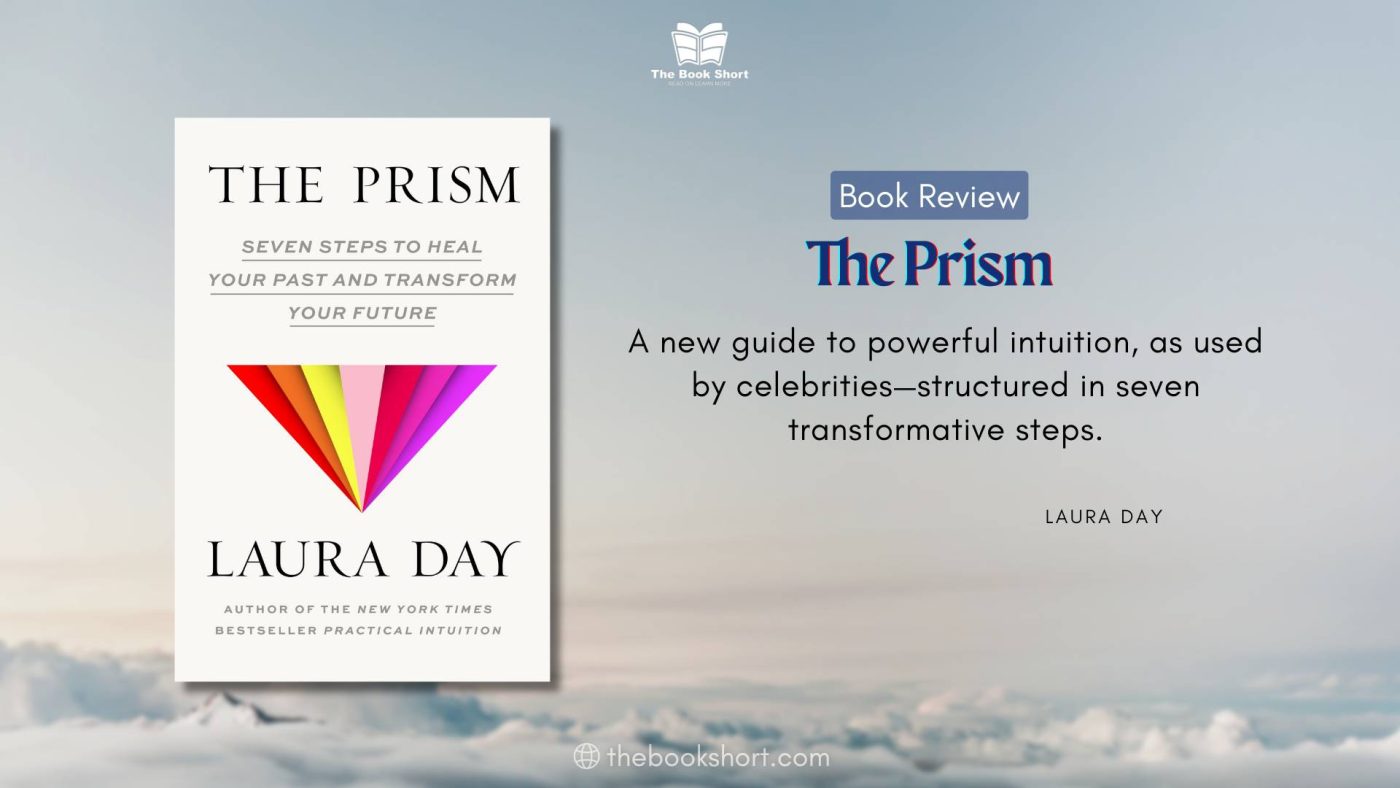
Unlock your inner power and reshape your world with “The Prism” by Laura Day. This insightful guide reveals how your intuition is not a mystical gift but a practical tool, demonstrating how it profoundly shapes your reality and offering actionable steps to consciously create the life you truly desire.
In diving into “The Prism,” I was drawn to Laura Day’s distinct approach to personal power. She moves beyond abstract concepts, providing concrete methods to access your inner guidance and initiate meaningful change. The book’s promise to transform how we perceive and interact with the world makes it a compelling exploration of our innate potential.
Basic information about the book The Prism (Bullet/Infobox format)
- Title: The Prism
- Author: Laura Day
- Year of publication: 2007
- Genre: Self-Help, Spirituality, Intuition, Personal Development, Manifestation
- Number of pages: Approximately 256 pages (Note: Page count may vary slightly between editions)
- Target Audience: Individuals seeking practical methods to develop their intuition, understand the role of energy in their lives, consciously manifest desires, and take an empowered, active role in shaping their experiences.

The Prism: Seven Steps to Heal Your Past and Transform Your Future
Main content summary The Prism
In “The Prism,” Laura Day presents a powerful framework centered on the understanding and utilization of one’s intuition. Far from treating intuition as a rare, abstract, or purely mystical phenomenon, Day posits it as a practical, inherent human ability – akin to a sense – that can be honed, trained, and applied effectively to navigate and influence daily life. The central tenet is that we are perpetually receiving intuitive information, and by cultivating the awareness to recognize this guidance and the courage to act upon it, we can consciously participate in shaping our desired reality. Day introduces the core metaphor that gives the book its title: our emotional state acts like a prism, filtering the pure, unmanifested potential of reality and thereby coloring and influencing the specific experiences and circumstances we attract.
The book is thoughtfully structured to lead the reader through a process of self-discovery and empowerment. It guides you in identifying your unique intuitive signals, comprehending the dynamic interplay of energy in creation, and applying these principles to manifest tangible outcomes in your life. Day excels at breaking down seemingly complex ideas about energy, intention, and intuitive knowing into easily digestible concepts, grounding them with practical exercises and illustrative real-life examples.
Key Concepts and Sections Explored:
Day typically establishes her foundational philosophy early on: intuition is a universal human capacity, not an exclusive gift. This challenges common misconceptions, asserting that everyone possesses this inherent sense.
- Understanding and Accessing Intuition:
- Defining intuition expansively, beyond mere ‘gut feelings,’ as a continuous stream of information available to everyone.
- Exploring the diverse forms intuition can take – from subtle physical sensations and spontaneous images to sudden thoughts or shifts in emotional awareness.
- Identifying and addressing common psychological and emotional blocks that hinder the recognition and trust of intuitive guidance.
- The Central Metaphor of the “Prism”:
- This metaphor is the conceptual cornerstone of the book. Day uses the image of a prism to symbolize the internal filter through which we perceive and interact with the raw potential of reality.
- Our beliefs, underlying fears, deeply held expectations, and critically, our prevailing emotional state, function as the facets of this personal prism.
- The “light” entering the prism represents the boundless possibilities of the universe, while the “light” that emerges – our lived experience – is inherently colored, distorted, and shaped by our unique internal filter.
- Consequently, transforming our external reality necessitates becoming acutely aware of and deliberately shifting the state of our “prism,” primarily by managing our emotional vibration and consciously choosing empowering beliefs.
- Energy, Vibration, and Creation:
- The book delves into the fundamental idea that everything in the universe, including thoughts, feelings, and intentions, is a form of energy vibrating at specific frequencies.
- Day elucidates how these personal energies interact resonantly with the universal energy field, directly influencing the circumstances and experiences we draw into our lives through the principle of like attracting like.
- This section powerfully links energetic principles to the process of manifestation, explaining why cultivating an emotional state aligned with desired outcomes is far more potent than simply wishing or attempting to force results through sheer willpower.
- Practical Exercises for Intuition and Creation:
- A significant and highly valued portion of “The Prism” is dedicated to actionable practice. Laura Day is renowned for providing concrete, often surprisingly simple, exercises.
- Exercises are included to help readers distinguish authentic intuitive signals from the noise of fear, doubt, or wishful thinking.
- Techniques are provided for setting clear intentions and focusing energetic attention towards specific desired results.
- Practices are introduced for consciously elevating one’s emotional vibration to better align with goals and aspirations.
- Methods are offered for using intuition to gain clarity and insight into particular questions or challenging situations.
- Guided journaling prompts and visualization exercises are integrated to strengthen intuitive muscles and energetic focus.
- Applying Intuition Across Life Areas:
- The book demonstrates the pervasive utility of intuitive skills by providing examples and guidance on how they can be applied effectively in various facets of life, including navigating relationships, making career decisions, supporting health, and managing finances.
- This section underscores the practical relevance and transformative potential of the principles taught.
- Overcoming Common Obstacles:
- Day proactively addresses the typical challenges individuals encounter when attempting to develop their intuition and manifest change, such as wrestling with self-doubt, overcoming fear of failure, managing impatience, and navigating internal or external resistance to change.
- Strategies are offered for cultivating resilience, maintaining a positive and open emotional state, and fostering trust in the intuitive process and the natural unfolding of creation, even when immediate results aren’t apparent.
- Living an Intuitively Guided Life:
- The concluding sections typically focus on seamlessly integrating these learned principles and practices into one’s daily existence.
- Emphasis is placed on living in continuous alignment with one’s inner wisdom, viewing it not as a one-time fix but as an ongoing practice that fosters grace and ease.
- The ultimate goal is to cultivate a state of natural flow and trust, allowing intuition and the understanding of energetic dynamics to serve as a constant, reliable compass for navigating life’s journey and actively co-creating one’s path.
Throughout “The Prism,” Day weaves together personal anecdotes, compelling client success stories, and sometimes simplified references to concepts like quantum physics to underscore her points and illustrate the tangible effectiveness of her methods. The book’s unwavering focus remains on empowering the reader to access their inherent abilities and take conscious command of their experience by mastering their internal state – the “prism” through which they filter and shape reality. The journey is presented as a powerful shift from a reactive stance towards life’s circumstances to a proactive role as a conscious co-creator of one’s destiny.
In-depth analysis The Prism
“The Prism” by Laura Day distinguishes itself within the self-help landscape by offering a remarkably structured and accessible approach to developing intuition as a vital, practical skill, while simultaneously illuminating the fundamental energetic mechanics that underpin our ability to create our reality. Day successfully reframes intuition not as an elusive or random phenomenon, but as a constant, interpretable stream of information waiting to be utilized.
Characters / Structure / Key Arguments
While “The Prism” is not a narrative driven book, the reader is undoubtedly the central “character,” actively engaged in applying the concepts and exercises. The inclusion of numerous anecdotes about Day’s clients and their experiences serves to provide relatable, real-world illustrations, acting almost like supporting cast members whose journeys underscore the validity and applicability of the methods taught.
The book’s structure is one of its great strengths: logical, progressive, and highly practical. It builds effectively from establishing foundational principles and demystifying intuition, moves through the introduction and exploration of the central “prism” metaphor and the role of energy/emotion, provides a wealth of actionable exercises, and culminates in demonstrating how these skills can be applied across diverse areas of life. This sequential build-up ensures readers can gradually integrate complex ideas and feel increasingly confident in practicing the techniques. The embedded exercises are not mere add-ons but integral components that reinforce the understanding that intuitive and creative abilities are skills honed through deliberate practice.
Key arguments powerfully articulated throughout the book include:
- Intuition is an innate, universal capacity accessible to every individual, regardless of background or perceived ability.
- Our internal state, particularly our dominant emotional vibration and belief system (the “prism”), acts as the primary filter that actively shapes the reality we perceive and experience.
- By consciously shifting our internal state, especially by managing and elevating our emotional frequency, we fundamentally alter the energetic resonance we project and consequently change the experiences we attract.
- The deliberate and conscious use of clear intention, aligned with appropriate energy and feeling, is paramount for effective manifestation.
- Intuition is an indispensable, practical tool for making aligned decisions, navigating life’s complexities, and guiding the creative process.
Writing style & content quality
Laura Day’s writing style is characteristically clear, warm, and empowering. She intentionally avoids dense academic jargon or overly ethereal mystical language, opting instead for accessible, relatable terms that make her profound concepts understandable and applicable to a broad audience. Her tone is consistently encouraging and affirming, inspiring readers to trust their own inner wisdom and inherent capabilities. The content quality is high, offering a cohesive philosophical framework married seamlessly with immediately actionable steps. Day demonstrates a remarkable talent for translating abstract spiritual or energetic principles into concrete, practical exercises that readers can readily implement. She masterfully blends theoretical explanation with direct, hands-on guidance, creating a reading experience that is both informative and transformative.
What stands out or differs from other books:
In a crowded market of books on intuition and manifestation, “The Prism” carves out a distinct identity through several key elements:
- The Potent “Prism” Metaphor: While the idea that one’s internal state influences reality is a common thread in self-help, Day’s central, well-developed, and consistently referenced metaphor of the emotional/belief “prism” provides an exceptionally clear and visual framework for grasping the mechanism by which this influence occurs. It powerfully highlights the filtering process.
- Uncompromising Focus on Actionable Practice: Laura Day is celebrated for her emphasis on providing specific, often simple yet profound, exercises designed to actively develop intuition and work with energy. This strong orientation towards practical, experiential application sets her work apart from texts that might remain more theoretical or purely motivational.
- Integrated Approach to Intuition and Manifestation: “The Prism” doesn’t treat intuition development and manifestation as separate disciplines; it expertly integrates them, showing how heightened intuition serves as a vital compass guiding the manifestation process, and how a clear understanding of energetic creation enhances the flow and clarity of intuitive knowing. It positions intuition as the essential guidance system and energy work/emotional alignment as the dynamic engine for consciously creating reality.
- Grounded and Demystified Perspective: Although dealing with non-physical concepts like energy fields and intuitive knowing, Day maintains a grounded and demystified perspective. She presents these abilities not as extraordinary or paranormal gifts, but as natural, inherent functions of the human system available to everyone, making the concepts feel attainable and relatable.
Notable quotes from the book
While specific phrasing requires direct access to the text, based on the core themes and Day’s known work, notable quotes from “The Prism” would likely capture the essence of:
- The universality of inner knowing: (“Everyone is intuitive.”)
- The direct impact of feelings: (“Your emotional state is the filter that colors your reality.”)
- Empowerment and self-responsibility: (“You are not a victim of circumstances; you are the conscious co-creator of your experience.”)
- The importance of internal listening: (“Learn to listen to the quiet whisper within; it holds the knowing.”)
- The resonance of energy: (“Energy follows intention, and like attracts like; align your vibration with your deepest desires.”)
These elements collectively establish “The Prism” as a comprehensive and highly practical guide for anyone ready to understand and actively utilize their inner power to consciously shape their lives, offering both the essential ‘why’ and the clear ‘how’.
Evaluation & expert personal review
“The Prism” by Laura Day presents a profoundly compelling and practical framework for understanding the intricate connection between our internal landscape – our thoughts, beliefs, and especially emotions – and the external reality we experience. My personal impression is that this book excels at demystifying concepts like intuition and energy work, which can often feel abstract or inaccessible to newcomers. The central metaphor of the “prism” is particularly ingenious and effective, providing a simple yet powerful visual model for how our internal filters actively shape our perception and experience of the world.
Advantages:
- Exceptional Practicality: The book’s greatest strength lies in its abundance of actionable steps, exercises, and techniques. This makes the concepts feel immediately attainable and empowers readers to begin applying the principles and cultivating their skills without delay.
- Clear and Illuminating Metaphor: The “Prism” concept is not just introduced; it’s thoroughly explored and consistently applied throughout the book, serving as an anchor that makes the core message about internal state influencing reality incredibly clear and memorable.
- Deeply Empowering Tone: Laura Day’s voice is consistently supportive, encouraging, and affirmative. She instills a strong sense of agency, emphasizing that the power to initiate change and shape one’s life resides firmly within the reader’s own consciousness and emotional state.
- Holistic Integration: The book masterfully integrates intuition, emotional awareness, energetic principles, and manifestation techniques, presenting a unified and cohesive view of how conscious creation operates from the inside out.
Disadvantages:
- Readers with a strictly materialist worldview or those who demand rigorous, peer-reviewed scientific proof for every concept might find the discussions on energy dynamics and the mechanism of intuition less persuasive, as they lean heavily on experiential evidence, anecdotal accounts, and perhaps simplified scientific analogies rather than exhaustive empirical data.
- As is true for virtually all self-help resources, the ultimate effectiveness and transformative impact of “The Prism” are inextricably linked to the reader’s genuine willingness to engage actively with the exercises, apply the principles consistently in their daily life, and cultivate patience – factors which the book can guide but not guarantee.
Readability level, and who the book is suitable for:
“The Prism” is remarkably readable and accessible. Laura Day employs clear, straightforward language, consciously minimizing jargon from spiritual or scientific disciplines. It is well-suited for a broad general adult audience and requires no prior background or expertise in spirituality, energy work, or intuition development. It serves as an excellent and welcoming entry point for anyone curious about these transformative topics.
It is particularly well-suited for:
- Individuals who feel stuck, limited, or disempowered by their circumstances and are actively seeking tangible, practical tools to initiate positive change in their lives.
- Anyone with a desire to understand, develop, and consciously utilize their innate intuitive abilities.
- Readers interested in exploring the principles of manifestation beyond mere positive thinking, seeking to understand the energetic and emotional components involved.
- Those who resonate with the fundamental idea that their inner world – their feelings, beliefs, and energy – profoundly influences their external experience.
Practical value:
The practical value of “The Prism” is undeniably significant and extends far beyond mere intellectual understanding or fleeting inspiration. It functions as a hands-on manual for personal transformation.
- Core Lessons: It imparts fundamental lessons on recognizing, interpreting, and trusting one’s intuition; understanding the potent, often underestimated, impact of emotions on personal reality; and learning how to consciously direct one’s energetic focus and intention towards desired outcomes.
- Direct Application: The book is replete with practical exercises and techniques designed for immediate daily application, ranging from simple yet effective intuition-building games to structured methods for setting intentions and aligning energy for manifestation.
- Mindset Shift: Crucially, “The Prism” fosters a profound shift in perspective – moving the reader from feeling passively controlled by external circumstances to embracing their role as an active, empowered participant in creating their life. It cultivates a powerful sense of agency, self-responsibility, and optimistic expectation.
Overall, “The Prism” stands out as a highly valuable resource for anyone committed to deepening their understanding of their inner power and acquiring practical, effective methods to consciously shape their future using the combined forces of intuition, emotion, and intentional energy.
Comparison with similar books The Prism
“The Prism” is comfortably situated within the popular genres of self-help, applied spirituality, and literature focused on conscious creation and intuition development. It shares foundational principles with numerous titles exploring the profound influence of thought, emotion, and intention on the reality we experience.
When compared to seminal works like Ask and It Is Given by Esther and Jerry Hicks (which channels the teachings of Abraham), “The Prism” tends to be less focused on articulating the comprehensive theoretical framework of the ‘Law of Attraction’ and the broader energetic universe. Instead, Day’s book places a stronger emphasis on providing direct, experiential, and practical exercises specifically centered on developing individual intuition and managing one’s personal energy and emotional state – the unique core function of the “prism” model.
Books focused primarily on intuition development, such as those by intuitive guide Sonia Choquette, might offer a more extensive exploration of the myriad ways intuitive information can be received across different sensory modalities. However, they may not as strongly integrate this intuitive skill development with the explicit process of deliberate creation or manifestation, nor do they typically employ the distinct “prism” metaphor as the central organizing concept for understanding how internal state impacts external reality, as Day’s book does.
Similarly, literature focused predominantly on manifestation techniques, like certain works by authors such as Joe Vitale or Bob Proctor, often provides detailed guidance on goal-setting, visualization, and affirmative thinking. Yet, these books might not place as significant an emphasis on developed intuition serving as an essential guiding force within the manifestation process itself, nor do they typically highlight the individual’s emotional and belief system filter as explicitly or metaphorically as “The Prism” does.
“The Prism” effectively carves out a unique and valuable niche by strongly linking the development and trust of intuition directly to the powerful idea that our emotional and energetic “prism” is the fundamental filter determining the nature of our lived experience. It offers an exceptionally practical, integrated, and accessible approach that skillfully bridges the ‘inner work’ of cultivating intuitive awareness with the ‘outer work’ of consciously creating desired outcomes in the physical world.


If readers resonated with the insights and practical guidance in “The Prism,” they might also find value and enjoyment in exploring:
- Making Miracles by Laura Day: Another key work by the same author, often considered a foundational text or companion volume, exploring the power of intention, particularly within group dynamics and conscious creation.
- The Spontaneous Fulfillment of Desire: Harnessing the Infinite Power of Coincidence by Deepak Chopra: This book delves into intuition, synchronicity, and coincidence from a perspective rooted in Vedic wisdom and quantum principles, offering a more spiritual lens.
- Psychic Pathways: Following Your God-Guided Intuition by Sonia Choquette: A guide focused heavily on identifying one’s primary intuitive pathway and building trust in different forms of intuitive knowing.
- Creative Visualization by Shakti Gawain: A classic and foundational text that provides simple yet powerful techniques for using mental imagery and affirmation to achieve goals and create positive change.
- The Power of Now: A Guide to Spiritual Enlightenment by Eckhart Tolle: While not solely focused on intuition or manifestation, Tolle’s emphasis on present moment awareness is foundational for quieting the mind and accessing intuitive guidance, and for managing the emotional state that forms one’s “prism.”
These related titles offer complementary perspectives and practices, allowing readers to further deepen their understanding of intuition, energy, consciousness, and conscious creation.
Conclusion & recommendations
“The Prism” by Laura Day stands out as an exceptionally valuable and empowering guide for anyone ready to understand and actively harness their innate capacity to shape their life experiences. Its most significant contribution lies in its clear, actionable approach to intuition development and its brilliantly effective metaphor of the “prism,” which transforms the often-abstract concept of our internal state influencing reality into something readily comprehensible and powerfully actionable.
Is it worth reading? Absolutely. If you are seeking practical, hands-on tools for personal growth and transformation, and resonate with the idea that your inner world is a key determinant of your outer experience, “The Prism” offers profound value. It provides a solid theoretical foundation while crucially equipping you with concrete methods to understand how your emotions, beliefs, and energy act as filters on your reality, and empowers you with techniques to intentionally adjust those filters for more desirable outcomes.
Who should make a point of reading this book? It is highly recommended for anyone curious about learning to effectively listen to and trust their inner guidance, understanding the dynamic role of energy and emotion in their life, and taking a more proactive, conscious, and empowered role in creating their future. It is particularly beneficial for those who are relatively new to these concepts or who may have found more theoretical teachings on manifestation and intuition challenging to apply in practice.
“The Prism” offers not just insights, but a clear, practical pathway to becoming a conscious co-creator of your life’s journey, reliably guided by the powerful wisdom residing within you.
Have you experienced the insights of “The Prism”? Share your thoughts, experiences, and reflections in the comments below!