
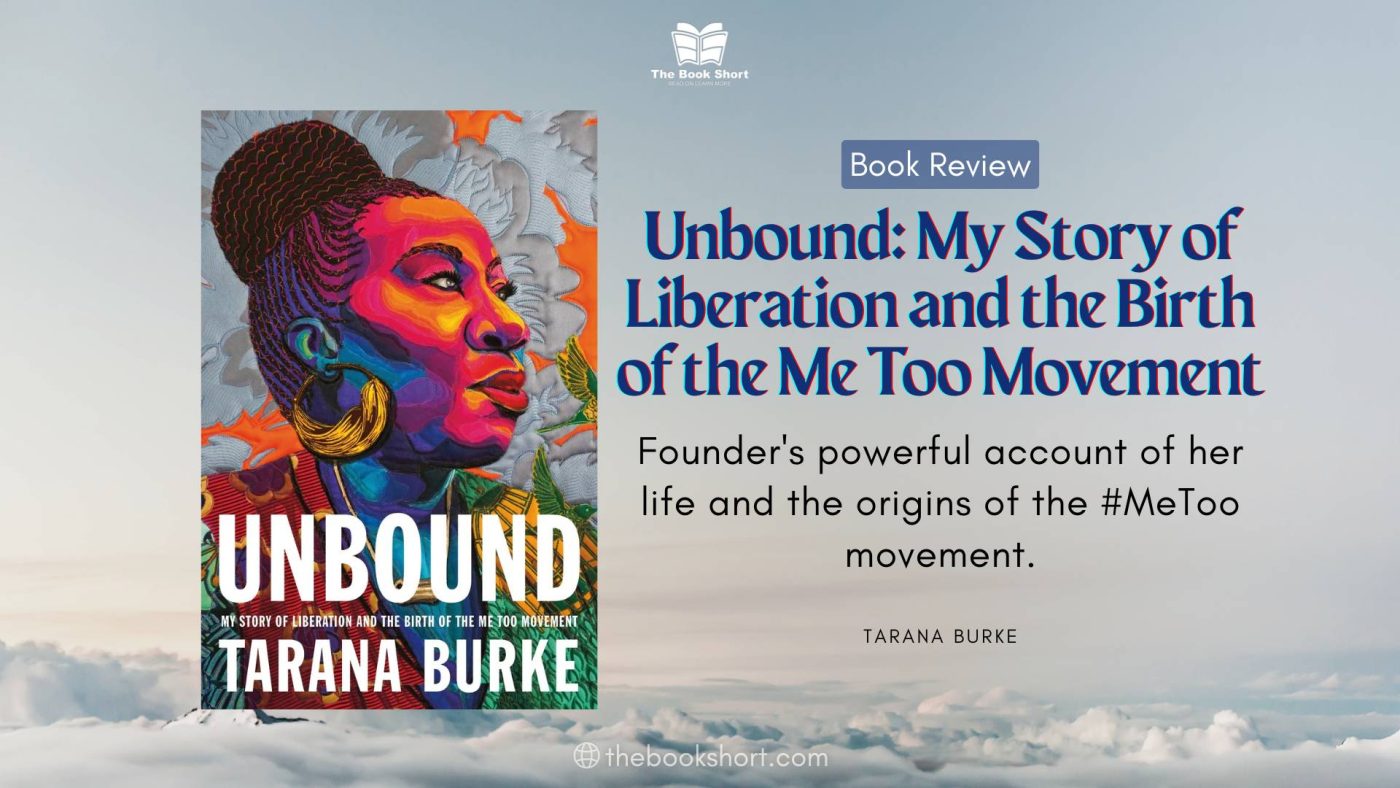
Tarana Burke’s Unbound reveals the deeply personal path to healing and the true story behind the Me Too movement’s origins. A raw, inspiring memoir of resilience that reshapes understanding.
Step into the powerful, necessary story of Tarana Burke. Unbound is more than a memoir; it’s an unflinching exploration of the trauma that marked her early life and the decades-long journey toward healing and activism that birthed the Me Too movement. Discover the profound resilience required to transform personal pain into a global catalyst for change, proving that liberation, truly, starts from within. This is the essential backstory to a movement that changed the world.
Basic Information: Unbound: My Story of Liberation and the Birth of the Me Too Movement
- Title: Unbound: My Story of Liberation and the Birth of the Me Too Movement
- Author: Tarana Burke
- Year of publication: 2021
- Genre: Memoir, Autobiography, Social History, Activism, Trauma & Healing
- Number of pages: Approximately 272 pages (may vary slightly by edition)
- Target audience: Readers interested in the authentic origins of the Me Too movement, social justice narratives, memoirs by Black women, journeys of healing from trauma, and the history of modern activism.
Summary: Unbound: My Story of Liberation and the Birth of the Me Too Movement
Unbound is Tarana Burke’s courageous and deeply affecting memoir, tracing the intricate path from her own experiences of trauma to the genesis and evolution of the ‘me too’ movement. This isn’t merely a historical account of a social phenomenon; it’s a profound personal narrative illustrating how Burke’s life story fundamentally shaped and necessitated the creation of this vital initiative.
The memoir opens by immersing the reader in Burke’s early life, particularly her formative years in the Bronx, New York. With unflinching honesty, she shares painful memories of sexual abuse and trauma experienced during childhood. These harrowing experiences are presented as central to her story, powerfully illustrating the insidious, long-lasting impact of sexual violence and the crushing isolation often endured by survivors. Burke candidly details the confusion, shame, and enforced silence that followed these incidents, and how they profoundly shaped her worldview and sense of self.
The narrative follows Burke through adolescence and young adulthood, chronicling her struggles to process trauma and find her voice in a world that often failed to protect or believe young Black girls. She recounts moments of feeling profoundly misunderstood, unsupported, and grappling with deep-seated internal pain. This journey involves critical moments of confronting her past, seeking out safe spaces for healing, and beginning the slow, arduous work of recovery. This period also illuminates her growing awareness of the systemic inequities—the intersections of race, poverty, and gender—that render young Black women particularly vulnerable and often invisible.
A significant, vital portion of Unbound focuses on Burke’s dedicated work with young people, particularly Black girls and women navigating the aftermath of sexual violence. Her career in non-profit organizations and community organizing became the fertile ground for her revolutionary ideas. Through tireless effort, she recognized a pervasive silence, a devastating lack of resources, and a profound need for dedicated support for survivors, especially those from marginalized communities. It was by truly listening to the stories of these young people, seeing their pain echo her own, and observing the systemic barriers to their healing and justice that the urgent need for a survivor-centric initiative like ‘me too’ crystallized.
Burke meticulously explains the humble, powerful inspiration for ‘me too’ in the early 2000s. Far from a concept intended for a viral hashtag or a celebrity-driven campaign, it began as a deeply personal, grassroots effort focused on community-based healing and empowerment specifically for young Black women of color who were survivors. The simple phrase, “me too,” was conceived as a tool for radical solidarity and validation among survivors – a quiet, powerful affirmation letting them know they were unequivocally not alone, that their experiences mattered, and that their healing journey was valid. It was a phrase meant to be shared face-to-face, within trusted circles, forming the bedrock for collective healing and action. She details the immense challenges of launching this work, the scarcity of resources, and the unwavering dedication required to build this supportive community from the ground up, one connection at a time.
The latter part of the book addresses the seismic explosion of the ‘me too’ hashtag in 2017 following the Harvey Weinstein revelations. Burke describes the surreal, overwhelming experience of seeing the phrase she had nurtured for well over a decade suddenly go viral, initially detached from its original, intentional context and purpose. While acknowledging the undeniable power and vast reach the hashtag achieved in dramatically raising awareness and providing a platform for millions globally to share their stories, she also offers a critical, nuanced reflection on the complexities and significant challenges that arose. She candidly discusses the media’s overwhelming focus on high-profile celebrity cases, the painful exclusion or marginalization of the voices of Black women and other women of color who were absolutely central to the movement’s origins, and the inherent tension between a broad viral awareness campaign and the ongoing, quiet, painstaking work of healing, solidarity, and community building that always remained at the core of ‘me too’.
Unbound courageously confronts the critiques and backlash the movement inevitably faced, offering no sanitized version of events. Burke is remarkably candid about the emotional toll of spearheading this work – the exhaustion, the pressure, the weight of expectation. Throughout these reflections, she powerfully reasserts the fundamental principles that have always guided her vision: placing survivors unapologetically at the center, prioritizing healing above all else (while still advocating for accountability), and relentlessly pushing for systemic change that addresses the root causes of sexual violence and inequity.
Ultimately, Unbound stands as a powerful testament to the transformative power of personal narrative, the extraordinary resilience of the human spirit, and the absolute necessity of collective action rooted in empathy, solidarity, and love. Burke masterfully weaves her own story inextricably with the movement’s, demonstrating with profound clarity that the fight against sexual violence is deeply personal and requires both individual liberation and collective transformation. This memoir is an essential call to understand ‘me too’ not merely as a fleeting cultural moment, but as an enduring, evolving movement fundamentally committed to justice, dignity, and healing for all survivors.
Analysis of Unbound: Themes, Style, and Impact
Unbound: My Story of Liberation and the Birth of the Me Too Movement offers an indispensable, critical, and deeply personal perspective on one of the most profoundly impactful social movements of our time. Tarana Burke’s memoir functions simultaneously as a vital historical corrective, revealing the movement’s true origins, and a profound, moving exploration of trauma, resilience, healing, and the power of grassroots activism.
Key Themes, Structure, and Arguments
The central figure, the heart of the narrative, is Tarana Burke herself. The structure is largely chronological, flowing from her childhood trauma and early experiences through her young adulthood, her pivotal career in youth advocacy, the intentional, quiet creation of ‘me too’ in the early 2000s, and finally, the complex explosion of the hashtag onto the global stage in 2017 and its nuanced aftermath. However, the structure isn’t rigidly linear; Burke skillfully weaves back and forth between past and present, compellingly connecting past pain to present understanding and future action.
Key arguments and core truths powerfully articulated throughout the book include:
- The foundational roots of ‘me too’ lie in dedicated grassroots work with young Black women and girls of color. Burke insists, with powerful evidence, that the movement was born not of viral fame but out of a specific, urgent need identified and addressed within marginalized communities long before it garnered widespread mainstream attention.
- At its core, ‘me too’ is fundamentally about solidarity, empathy, and healing. While acknowledging the importance of accountability for perpetrators, Burke underscores that the original and enduring purpose was to create safe, affirming spaces for survivors to feel seen, heard, believed, and supported on their individual and collective journeys toward healing.
- Trauma is a deeply personal wound, but authentic healing requires community and collective support. Burke’s own story and her work with others powerfully illustrate how individual survival and recovery are inextricably linked to and bolstered by collective solidarity, shared experience, and communal action.
- Systemic issues – particularly the intersections of race, class, gender, and identity – profoundly shape experiences of sexual violence and dictate access to justice and healing resources. The memoir highlights the unique, compounding barriers faced by survivors from marginalized communities, whose experiences are often ignored or devalued.
- The viral moment of ‘me too’ in 2017, while powerful in raising global awareness, presented significant complexities and challenges. Burke openly discusses the inherent tension between broad visibility and the very real risk of diluting or losing the movement’s original, intentional focus on community building, comprehensive healing, and the centrality of marginalized voices.
Writing Style, Emotional Depth, and Content Quality
Burke’s writing style is remarkably direct, disarmingly honest, and profoundly personal. She employs accessible, clear language, making the complex emotional landscape of trauma, resilience, and activism understandable and relatable. Her prose is evocative, drawing the reader intimately into her most painful and most empowering experiences. There is a raw, brave vulnerability in her sharing of her own trauma and healing journey, which lends immense weight, credibility, and authenticity to her essential message about the vital importance of believing and supporting survivors unconditionally.
The content quality is exceptional, particularly in its emotional depth, historical clarity, and ethical grounding. Burke provides a much-needed, authentic insider’s account of the movement’s true, quiet beginnings, forcefully challenging and correcting common narratives that focus exclusively on the 2017 viral surge triggered by high-profile cases. She is reflective, critically insightful, and incredibly generous in sharing her hard-won wisdom. The book avoids sensationalism, relying instead on the undeniable power of lived experience, thoughtful analysis, and unwavering empathy.
Notable Insights and What Stands Out
What fundamentally differentiates Unbound from many other accounts or discussions of the Me Too era is its unwavering primary focus on the personal story of the founder and the grassroots, community-based origins of the movement. While countless articles, books, or documentaries might dissect the viral moment, analyze the high-profile cases, or explore the broader societal impact from a distance, Burke deliberately and powerfully places her own body, her own trauma, and her decades of quiet, difficult, dedicated work at the absolute center. She provides the essential, often-missing context that the 2017 surge was not a sudden phenomenon but was built upon a deep, enduring foundation laid years earlier, intentionally for and by marginalized communities. Unbound is not just a historical record; it is a living testament to how lived experience fuels the most potent activism and how authentic collective liberation is intrinsically tied to and dependent upon individual healing. It recenters the voices and experiences—particularly those of Black women and girls—that were often overlooked, minimized, or erased in the mainstream media’s dominant narrative of Me Too.
Reviewing Unbound: Personal Evaluation and Readability
Unbound is, without question, a powerful, essential, and deeply moving read. My personal response to the book is one of profound respect for Burke’s courage, her honesty, and the clarifying light she shines on the true heart of the Me Too movement. Like many, my initial understanding was largely shaped by the headlines and the viral moments of 2017. Burke’s memoir entirely reframes this perspective, providing the crucial backstory and emphasizing the original, deeply empathetic, and community-focused purpose of ‘me too’ as a vital tool for healing, solidarity, and empowerment, especially within the communities she served for decades.
One of the greatest strengths and advantages of Unbound is its absolute authenticity. Burke does not present herself as a flawless, distant icon but as a resilient survivor who channeled her own profound pain and experience into a life’s purpose. Her vulnerability is the book’s bedrock, making the narrative relatable, human, and utterly compelling, powerfully underscoring the central message that healing is an ongoing process, and that dedicated activism can be a vital, reciprocal part of that process. The book’s deliberate focus might be perceived as a “disadvantage” only if a reader is solely expecting a comprehensive, exhaustive historical account of every single facet of the Me Too movement globally post-2017. However, this focus is intentional and, in my evaluation, a profound strength, as it serves to powerfully correct the often-incomplete, decontextualized mainstream narrative and recenter the story on its true origins and purpose.
The readability level of Unbound is high. Burke’s prose is clear, accessible, direct, and flows beautifully, drawing the reader forward even through incredibly difficult subject matter. Despite tackling weighty and painful topics like child sexual abuse, systemic oppression, and the complexities of leading a global movement, the language is never overly academic, clinical, or dense. The narrative structure, while gracefully weaving between moments in the past and reflections in the present, is easy to follow and emotionally impactful. This book is incredibly well-suited for a broad and diverse audience:
- Anyone seeking a genuine understanding of the history and true purpose of the Me Too movement.
- Survivors of sexual violence looking for stories of profound resilience, authentic healing, and the power of finding community.
- Activists, organizers, and social justice advocates seeking inspiration, practical lessons in community building, and insights into leading movements for change.
- Readers interested in compelling memoirs about overcoming adversity and transforming trauma.
- Individuals wanting to deepen their understanding of the intersection of race, gender, class, and social justice issues in America.
The practical value of Unbound is immense and far-reaching. It offers profound lessons that extend far beyond the specific topic of sexual violence, touching upon universal themes of human experience and social change. Key takeaways include:
- The paramount importance of listening to and believing survivors, unequivocally. This is presented not just as a political stance but as a fundamental act of human dignity and a necessary step for healing.
- Prioritizing healing as a core component of justice. Burke powerfully illustrates that while accountability is crucial, the well-being and recovery of survivors must remain at the heart of transformative work.
- The radical power of solidarity and shared experience. Recognizing that connection and community can build powerful, resilient networks capable of profound change.
- Understanding that large-scale social movements often begin with quiet, dedicated, often invisible work within specific, marginalized communities. It teaches patience, persistence, and the value of deep community roots.
- The powerful connection between personal liberation and collective liberation. Burke’s own journey demonstrates that confronting one’s own trauma and seeking personal healing is not a distraction from activism but can be the very fuel, insight, and empathy required to help liberate others.
Reading Unbound can undeniably shift one’s perspective, moving the focus from sensational headlines and abstract concepts to the deeply human stories, the quiet acts of courage, and the core values of empathy, healing, dignity, and empowerment that truly sparked and continue to define the ‘me too’ movement.
Conclusion and Recommendation: Should You Read Unbound?
Unbound: My Story of Liberation and the Birth of the Me Too Movement is an essential, powerful, and deeply moving memoir that provides absolutely crucial context and profound emotional resonance to a global movement that continues to reshape our world. Tarana Burke’s courageous honesty about her own journey through trauma and healing is inextricably linked to the quiet, persistent, transformative work she dedicated herself to for decades, which laid the indispensable foundation for ‘me too’ long before it registered as a viral phenomenon. The book’s immense value lies in its compelling blend of personal narrative and vital social history, purposefully centering the voices, experiences, and liberation of marginalized survivors who were always at the heart of the movement’s origins and purpose.
Is Unbound worth reading? Absolutely, unequivocally yes. It is not just a memoir; it is a necessary corrective to prevailing narratives, a testament to resilience, a masterclass in grassroots activism, and an enduring source of inspiration. It challenges misconceptions, fosters deep empathy, and offers profound, actionable insights into healing, solidarity, and the true nature of sustainable social change.
Who should make Unbound a priority read? Anyone seeking a genuine, human-centered understanding of the Me Too movement beyond the headlines. It is essential for those interested in social justice, the power of memoirs to illuminate systemic issues, journeys of healing from trauma, and the history and practice of community organizing, particularly from the perspective of a Black woman leader. If your understanding of Me Too begins and ends with a hashtag, this book will provide the vital, necessary backstory and reframe its enduring significance.
Have you experienced the power of Unbound? Share your thoughts and reflections in the comments below!