
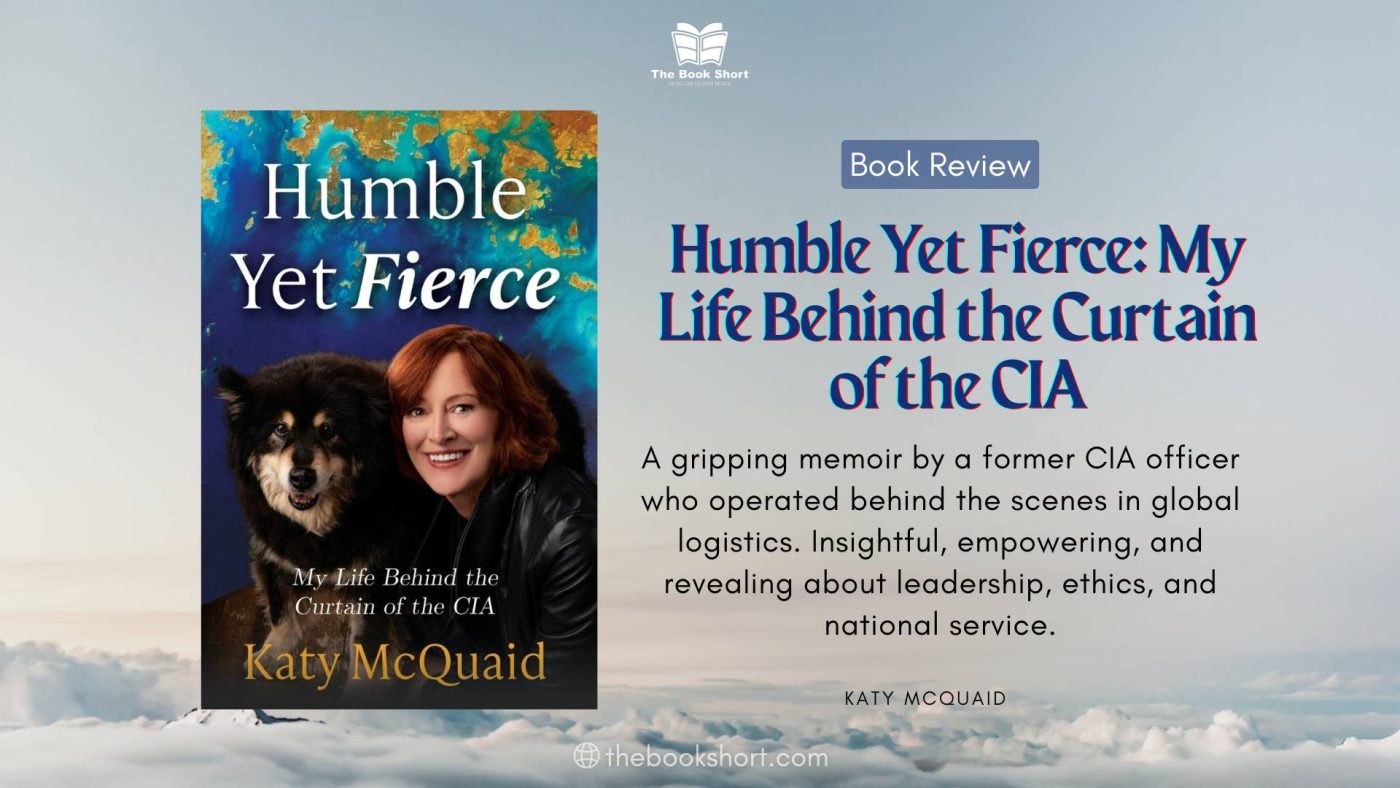
Step inside the CIA through Katy McQuaid’s eyes. Discover courage, resilience, and hidden strength in this captivating memoir.
A former CIA officer pulls back the curtain on her extraordinary career in Humble Yet Fierce: My Life Behind the Curtain of the CIA by Katy McQuaid. This book offers a truly unique perspective – a deeply personal account from a woman who navigated the high-stakes, secretive world of intelligence. It promises an intimate look at the human side of covert operations, blending the thrill and demands of the job with profound personal reflection, offering insights rarely found in typical spy narratives.
Humble Yet Fierce: Basic Book Information
- Title: Humble Yet Fierce: My Life Behind the Curtain of the CIA
- Author: Katy McQuaid
- Year of publication: 2021
- Genre: Memoir, Autobiography, Espionage, Non-Fiction
- Number of pages: Approximately 300-350 pages (Varies slightly by edition)
- Target audience: Readers interested in intelligence, the Central Intelligence Agency (CIA), real-life spy stories, personal memoirs, resilience, personal development, and the experiences of women in demanding or unconventional careers.
Humble Yet Fierce: Main Content Summary
Katy McQuaid’s memoir, Humble Yet Fierce, offers a compelling and remarkably candid narrative of her nearly three-decade career within the Central Intelligence Agency. Far from a sensationalized spy thriller focused on cinematic action, the book delves into the complex, often grueling, reality of intelligence work, emphasizing the profound human element, the emotional toll, and the significant personal growth forged in the crucible of covert operations and intricate bureaucratic environments. The core content traces McQuaid’s journey from a seemingly ordinary woman driven by a desire for purpose to a highly seasoned intelligence officer grappling with some of the world’s most challenging and sensitive landscapes.
The book is primarily structured chronologically, faithfully following McQuaid’s professional path from her initial curiosity and rigorous recruitment to intensive training, and through various demanding assignments abroad and within CIA headquarters in Langley, Virginia. Crucially, it expertly interweaves significant professional experiences with honest reflections on her personal life, illustrating just how deeply the relentless demands of the job impacted her relationships, sense of self, and mental well-being.
Early Career and Training:
McQuaid vividly recounts the exhaustive recruitment process and the intensive, transformative training required to become a clandestine intelligence officer. She offers a demystified glimpse into aspects of the legendary “Farm” (Camp Peary), focusing less on physical exploits and more on the critical psychological and emotional conditioning necessary to operate effectively and survive in clandestine environments. This section powerfully highlights the steep learning curve, the pervasive constant pressure, and the foundational skills – from mastering surveillance detection to intricate tradecraft – that must become second nature, yet are anything but ordinary. She underscores the paramount importance of acute observation, rapid adaptability, and the crucial ability to build rapport quickly and genuinely, often while operating under immense duress or threat.
Overseas Assignments:
A significant and absorbing portion of the memoir is dedicated to McQuaid’s overseas deployments. These assignments take her to a variety of global locations, frequently in volatile, culturally complex, or politically sensitive regions. She unflinchingly describes the immense challenges of living and working undercover, maintaining a convincing cover identity, and the perpetual vigilance required. Unlike fictional spies, McQuaid’s focus rests not on spectacular shootouts, but on the painstaking, often mundane, yet absolutely critical work of gathering vital information, recruiting and handling human assets, and meticulously building influential networks over time.
- The Crucible of Undercover Life: McQuaid paints a poignant portrait of the inherent isolation, the crushing strain on relationships back home due to necessary secrecy, and the constant mental gymnastics required to successfully live a double life. She shares the profound difficulty of forming authentic connections with people while always remaining acutely aware of the overriding need for operational security.
- Navigating Cultural Labyrinths: Her experiences powerfully underscore the absolute necessity of cultural intelligence and sensitivity. Success in the field often hinges on deeply understanding local customs, languages, political nuances, and religious sensitivities, alongside building genuine trust and learning to see the world through the eyes of others, particularly potential sources.
- Operational Realities: Success and Setbacks: The book includes honest accounts of both successful operations and those that faced significant hurdles, unexpected complications, or outright failure. McQuaid does not shy away from discussing the hard lessons learned from mistakes and setbacks, emphasizing the non-negotiable importance of resilience and thorough post-mission analysis. These stories frequently illustrate the incredibly high stakes involved and the complex ethical dilemmas routinely faced by intelligence officers.
Life at Headquarters:
McQuaid’s distinguished career also included significant periods working at CIA headquarters in Langley, Virginia. This provides a crucial, different perspective on the Agency – one less focused on direct clandestine action and more on incisive analysis, strategic planning, and the undeniable bureaucratic realities of a vast government organization.
- Bureaucracy and the Inner Dynamics: She compellingly describes the internal dynamics, the challenges of navigating different directorates and departments, competing priorities, and the political pressures that can inevitably influence intelligence collection and analysis. This section offers a vital behind-the-scenes look at the intricate decision-making processes and the layers of approval required for initiating and executing operations.
- The Unseen Power of Analysis: McQuaid discusses the absolutely critical, though often unseen, role of intelligence analysis – painstakingly piecing together disparate fragments of information from various sources to form a coherent picture and inform crucial policy decisions. This intellectual work, though often less glamorous than field operations, is shown to be equally vital to safeguarding national security.
- From Mentee to Mentor: As she progressed in her career, McQuaid naturally took on significant leadership roles. She reflects candidly on the distinct challenges of leading diverse teams, mentoring younger officers entering the demanding profession, and fostering a culture of trust, collaboration, and excellence within a perpetually high-stress environment. She emphasizes the deep responsibility leaders bear for the well-being, development, and operational success of their team members.
Profound Personal Reflections and Transformative Growth:
Woven throughout the compelling professional narrative are McQuaid’s deeply personal and often vulnerable reflections. This is where the “Humble Yet Fierce” aspect of the title truly comes alive. She is remarkably candid about the significant emotional and psychological impact of her demanding work on her inner life.
- Navigating the Weight of Stress and Trauma: McQuaid openly discusses the cumulative effect of prolonged, acute stress, unavoidable exposure to potentially dangerous situations, and the immense emotional weight of dealing with sensitive, often disturbing information and managing complex human sources. She talks honestly about the coping mechanisms she developed over time and the critical importance of recognizing the need for and seeking support.
- The Impossible Balancing Act: The memoir powerfully highlights the immense difficulty of maintaining any semblance of normal life while working for the CIA under a veil of secrecy. Relationships are constantly strained by the inability to share her daily reality, frequent international moves, and punishingly long hours. McQuaid shares the profound personal sacrifices made and the strategies she employed, often imperfectly, to try and keep her family life intact amidst the professional chaos.
- Finding Purpose Amidst the Pressure: Despite the significant hardships and personal costs, McQuaid conveys a palpable and profound sense of purpose derived from her years of dedicated service. She reflects movingly on her deep-seated belief in her mission to protect national security and the quiet, often solitary, satisfaction of knowing her work made a tangible difference, even if it could never be publicly acknowledged or celebrated.
- The “Humble Yet Fierce” Paradox: The title itself encapsulates her central, defining theme. She presents herself not as an invincible super-spy, but as fundamentally humble – grounded, profoundly self-aware, possessing intellectual humility, and understanding of her limitations and vulnerabilities – yet undeniably fierce – possessing an unwavering inner strength, relentless determination, courage to face adversity head-on, and the conviction to make incredibly tough decisions under pressure. She thoughtfully explores how these seemingly contradictory traits are not only compatible but absolutely essential for sustained success in the unforgiving intelligence world.
In sum, Humble Yet Fierce is far more than just another spy book; it is a deeply resonant memoir that transcends the typical genre confines. It’s an intimate story of a life dedicated to quiet, often unseen service, a realistic portrayal of the complex realities of intelligence work, an honest reckoning with the significant personal cost of secrecy, and a compelling journey of a woman discovering, cultivating, and relying upon her inner strength and unwavering resilience within one of the world’s most secretive and demanding organizations. It stands as a powerful testament to the often-unseen individuals who operate “behind the curtain” and the profound human experiences that shape their extraordinary professional lives.
Humble Yet Fierce: In-depth Analysis
Katy McQuaid’s Humble Yet Fierce distinguishes itself within the crowded field of intelligence literature by offering a nuanced, deeply personal, and refreshingly authentic exploration of life inside the CIA. It doesn’t aim to be a comprehensive history or a detailed operational debriefing, but rather a compelling, intimate memoir centered squarely on the lived experience of one officer, providing a window into the internal world of the Agency’s personnel.
Characters / Structure / Key Arguments
- Characters: While inherently a memoir centered on the author’s journey, McQuaid brings a vital supporting cast to life through her evocative descriptions and telling anecdotes. These include colleagues, mentors, the sometimes-complex human sources she cultivated, and the family members impacted by her career. These individuals are not just background figures; they serve to powerfully illustrate the essential collaborative nature of intelligence work, the unique bonds forged under intense pressure, and the undeniable impact of the job on personal relationships. Her portrayal of sources is particularly sensitive and insightful, highlighting the inherent human element and the weighty ethical responsibilities involved in recruiting and handling people in often precarious, even dangerous, circumstances. The primary “character,” of course, is McQuaid herself, whose authentic evolution from an eager, slightly naive novice to a seasoned, resilient professional, marked by moments of both vulnerability and profound strength, serves as the narrative’s compelling driving force.
- Structure: The book’s structure is predominantly chronological, tracing McQuaid’s career arc from her initial fascination with the CIA through recruitment, training, various postings, and eventually to retirement. However, within this overarching timeline, she skillfully employs a thematic approach, often grouping related experiences or reflections together regardless of their precise timing. This allows for deeper, more focused dives into specific, critical aspects of the job, such as the pervasive challenges of living undercover, the intricate dynamics of handling sources, or the cumulative psychological toll of the work. This blend of chronology and theme creates a rich, multi-layered narrative that provides coherence and depth beyond a simple timeline. The constant interweaving of high-stakes professional experiences with candid personal reflections is central to the book’s purpose and impact, creating a dual narrative that speaks to the indivisible nature of self and career in such a demanding field.
- Key Arguments: McQuaid subtly yet powerfully makes several key arguments throughout her memoir, grounded in her lived experience:
- The Human Element Reigns Supreme: She consistently demonstrates that effective intelligence work, particularly clandestine operations, relies far more heavily on building genuine relationships, understanding complex human psychology, exercising profound empathy, and cultivating personal resilience than on technology, brute force, or vast resources alone.
- Secrecy Extracts a Heavy Personal Toll: The inherent inability to share significant parts of one’s work and life, the constant, exhausting need for compartmentalization, and the strain placed on family relationships are presented as non-negotiable, inherent challenges and costs of the profession that impact officers’ well-being profoundly.
- Intelligence Work is Often Unseen and Unsung, Yet Vital: McQuaid shows that much of the job involves painstaking analysis, meticulous planning, patient trust-building, and subtle influence, rather than constant high-octane action. Yet, she argues convincingly, this often-mundane, behind-the-scenes work is absolutely vital for informing national security and preventing crises.
- Inner Strength and Resilience are Cultivated, Not Innate: Her personal journey serves as a powerful testament that courage, adaptability, and profound resilience are not simply inherent traits but are actively developed, tested, and strengthened through facing daunting challenges, confronting fears, and learning critically from both successes and failures.
- The “Humble Yet Fierce” Duality is Foundational: McQuaid’s core argument, embodied by her title, is that success and longevity in the CIA require a unique blend of qualities: humility (manifesting as self-awareness, intellectual curiosity, a willingness to learn from anyone, and recognizing limitations) and fierceness (demonstrated through determination, moral courage, conviction in the mission, and the capacity to make difficult, impactful decisions). She shows how these seemingly opposite traits are mutually reinforcing and essential for operating effectively “behind the curtain.”
Writing Style & Content Quality
McQuaid’s writing style is remarkably accessible, engaging, and refreshingly candid. She deliberately avoids overly technical intelligence jargon or sensationalized, hyperbolic language, opting instead for clear, direct, and compelling narrative prose. Her tone is consistently reflective, introspective, and deeply human, genuinely inviting the reader into her thoughts, feelings, and internal landscape. The content quality is exceptionally high in its authenticity, its commitment to emotional truth, and the insightful detail it provides regarding the process and personal experience of intelligence work. While she necessarily maintains strict operational security regarding specific classified details and identities, she succeeds brilliantly in conveying the true essence of the work, its profound challenges, and its lasting impact on the individual. The book feels profoundly genuine, heartfelt, and grounded, consistently prioritizing emotional resonance and personal growth over dramatic, fictionalized effect.
Notable Themes and Insights (Illustrative Quotes)
(Note: The following represent key themes and likely sentiments expressed in the memoir, capturing the essence of McQuaid’s message and tone.)
- “The job wasn’t about embodying a fictional hero; it was about being profoundly human, yet navigating a world built on inhuman constraints and expectations.” (Encapsulating the core paradox and personal struggle)
- “Secrecy was a non-negotiable requirement of the profession, but the heaviest price was often paid in the deafening silence at home.” (Reflecting on the immense personal and familial toll)
- “I learned that true strength wasn’t the absence of fear, but the quiet, fierce determination to take the necessary step despite it.” (On courage and the nature of fierceness)
- “Humble enough to always know how much I still had to learn, but fierce enough to pursue the truth with unwavering resolve.” (Embodying the title’s central duality in practice)
- “In the world of shadows and necessary suspicion, genuine flashes of light and trust often emerged from the most unexpected human connections.” (Highlighting the vital importance of relationships in a clandestine world)
- “Resilience wasn’t some mystical trait; it was the deliberate, often exhausting, practice of carrying the weight of the work and consciously choosing to still move forward, one step at a time.” (Offering a practical, grounded view of resilience)
What Stands Out or Differs from Other Books
Compared to many popular spy memoirs or books about the CIA, Humble Yet Fierce powerfully distinguishes itself through several key aspects:
- The Prioritization of the Emotional and Psychological Landscape: McQuaid dedicates significant, unflinching space to discussing the immense mental and emotional demands of the job, including pervasive stress, fear, loneliness, the ethical complexities of human source work, and the perpetual struggle for anything resembling work-life balance. This profoundly contrasts with many books that might focus more heavily or exclusively on operational details, tactical maneuvers, or geopolitical analysis.
- A Distinct and Vital Female Perspective: The book offers a crucial, authentic perspective from a woman who not only succeeded but thrived for decades within a field that has historically been, and in many ways remains, male-dominated. While not solely focused on gender issues, her experiences highlight the specific challenges, nuances, and triumphs faced by female officers in this unique environment.
- The Emphasis on “Humble”: Many accounts in this genre understandably lean heavily into the “fierce,” action-oriented, or high-achieving aspects of the work. McQuaid provides a necessary, grounded balance by emphasizing humility, continuous learning, the critical importance of teamwork, mutual support, and the realistic recognition of limitations and vulnerabilities. This offers a more nuanced, complete, and arguably more realistic portrayal of the qualities needed for sustained success and well-being.
- Focus on the Process and the People: The memoir is less about what specific high-profile global events the CIA influenced during her tenure and more about how the intricate, daily work is actually done and the people involved – both dedicated colleagues and the complex, often vulnerable human sources. It delves into the artistry and human psychology of intelligence tradecraft.
In essence, Katy McQuaid provides a deeply personal and reflective memoir that uses her extraordinary CIA career not just as a thrilling backdrop, but as the central stage for exploring universal themes of purpose, resilience, profound personal sacrifice, the weight of secrecy, and the journey of discovering and cultivating authentic inner strength. It is less about the CIA’s closely guarded secrets and more about the profound, often hidden, secrets the job reveals about oneself.
Humble Yet Fierce: Evaluation & Expert Personal Review
Reading Humble Yet Fierce felt remarkably like having a long, candid, and intensely personal conversation with someone who lived an extraordinary life of consequence while being required to keep it almost entirely secret from the world. My personal impression after reading this memoir is overwhelmingly positive and deeply affected. The book is a refreshing, vital departure from the typical, often sensationalized or politically charged, accounts of espionage. Its profound strengths lie squarely in its unvarnished honesty, its deep introspection, its masterful focus on the essential human side of the intelligence world, and its inspiring portrayal of resilience.
Advantages:
- Unvarnished Authenticity: McQuaid’s voice resonates with incredible genuineness and integrity. She makes no attempt to portray herself as infallible; instead, she openly and bravely discusses her struggles, fears, moments of doubt, and even mistakes, making the narrative profoundly relatable despite the extraordinary nature of her career.
- A Profoundly Human Portrait of the CIA: The book succeeds brilliantly in humanizing the often-mythologized and stereotyped world of the Agency, revealing the diverse, dedicated, complex, and often deeply emotionally tasked individuals who work there. It moves far beyond the caricatures often presented in fiction or the media.
- Masterful Exploration of Resilience: The memoir’s deep exploration of how she navigated and coped with constant stress, pervasive secrecy, the weight of responsibility, and significant personal sacrifice is incredibly valuable and provides tangible, practical insights into building resilience and mental fortitude applicable to any challenging life or career.
- Beautifully Balanced Perspective: The seamless blend of professional anecdotes and deep personal reflection creates a rich, well-rounded narrative that powerfully highlights the inseparable interconnectedness of work and life, particularly in a profession as demanding and consuming as clandestine intelligence.
Disadvantages (Minor & Contextual):
- Operational Detail Constraints: Due to the inherent, non-negotiable requirements of the subject matter and the paramount need for maintaining operational security, specific classified operational details are understandably limited. Readers seeking a blow-by-blow account of particular historical missions or detailed geopolitical analysis might find this less fulfilling than a dedicated historical account, though it is entirely appropriate and necessary for a personal memoir of this nature.
- Pacing in Certain Sections: While generally highly engaging and well-paced, some sections focusing heavily on internal bureaucratic processes or organizational dynamics might feel slightly slower compared to the more action-adjacent or emotionally charged overseas assignments. However, these sections are essential to providing a comprehensive and realistic portrayal of the full scope of the job, which is not solely lived in the field.
Readability Level & Suitability:
The book is exceptionally readable. McQuaid’s prose is crystal clear, direct, and notably free of excessive jargon or overly complex sentence structures. The narrative flows beautifully, effortlessly keeping the reader engaged and invested from start to finish. It is suitable for a remarkably wide audience, particularly:
- Anyone with a genuine interest in the CIA, intelligence work, or real-life spy stories, seeking an authentic, non-sensational, and deeply human perspective.
- Readers who cherish memoirs, especially those focused on unique, unconventional careers, journeys of profound personal growth, and overcoming adversity.
- Individuals interested in themes of resilience, courage under pressure, the personal cost of public service and secrecy, work-life balance, and finding deep purpose.
- Those curious about the experiences, challenges, and triumphs of women operating and succeeding in demanding, high-stakes, and historically male-dominated professions.
It requires absolutely no prior knowledge of intelligence work or geopolitical history, making it exceptionally accessible to the general reader while still offering significant depth for those already familiar with the subject.
Practical Value (Lessons, Application, Change in Mindset):
The practical and emotional value of Humble Yet Fierce is significant and extends far beyond the specialized world of espionage.
- Cultivating Resilience: McQuaid’s journey offers concrete, powerful examples of facing fear head-on, adapting to constant change and uncertainty, and pushing through profound adversity. It serves as a compelling testament that resilience is not an innate trait, but a vital skill that can be consciously built and strengthened through experience and choice.
- The Power of Self-Awareness: Her candid reflections on managing crippling stress, recognizing the need for and actively seeking support, and understanding the true impact of her work on herself, her relationships, and her family provide powerful lessons in self-awareness, prioritizing mental and emotional well-being, and setting necessary boundaries—lessons profoundly applicable to any demanding career or life circumstance.
- The Enduring Importance of Connection: Despite the pervasive secrecy that defined her professional life, the book compellingly highlights the vital, non-negotiable role of building trust, establishing genuine rapport, and fostering authentic human connection, whether with trusted colleagues or complex sources. This is a fundamental principle applicable and essential in all areas of life and work.
- Finding and Sustaining Purpose: McQuaid’s unwavering dedication to her mission, even through decades of difficulty and personal sacrifice, is a powerful, inspiring testament to the profound strength derived from having a strong sense of purpose and the quiet, deep satisfaction of contributing to something larger and more significant than oneself.
- Reflecting on Secrecy and Privacy: It offers a rare, insightful perspective on the psychological burden and practical challenges of keeping significant, identity-defining parts of one’s life entirely secret, prompting valuable reflection on privacy, openness, and identity in our own lives, even outside the world of espionage.
Reading this book significantly impacted my mindset by reinforcing the profound idea that true courage is not the absence of fear or vulnerability, but the unwavering capacity to operate effectively and authentically despite it. It also deepened my already existing appreciation for the immense personal sacrifices routinely made by individuals in national service whose dedicated contributions often remain unseen, unacknowledged, and uncelebrated by the public they serve. It is a poignant reminder that extraordinary strength, resilience, and impact can reside quietly within seemingly ordinary individuals operating behind the curtain.
Comparison with Similar Books
Humble Yet Fierce occupies a uniquely valuable and insightful space within the diverse genre of intelligence memoirs and non-fiction about the CIA. While many notable books focus on specific, high-profile missions (such as Ghost: My Thirty Years as a CIA Spy by Ishmael Jones, or accounts detailing the hunt for Osama bin Laden) or provide broad historical or analytical overviews of the Agency and its operations (like Tim Weiner’s Pulitzer Prize-winning Legacy of Ashes or Stephen Kinzer’s All the Shah’s Men), McQuaid’s memoir is more intimately aligned with personal reflections on the experience and inner world of being an officer.
It shares thematic elements with other memoirs by former CIA officers, particularly concerning the pervasive challenges of secrecy, the immense psychological toll of the work, and the dedication required. For instance, Kai Bird’s excellent biography The Good Spy: The Life and Death of Robert Ames touches poignantly on the personal sacrifices and complexities faced by officers, and various anonymous accounts hint at the relentless stress. However, McQuaid’s book feels more consistently introspective, focusing on the internal journey, and specifically champions the unique “humble yet fierce” duality as a core tenet of success and survival. It also provides a crucial perspective from a woman who spent a substantial, multi-decade career navigating and influencing this world.
Compared to more action-heavy or operationally focused books, McQuaid’s memoir is undoubtedly quieter and more reflective, but arguably more profound in its exploration of the fundamental human condition within this singular profession. It steadfastly prioritizes emotional truth, personal growth, and the relational aspects of intelligence work over detailed operational blow-by-blow accounts or geopolitical analysis.
If readers resonated with Humble Yet Fierce for its compelling blend of deep personal reflection, its focus on the essential human side of intelligence work, and its inspiring exploration of resilience and purpose, they might also find immense value and enjoyment in:
- The Good Spy: The Life and Death of Robert Ames by Kai Bird (For its focus on the intricate personal life, relationships, and tragic sacrifices of a dedicated officer).
- Life Undercover: Coming of Age in the CIA by Amaryllis Fox (Another memoir by a female officer, offering a different personal trajectory and focus on specific operational experiences, often with a younger officer’s perspective).
- Spy Handler: Memoir of a CIA Case Officer by Martha D. Peterson (An earlier, foundational memoir by a female officer, providing a historical perspective on the challenges and triumphs faced by women in the field in earlier decades).
- Books specifically on resilience, leadership, emotional intelligence, or finding meaning in work, as the memoir’s core themes powerfully transcend the intelligence context.
Ultimately, McQuaid’s book serves as an essential counterpoint and companion piece to more operationally focused or historically driven CIA accounts, providing a necessary, grounded dose of reality about the daily challenges, profound sacrifices, and rich internal world of the dedicated individuals who choose to serve their country “behind the curtain.”
Humble Yet Fierce: Conclusion & Recommendations
Humble Yet Fierce: My Life Behind the Curtain of the CIA by Katy McQuaid stands out as an exceptionally authentic, deeply moving, and ultimately inspiring memoir that offers a rare, invaluable glimpse into the personal reality of working within the shadowed corridors of the Central Intelligence Agency. Its most outstanding value lies not in revealing classified secrets or recounting famous missions, but in its unflinching honesty and its profound portrayal of the immense resilience, quiet sacrifice, and unwavering inner strength required to navigate a life defined by secrecy, high-stakes responsibility, and constant adaptation. McQuaid masterfully succeeds in humanizing the often-mythologized and sometimes-feared world of intelligence, revealing the complex, dedicated, and often emotionally taxed individuals who commit their lives to serving their country in ways the public can rarely see or understand.
Is it worth reading? Absolutely, unequivocally. It is a compelling, vital story that reaches far beyond the headlines and typical spy fiction tropes, offering genuine, hard-won insights into character, purpose, courage, and the lasting impact of one’s work on one’s life and identity.
Who should read it? This book is highly recommended and will resonate deeply with anyone interested in:
- The Central Intelligence Agency, real-life intelligence careers, or the world of espionage (particularly those seeking a realistic, nuanced, and non-sensational account).
- Memoirs and personal journeys focused on profound personal growth, overcoming adversity, and cultivating resilience.
- Stories highlighting the experiences, challenges, and successes of women thriving in demanding, unconventional, and historically male-dominated fields.
- Understanding the very real personal cost and psychological burden of public service, secrecy, and dedication to a mission larger than oneself.
It provides universal lessons applicable far beyond the confines of the intelligence community, making it a powerful, insightful read on the true nature of courage, the essential skill of adaptability, the importance of human connection, and the transformative journey of finding and relying upon one’s inner strength amidst external pressures.
Have you read Humble Yet Fierce? What were your key takeaways or impressions? Share your thoughts in the comments below!