
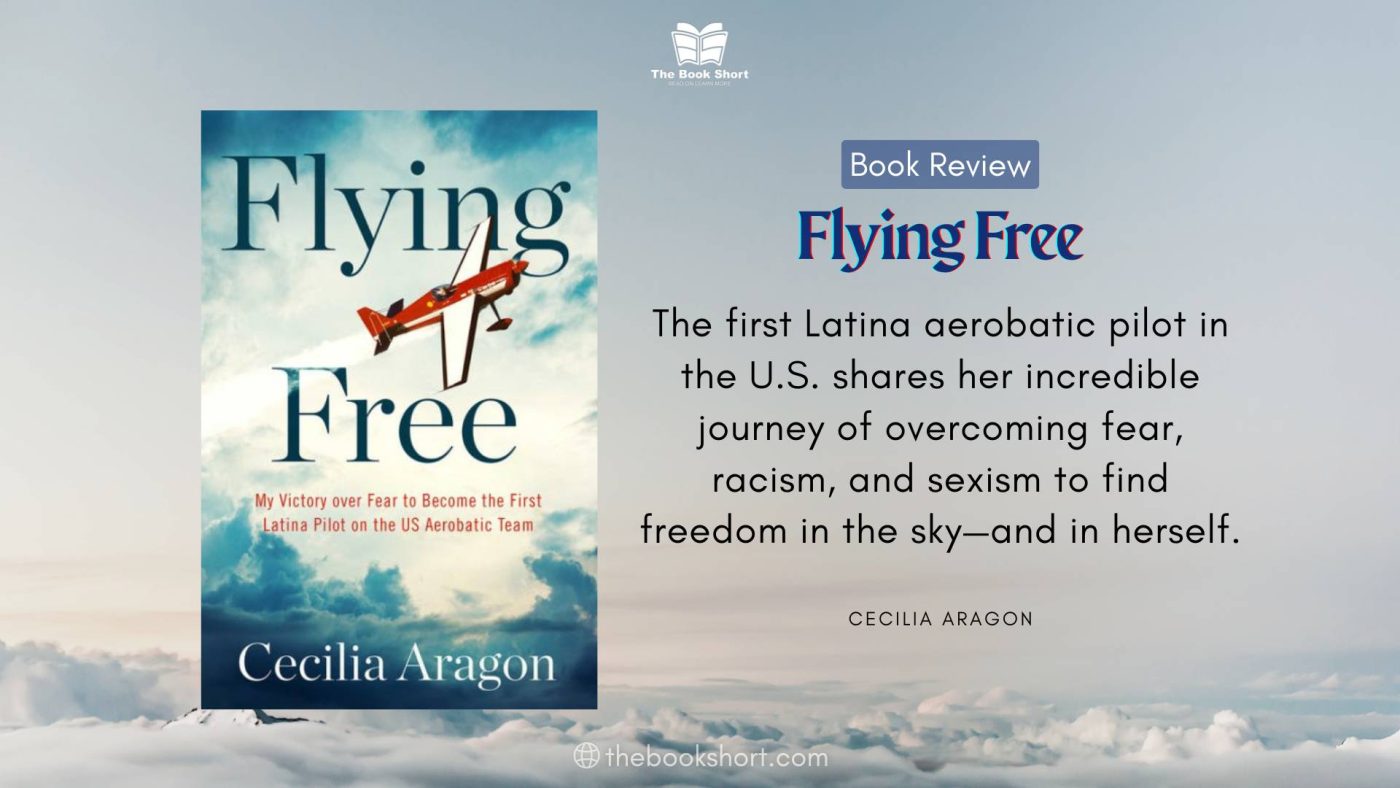
Confronting deep-seated fears can feel like an impossible flight against gravity, yet it can lead to extraordinary achievements. Flying Free: My Victory Over Fear to Become the First Latina Pilot on the U.S. Aerobatic Team by Cecilia Aragon is a powerful memoir that charts this astonishing journey. I chose this book for review and analysis because it presents a rare and compelling intersection: the raw vulnerability of battling debilitating anxiety, the rigorous logic of a computer scientist, and the death-defying world of competitive aerobatics. Aragon’s unflinching honesty about fear, paired with the inspiring narrative of her conquest, offers profound insights applicable far beyond the cockpit – lessons on resilience, discipline, and the true meaning of courage.
Flying Free: Book Details & SEO Information
- Title: Flying Free: My Victory Over Fear to Become the First Latina Pilot on the U.S. Aerobatic Team
- Author: Cecilia Aragon
- Year of Publication: 2020
- Genre: Memoir, Biography, Aviation, Psychology, Inspirational
- Number of Pages: 320 pages
- Target Audience: Readers seeking inspirational memoirs, insights on overcoming anxiety and fear, stories about women in aviation or women in STEM, and accounts of personal transformation or achieving seemingly impossible goals. This book appeals to anyone interested in the psychology of performance, competitive aerobatics, or the journey of the first Latina pilot on the U.S. Aerobatic Team.
Flying Free Book Summary: A Journey from Fear to Flight
Flying Free recounts the truly remarkable story of Cecilia Aragon’s evolution from a young woman paralyzed by timidity and panic attacks to a confident, nationally ranked champion aerobatic pilot. The memoir unfolds chronologically, intricately weaving together narratives of her challenging childhood, her academic path, and her utterly unexpected plunge into the high-stakes world of precision flying. At its heart, the book is a testament to the relentless struggle against debilitating fear and how the intense discipline and unwavering focus demanded by aerobatics became her unlikely — yet ultimately successful — path to freedom.
The narrative begins with Aragon’s early years, marked by acute shyness, a stutter, and a pervasive sense of fear rooted in various experiences, including a traumatic childhood accident. She vividly describes feeling overwhelmed by social interactions and crippled by anxiety, particularly around performance or any perceived risk. Despite these internal battles, she excelled academically, eventually pursuing a secure career in computer science, a field that felt controlled and safe, a stark contrast to physical danger.
However, life presented a pivotal turn when she was introduced to flying. Initially, even basic flights were terrifying, triggering intense panic responses. The very idea of aerobatics — the loops, rolls, spins, and other extreme maneuvers — seemed diametrically opposed to her fearful nature. Yet, something about the inherent challenge, the absolute requirement for precise control within a potentially chaotic environment, exerted a powerful pull.
The story then shifts to her arduous journey through flight training and into the demanding realm of aerobatic training. This is painted not as a smooth ascent, but a constant, brutal battle against her own mind and body. The fear, she emphasizes, doesn’t vanish; she learns to navigate it. She recounts panic attacks in the cockpit, the constant temptation to quit, and the sheer mental fortitude required to push through physical discomfort and psychological barriers. Her instructors feature prominently, pushing her limits while providing essential guidance and belief.
A significant, and fascinating, portion of the book delves into the technical side of aerobatics. Without becoming overly technical for non-pilots, Aragon explains the physics and the immense mental demands of maneuvers like the Hammerhead turn or the Immelmann. This section powerfully illustrates the book’s central paradox: engaging in inherently dangerous activities forces her to confront and master her fear. The intense, all-consuming concentration required in these moments leaves no space for the diffuse, overwhelming anxiety that plagued her on the ground.
As her skills grow, the memoir details her entry into competitive aerobatics. Competition adds another layer of pressure, demanding flawless execution of complex routines under intense scrutiny. She shares the triumphs and setbacks, the grueling practice schedule, and the financial strain. Her journey culminates in the monumental achievement of becoming the first Latina pilot on the U.S. Aerobatic Team, a powerful testament to her extraordinary perseverance and skill.
Throughout the narrative, Aragon skillfully draws parallels between her experiences in the air and her life on the ground. The hard-won lessons in managing fear, maintaining focus, and executing under pressure in the cockpit translate into significantly increased confidence and resilience in other areas of her life, including her distinguished academic and professional career. She offers insightful reflections on the nature of fear itself, distinguishing between healthy caution and debilitating anxiety.
The book also thoughtfully explores themes of identity, particularly her experience as a Latina woman navigating the often overwhelmingly white and male world of aviation. She addresses the challenges she faced and underscores the vital importance of representation.
The memoir concludes not with a claim of complete freedom from anxiety, but with reflections on the lasting impact of her aerobatic journey. She has developed powerful coping mechanisms and forged a profound, unshakeable belief in her capacity to face any challenge head-on. The act of flying, once a source of sheer terror, transforms into her ultimate source of strength, discipline, and liberation.
Key Stages and Powerful Themes Explored in Flying Free:
- Seeds of Fear: Childhood experiences and the development of chronic anxiety and phobias.
- Seeking Safety in Logic: Finding refuge and academic success in the controlled world of computer science.
- The Unlikely Pull of Aviation: Initial terror and the unexpected draw towards flight.
- Embracing the Edge: The daunting decision to pursue high-risk aerobatic flying.
- Waging War in the Cockpit: Visceral accounts of managing panic attacks during intense training and maneuvers.
- The Precision of Courage: Explaining the technical demands of aerobatics as a tool for mental discipline.
- The Arena of Competition: The pressures and rewards of striving for excellence under scrutiny.
- Breaking Ground: Becoming a pioneer as the first Latina on the U.S. Aerobatic Team.
- Translating Lessons: How mastering fear in the air reshaped her life on the ground.
- The Nature of Resilience: Deep reflections on anxiety, coping strategies, and mental fortitude.
- Identity and Belonging: Navigating the aviation world as a Latina woman and the power of representation.
- The Alchemy of Fear: How facing the ultimate terror led to profound personal freedom and transformation.
In essence, Flying Free transcends the typical aviation story; it’s a deeply human and profoundly moving account of the extraordinary capacity to confront profound limitations and achieve seemingly impossible goals through sheer courage, unwavering discipline, and a fierce refusal to be defined by fear. It is a must-read for anyone seeking an inspirational memoir about overcoming anxiety.
Flying Free Book Analysis: A Masterclass in Battling Internal Storms
Cecilia Aragon’s Flying Free is a remarkable memoir that distinguishes itself by seamlessly blending a deeply personal narrative of overcoming severe anxiety with the thrilling, almost counter-intuitive world of competitive aerobatics. The central thesis is the paradoxical journey of an individual crippled by fear who discovers liberation by deliberately embracing extreme risk.
Protagonist, Structure, and Core Arguments
The undisputed protagonist, rendered with incredible vulnerability and honesty, is Cecilia Aragon herself. Her portrayal is unflinching; she spares no detail in describing the physical symptoms and mental anguish of her panic attacks or the depth of her innate timidity. This raw, authentic voice is fundamental to the book’s emotional impact. Supporting characters, primarily flight instructors and fellow pilots, serve largely to facilitate her journey or illuminate the cultural landscape of aviation, though some are sketched with enough detail to feel distinct.
The structure is primarily chronological, tracing Aragon’s life from a fearful child through her distinguished aerobatic career. However, within this timeline, she frequently interweaves insightful reflections on the nature of fear, psychology, and the hard-won lessons learned. This subtle layering adds significant depth, connecting past experiences to present understanding. The narrative masterfully builds tension, mirroring the escalating difficulty of both the flying maneuvers and her internal battles.
The most compelling arguments embedded within the book include:
- Fear is not an insurmountable barrier, but an emotion that can be managed, understood, and even harnessed.
- True freedom often lies not in avoiding what terrifies you, but in confronting your deepest fears head-on.
- Intense discipline and rigorous practice can provide the necessary structure to manage internal chaos, such as crippling anxiety.
- Courage is not the absence of fear, but the conscious choice to act despite being terrified.
- Pushing yourself to your absolute limits can fundamentally alter your self-perception and your relationship with the world.
- Identity, including gender and ethnicity, can present unique challenges but also contribute distinct perspectives and strengths to seemingly homogenous fields.
Writing Style and Literary Quality
Aragon’s writing style is remarkably accessible and emotionally resonant. She possesses a gift for describing both complex aerial maneuvers and the intricate psychological state of panic with vivid clarity and precision. Her language is direct, often imbued with deep introspection. She effectively employs metaphor, particularly drawing powerful parallels between the demands of controlling an airplane in extreme attitudes and the strategies needed to control runaway thoughts and physical reactions during an anxiety attack.
The quality of the content is exceptionally high, offering not only a profoundly moving personal story but also genuinely insightful reflections on fear, resilience, and the human psyche. The descriptions of flying are visceral, exciting, and terrifying, even for readers with no aviation background. What elevates Flying Free beyond a standard memoir is the intellectual rigor Aragon brings from her background as a computer scientist. She approaches her own internal landscape with an analytical mind, attempting to understand her mind and body’s responses through observation and logical deduction. She discusses concepts like the physiological stress response, the role of adrenaline, and the specific cognitive strategies she developed. This unique fusion of raw personal experience and analytical perspective offers a far richer understanding of her journey than a purely emotional account might.
Capturing the Essence: Notable Insights (Paraphrased)
While quoting specific lines requires the text, the powerful essence of Flying Free resonates through its core ideas, which can be captured by reflecting on Aragon’s transformative journey:
- On confronting fear: The only viable path through the overwhelming wave of fear was to deliberately move into its very center.
- On redefining courage: True courage wasn’t the absence of terror in my gut; it was feeling utterly terrified and choosing to take action anyway.
- On lessons from the sky: The absolute precision demanded to control the aircraft during a chaotic spin mirrored the mental precision I needed to control my own spiraling panic attack.
- On her transformation: I didn’t become a person incapable of fear, but I learned, through repeated effort and courage, that I was ultimately stronger than my fear.
- On breaking barriers: My achievement wasn’t just about mastering flight; it was a powerful statement challenging the limits others – and I myself – had placed on someone like me.
What truly distinguishes Flying Free among memoirs about overcoming adversity or achieving peak performance is its hyper-focus on chronic, debilitating anxiety as the primary internal conflict and the deeply unconventional choice of competitive aerobatics as the battleground. Many memoirs explore external challenges (illness, societal barriers) or the mastery of a skill for its own sake. Aragon’s intense focus is on the internal war against her own psychological state, demonstrating how mastering an external, incredibly demanding skill provided the very tools and structure necessary for internal victory. The inclusion of her scientific perspective on fear adds a unique layer, making it not just an emotional tale of triumph, but also an intellectual exploration of human psychology under extreme, self-imposed pressure.
Flying Free: Evaluation, Review, and Practical Takeaways
Flying Free is a profoundly impactful read that settles deep within you, resonating long after you’ve turned the final page. My personal impression is overwhelmingly positive; it’s a book that inspires and challenges in equal measure. The book’s greatest strength lies in Cecilia Aragon’s unflinching, almost startling, honesty about her lifelong struggles with anxiety. It is rare to encounter such a candid, vulnerable account of crippling fear, and this openness makes her ultimate triumph incredibly compelling, deeply human, and highly relatable.
Advantages:
- Inspirational Power: The arc from extreme timidity to champion aerobatic pilot is genuinely breathtaking and serves as a powerful testament to the immense potential for personal growth and radical change. This is a top inspirational book about overcoming fear.
- Universal Relatability: While the setting and activities are extreme, the core struggle against fear, self-doubt, and the physical manifestations of anxiety is a universal human experience. Readers grappling with anxiety, phobias, or imposter syndrome will find a kindred spirit and profoundly practical insights.
- Psychological Insight: Aragon’s unique blend of personal narrative and analytical reflections on the psychology of fear is highly enlightening. She provides not just a compelling story, but a framework for understanding and potentially confronting one’s own internal barriers.
- Engaging Subject Matter: The world of competitive aerobatics is inherently dramatic, thrilling, and dangerous, providing a spectacular backdrop for the deeply personal transformation unfolding within it.
- Exceptional Prose: The writing is clear, evocative, and possesses a compelling momentum that keeps the reader deeply invested in Aragon’s journey.
Potential Disadvantages:
- Some readers less interested in aviation or the technical aspects might find certain descriptions of flying maneuvers or the physical sensations of anxiety repetitive at times. However, I felt these details were crucial to fully conveying the difficulty of the challenge and the rigor of the process.
- Consistent with the memoir genre, the focus is intensely on Aragon’s internal state and her personal journey. While present, supporting characters are generally less developed.
Readability Level and Ideal Audience:
The book is exceptionally readable. Aragon deliberately avoids overly technical jargon, explaining complex flying concepts in clear, accessible terms. The language is straightforward yet powerful, making it suitable for a wide range of adult readers. It will particularly resonate with:
- Individuals who have experienced anxiety, panic attacks, or phobias.
- Readers interested in aviation, extreme sports, or the psychology of high performance.
- Anyone seeking inspirational stories of overcoming adversity and building resilience.
- Enthusiasts of memoirs, especially those by women or individuals from underrepresented backgrounds in STEM or aviation.
- Students of psychology, particularly interested in fear response and coping mechanisms.
Practical Value and Enduring Impact:
The practical value of Flying Free is significant and extends far beyond its specific context. It offers several key lessons and potential shifts in mindset that readers can apply to their own lives:
- Reframing Fear: The book powerfully teaches that fear is not necessarily a signal to retreat, but often an indicator that something important or growth-inducing lies ahead. Aragon’s strategies of confronting fear directly, breaking down overwhelming challenges into manageable steps, and using discipline as a grounding tool are invaluable.
- The Transformative Power of Discipline: Her journey vividly demonstrates how rigorous practice, intense focus, and dedication to mastering an external, demanding task can provide essential structure and control over internal chaos. This lesson is profoundly applicable to any skill development or goal pursuit.
- Building True Resilience: The narrative illustrates, page by page, how consistently pushing through discomfort, fear, and setbacks builds deep mental toughness and self-efficacy.
- A Mindset Shift: The book encourages a fundamental shift from viewing anxiety or fear as a personal failing or weakness to seeing them as understandable biological responses that can be understood, managed, and potentially even leveraged.
- Validation and Connection: For readers who live with anxiety, Aragon’s candid account offers profound validation, reducing feelings of isolation and demonstrating that extraordinary things are possible even when battling internal demons.
Reading Flying Free has the genuine potential to change one’s perspective on personal limitations and the nature of fear, offering both profound hope and actionable insights for facing life’s challenges head-on. It’s a powerful book about courage and resilience.
Comparing Flying Free with Similar Inspirational Memoirs
Flying Free comfortably fits within the genre of memoirs focused on personal transformation and overcoming significant challenges, often involving the mastery of a demanding skill or confronting physical/psychological limits. It shares thematic DNA with several notable books:
- West with the Night by Beryl Markham: A classic aviation memoir by a pioneering female pilot. While sharing the aviation setting and a spirit of adventure, Markham’s focus is less on internal psychological struggle and more on her external experiences flying across Africa.
- Deep Work: Rules for Focused Success in a Distracted World by Cal Newport: Not a memoir, but Newport’s concepts of intense focus and disciplined practice resonate strongly with Aragon’s method of using the demands of flying to manage her anxiety.
- Daring Greatly by Brené Brown: Brown’s influential work on vulnerability, courage, shame, and worthiness aligns thematically with Aragon’s core journey. However, Brown approaches these topics through psychological research and personal reflection on common experiences, while Aragon tells a single, dramatic, high-stakes narrative.
- Educated by Tara Westover: Another powerful memoir about overcoming a challenging background and profound limitations through intellectual pursuit and resilience. The external barriers and academic environment differ significantly, but the theme of radical personal transformation is shared.
- The Ride of a Lifetime by Robert Iger: A business memoir about leadership, decision-making under pressure, and facing corporate challenges. While sharing themes of pushing boundaries and resilience, it lacks the deep focus on personal psychological struggle central to Aragon’s book.
What truly distinguishes Flying Free is its unique synthesis: chronic, debilitating anxiety as the central, internal antagonist; the utterly specific and high-stakes world of competitive aerobatics as the proving ground; and the author’s background as a scientist informing her analytical and insightful approach to her own psychological journey. It is less a broad adventure tale (like Markham), less a direct self-help guide (like Brown or Newport), and more a visceral, first-person exploration of waging war against one’s own mind in an environment that demands absolute presence and control. It stands out as a powerful memoir on overcoming fear and anxiety through aviation.
Readers captivated by Flying Free might also find themselves drawn to:
- Memoirs specifically detailing experiences with anxiety, panic disorder, or phobias.
- Biographies or memoirs of pioneering individuals in demanding fields, especially women who broke barriers.
- Books exploring the psychology of performance, courage, or mental toughness.
- Other narratives related to aviation, particularly those focusing on the pilot’s personal journey and mindset.
Conclusion & Recommendation: Is Flying Free Worth Reading?
Flying Free by Cecilia Aragon is far more than a thrilling account of aerobatic flight; it is a deeply human, intensely honest, and profoundly insightful memoir about the nature of fear and the extraordinary resilience of the human spirit. Its outstanding value lies in Aragon’s courageous vulnerability in sharing her lifelong struggle with crippling anxiety and her powerful demonstration that confronting, rather than perpetually avoiding, our deepest fears can unlock unexpected strength, discipline, and profound freedom.
Is it worth reading? Absolutely, unequivocally yes. It is a compelling and unique blend of personal vulnerability, rigorous psychological exploration, and heart-stopping action in the sky. It stands out among inspirational books for its raw honesty and specific, dramatic context.
Who should read it? Anyone seeking genuine inspiration to face their own personal challenges, those interested in the psychology of fear and anxiety, individuals curious about aviation or extreme sports, and readers who appreciate candid, intelligent, and exceptionally well-written memoirs. It offers invaluable lessons and powerful validation for anyone who has ever felt limited by anxiety, self-doubt, or the feeling that their fears are insurmountable. It’s essential reading for understanding how to conquer fear and build resilience.
Have you read Flying Free by Cecilia Aragon? What were your key takeaways or most powerful moments? Share your thoughts and reflections in the comments below!