
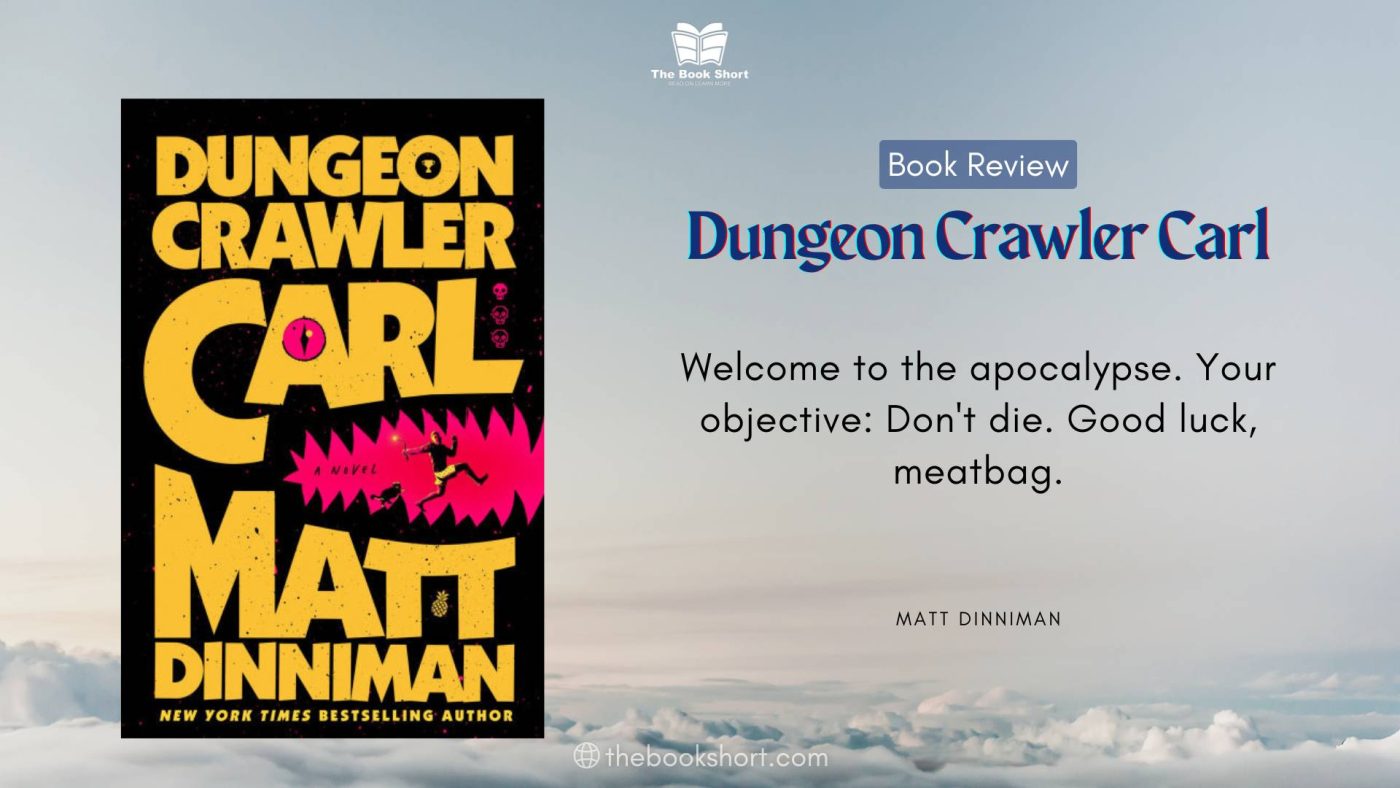
Earth is a dungeon now. Carl and Donut must survive floor after brutal floor in this hilarious, dark, and unique LitRPG adventure.
Introduction:
Imagine waking up to find Earth transformed into a massive, multi-level dungeon. Monstrous creatures roam, deadly traps lie hidden, and a corporate overlord Syndicate orchestrates the whole catastrophe as a galactic reality show. This is the premise of Matt Dinniman’s Dungeon Crawler Carl: Doomsday Scenario, a book that plunges you headfirst into a maelstrom of horrific chaos and laugh-out-loud comedy. I was drawn to this title for its audacious originality – a concept that marries brutal, high-stakes survival with an utterly unique brand of humor, making it impossible to put down. This isn’t just a story; it’s a vibrant, visceral experience.
Basic Information about Dungeon Crawler Carl: Doomsday Scenario
- Title: Dungeon Crawler Carl: Doomsday Scenario
- Author: Matt Dinniman
- Year of publication: 2020
- Genre: LitRPG, Sci-Fi, Dark Comedy, Survival Horror, Satire
- Number of pages: Approximately 500-600 pages (Note: page count varies by edition and format, but it’s a substantial read)
- Target audience: Readers seeking boundary-pushing LitRPG, fans of dark and cynical humor, enthusiasts of survival stories with a unique twist, and those interested in satirical science fiction.
Main Content Summary of Dungeon Crawler Carl: Doomsday Scenario
Dungeon Crawler Carl: Doomsday Scenario serves as the electrifying debut for the phenomenon that is the Dungeon Crawler Carl series. It introduces us to Carl, an average guy whose world is obliterated in an instant when enigmatic alien entities, the Syndicate, convert Earth into an elaborate planet-sized dungeon designed for live, intergalactic entertainment. Billions perish in the initial cataclysm, but Carl, serendipitously sheltering in a basement with his estranged fiancée’s pampered Persian cat, Princess Donut, finds himself one of the few thrust into the horrifying, televised spectacle known as the Crawl.
The narrative meticulously chronicles the frantic, bloody opening act on the Dungeon’s first floor. The rules of this deadly game are starkly simple, relentlessly brutal, and often delivered with infuriating cheerfulness by the omnipresent AI narrator, dubbed “Princess Leia” by Carl. Carl and Donut must rapidly internalize the core mechanics: slay grotesque monsters, accumulate Experience Points (XP) to level up, discover valuable loot, complete perilous quests, and, above all, survive. The stakes couldn’t be higher – death is absolute, permanent, and the Dungeon itself seems actively malice, conjuring increasingly inventive and nightmarish ways to eliminate contestants, all for the voyeuristic pleasure of countless alien species tuning in to the “Galaxy’s Greatest Dungeon” network.
The Start of the Crawl: First Contact and Basic Mechanics
The story ignites with the sudden, world-shattering arrival of the Syndicate. Carl is caught completely unaware, hiding in a basement with Donut during what they initially assume is just another strange event. The moment of transformation is swift and brutal. They are immediately indoctrinated into the Dungeon system, assigned their initial “classes” – Carl as a pragmatic ‘Vagabond’ and Donut, hilariously and surprisingly, as a ‘Princess Class,’ reflecting her privileged former life. The disembodied, relentlessly upbeat voice of the AI narrator explains the fundamental rules, often couching mass death and survival in infuriating corporate jargon and cheerful detachment.
- Initial Scramble: The opening hours are depicted as pure, visceral panic. Survivors are scarce, scattered amidst the ruins of their former world, now populated by strange, low-level monsters born from Dungeon magic. Carl and Donut’s immediate, reluctant partnership is forged in this chaos.
- Learning the System: The book dives deep into core LitRPG elements, vital for understanding the rules of survival:
- Gaining XP from defeating monsters and completing objectives.
- Leveling up key statistics like Strength, Dexterity, Constitution, etc., directly impacting their abilities.
- Acquiring unique skills and perks, which can range from genuinely useful combat maneuvers to bizarre, humorous, or gruesomely specific abilities.
- Finding and equipping gear – from improvised weapons to magical artifacts.
- Navigating the peculiar “Social Credit” system, a form of currency influenced by viewer engagement (donations, likes) and in-game achievements, underscoring the reality show element.
- The AI Narrator: More than just a voice, the Dungeon’s AI is a character in itself. It functions as the cruel, indifferent host of this cosmic game, constantly providing crucial information, ambiguous hints, warnings, and often, hilariously sarcastic commentary on Carl and Donut’s plight. Its relentless positivity in the face of utter despair magnifies the satire and the Syndicate’s chilling cruelty.
Navigating the First Floor: Challenges and Alliances
The bulk of Doomsday Scenario‘s narrative tension unfolds on the sprawling first floor, a terrifyingly warped representation of Earth’s familiar surface and subterranean spaces. Carl and Donut encounter a gruesome menagerie of foes, evolving from mundane animals mutated into monsters to truly alien and horrifying creatures.
- Monster Encounters: Early threats are manageable in small numbers, but the Dungeon constantly escalates the difficulty, throwing larger groups or introducing environmental hazards like toxic zones, collapsing infrastructure, or floor-specific mini-challenges tied to former Earth locations.
- Survivor Interaction: Carl and Donut are not entirely alone. They cross paths with other human survivors, leading to fraught and complex encounters. The Dungeon actively encourages or forces these interactions, sometimes rewarding cooperation, other times incentivizing betrayal. Trust is a precious and often fatal mistake in this new world.
- Floor Quests: The AI introduces overarching main quests and smaller side quests, steering survivors towards dangerous objectives that yield significant rewards necessary for progression. These quests provide structure and often reveal disturbing details about the Syndicate’s motives or the Dungeon’s true nature.
- Donut’s Unexpected Role: Princess Donut is far from a passive pet. She is a fully realized player with her own distinct stats, skills, and unique perks tied to her ‘Princess Class’ and feline nature. Her perspective, often shared directly through system messages displaying her thoughts, provides immense humor and is the emotional core of the story, grounding Carl and the reader amidst the madness.
The Climax: Surviving the First Floor
As the first floor nears its conclusion, the pressure mounts. The Dungeon imposes a time limit or a completion threshold, and failure to meet these criteria results in summary execution. The final section of the book centers on Carl and Donut’s desperate, perilous push towards the first floor exit, overcoming the ultimate, floor-specific obstacles the AI throws at them.
- Escalating Difficulty: The final zones of the floor are explicitly designed to be kill boxes, testing every skill, piece of gear, and strategic decision Carl and Donut have made.
- Boss Encounters: Each floor culminates in a significant challenge, often a powerful “boss” monster or a complex, deadly environmental puzzle, designed to eliminate weaker contestants.
- The Exit: Reaching the portal or stairs to the next floor is the immediate goal, but the path is fraught with final perils, and passage isn’t guaranteed without meeting the Dungeon’s demanding criteria.
Dungeon Crawler Carl: Doomsday Scenario masterfully concludes as Carl and Donut successfully navigate the horrors of the first floor. They emerge changed, having gained invaluable experience, crucial gear, and a chillingly clearer picture of the terrifying reality they inhabit. The ending serves as a perfect launchpad for the subsequent books, hinting at the vast, multi-layered, and unimaginably deadly structure of the Galaxy’s Greatest Dungeon and the dark secrets behind its creation. The book is a relentless, uproarious, and surprisingly poignant journey through a nightmare scenario grotesquely packaged as the ultimate game show.
In-depth Analysis of Dungeon Crawler Carl: Doomsday Scenario
Matt Dinniman’s Dungeon Crawler Carl: Doomsday Scenario is a remarkable achievement in genre fusion – a seamless, compelling blend of LitRPG mechanics, pitch-black comedy, biting sci-fi satire, and visceral survival horror. At its heart, the book explores profound themes of human resilience, the grotesque nature of entertainment in a hyper-capitalist, utterly indifferent universe, and the desperate search for meaning and connection amidst overwhelming despair and existential absurdity.
Dinniman brilliantly conveys these messages through the book’s unconventional narrative structure and the sharply defined voices of his central characters, including the non-human AI. The integrated LitRPG system is far from a mere mechanic; it’s a fundamental lens through which the horrific reality is processed, quantifying human suffering and death into cold, statistical progression and marketable content for a galactic audience.
Characters / Structure / Key Arguments
- Characters: Carl and Donut are the magnetic, dysfunctional core of the narrative.
- Carl: He begins as the ultimate everyman protagonist, utterly blindsided, grieving the loss of his entire world and everyone he knew. His core strength isn’t heroic prowess but his fierce pragmatism, uncanny adaptability, razor-sharp dark humor, and a surprising, often brutal, capacity for violence when pushed. He’s instantly relatable precisely because he reacts with disbelief, foul-mouthed anger, and gallows humor rather than immediate, unrealistic heroism. His internal thoughts and caustic exchanges with the AI highlight his constant struggle to cling to his humanity in an inhumane system.
- Donut: Elevated far beyond a simple animal sidekick, Donut is a fully realized character with her own surprisingly complex motivations (initially driven by primal feline instincts and a desire for comfort) and unique, often hilarious, capabilities granted by her bespoke ‘Princess Class.’ Her interactions with Carl, frequently facilitated by the Dungeon’s ability to display her thoughts, provide vital moments of levity, contrast, and genuine warmth. Their deepening, unlikely bond is the undisputed emotional anchor of the entire series.
- The AI Narrator (“Princess Leia”): Though inorganic, the AI acts as a powerful, central character. It embodies the cold, calculating, and utterly indifferent nature of the Syndicate and the exploitative entertainment industry it represents. Its relentlessly cheerful, often passive-aggressive delivery of horrific news and game mechanics serves as a constant source of satire and deepens the sense of cosmic horror and corporate cruelty.
- Structure: The book follows the classic dungeon crawl progression, moving sequentially through floors (though Doomsday Scenario focuses almost entirely on the foundational experience of Floor 1). Within this framework, Dinniman masterfully layers:
- LitRPG Progression: Clear objectives (leveling, quests), tangible progress (stats, skills, gear), providing a sense of accomplishment despite the grim setting.
- Survival Narrative: A pervasive sense of constant threat, resource scarcity, difficult moral choices regarding other survivors, and the raw struggle for existence.
- Scathing Satire: Relentless commentary on reality television’s voyeurism, unchecked corporate culture, the insidious influence of social media (mirrored by the Social Credit system), and the desensitization to suffering when packaged as entertainment.
- Key Arguments/Themes:
- Resilience and Adaptation: The core exploration of how ordinary individuals endure unimaginable trauma and must brutally adapt to survive a hostile, alien-controlled reality.
- Finding Humor in the Absurd: The book posits that laughter, no matter how dark, and finding moments of connection are vital coping mechanisms in a meaningless, cruel universe controlled by uncaring, powerful entities.
- Critique of Entertainment and Capitalism: A fierce condemnation of how far society (or galactic civilization) will go for profit and entertainment, depicting mass extinction and human suffering as a prime-time reality show.
- The Value of Connection: The bond between Carl and Donut is the undeniable emotional core, emphasizing the critical importance of companionship, loyalty, and care in absolute isolation and despair.
Writing Style & Content Quality
Matt Dinniman’s writing style is arguably the series’ greatest asset: sharp, propulsive, and utterly distinctive, perfectly calibrated for the chaotic narrative.
- Voice: The primary narrative voice, largely third-person focused on Carl’s perspective, is saturated with his cynical, weary, yet surprisingly caring personality and his unique brand of dark humor. The AI’s voice is a perfectly crafted counterpoint – consistently irritating, cheerful, and chillingly corporate.
- Tone: The book masterfully navigates radical tonal shifts, pivoting seamlessly between moments of genuine, gut-wrenching horror and brutal violence to scenes of absurd, laugh-out-loud comedy. This deliberate whiplash is incredibly effective at keeping the reader off balance and engaged.
- Language: Dinniman employs powerful, direct language. Carl’s internal monologue and dialogue are replete with realistic profanity and scattered pop culture references, grounding his character in a semblance of normalcy despite the insane circumstances. Descriptions of gore, violence, and bodily horror are unflinching and graphic, integral to the survival horror element.
- Content Quality: The originality of the premise is matched by the high quality of its execution. The complex LitRPG mechanics are woven organically into the narrative, explained clearly through the AI and Carl’s learning process. The pacing is relentless and perfectly judged, constantly introducing new threats, mechanics, and micro-objectives to maintain momentum. The world-building, even limited mostly to the first floor, is compelling, hinting at a vast, terrifying universe controlled by the Syndicate.
Notable Quotes from the Book
- “Oh, you found the stairs! Good job, Crawler! The Stairs are one of the Dungeon’s primary methods of inter-floor transportation! Unfortunately, you won’t be using them. They require a level that you do not possess! Please explore the floor and gain more experience!” – (A quintessential example of the AI’s passive-aggressive, unhelpful “help,” highlighting the game’s arbitrary cruelty)
- “Dammit, Donut.” – (Carl’s frequent, exasperated, yet deeply affectionate refrain, the simplest expression of their complex bond)
- “I’m just trying to survive, you glorious bastard.” – (Carl, addressing the indifferent universe via the AI, encapsulating his defiant spirit)
- “Achievement Unlocked: Pet the Damn Cat!” – (Perfectly illustrates the series’ blend of mundane, human moments with the bizarre, quantifying logic of the game system)
What truly elevates Dungeon Crawler Carl above other books in similar genres is the sheer audacity of its core concept and the flawless execution of its completely unique, often jarring, tone. While many LitRPGs lean into wish fulfillment or epic fantasy settings, DCC grounds its mechanics in a horrifying, satirical alien invasion of the real world, using the game structure not just for power progression but as a means to amplify the inherent absurdity and profound cruelty of the situation. The humor is significantly darker, more cynical, and pervasive than in most LitRPGs, and the emotional depth, primarily centered on Carl and Donut’s relationship, feels surprisingly authentic and moving amidst the relentless chaos. It takes the fundamental concept of ‘leveling up’ and applies it to the processing of trauma and the raw struggle for survival in a way that is both hysterically funny and deeply unsettling.
Evaluation & Expert Personal Review
Dungeon Crawler Carl: Doomsday Scenario is, without question, a wild and exhilarating ride for the reader it’s intended for. As a reviewer and genre enthusiast, my personal impression was overwhelmingly positive – this book isn’t just read; it’s experienced. It sunk its claws into me from the very first page with its utterly insane premise and refused to let go until the final word.
Advantages:
- Unparalleled Originality: The core concept of Earth as a grotesque reality TV dungeon is groundbreaking and executed with fearless creativity.
- Masterful Tone: The delicate, yet powerful, balance between pitch-black humor and genuine, visceral horror is the book’s secret weapon, creating moments that illicit both shocked laughter and tense apprehension, sometimes simultaneously.
- Exceptional Characters: Carl and Donut are an iconic duo. Their dynamic – their banter, their reliance on each other, their shared trauma and humor – is the absolute heart of the series, providing both comedic relief and profound emotional resonance. Donut, in particular, is a triumph of character writing.
- Propulsive Pacing: The narrative moves at a breakneck speed, constantly introducing new, deadly challenges, complex mechanics, and mini-objectives that ensure the reader is glued to the page.
- Intriguing World-Building: Even within the confines of the first floor, the hints and glimpses of the vast, terrifying universe controlled by the Syndicate and its alien audience are endlessly fascinating.
- Sharp Satire: The book functions as a potent, often uncomfortable, critique of reality TV culture, corporate greed, social media’s influence, and society’s disturbing desensitization to violence when it’s packaged as entertainment.
Disadvantages:
- Content Sensitivity: The humor is profoundly dark and relies on shock value, which may be offensive to some readers. The descriptions of violence, gore, and death are frequent, graphic, and unsparingly detailed, firmly placing it within the survival horror subgenre.
- Language: Carl’s internal monologue and dialogue are heavily peppered with profanity, which is authentic to the character but might be a barrier for readers sensitive to strong language.
- LitRPG Elements: While seamlessly integrated, readers entirely new to or disinterested in gaming mechanics (stats, levels, specific perks, numerical progression) might find certain sections less immediately engaging, although the story is strong enough to carry non-gamers.
Readability Level: The prose itself is direct, conversational, and highly accessible, contributing to its rapid pace. However, fully grasping the nuanced and ever-evolving LitRPG system and the frequent introduction of new game concepts requires active engagement from the reader. I’d rate the prose as relatively easy to consume, but the thematic depth and mechanical complexity demand attentiveness.
Who the Book is Suitable For:
This book is an absolute must-read for:
- LitRPG enthusiasts searching for a series that dares to break the mold and offer a truly unique setting.
- Readers who revel in dark comedy, satire, and humor that pushes boundaries.
- Fans of post-apocalyptic or survival narratives with a strong science fiction twist and high stakes.
- Anyone looking for a book that balances genuine emotional depth and character development with relentless action and a refusal to take itself too seriously, despite the horrific premise.
- Definitely not suitable for: Readers with low tolerance for gore, profanity, deeply cynical humor, or graphic depictions of death and suffering.
Practical Value: While Dungeon Crawler Carl won’t teach you a new skill in the traditional sense, it offers darkly humorous and surprisingly insightful perspectives:
- Extreme Adaptability: It serves as a stark, albeit exaggerated, reminder that survival often hinges on an individual’s ability to think on their feet, embrace radical change, and use whatever tools are available in unimaginably alien circumstances.
- Finding Light in Darkness: The bond between Carl and Donut, and Carl’s ability to crack jokes and find moments of levity, models the human capacity to find connection and humor even in the most dire, hopeless situations.
- Cultural Critique: It encourages critical reflection on our own society’s consumption of media, the desensitization to violence in entertainment, and where we draw the lines regarding what is acceptable to watch or glorify.
In conclusion, Doomsday Scenario is a phenomenally entertaining and original start to a series that courageously leans into its outlandish premise. It delivers a singular reading experience through its potent blend of action, laugh-out-loud dark comedy, and surprisingly poignant character moments.
Comparison with Similar Books
Dungeon Crawler Carl: Doomsday Scenario carves out a distinct niche within the crowded LitRPG landscape, largely due to its apocalyptic Earth setting, relentless dark humor, and sharp satirical edge. While it shares core mechanics with many popular titles, its tone and premise are truly unique.
- Standard Fantasy/VR LitRPG: Series like The Wandering Inn or Ascension Online typically place characters in high-fantasy worlds or virtual reality simulations where the game mechanics feel native or chosen. DCC fundamentally differentiates itself by forcibly imposing the LitRPG system onto the real, modern world during a sudden, catastrophic invasion, imbuing the mechanics with a layer of horror, trauma, and violation rarely seen in the genre.
- Sci-Fi Survival Game Narratives: Books such as Suzanne Collins’ The Hunger Games or Koushun Takami’s Battle Royale feature characters forced into deadly survival games for the entertainment of others. DCC elevates this concept by fully integrating the explicit, statistical progression system of LitRPG and adding the layer of indifferent, voyeuristic alien viewers as a core narrative element.
- Dark Comedy Sci-Fi: Authors like Christopher Moore or Douglas Adams use humor in bizarre, science fiction settings, but DCC pushes the “dark” aspect significantly further, juxtaposing its comedic moments with graphic, disturbing violence and existential despair in a way few authors attempt.
If readers enjoyed Dungeon Crawler Carl: Doomsday Scenario, they would likely also appreciate:
- The subsequent books in the Dungeon Crawler Carl series: The story, characters, and world expand exponentially, maintaining the core tone and quality.
- He Who Fights With Monsters by Travis Deverell: Another highly popular LitRPG known for its strong, cynical protagonist voice and humor, though generally presenting a slightly less grim and satirical world than DCC.
- The Completionist Chronicles by Dakota Krout: Focuses heavily on intricate game mechanics, unique class systems, and crafting, often featuring comedic elements and a strong sense of progression, appealing to mechanics-focused LitRPG fans.
- Critical Failures by Robert Bevan: A LitRPG notorious for its extremely crude, boundary-pushing humor and over-the-top scenarios, likely to resonate with readers who enjoy DCC‘s dark comedy aspects taken to an extreme.
- Super Powereds by Drew Hayes: While not strictly LitRPG, this series about a superhero college incorporates a unique, detailed progression system for powers and features excellent character dynamics and a compelling blend of humor and serious stakes, sharing a similar appeal to fans of well-developed systems and engaging casts.
Dungeon Crawler Carl undeniably occupies a unique and prominent position within speculative fiction. It offers a fresh, brutal, and uproariously funny interpretation of the LitRPG premise that is difficult to directly replicate, but its core appeal – engaging protagonists, a uniquely compelling world, and relentless narrative drive – aligns it with other standout series in the broader LitRPG and genre-bending fiction landscape.
Conclusion & Recommendations
Dungeon Crawler Carl: Doomsday Scenario is an absolutely essential read for anyone seeking a truly unique and unforgettable literary experience. Its primary strengths lie in its fearless originality, the perfect, precarious balance it strikes between dark humor and genuine horror, and the creation of two of the most memorable protagonists in recent genre fiction: Carl and Donut. It’s a sharp, incisive satire cleverly disguised within the framework of a brutal LitRPG survival story.
Is it worth reading? Unequivocally yes – provided you are the right audience. It has become a cultural phenomenon within its genre for good reason, offering a reading experience unlike almost anything else currently available.
Who should read it? This book is tailor-made for enthusiasts of LitRPG who crave something drastically different from traditional fantasy, readers who delight in dark comedy and satire that doesn’t pull punches, fans of post-apocalyptic or survival narratives infused with cutting-edge sci-fi concepts, and anyone brave enough to dive into a book that refuses to shy away from extreme situations while still delivering profound character growth and high-octane action. If you appreciate entertainment that pushes boundaries, is genuinely hilarious in the face of utter chaos, and features a talking, leveling-up cat, pick this up immediately. If, however, you prefer gentle fantasy, are sensitive to graphic content, strong language, or pitch-black humor, this is likely a book you should bypass.
Have you ventured into the Dungeon? Share your thoughts on Dungeon Crawler Carl: Doomsday Scenario in the comments below!