

Escape the bloody waters of competition and create your own uncontested market. This Blue Ocean Strategy book summary and review unpacks the revolutionary framework for making your rivals irrelevant by changing the game itself.
Are you tired of fighting over a shrinking pool of customers? Blue Ocean Strategy offers a compelling alternative: stop competing and start creating. I chose to review this modern classic because its core message is profoundly liberating. It reframes strategy not as a zero-sum battle for dominance, but as a creative act of market generation. Its practical, step-by-step frameworks for discovering these new markets are what elevate it from a compelling idea to an indispensable tool for any true innovator.
Blue Ocean Strategy: Book Fact Sheet
- Title: Blue Ocean Strategy: How to Create Uncontested Market Space and Make the Competition Irrelevant
- Author: W. Chan Kim & Renée Mauborgne
- Year of publication: 2005 (Expanded Edition in 2015)
- Genre: Business, Strategy, Management
- Number of pages: Approx. 320 (Expanded Edition)
- Target audience: Entrepreneurs, managers, CEOs, business strategists, and marketing professionals.

Blue Ocean Strategy, Expanded Edition: How to Create Uncontested Market Space and Make the Competition Irrelevant
A Comprehensive Summary of Blue Ocean Strategy’s Core Concepts
Blue Ocean Strategy provides a systematic and replicable process for moving beyond competition. The authors argue that lasting success comes not from waging war in existing industries, but from creating “blue oceans”—pristine, untapped markets ripe for growth. The book brilliantly bridges theory and practice, first introducing its core philosophy and then equipping readers with the analytical tools to bring it to life.
Red Oceans vs. Blue Oceans: The Central Metaphor
The book’s entire philosophy is built upon a powerful, clarifying metaphor that divides the market universe in two:
- Red Oceans: These are all the industries that exist today. In these markets, the boundaries are defined, the rules of competition are well understood, and companies viciously fight for a greater share of existing demand. As the market space becomes saturated with rivals, the competition turns fierce and bloody, staining the water red.
- Blue Oceans: These represent the industries not yet in existence—the vast, deep, and unknown market space, untainted by competition. In blue oceans, demand is created rather than fought over. This provides a powerful opportunity for growth that is both highly profitable and rapid. Here, the competition is irrelevant because the rules of the game have yet to be written.
Kim and Mauborgne’s central thesis is that while business schools and corporate boardrooms have overwhelmingly focused on mastering red ocean strategies, the real titans of industry are those who create blue oceans.
Value Innovation: The Cornerstone of Blue Ocean Strategy
The engine that powers the creation of blue oceans is the simultaneous pursuit of differentiation and low cost. The authors give this powerful concept a name: Value Innovation.
- Value without Innovation: Tends to focus on incremental improvements or “value creation,” which keeps you in the same competitive space, often at a higher cost.
- Innovation without Value: Often technology-driven, futuristic, or pioneering for its own sake, without creating something customers truly value and are willing to pay for.
Value innovation is the alchemy that happens when a company aligns innovation with utility, price, and cost. It’s about creating a quantum leap in value for both buyers and the company, unlocking new, uncontested market space. Instead of obsessing over benchmarking and beating competitors, you focus on making them irrelevant by delivering an experience that is in a class of its own.
Key Analytical Tools and Frameworks
To transform this philosophy from an abstract idea into a concrete plan, the book offers several indispensable tools.
The Strategy Canvas
The strategy canvas is a diagnostic tool and an action framework rolled into one. It graphically captures the current state of play in an industry, allowing you to visualize:
- Factors of Competition: The key factors an industry traditionally competes on (e.g., price, quality, service speed).
- Offering Level: The degree to which companies offer these factors to their customers.
- Strategic Profile: The value curve, a graphic depiction of a company’s performance across its industry’s competitive factors.
A company trapped in a red ocean will have a value curve that largely mirrors its competitors—a clear sign of imitation, not innovation. A true blue ocean strategy is visible when a company’s value curve stands alone, looking fundamentally different from everyone else’s.
The Four Actions Framework (ERRC Grid)
To break the trade-offs of the past and craft a new value curve, the authors introduce the Four Actions Framework. It forces you to challenge your industry’s long-held assumptions by asking four transformative questions:
- Eliminate: Which factors that the industry takes for granted should be completely eliminated? This helps slash costs by removing elements customers no longer find valuable.
- Reduce: Which factors should be reduced well below the industry standard? This lowers costs further by identifying areas where the industry over-delivers without a corresponding increase in buyer value.
- Raise: Which factors should be raised well above the industry standard? This pushes for new demand by uncovering and amplifying what buyers truly desire.
- Create: Which factors should be created that the industry has never offered? This is the heart of value innovation, creating new sources of value and shifting the pricing landscape.
The book’s iconic example is Cirque du Soleil. They eliminated costly animal acts and star performers, reduced the emphasis on cheap humor and thrills, raised the artistry and sophistication of the production, and created a new form of entertainment that fused the circus with theatre and dance, appealing to an entirely new audience of adults.
The Six Paths Framework: Reconstructing Market Boundaries
To guide managers in their systematic hunt for blue oceans, the book outlines six pathways for looking beyond the accepted boundaries of a market:
- Path 1: Look Across Alternative Industries. Don’t just look at direct competitors; look at alternatives that fulfill a similar need (e.g., for a cinema, alternatives are restaurants, not just other cinemas).
- Path 2: Look Across Strategic Groups Within Industries. Analyze why customers trade up for a premium option or trade down for a budget one. The space between these groups is often a blue ocean.
- Path 3: Look Across the Chain of Buyers. Challenge your industry’s definition of the “target customer.” Often, significant value can be unlocked by focusing on influencers or end-users who were previously ignored.
- Path 4: Look Across Complementary Product and Service Offerings. Explore what happens before, during, and after your product is used. The solution to a customer’s problem rarely exists in a vacuum.
- Path 5: Look Across Functional or Emotional Appeal to Buyers. Can you inject emotion into a purely functional industry, or strip away emotional fluff to offer functional simplicity? Shifting this orientation can create a new market.
- Path 6: Look Across Time. Identify decisive, irreversible trends. By understanding their trajectory, you can project what new value they will unlock for customers in the future and skate to where the puck is going.
By applying these frameworks, Blue Ocean Strategy offers a clear, actionable roadmap for businesses to escape the red ocean’s bloody competition and chart a course toward their own uncontested market space.
In-Depth Book Analysis: Themes and Arguments in Blue Ocean Strategy
Blue Ocean Strategy is far more than a business manual; it is a manifesto against the deeply ingrained, military-derived principles of competitive strategy that have dominated modern business thought. The book’s true power lies in its structured, almost scientific, approach to strategic creativity.
Characters / Structure / Key Arguments
While devoid of traditional characters, the book’s central narrative pits a protagonist against an antagonist: the heroic “Blue Ocean” of creation versus the tired, bloody “Red Ocean” of competition. The real-world companies—from Cirque du Soleil and Yellow Tail wines to Ford’s Model T—are not just examples; they are case studies that serve as parables, bringing the core concepts to life.
The book’s central argument is a direct challenge to the idea that markets are a fixed reality. Kim and Mauborgne argue that market boundaries are fluid, constantly being shaped by the actions and beliefs of industry players. Therefore, the ultimate goal should not be to compete within existing constraints, but to make the competition irrelevant by redrawing them. This is a radical departure from strategists like Michael Porter, whose influential Five Forces framework is designed to analyze and master existing industry structures. Blue Ocean Strategy is about shattering those structures.
The book is structured with the clarity of a masterclass:
- Defining the Universe: It begins by establishing the core metaphors of Red and Blue Oceans.
- Introducing the Toolkit: It then systematically introduces the analytical frameworks—the Strategy Canvas, the Four Actions Framework, and the Six Paths.
- Executing the Vision: The second half of the book addresses the practicalities of implementation, tackling organizational hurdles and ensuring a blue ocean strategy is both profitable and sustainable.
This logical flow from “what” and “why” to “how” demystifies the art of strategy, making it feel both accessible and achievable.
Writing Style & Content Quality
Kim and Mauborgne’s writing is a masterclass in clarity. Though born from rigorous academic research, the style is direct and engaging, avoiding impenetrable jargon in favor of powerful, sticky metaphors. The Red Ocean/Blue Ocean concept is instantly understandable, a key reason for the book’s enduring global appeal.
The content’s quality is anchored in over a decade of research into 150+ strategic moves across 30 industries. This empirical foundation lends immense credibility to the frameworks. However, the book’s true genius is its shift from being descriptive to being prescriptive. Many business books describe what successful companies did; Blue Ocean Strategy provides a methodology for how any organization can do it.
What truly sets it apart from its peers is this relentless focus on creation over competition. Books like Good to Great analyze the traits of exceptional companies in retrospect, and The Innovator’s Dilemma explains why great companies get disrupted. Blue Ocean Strategy provides a proactive toolkit for building the future, regardless of your starting point. It’s less about being the best player in the game and more about inventing a new one where you are the only player.
Notable Quotes from the Book
The book is packed with memorable lines that distill its philosophy into powerful maxims:
- “The only way to beat the competition is to stop trying to beat the competition.”
- “Blue ocean strategy is about reducing your costs while also offering more value to your customers. This is what we call value innovation.”
- “Value innovation is the cornerstone of blue ocean strategy. We call it value innovation because instead of focusing on beating the competition, you focus on making the competition irrelevant by creating a leap in value for buyers and your company, thereby opening up new and uncontested market space.”
- “Don’t compete against your rivals—make them irrelevant.”
These quotes powerfully reinforce the book’s central message: strategic success is not a zero-sum game of winners and losers. It is about redefining the problem to create a positive-sum outcome where both the company and its customers win big.
Personal Review and Evaluation of Blue Ocean Strategy
Blue Ocean Strategy has rightfully earned its place as a modern business classic. It delivers a refreshing, empowering, and profoundly practical perspective that can permanently alter how you see business, opportunity, and competition itself.
Personal Impressions
The book’s greatest strength is its paradigm-shifting message, powerfully supported by actionable tools. The concepts feel intuitive, and frameworks like the ERRC Grid and the Strategy Canvas are genuinely transformative in a brainstorming or strategic planning session. They create a common language and a structured process for a team to think beyond the current competitive battlefield. The deep dive into case studies like Cirque du Soleil makes the theory tangible, memorable, and deeply inspiring.
However, the book is not without its challenges. Its primary weakness is that the elegant frameworks can make the messy reality of creating a blue ocean seem deceptively simple. The real-world journey is fraught with uncertainty, risk, and immense organizational inertia. Secondly, while the principles are timeless, some of the core case studies are aging. A reader today might crave more contemporary examples from the digital-first economy. Finally, the book is laser-focused on the “what” of strategy, but less so on the “who”—the specific leadership DNA and cultural resilience required to navigate a company from a red ocean into the unknown blue.
Readability and Audience
For a book on high-level strategy, Blue Ocean Strategy is remarkably lucid and engaging. The authors have masterfully distilled complex research into clear, unforgettable concepts. Its logical progression makes it a vital read for a broad audience.
This book is most highly recommended for:
- Entrepreneurs and Startup Founders: Who are inherently in the business of creating something from nothing.
- CEOs and Senior Leaders: Who are tasked with navigating their organizations away from commoditization and toward new growth frontiers.
- Product Managers and Marketers: Who need practical tools to break free from feature-for-feature competition and discover what customers truly value.
- Business Students: For whom it provides an essential counterpoint to traditional models of competitive strategy.
It is less suited for those in purely operational roles with little influence over strategic direction.
Practical Value
The practical value of Blue Ocean Strategy is immense, starting with its power to rewire your thinking.
- Liberating Your Strategic Focus: It gives you permission to stop obsessing over every move a competitor makes and instead turn your gaze to the vast, overlooked world of “non-customers” and what they might value.
- Providing Actionable Tools: The frameworks are not just theoretical. The Strategy Canvas is an outstanding visualization tool for any strategic meeting, instantly revealing where you are and where you could go.
- Redefining Innovation: It teaches the profound lesson that game-changing innovation doesn’t always require a technological breakthrough. Value innovation can come from simply reimagining and recombining existing elements in a novel way, as Cirque du Soleil proved.
Ultimately, reading this book gives you a new lens for viewing the world of business—one that sees opportunity where others see only threats, and creation where others see only competition.
Blue Ocean Strategy vs. Other Business Books: A Comparison
Blue Ocean Strategy didn’t just describe a new market; it created one in the crowded world of business literature. Its unique position is best understood by contrasting it with other giants of the genre.
The most direct contrast is with Michael Porter’s Competitive Strategy. Porter’s work codified the art of red ocean warfare. His Five Forces model is a masterclass in analyzing an existing industry to find a defensible position and carve out a competitive advantage. Blue Ocean Strategy is a direct rebellion against this worldview. It argues that the most enduringly successful companies don’t just play the game better; they fundamentally change the game. Where Porter teaches you how to win the war, Kim and Mauborgne teach you how to avoid it entirely.
It also shares a conceptual neighborhood with Clayton Christensen’s The Innovator’s Dilemma. Both books explore the dynamics of disruption. However, Christensen primarily focuses on how disruptive innovations—often technologically simpler and cheaper—emerge from the low end of a market to unseat incumbents. Blue Ocean Strategy is broader, offering a deliberate methodology (the Six Paths) to proactively search for new market creation in any area, not just through low-end technological threats.

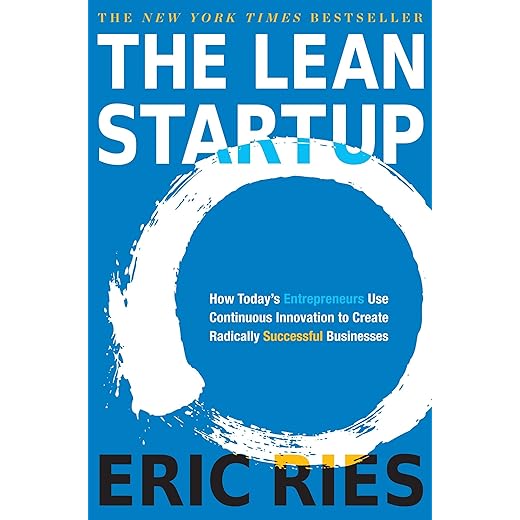


For readers inspired by the “think different” ethos of Blue Ocean Strategy, other complementary reads include:
- Zero to One by Peter Thiel: Thiel’s powerful argument for creating new things (going from 0 to 1) instead of competing on existing models (going from 1 to n) is the philosophical soulmate of blue ocean thinking.
- The Lean Startup by Eric Ries: While focused on execution methodology for startups, its emphasis on validated learning and pivoting away from failed hypotheses aligns perfectly with the exploratory search for a new, viable value curve.
- Crossing the Chasm by Geoffrey A. Moore: This classic is the perfect follow-up, tackling the specific challenge of how to market and sell the kind of discontinuous innovation that a blue ocean strategy often creates.
In essence, Blue Ocean Strategy serves as a crucial bridge between high-level strategic theory and hands-on innovation, offering a unique and structured pathway to new growth.
Conclusion: Is Blue Ocean Strategy a Recommended Read?
Blue Ocean Strategy is not merely a book; it is a mindset shift packaged with a practical, powerful toolkit. Its exceptional value lies in its ability to liberate strategists, leaders, and entrepreneurs from the zero-sum trap of head-to-head competition. It provides both a compelling argument and a systematic methodology for pursuing value innovation—the elegant, simultaneous pursuit of greater customer value at a lower cost.
Yes, this book is unequivocally worth reading.
It is essential reading for anyone tasked with setting the future direction of an organization, from a solo founder sketching on a napkin to a C-suite executive in a global corporation. It will challenge you to ask profound, uncomfortable questions about the industry you’re in, the customers you serve, and the unspoken rules you blindly follow. While the execution is infinitely harder than the reading, the frameworks within provide the crucial starting point for the conversations that lead to true transformation. If you feel stuck in a crowded market where the only path forward seems to be fighting harder for smaller and smaller gains, this book doesn’t just offer you a map—it offers you a whole new world.
Have you read this book? Share your thoughts and experiences in the comments below.