

Ready to build the future? This book review of Zero to One by Peter Thiel delves into a provocative guide on how to create entirely new things, rather than just copying what already exists. I chose this book for analysis because it deliberately sidesteps conventional business wisdom, offering instead a compelling, philosophical toolkit for innovation. Its singular power lies in teaching you how to think—about technology, markets, and progress—not just what to do, making it an indispensable read for any founder, creator, or visionary.
Zero to One: Book Information at a Glance
- Title: Zero to One: Notes on Startups, or How to Build the Future
- Author: Peter Thiel with Blake Masters
- Year of publication: 2014
- Genre: Business, Entrepreneurship, Startups, Philosophy
- Number of pages: 210
- Target audience: Entrepreneurs, innovators, investors, students, and anyone with a stake in the future of technology and business.

Zero to One: Notes on Startups, or How to Build the Future
Zero to One Book Summary: A Deep Dive into the Core Content
Zero to One: Notes on Startups, or How to Build the Future is not a typical business manual filled with checklists and case studies. It is a profound, philosophical guide to building companies that create what has never existed before. The title itself captures the book’s central, electrifying idea: true innovation means going from “zero to one”—creating something out of nothing—rather than from “one to n,” which is the act of copying, iterating, or globalizing what already works. The book is a lean, potent distillation of notes taken by Blake Masters from a now-legendary class Thiel taught at Stanford University in 2012.
The Challenge of the Future: Vertical vs. Horizontal Progress
Thiel frames the entire project of civilization around two distinct forms of progress:
- Horizontal or Extensive Progress (1 to n): This is the act of copying things that work. Think of it as taking a proven concept and scaling it across the globe. Thiel uses “globalization” as a shorthand for this. A primary example is China’s economic miracle, which was built on replicating technologies and business models pioneered in the West.
- Vertical or Intensive Progress (0 to 1): This is the act of doing something entirely new. It requires “technology” in its broadest sense—not just computers, but any novel and superior way of doing things. The startup, in Thiel’s view, is the most powerful engine for this kind of progress. This is the realm of true creation.
Thiel argues that while globalization is necessary, our collective future depends almost entirely on vertical progress. Without bold new technologies, globalization is simply unsustainable and will lead to a future of scarcity and conflict.
The Ideology of Competition is a Myth
In one of the book’s most startling and influential arguments, Thiel dismantles the sacred cow of capitalism: competition. While business schools and economic theory praise competition as the healthy engine of a free market, Thiel declares it a destructive force.
- Competition Destroys Profits: In a competitive market, companies are locked in a desperate struggle for survival, forcing them into a race to the bottom on price. Their profit margins are annihilated, leaving no resources for long-term planning, deep research, or even treating employees well. The US airline industry is his classic example: it creates immense value for travelers but has historically captured almost none of that value as profit.
- Competition Breeds Sameness: Locked in battle, competitors become obsessed with one another. They mimic features, copy marketing strategies, and lose sight of what truly matters, eventually becoming almost indistinguishable from each other.
Instead of waging war, Thiel urges entrepreneurs to seek its polar opposite: monopoly.
All Happy Companies are Different: The Power of Monopoly
For Thiel, a “monopoly” isn’t the cartoon villain of economics—an abusive entity propped up by corrupt laws. It is a company so uniquely good at what it does that no other firm can offer a close substitute. Google is his prime example. It holds a monopoly on search but doesn’t act like a traditional monopolist because the threat of new technology keeps it innovative.
- Monopolies Fuel Progress: Because creative monopolies enjoy healthy profits, they possess the freedom to think beyond the next quarter. They can fund ambitious R&D, pursue a grand vision, and build a better future. They are the true engines of “zero to one” leaps.
- The Four Hallmarks of a Monopoly: Thiel outlines four key traits that define a durable monopoly:
- Proprietary Technology: Your advantage must be an order of magnitude better than the competition. A 10x improvement is the benchmark; anything less is a marginal tweak that won’t secure your position.
- Network Effects: Your product becomes more valuable as more people use it. Think Facebook or PayPal. The key is to start with a tiny, niche market, dominate it completely, and then strategically expand outward.
- Economies of Scale: The business must get inherently stronger as it grows larger. Software is the ultimate example, where the marginal cost of producing an additional unit is virtually zero.
- Branding: Building a powerful, inimitable brand is paramount. Apple has crafted a brand identity so strong that it functions as a technological and cultural monopoly in itself.
The Seven Questions Every Business Must Answer
Thiel argues that every aspiring founder must have compelling answers to seven critical questions. A startup with strong answers across the board is positioned for greatness; one with weak answers is destined for failure.
- The Engineering Question: Can you create a breakthrough technology instead of just an incremental improvement? Is it truly 10x better?
- The Timing Question: Is now the right moment to start this specific business?
- The Monopoly Question: Are you starting by dominating a small, specific market?
- The People Question: Do you have the right team, not just in skill but in culture and vision?
- The Distribution Question: Do you have a concrete plan to not just create but deliver your product to customers?
- The Durability Question: How will your market position be defensible 10 and 20 years from now?
- The Secret Question: Have you identified a unique opportunity, an important truth, that few others see?
This final question about “secrets” is the philosophical heart of the book. Thiel believes the world is still full of undiscovered truths about nature and people. Great companies are built on finding one of these secrets and using it to build a different future.
In-Depth Analysis of the Zero to One Book
Zero to One stands in a category of its own, far removed from the crowded shelves of business self-help. It is less a “how-to” guide and more a “how-to-think” manifesto. Its enduring power lies not in providing checklists, but in fundamentally rewiring the reader’s assumptions about what it means to create value.
Key Arguments and Structure
The book’s architecture flows elegantly from Thiel’s core philosophy. It begins with a grand, civilizational challenge—our need for vertical progress—and then systematically demolishes the myths that prevent entrepreneurs from meeting it.
- Contrarianism as a First Principle: The book’s entire argument is an answer to Thiel’s favorite interview question: “What important truth do very few people agree with you on?” For Thiel, that truth is that competition is for losers and that every successful business is a monopoly. This single, defiant belief is the foundation upon which every chapter is built.
- From Philosophy to Practice: The book masterfully transitions from high-level, abstract concepts (the nature of progress, the critique of competition) to tangible, actionable frameworks (the four traits of a monopoly, the seven startup questions). Thiel first builds a compelling worldview, then demonstrates its application in the messy reality of company-building.
- The Power of Secrets: The recurring theme of “secrets” elevates the book beyond mere business strategy. In an era that often feels saturated, where it seems every idea has been tried, Thiel’s call to unearth hidden truths is a powerful one. He reframes entrepreneurship not as a financial exercise, but as a noble act of exploration and discovery, lending the entire endeavor a sense of grand purpose.
Writing Style & Content Quality
The book’s style, a direct result of its origins as crystalized lecture notes, is one of its greatest assets.
- Clarity and Conviction: The prose is strikingly direct, assertive, and refreshingly free of corporate jargon. Thiel and Masters favor short, declarative sentences and potent aphorisms, making deeply philosophical and economic concepts feel both accessible and urgent.
- Provocative and Dogmatic Tone: Thiel’s tone is intentionally provocative. He delivers bold proclamations (“Competition is for losers,” “All happy companies are different”) designed to shock readers out of their intellectual complacency. While some might find it dogmatic, this very quality forces a confrontation with one’s own ingrained beliefs. The book doesn’t just present ideas; it argues for them with unshakeable conviction.
- Rich Interdisciplinary Synthesis: The content quality is exceptionally high because it seamlessly weaves together insights from philosophy, economics, history, and technology. Thiel draws on Shakespeare and Tolstoy as readily as he does on the dot-com bubble to build his case, giving his arguments a timeless weight and texture that generic startup guides lack.
Notable Quotes from the Book
The book is packed with memorable lines that distill its core philosophy into sharp, unforgettable truths.
- “The next Bill Gates will not build an operating system. The next Larry Page or Sergey Brin won’t make a search engine. If you are copying these guys, you aren’t learning from them.”
- “Competition is for losers.”
- “All happy companies are different: each one earns a monopoly by solving a unique problem. All failed companies are the same: they failed to escape competition.”
- “A startup is the largest group of people you can convince of a plan to build a different future.”
- “Brilliant thinking is rare, but courage is in even shorter supply than genius.”
Evaluation & Personal Review of the Zero to One Book
Zero to One is one of those rare books that fundamentally alters how you view the world. It’s less about the operational details of running a business and more about cultivating the mindset required to create something of true, lasting value. I return to it periodically, not for tactical advice, but for a jolt of strategic clarity and a reminder to think bigger.
Advantages:
- Paradigm-Shifting Ideas: The book’s most profound strength is its power to upend your most deeply held assumptions. The pro-monopoly, anti-competition argument is a liberating concept for any innovator, freeing you from the tyranny of imitation and giving you permission to think boldly and originally.
- Focus on First Principles: Thiel compels you to think from the ground up. The “seven questions” are not a simple checklist but a rigorous framework for interrogating the very soul of a business idea, forcing a reckoning with its long-term viability.
- Inspiring and Ambitious Tone: The book is suffused with a powerful sense of optimism. It treats entrepreneurship not just as a path to wealth, but as a moral imperative to build a better future, a message that is incredibly motivating for anyone tired of mediocrity and incrementalism.
Disadvantages:
- Deliberately Lacks Tactical Detail: Readers searching for a step-by-step blueprint on launching a company will be disappointed. This is by design. The book is philosophical and strategic, offering a compass, not a map. It tells you where to go (toward monopoly) but offers little on the day-to-day grit required to get there.
- Potentially Polarizing Stance: Thiel’s uncompromising views on monopoly and his dismissive tone toward “1 to n” businesses can feel elitist or out of touch, particularly for those running small, non-tech businesses in competitive industries.
Readability and Target Audience:
Thanks to its lucid, concise prose, the book is exceptionally readable. Despite its intellectual depth, it remains accessible to a wide audience. It is essential reading for:
- Aspiring and current entrepreneurs, especially those in technology.
- Investors seeking a mental model for identifying truly transformative companies.
- Students and thinkers fascinated by the intersection of technology, economics, and society.
- Anyone feeling trapped in a competitive rat race and looking for a new framework for creating value.
Practical Value:
The true practical value of Zero to One is its impact on your mindset. After reading it, you will:
- Instinctively question the wisdom of entering a crowded market.
- Become obsessed with creating a “10x better” solution.
- Prioritize building a durable, defensible business over chasing fleeting, short-term gains.
- Start asking contrarian questions to uncover the “secrets” hiding in plain sight.
Books Like Zero to One: Further Reading for Innovators
Zero to One occupies a unique space, blending high-level business strategy with grand philosophy. If its ideas ignited your thinking, you might also enjoy these titles that explore similar themes from different, yet complementary, angles.
- The Innovator’s Dilemma by Clayton M. Christensen: This classic academic text provides the “why” behind Thiel’s arguments. It explains with rigorous detail why great, well-managed companies so often fail when faced with disruptive innovation, offering a theoretical backbone to Thiel’s call for new technology.
- Blue Ocean Strategy by W. Chan Kim and Renée Mauborgne: If Thiel provides the “what” (seek monopoly), this book provides a “how.” It offers a practical framework for making the competition irrelevant by creating “blue oceans” of uncontested market space, serving as a tactical companion to Thiel’s high-level vision.
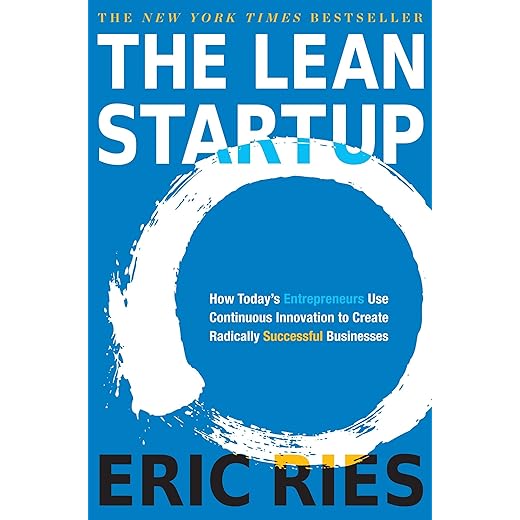
- The Lean Startup by Eric Ries: This book offers the “process.” It presents a contrasting, yet essential, perspective. While Thiel focuses on the singular grand vision, Ries provides the iterative, scientific methodology (Build-Measure-Learn) for navigating the profound uncertainty of actually building a new product. Reading both gives a founder a complete toolkit: a bold destination and a method for the journey.


Final Thoughts: A Must-Read for Future Founders
Summary of Outstanding Value:
Zero to One is more than a business book; it is an essential philosophical treatise for the modern innovator. Its enduring value lies in its power to rewire your brain, compelling you to reject the dogma of competition and embrace the courageous, difficult path of creating something new. It offers a timeless framework for thinking about value creation—not just for the next quarter, but for the next decade and beyond.
Is it worth reading?
Unquestionably. It is a short, dense, and profoundly insightful book that will deliver more ROI per page than almost any other title on the business shelf.
Who should read it?
Anyone who dreams of building a different and better future. It is required reading for founders, creators, investors, and leaders who refuse to accept the world as it is and are determined to build the world as it could be.
Have you read this book? Share your thoughts in the comments below.