
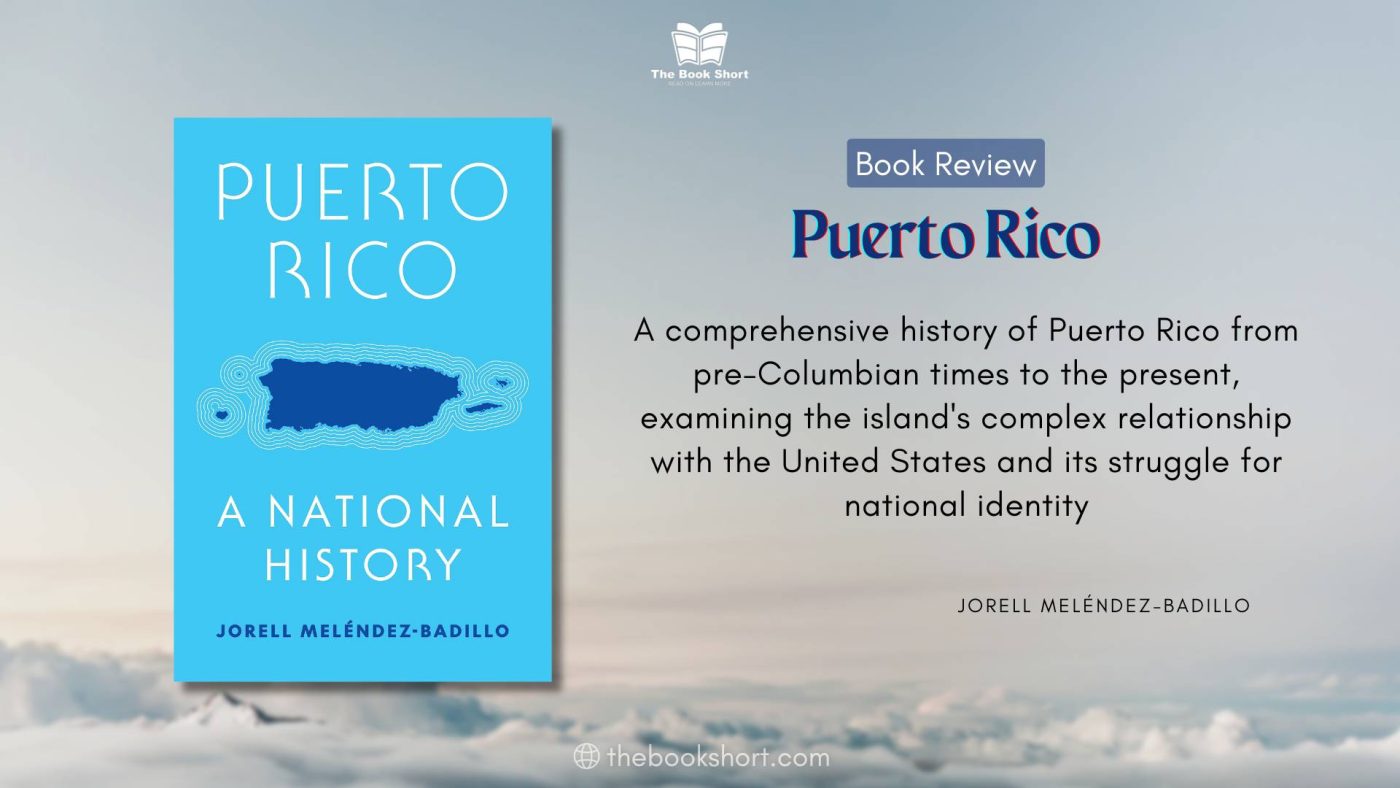
Explore Puerto Rico’s intricate history from a powerful new angle, focusing on the vibrant lives and enduring struggles of its working class and the forging of a distinct identity. Jorell Meléndez-Badillo’s “Puerto Rico: A National History” is a vital, paradigm-shifting read that boldly challenges commonly accepted narratives.
Book Details: Puerto Rico: A National History
- Title: Puerto Rico: A National History
- Author: Jorell Meléndez-Badillo
- Publication Year: 2022
- Genre: History, Non-fiction, Caribbean Studies, Labor History, Postcolonial Studies
- Pages: Approximately 304 pages
- Ideal Reader: Academics, students, and engaged general readers passionate about Puerto Rican history, labor movements, the impacts of colonialism, and understanding history “from below.”

Puerto Rico: A National History
Delving into Puerto Rico: A National History – Book Summary
Jorell Meléndez-Badillo’s “Puerto Rico: A National History” offers a profoundly moving and intellectually rigorous journey through the island’s past, presenting a narrative that starkly contrasts with conventional histories. At its heart, the book is a testament to the resilience and agency of working-class and marginalized Puerto Ricans, arguing compellingly that their collective experiences and persistent struggles are the true foundation of the island’s national identity – an identity forged long before and throughout the eras of Spanish and U.S. colonial dominion.
While structured chronologically, moving from the ancient Taíno world through the Spanish colonial period, the seismic shift of the 1898 U.S. invasion, the complexities of the 20th century under U.S. rule, and into the pressing challenges of today, Meléndez-Badillo consistently prioritizes the lived realities of labor, resistance, and cultural survival. This lens offers a potent alternative to histories preoccupied solely with political elites, colonial administrators, or military campaigns.
Early Roots: Labor, Exploitation, and Nascent Identity
The narrative opens with the disruption of indigenous Taíno life by Spanish arrival and swiftly turns to the brutal establishment of a colonial system built on coerced labor. Meléndez-Badillo vividly portrays the experiences of enslaved Africans and indentured laborers, emphasizing how the horrific conditions on sugar plantations and other colonial ventures didn’t just inflict suffering but also spurred early, vital forms of resistance and community formation among the oppressed. He posits that these shared trials of exploitation and struggle laid the groundwork for a burgeoning sense of collective identity among the working poor, distinct from both their Spanish overlords and the local Creole elite.
The 19th Century: Catalysts for Change – Labor, Rebellion, and Forging Identity
The 19th century unfolds as a period marked by the deepening grip of capitalist expansion, transformative shifts in agriculture, and the growing assertion of the laboring classes. The author meticulously details the myriad uprisings, strikes, and everyday acts of quiet defiance that punctuated these decades. Events like the Grito de Lares in 1868 are re-examined, not just as an elite-driven independence attempt, but crucially through the lens of the enslaved people and landless peasants who swelled its ranks. Meléndez-Badillo illustrates how the evolving labor landscape – from slavery to various forms of free labor and widespread land dispossession – created new arenas of conflict and surprising collaboration among different groups of workers. This era also witnessed the crucial emergence of early mutual aid societies and labor organizations, which, he argues, were indispensable spaces for solidifying working-class identity and political consciousness.
1898 and Beyond: The Profound Impact of U.S. Rule
The U.S. invasion of 1898 is depicted as a critical, often violent, turning point. Meléndez-Badillo powerfully debunks the simplistic narrative of a seamless or universally welcomed transition. Instead, he documents the immediate disruption and violence of the invasion itself, followed by the profound restructuring of the island’s social and economic fabric as U.S. capital rapidly came to dominate the vital sugar industry and other sectors. This domination led to widespread landlessness, escalating poverty, and crippling dependence for the vast majority. He keenly analyzes the rise of dynamic new labor movements under U.S. rule, including the Free Federation of Labor (FLT), highlighting their complex dance between initial collaboration with American unions and fierce advocacy for local worker rights. The author unflinchingly reveals the intricate, sometimes fraught, relationship between these labor leaders and the colonial administration, marking moments of both strategic alliance and fervent opposition.
The 20th Century: Navigating Colonial Modernity and Persistent Working-Class Struggles
The summary of the 20th century delves into the layered complexities of U.S. colonial rule, including the implementation of ambitious programs like Operation Bootstrap. Often hailed as a period of modernization and economic ‘progress,’ Meléndez-Badillo offers a sharp critique by centering the human cost: the experiences of those displaced from rural life, funneled into demanding, low-wage factory jobs, or compelled to migrate to the U.S. in search of precarious opportunities. He navigates the political landscape through the prism of powerful popular movements – the waves of strikes, the impassioned protests, and the relentless fight for better working conditions and fundamental political rights. The trajectory of various political factions, from early socialists and independentistas to the dominant Popular Democratic Party, is analyzed specifically in terms of their impact on and engagement with the working class. The author also beautifully underscores the enduring power of cultural resistance and the vibrant formation of a distinct working-class culture amidst the pervasive pressures of Americanization.
Contemporary Echoes: A Long History of Struggle
The book’s concluding sections address the late 20th and early 21st centuries, a period defined by economic contraction, escalating debt, the dismantling of key industries, and the devastating blows of natural disasters. Meléndez-Badillo draws a direct, clear line between these contemporary crises and the long, painful history of colonialism and economic exploitation. He emphasizes the remarkable, ongoing resilience and unwavering struggle of the working population in the face of harsh austerity measures, deep political turmoil, and the catastrophic impacts of events like Hurricane Maria. The summary culminates by powerfully reinforcing the book’s central, urgent thesis: understanding Puerto Rico’s present, and envisioning its future, is utterly impossible without acknowledging the enduring strength, agency, and historical significance of its working people.
Throughout this compelling summary, the driving force is the emphasis on collective action, the organic formation of cultural identity from the ground up, and the persistent, unyielding resistance against manifold forms of oppression. The book doesn’t just invite; it compels readers to view Puerto Rican history not solely through the lens of political machinations or colonial dictates, but through the everyday lives, the demanding labor, and the courageous struggles of the vast majority of its inhabitants.
Critically Analyzing Puerto Rico: A National History
Jorell Meléndez-Badillo’s “Puerto Rico: A National History” stands as a monumental achievement and a crucial, necessary intervention in the historical discourse surrounding the island. It is a bold and deeply insightful reframing that places the experiences and agency of the working class, marginalized communities, and popular sectors at the absolute core, arguing forcefully that their story is the authentic “national history” of Puerto Rico. This perspective offers a profound challenge to both traditional nationalist narratives and colonial accounts, which have historically centered on elite politics, debates over status, or the actions originating from metropolitan centers.
Core Arguments and Narrative Architecture
The book’s structure, while broadly chronological, derives its true analytical power from its consistent thematic focus woven throughout time. Meléndez-Badillo masterfully threads the interconnected themes of labor, exploitation, resistance, cultural resilience, and the forging of identity through shared struggle across centuries.
- Challenging the Conventional Wisdom: A fundamental argument is that Puerto Rican national identity wasn’t a creation of political leaders or intellectuals debating abstract status questions, but rather organically formed through the shared trials, resistance, and community bonds among enslaved people, resilient peasants, skilled artisans, and tireless factory workers. This commitment to a “history from below” is the book’s defining, powerful characteristic.
- Labor as the Island’s Engine: Meléndez-Badillo positions labor – its organization, the relentless exploitation it faced, and the fierce resistance it spawned – as the absolute bedrock of historical change and identity formation in Puerto Rico. From the coerced toil of early colonialism to the demands of wage labor under U.S. rule, he reveals how work and its brutal conditions sculpted social relationships and ignited political consciousness.
- Highlighting Agency, Not Just Victimhood: The book excels at showcasing the vibrant agency of marginalized groups, illuminating their active, deliberate participation in strikes, rebellions, mutual aid networks, and dynamic cultural production. They are presented not merely as passive victims of colonial or capitalist forces but as active shapers of their own destiny and history.
- A Continuum of Defiance: The analysis compellingly demonstrates a powerful continuity of struggle against various forms of oppression (colonialism, rapacious capitalism, systemic racism, ruthless class exploitation) spanning across different historical periods. This underscores that the formidable challenges confronting contemporary Puerto Rico are profoundly rooted in this long, unbroken history of resistance.
The narrative arc, moving from ancient origins to the present day, allows the author to build his argument with cumulative force, illustrating how earlier patterns of labor and resistance adapted and persisted under successive colonial regimes. While the book doesn’t offer a rigid chapter-by-chapter breakdown, its unwavering thematic focus serves as the narrative’s robust spine.
Writing Style and the Resonance of the Content
Meléndez-Badillo’s prose is a remarkable blend of scholarly depth and engaging accessibility. He synthesizes a vast and intricate body of historical research, drawing upon primary sources often overlooked in more conventional accounts – the vibrant pages of labor newspapers, detailed court records involving working people, poignant testimonies of struggle.
- Captivating Prose: Despite its academic rigor, the writing is anything but dry. It is often passionate, conveying with palpable empathy the human dimensions of the struggles he so meticulously describes. He navigates complex historical terrain without resorting to obfuscating jargon, making it profoundly readable for a wide audience.
- Argumentative and Persuasive: The author’s central arguments are not just presented; they are fiercely and clearly articulated throughout. He doesn’t simply recount events; he interprets them through a sharply critical lens, building a powerful, persuasive case for his “history from below” methodology.
- Richness in Detail: The content is extraordinarily rich with specific examples of pivotal strikes, courageous protests, individual lives, and key organizations that might be unfamiliar to readers accustomed to mainstream historical narratives. This wealth of detail doesn’t just illustrate his points; it fundamentally substantiates them, grounding the theoretical in the lived experience.
What truly sets this book apart from many other historical accounts of Puerto Rico is its absolute, unwavering commitment to centering the working class and its deliberate act of decentering political elites and the often-dominant discourse of status debates. While those topics appear, they are consistently filtered through the lens of how they impacted and were shaped by the lives and struggles of the majority. While this perspective has roots in specific academic circles, presenting it as the comprehensive national history is a significant, transformative intervention. Many histories might allocate a dedicated chapter to labor or social movements, but Meléndez-Badillo elevates them to the role of protagonist throughout the entire unfolding narrative.
Evocative Themes Echoed in the Text
While specific quotes would add flavor, the profound essence of the book is captured by the themes that resonate page after page:
- The intrinsic link between labor and the soul of a nation: The very act of working the land, enduring the factory’s grind, or harvesting sugar emerges as foundational to a shared, evolving collective identity.
- The unbroken chain of resistance: Statements implicitly or explicitly linking the defiant uprisings of the 19th century to the organized strikes of the 20th and the vibrant community protests of today.
- A pointed critique of narratives that erase the people: Lines that subtly or directly question historical accounts content to focus only on the corridors of power, ignoring the vibrant life and struggle outside them.
- Celebrating the power of the marginalized: Sentences that illuminate the conscious, deliberate actions and sophisticated organizing efforts undertaken by workers, peasants, and the urban poor.
These thematic echoes capture the book’s powerful, resonant message: that a true understanding of Puerto Rico demands listening intently to the voices, acknowledging the experiences, and recognizing the inherent dignity of its working people, whose persistent struggles and extraordinary resilience have irrevocably shaped the nation from its very foundations.
Evaluating the Impact of Puerto Rico: A National History
Jorell Meléndez-Badillo’s “Puerto Rico: A National History” is, in my considered evaluation, not merely a book but an indispensable cornerstone for anyone seeking a genuine, comprehensive grasp of the island’s complex story. Its most compelling strength lies in its audacious and unwavering commitment to narrating Puerto Rico’s past through the eyes and experiences of its working class and marginalized populations. This perspective isn’t merely an interesting addition; it is the very heart of the narrative, powerfully shifting the historical conversation away from elite political maneuvering and colonial decrees toward the raw, lived realities of the majority.
The book succeeds brilliantly in illustrating how the relentless struggles for survival, for dignity, and for fundamental rights among enslaved individuals, tenacious peasants, skilled artisans, and tireless industrial workers were far from historical footnotes. They were, in fact, foundational forces that shaped social structures, forged cultural identity, and fueled movements of resistance across centuries of colonial domination. It provides a potent, necessary counter-narrative that challenges idealized, oversimplified, or elite-centric accounts of the past.
One minor point that some readers might perceive as a challenge is the sheer density of detail regarding specific labor organizations, strikes, and figures who may not be widely known outside specialized historical circles. While this meticulous detail is absolutely vital to the author’s argument and immeasurably enriches the narrative, it does demand focused engagement from the reader. However, this is a small consideration when weighed against the immense value the book delivers.
Accessibility and Ideal Audience:
The book is crafted in a clear, compelling style that genuinely welcomes a broad spectrum of readers, extending well beyond the confines of academia. While it is undeniably a scholarly work grounded in extensive research, the prose flows naturally, free from excessive academic jargon. It is exceptionally well-suited for:
- University Students: An outstanding core or supplementary text for courses delving into Puerto Rican history, Caribbean studies, labor history, and the dynamics of colonialism and postcolonialism.
- Engaged General Readers: Anyone with a deep curiosity about Puerto Rico, the history of colonialism, the power of social history, or the lives of ordinary people will find this book profoundly rewarding and accessible. It assumes some basic familiarity with the island’s timeline but provides ample context for newcomers.
- Activists and Community Organizers: Offers essential historical depth and context for understanding contemporary social and economic challenges, and illuminates the long, inspiring legacy of popular resistance on the island.
Transformative Value:
The practical and intellectual value of this book is immense, even transformative.
- Core Lesson: It imparts a vital, often overlooked lesson about the true architects of history – not solely those wielding formal power, but the people who toil, who endure, who resist, and who build communities from the ground up. It champions the critical importance of “history from below.”
- Applicable Framework: The analytical framework Meléndez-Badillo employs provides a powerful model that can be applied to understanding the histories of other colonized, marginalized, or working populations globally. It offers a clear lens for examining the indispensable role of labor and popular movements in shaping national identities and challenging dominant, often oppressive, narratives.
- Shifting Perspective: Reading this book fundamentally alters one’s perspective on Puerto Rico. It pivots the focus away from the often-consuming debates about political status (which dominate much public discourse) toward the enduring material realities and social conditions sculpted by centuries of exploitation and the persistent, heroic fight for justice waged by working people. It fosters a deeper, more authentic appreciation for the extraordinary resilience, creativity, and agency of the Puerto Rican people in the face of staggering challenges. It forcefully demonstrates that current struggles are not isolated events but are deeply embedded in a long, unbroken historical trajectory of resistance against oppressive systems.
In summary, “Puerto Rico: A National History” is a profoundly significant and necessary book that not only reorients historical understanding but also offers a vital, compelling perspective on the island’s past and its enduring, complex present.
How “Puerto Rico: A National History” Compares to Other Accounts
Jorell Meléndez-Badillo’s “Puerto Rico: A National History” carves out a distinct and essential space within the historiography of the island precisely because it places the working class and popular sectors not merely in the history, but at the absolute center of its national narrative. Many respected traditional histories, while valuable, often privilege accounts of political leaders, constitutional developments, pivotal political status debates, or the actions emanating from colonial powers in Spain and the U.S. While Meléndez-Badillo addresses these elements, he consistently analyzes them through the direct impact they had on, or the resistance they sparked among, the lives and struggles of ordinary Puerto Ricans.
Compared to earlier comprehensive histories, which might dedicate insightful chapters to social or labor history as distinct, perhaps secondary, topics, Meléndez-Badillo integrates these themes as the fundamental organizing principle across the entire sweep of the national story. This is its defining difference and strength. For instance, while esteemed historians like Fernando Picó have undertaken crucial, groundbreaking work in local and agrarian history, meticulously highlighting the experiences of peasants and rural workers, Meléndez-Badillo offers a compelling, comprehensive national history grounded in this very perspective.
His scholarship stands on the shoulders of other historians who have focused on labor and social movements within specific periods, synthesizing and building upon their vital contributions. However, few, if any, have presented the entire arc of Puerto Rican history so consistently and uncompromisingly from this vantage point.
Puerto Rico: A National History
For readers captivated by “Puerto Rico: A National History,” further exploration might include:
- “The Agony of Puerto Rico” by Juan Ángel Silén: An older, foundational, yet still remarkably relevant work offering a critical, left-leaning analysis of Puerto Rico’s economic and political journey, with a significant focus on exploitation and popular resistance.
- Works by Fernando Picó: His deeply researched microhistories, particularly those focused on rural Puerto Rico, provide unparalleled ground-level insight into the challenging lives and quiet struggles of the poor and marginalized. His book “Amargo café” (Bitter Coffee) is a classic example.
- “Sugar and the Puerto Rican Political Process” by Andrés Nazario Torrenegra: While more focused on the intricate political economy of the sugar industry, it provides crucial historical context on the brutal labor conditions and the vibrant movements that emerged within this defining sector.
- Contemporary studies of social movements and community organizing: Current scholarship and reporting on recent protests, grassroots initiatives, and resistance efforts in Puerto Rico often reveal powerful connections and continuities with the long historical legacy of popular struggle detailed by Meléndez-Badillo.
While these suggested readings may focus on specific facets or distinct historical periods, Meléndez-Badillo’s book provides the overarching, foundational history that integrates these crucial themes across centuries, making it both an essential starting point for newcomers and a powerful capstone for those already familiar with aspects of the island’s past.
Puerto Rico: A National History – Final Thoughts & Recommendations
Jorell Meléndez-Badillo’s “Puerto Rico: A National History” is nothing short of an outstanding achievement and a profoundly necessary recalibration of the island’s historical narrative. Its immense value lies in its unflinching commitment to placing the working class and marginalized populations at the absolute center, presenting their struggles, resilience, and inherent agency as the true, vital thread weaving through Puerto Rican national history. By foregrounding labor, resistance, and the organic formation of culture from the ground up, the book constructs a powerful, essential counter-narrative that challenges conventional, elite-centric accounts and vividly reveals the deep, historical roots of contemporary challenges.
Is it worth reading? Without a doubt, unequivocally yes. This book is far more than just a historical account; it is, in a sense, an act of historical justice, lending voice and prominence to those who have too often been relegated to the periphery of the narrative. It is absolutely essential reading for anyone seeking to grasp the true complexity, resilience, and enduring spirit of Puerto Rico.
Who stands to gain most from reading this book?
- Anyone seeking to understand Puerto Rican history beyond the often-dominant focus on political status debates.
- Students and scholars across history, sociology, labor studies, Caribbean studies, and postcolonial theory.
- Individuals driven by a desire for a deeper understanding of colonialism’s profound, lasting impacts on the lives of ordinary people.
- Anyone captivated by the power and insights gained from “history from below” methodologies.
This book will not just inform you; it will challenge your assumptions, enrich your empathy, and deepen your understanding of a nation profoundly shaped by centuries of struggle and defined by the extraordinary, enduring strength of its people.
Have you read “Puerto Rico: A National History”? We invite you to share your insights and reflections in the comments section below!