
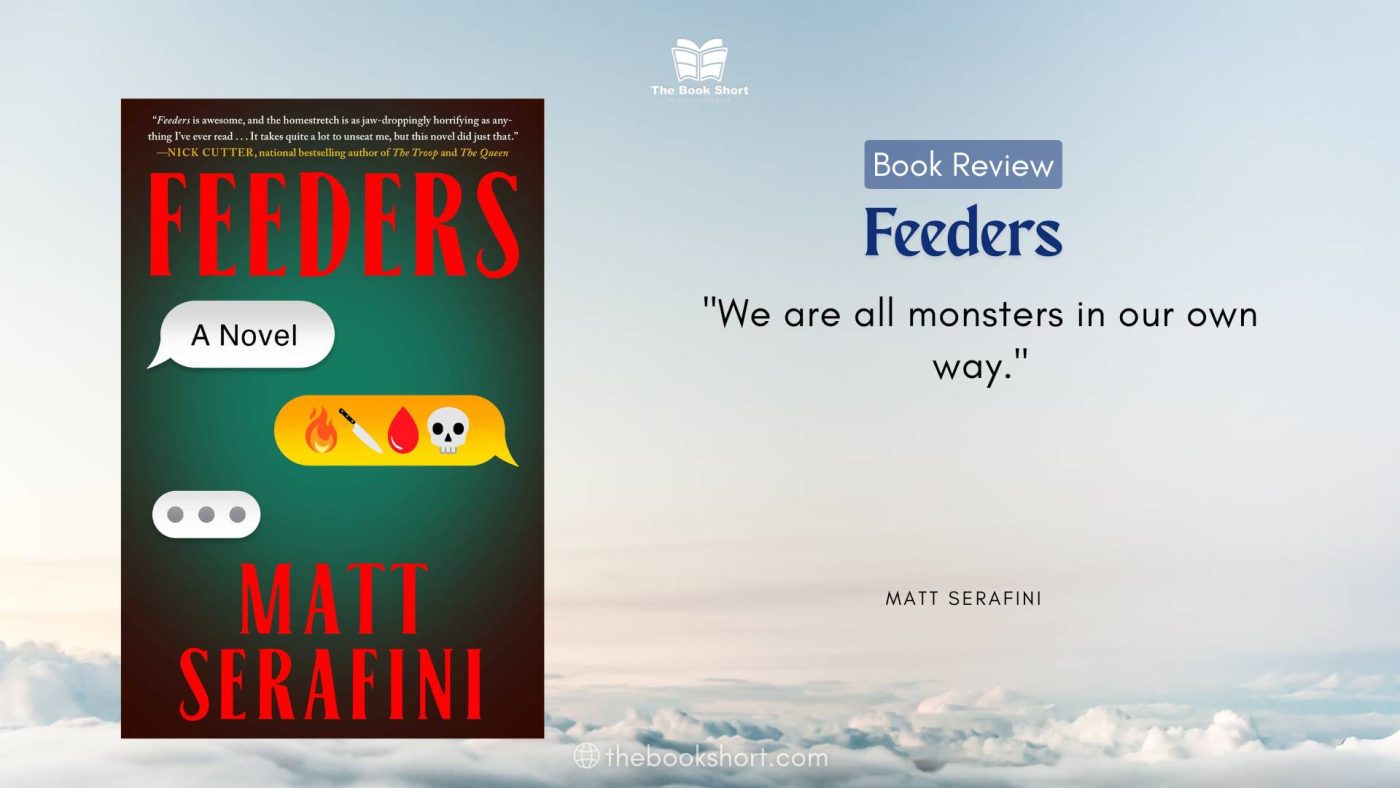
A small town faces an unimaginable horror when something ancient and hungry emerges. Dive into the terrifying world of Matt Serafini’s Feeders.
Small towns often hide dark secrets, but in Matt Serafini’s Feeders, the secret isn’t hidden for long. We chose this book for analysis because it offers a visceral, no-holds-barred take on creature horror, blending classic tropes with a modern, brutal sensibility that challenges genre boundaries and provides a genuinely unsettling reading experience.
Basic Information About the Book Feeders
- Title: Feeders
- Author: Matt Serafini
- Year of publication: 2015
- Genre: Horror (Creature Feature, Cosmic Horror elements)
- Number of pages: Approx. 200-250 pages (Varies slightly by edition)
- Target audience: Adult readers who enjoy extreme horror, creature features, and survival stories.
Main Content Summary Feeders Book Summary
Feeders plunges the reader headfirst into a nightmare unfolding in the seemingly quiet town of Havenwood. The story follows a diverse group of residents as they confront an escalating onslaught of monstrous entities emerging from beneath the town. These creatures are not typical movie monsters; they are ancient, grotesquely designed, and driven by a singular, terrifying instinct: to feed.
The Emergence
The initial signs are subtle – strange sounds from the woods, missing pets. But quickly, the horror ramps up. People start disappearing, and then the attacks begin. The creatures, described with gruesome detail, are insectoid in appearance, with sharp appendages, proboscises for draining fluids, and a relentless, swarming nature. They seem to operate with a hive mind, or perhaps guided by something even larger and more ancient stirring below the surface.
The Struggle for Survival
The narrative shifts perspective between several key characters, allowing the reader to witness the chaos from different angles:
- The Law Enforcement: Local sheriff deputies, initially skeptical, are quickly overwhelmed as their conventional weapons prove ineffective and their understanding of the threat is utterly shattered.
- The Residents: Ordinary townspeople, including families, teenagers, and loners, find themselves isolated and trapped in their homes or trying desperately to flee. Their attempts to organize or understand what’s happening are often futile against the sheer speed and brutality of the creatures.
- The Outsiders: Characters who may have stumbled into Havenwood just before the event or have a mysterious connection to the strange occurrences, potentially offering clues or alternative methods of survival/resistance.
The summary doesn’t follow traditional chapters but moves through distinct phases of the unfolding disaster:
- Phase 1: Unexplained Phenomena & Initial Attacks: The creepy build-up where strange events escalate into undeniable, horrifying reality. This section focuses on the confusion and fear of the first encounters.
- Phase 2: The Town Under Siege: As the creatures multiply and become bolder, Havenwood becomes a slaughterhouse. Communication is cut off, escape routes are blocked, and the surviving residents are forced into desperate acts of self-preservation. The focus is on survival against overwhelming odds and the breakdown of social order.
- Phase 3: The Descent & The Source: A smaller group of survivors may attempt to understand or confront the source of the infestation, often leading to terrifying discoveries about the creatures’ origin and purpose. This phase delves deeper into the potential cosmic horror elements suggested by the narrative.
- Phase 4: The Aftermath/Climax: The story culminates in a final, brutal confrontation or reveal. Unlike many horror stories, Feeders offers little in the way of easy answers or hope, focusing instead on the sheer destructive power of the event.
Throughout the book, Serafini doesn’t shy away from graphic descriptions of violence and gore. The creatures are efficient, horrific killing machines, and their attacks are detailed with unflinching realism. The focus is less on intricate plot twists and more on the raw, primal terror of being hunted by something utterly alien and unstoppable. The human characters are pushed to their limits, revealing both moments of desperate bravery and abject despair. The scale of the threat quickly becomes apparent, suggesting that this isn’t just a local problem, but something far more significant and horrifying.
In-depth Analysis Feeders Book Analysis
Feeders is a masterclass in visceral, action-driven creature horror, elevated by its relentless pacing and unapologetic embrace of the grotesque. The core theme is undoubtedly the fragility of civilization and the human body in the face of an ancient, indifferent, and hungry natural (or unnatural) force. It explores themes of survival, fear, isolation, and the sheer cosmic horror of encountering beings that operate entirely outside the realm of human understanding or control.
Characters / Structure / Key Arguments
The characters in Feeders are largely archetypes thrust into extreme circumstances. While some have brief backstories, their primary function is to react to the escalating horror, serving as relatable points of view through which the reader experiences the terror. There isn’t a single protagonist who solves the problem; rather, it’s a story about a collective nightmare and individual struggles within it. The structure is episodic, cutting between different groups of survivors as the situation worsens, creating a sense of widespread panic and showing the multifaceted impact of the invasion. This multiple-perspective approach keeps the energy high and illustrates the overwhelming nature of the threat. Serafini’s key “argument,” if one can call it that in a horror context, is that some horrors simply exist to consume, and humanity’s place in the universe is far less significant than we might believe when confronted with such a force. There is no grand plan, only hunger.
Writing Style & Content Quality
Serafini’s writing style in Feeders is direct, lean, and highly descriptive, particularly when it comes to the creatures and the gore. He employs a straightforward narrative voice that focuses on conveying the immediate terror and physical sensations of the attacks. The language is brutal and unflinching, avoiding flowery prose in favor of raw impact. This style is highly effective for the genre, plunging the reader into the moment-to-moment struggle for survival. The content quality is high within its specific niche; while not focusing on deep character development or complex philosophical themes, it delivers on its promise of intense, graphic creature horror with relentless energy. The descriptions of the “feeders” themselves are imaginative and deeply unsettling, contributing significantly to the book’s impact.
What Stands Out
What truly distinguishes Feeders from many other creature features is its sheer brutality and lack of conventional resolution. Serafini doesn’t pull punches; characters die suddenly and gruesomely, and there’s little sense of a clear path to victory or understanding. The creatures aren’t simply monsters to be defeated; they feel more like a biological imperative or a natural disaster with teeth. The scale of the problem feels immense, extending beyond just the town. The book offers a bleak, nihilistic perspective on survival horror, where the “why” is less important than the horrifying “what.”
Notable Quotes from the Book
- Brutal, sensory descriptions of the feeders and their attacks.
- Short, panicked dialogue reflecting the characters’ fear and desperation.
- Internal thoughts that underscore the loss of hope and the harsh realities of survival.
- Unflinching descriptions of violence and death.
Examples might include lines focusing on the tearing of flesh, the speed of an attack, the smell of decay, or simple, desperate pleas or commands. The impact comes from the context of intense action and the raw, survivalist language.
Evaluation & Expert Personal Review Feeders Book Review
Feeders is a short, sharp shock of horror that delivers exactly what it promises: relentless creature feature terror. My personal impression is that it’s a highly effective and unapologetically gory entry into the genre.
Advantages: The pacing is breakneck, making it a quick and absorbing read. The creature design is horrific and memorable. Serafini excels at building tension and then unleashing absolute chaos. The multiple perspectives work well to convey the widespread nature of the disaster. It offers a genuinely bleak and intense experience for horror fans looking for something extreme.
Disadvantages: Character development is minimal, focusing more on immediate reactions than deep personalities. The plot is relatively simple, driven primarily by the escalating attacks. For readers who prefer more complex narratives, intricate world-building, or hopeful endings, this book might feel lacking. The graphic content is definitely not for the faint of heart.
Readability Level & Suitability: The language is straightforward and accessible. The chapters (or shifts in perspective) are short, making it easy to pick up and put down (if you can bear to). It’s suitable for adult readers comfortable with extreme violence and gore. It’s highly suitable for fans of splatterpunk, creature features, and survival horror. If you enjoyed movies like The Mist, Pitch Black, or certain creature-centric episodes of The X-Files but wished they were far more brutal and hopeless, Feeders is for you.
Practical Value: While a horror novel isn’t typically sought for “practical value” in the traditional sense, Feeders offers an intense exploration of fear, survival instincts under extreme pressure, and the psychological impact of unimaginable trauma. It serves as a visceral reminder of human vulnerability and the thin veneer of civilization. For writers or fans of horror, it’s a strong example of how to execute a high-energy, creature-focused narrative with maximum impact through pacing and description. It changes your mindset by making you question what truly ancient, unknowable horrors might lie just beneath the surface of our everyday lives.
Comparison with Similar Books Feeders Book Comparison
Feeders sits comfortably within the realm of extreme horror and creature features, sharing DNA with authors known for their graphic and intense work.
It can be compared to:
- Bentley Little’s small-town horrors: While Little often blends horror with social commentary or supernatural weirdness, both authors excel at turning seemingly normal environments into places of unspeakable terror.
- Authors like Edward Lee or Wrath James White (in terms of gore/intensity): Serafini shares their willingness to explore the most graphic aspects of horror, though Feeders is more focused on creature biology and survival than the societal depravity sometimes found in extreme splatterpunk.
- Books like The Ruins by Scott Smith: Both feature a small group trapped by a relentless, alien biological entity where survival is paramount and understanding is limited.
If readers enjoyed Feeders, they might also enjoy:
- The Troop by Nick Cutter (similar focus on biological horror, isolation, and intense survival)
- Near the Bone by Christina Henry (creature feature with a focus on isolation and terror)
- Works by authors like Brian Keene, particularly his early monster novels, for their blend of visceral action and monstrous threats.
- Short story collections focusing on creature horror from independent horror presses.
Conclusion & Recommendations Feeders Book Review
Feeders by Matt Serafini is a lean, mean, terrifying machine of a horror novel. Its outstanding value lies in its relentless pacing, gruesome creature design, and uncompromisingly bleak vision of survival. It is absolutely worth reading for fans of intense, graphic creature features who appreciate horror that doesn’t shy away from the absolute worst-case scenario.
Who should read it? If you love monster movies, survival horror, and are not easily disturbed by graphic descriptions of violence and gore, then Feeders is highly recommended. Avoid it if you prefer subtle horror, strong character arcs, or happy endings.
Have you read this book? Share your thoughts in the comments below!